New Pros Summer Book Club – Social Pollination Review

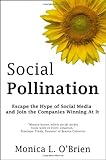
Social Pollination by Monica O’Brien is an easy to read book that can help small businesses effectively utilize social media. This 224 page book focuses on small businesses, but O’Brien’s book can also be applied to your own personal brand.

A few of the chapters that really stood out to me as a reader were “The Psychology of Online Sharing,” “Optimizing your Content” and “Social Media Tracking and ROI.” “The Psychology of Online Sharing” explains why people share online content as well as why people don’t share online content. People don’t often think about the psychology behind sharing, but it is definitely a point social media users should understand.

“Optimizing your Content” and “Social Media Tracking and ROI” are chapters that provide tips and tools on how to understand and evaluate search engine optimization and quantitatively measure your brand’s social media impact. Both are tools social media users need to understand to take their social media ability to the next week.

Case study and “buzz tips” throughout the book apply O’Brien’s lessons to real-world companies to make the tools discussed even more easily understandable for the readers. O’Brien commonly uses a summary and learn more section at the end of almost every chapter so the reader can easily pursue more information on the topic discussed. She makes it very easy for you, the reader, to understand social media and I’m happy to recommend this book to others.

What are your thoughts on Social Pollination?

professional development webinar…Build a Thriving Online Brand for Yourself (June 16, 2010)

Just a mere few years ago, a resume was one of the only things a recruiter had access to in order to gain insight into an applicants background, experience and overall personal brand. Well those days are over.

Now a quick Google search can reveal your online footprint – the blog you write, comments you’ve left, your Facebook profile, tweets, pictures you’re tagged in, events you’ve attended, and the lists goes on. It is now more important then ever to be as strategic with you online presence as you are with your resume. Everyone should be asking themselves, “Have I positioned myself well online?”

To help us determine how, when and where to join online conversations, while maintaining our professional credibility, we’ve invited fellow New Pro member Lauren Fernandez to share her secrets to becoming an online influencer during the New Pros webinar “Build a Thriving Online Brand for Yourself,” Wednesday, June 16, 2010 from 2 p.m. – 3 p.m. EST.

Lauren Fernandez is an account executive at Moroch | PR, and specializes in social and traditional media relations strategy, working exclusively with the energy sector. In the past, she has worked extensively on behalf of clients across a variety of industries, including health care, motion pictures, technology and higher education. Lauren’s public relations and social media blog “LAF” was awarded “Best Up-and-Coming Blog” at the 2009 PR Reader’s Choice Blog Awards. She is a co-creator and moderator of the popular #u30pro, an ongoing Twitter conversation focusing on professional insight and bridging the generation gap. Connect with Lauren (@CubanaLAF) on Twitter.

For the cost of this event, PRSA members will receive a free New Professionals Section membership (a $20 value). This membership will expire at the time of your PRSA National membership renewal.

For more information or to register, click here.

Making networking strides by taking baby steps by Brian Camen

Times are tough, and unemployment is still high (9.7% in March 2010). Whether it’s entry-level or non entry-level, a lot of public relations pros are looking for a position. In my opinion, real-life networking is still the most beneficial, followed by online networking. Here are a few easy baby steps to help networking jacks hunt for PR jobs.

1)      Get a Book of Top/Best Companies – Networking only works if you have someone with whom to network. A book of top companies could help you create a networking wish list. You can look up the top 25 or so PR agencies in your area, or you can use these resources to look up top companies in a specific industry, such as health/beauty or tourism.

2)      Harness the Power of PR to Make Contact –Starting with your list of 25 to 50 companies, go online and look for open positions. If there are none, contact their PR department directly. How? Every company website lists media relations contacts. (Things looking clearer now?) If there’s not a position open, use this opportunity to set up an informational interview.

3)      Be Yourself – How many times have you seen people act like a king when they try to network? There is no need to try to be someone different. In real-life or online, your networking personality should match who you really are.

When it comes to looking for PR jobs, don’t forget you can tap into a networking strategy, such as this one, without going to a networking event. By combining online and in-person networking, the job seeing jack will have his day.

BRIAN CAMEN is an Account Executive at a public relations agency in Chicago. Read his blog The PR Practitioner (http://www.theprpractitioner.com). He can be reached at brian.camen@gmail.com or @BrianCamen

professional development event…How to Break in to International PR (Sept. 16)

Did you think you had to curb your wanderlust and settle down before you could enter the public relations field? International PR is one way you can feed your interest in travel and culture while still getting a paycheck doing the public relations work you enjoy; but how can you, a new public relations professional, tap into the international PR scene?

Next week, the International Public Relations Section of PRSA is hosting a teleseminar specifically designed to help PR newbies get a foot in the international door. Jim Holtje (Senior Manager of Leadership Communications for Siemens Corp) and three others will share their Tips to Breaking into International PR on Wednesday September 16.

Holtje was kind enough to give us a preview of his experience in international PR, including how he started on the international track and what advice he’d give newbies who want to break in. If you’d like to hear more about international PR and how to break in, register for the teleseminar–Oh, and don’t put it off for too long; if you want to dial in to the live event, you’ll need to register by this Friday!

How did you break into international PR?

I began studying foreign languages in middle school and continued through high school and college. In college, I traveled a lot to Europe, taking advantage of cheap student airfares, Eurail passes, sometimes sleeping on friends’ floors to save money. I had also gotten some practical journalism skills working as the features editor at New York University’s student newspaper, The Washington Square News, and worked on a PBS television program. After NYU, I got my M.A. at Columbia University in international affairs and economics. At first, I wanted to work for the State Department but ended up in a private sector career.

My professional career started out in international political consulting working on a 1992 presidential campaign in South Korea. I then worked for a number of PR agencies and consultancies doing international PR for Chrysler, DaimlerChrysler, Wal-Mart, Eli Lilly, Deloitte, Deutsche Post, and others in Washington, D.C. and New York. I started working at Siemens USA seven years ago including a three-year stint at the Munich headquarters as the chief English-language speechwriter. As far as international goes, I absolutely love it. I can’t imagine doing anything else!

What skills are especially important in international PR?

Most international PR pros are often generalists who have a tremendous passion for the world beyond their immediate borders. That passion could come from previous travels or living overseas or just plain “wanderlust.” Either way, they enjoy working and dealing with the world beyond their immediate horizons.

Personally, I think the skills that count most include foreign language ability; hard-core PR skills, including writing and pitching; as well as empathy for others who are not always like you culturally or linguistically. Last but not least, flexibility and patience. You have to be ready to roll with the punches in the international arena. International PR is not always seamless or easy. A lot can get “lost in translation.” But that’s the challenge—and for me, that’s what makes the work eternally interesting.

What’s a typical day when you work in international public relations?

There probably is no “typical” day. A lot depends on where you’re working and whom you’re working for. For example, when I worked as a speechwriter at Siemens’ global headquarters in Germany, we had to write speeches for our CEO to deliver in China, India, Brazil, Egypt, Russia, etc.

That meant quickly getting up to speed on our businesses there, plus learning what would work—or not work—culturally. You constantly have to strike a balance between what your core corporate message is while keeping in mind what foreign audiences are looking for or expect.

Typical? Not likely. Fascinating? Always.

What are you most excited about talking about during the Sept 16 telesem?

I’m excited that we have such great guests from the corporate, agency, and not-for-profit worlds who can give New Pros some real-world advice about international PR. Real world advice–not theory. This is especially valuable in a down economy when people are looking for ways to distinguish themselves in a tough marketplace.

Anita Larsen at Unilever; Robin Kim at Burson-Marsteller in London; and Blair Palese in Australia who used to head Greenpeace PR in London; all bring practical experience to the table that New Pros can benefit from. I’m looking forward to a very lively discussion and to participants getting some real value from the experience.

My hope is that it that the teleseminar ends up changing a few career. It will be well worth the hour investment.

What advice do you have for new pros who are interested in breaking into international PR?

The panelists on September 16 will have their own tips. Here’s a sneak peak at mine:

1) Travel. It can change your life.
2) If you’re already in PR and working at an agency, seek out either foreign clients or large American clients with operations overseas. Large global PR agencies also have opportunities overseas.
3) If you work for a foreign corporation, look for ways to work at the company’s overseas headquarters. If you work for an American multinational, find ways to work at their foreign affiliates.
4) If you’ve haven’t already learned a foreign language, give it a try. If you already speak one, improve your skills. You don’t have to be perfect, but you should at least make an effort.
5) Don’t neglect your core PR skills: writing, pitching, problem solving.
6) My advice no matter what you do in PR: Network, network, network…


JIM HOLTJE will be one of the panelists during “Stand out in a down economy: Tips for breaking into international pr”, a PRSA teleseminar. The event will be 1 hour long, mid-day Wednesday, September 16. For more information and to register, go to the event site.

your pr career… 10 Steps to Starting a Local New Pros PR Group by Crystal Olig

Our first years in public relations can vary from enlightening and fun to intimidating and tough. Our peers in PR quickly become our best resources, providing a relationship-based connection to the industry.

By starting a New Pros group for your local PRSA Chapter, you’ll be able to share your passion for PR, be a leader in the chapter, and grow your personal network of connected, smart, and helpful peers—who won’t mind if you occasionally geek out about AP style, social media, or the coolest new blogger in the city.

Starting a local New Pros group takes some work, but it is not as hard as it sounds. This 10-step roadmap spells out exactly how you can get there.

Find New Professionals in Your Area

1. Build a base of new PR professionals.

Associate members, recent graduates, and current internship programs are rife with new PR pros eager to build professional skills and connections. Get email addresses, Twitter handles, phone numbers, and LinkedIn or Facebook info and connect with new pros in multiple ways.

2. Expand your base of new PR professionals through referrals.

Build an active referral program. At every live event, ask new pros for connections to their peers. Challenge each attendee to bring a friend or industry peer. Engage new pros on Twitter; then use your network to create a “re-tweet” trail for event postings and resource links. Use Facebook to actively invite others to events, engaging them pre- and post-event. Use word-of-mouth to help bring in new people.

Reach Out

3. Create a consistent outreach plan.

Choose a primary New Pros communication tool, such as a list-serv or Facebook page. Train new pros where to go first for group information, and stay in front of busy professionals by using secondary resources like an online chapter calendar, weekly e-blasts, and oral announcements before other PRSA events. Reminders are key. Follow this schedule and contact members one month, then one week, and then one day out.

4.  Don’t assume—Ask what new professionals in your area need.

You can discover what your members are interested in using a short and sweet questionnaire. A quick Survey Monkey quiz can do the trick also. For example, you can ask new pros to rank interests, such as these:
•    Career building advice
•    Connection to a mentor figure
•    Gen Y workplace issues/generational differences
•    Hard skill development, i.e. pitching practice, social media strategy
•    Informal socializing
•    Meeting the media
•    Networking with more seasoned pros
•    Sharing experiences in comfortable peer-to-peer environment
•    Soft skill development, i.e. time or information management

Plan and Engage

5. Plan hybrid new professionals events.

Many young pros want to socialize, but need an academic incentive to compete against a crowded social calendar. In Phoenix, we created the “Happy Hour+” program, hosting informal education opportunities for the first 15-20 minutes of the event, followed by networking. Examples include a “Top 10” tips presentation on focused topics, roundtables on hot button issues, or quick Q&A sessions with PRSA board members or notable leaders.

6. Initiate a matching program.

Many times both seasoned and new professionals are unwilling or unable to commit to a formal mentoring program, though it’s a frequently-mentioned need. A matching mechanism during the RSVP process for chapter-wide events allows new and seasoned professionals to be paired up for a one-time-only mentorship opportunity. If individuals make a great personal connection, it can develop into a more consistent mentorship relationship.

7. Deliver variety in programming.

Deliver events and topics that are varied. Don’t be afraid to crowd-source the next topic. Shifting physical locations for events, from local agencies to downtown pubs to suburban restaurants, helps spread the burden of drive time obstacles.

Keep this Advice in Mind

8. New professionals leaders must be visible and accessible.

Send at least two New Pros members to the regular PRSA events and host a New Pros table. Invite new professionals to join the table. This way the new pros will will have someone to sit with, ask questions of, and network with. As an added bonus, New Pros committee chairs get valuable visibility within the larger PRSA chapter.

9. Be time- and cost-conscious.

New pros encounter common barriers to developing a consistent tie with professional associations: Time and money. As an entry-level or junior employee, it’s hard for a new pro to request time off to attend daytime PRSA events. Plan events outside of 8 a.m. to 5 p.m. Events such as weekend brunches, happy hours, or coffee meet-ups might work better than lunch meetings. Many organizations are unable to assist with membership fees for junior pros, and entry level salaries don’t cover many extras. Be open to non-member attendance, and try to keep events free or under $5 (unless the fee covers the cost of food or drink).

10. Create a super committee.

To launch a New Pros group, you need a solid, diverse, and enthusiastic committee to share the workload. Start with four to five new pros from different areas of PR, including corporate, non-profit, and agency. The New Pros committee leader should have a strong tie to chapter leadership, whether through a designated board member contact, within a professional development cluster, or via the membership committee. Meet monthly in person or via conference call. Maintain a strong committee by respecting each person’s time, requiring accountability and responsiveness and consistently incorporating committee members’ input or ideas.


CRYSTAL OLIG is the former Phoenix PRSA New Pros Committee Chair and is a current Central Ohio PRSA University Liaison committee member. She can be reached at crystal.a.olig[at]gmail.com or through @sparklegem on Twitter, linkedin.com/in/crystalaolig, or the whY genY blog.