Intro to series… Non-profit government PR by Kallie Bonnell

Working at a non-profit (NFP) in the government space, especially in our current economy, is a daily exercise in doing more with less. Being creative and knowing how to leverage your product or service is very useful as budgets and state appropriation dollars continue to decrease. Creativity, thinking outside of the box, is an absolute must.

The daily work environment varies from organization to organization; but, in general, employees of NFPs are passionate about their work. The idea of a NFP, at its core, is not to turn a huge profit, but to provide a quality product/service, or successfully fill a need, while covering its budgetary costs. For this reason NFP salaries are typically on the low end, however truly enjoying and valuing your work, and non-monetary benefits, frequently found at NFPs, compensate for lower pay.

One of the major pluses of NFP work is that you can try your hand at almost anything. You might have to play squeaky wheel as the new pro in the office, but in my experience there is abundant opportunity to get a variety of PR, marketing, fund raising, and integrated communications experience. A wide skill set will make you very valuable employee to any NFP organization.

Finding a job in the NFP world is very possible. First, determine what you’re interested in. Next, identify NFPs in that industry and start researching. Try your local united way for a list of NFP organizations, or see if your city or state has a not-for-profit news website. Other avenues include your state employment websites. Check the internet for databases operated by your state, Indiana has, Indiana Career Connect, your state likely has something similar.

Kallie Bonnell is the Communications and Marketing Manager for a governmental body that provides technology solutions to higher education institutions. Kallie has worked in various public relations and marketing positions for the past five years.

FREE Event! Going Pro: Taking Your Social Media Skills to the Business Setting

As new PR pros we are familiar and comfortable with using social media tools. But we also understand that it’s not all about knowing how to post a Facebook or Twitter update. How can we reach audiences in a way that delivers results, and proves the business value of social media? What’s the best way to authentically engage with customers, clients and key influencers?

During our free brown bag teleseminar next Friday, Sept. 10 at noon EST, we will explore how to effectively leverage our fluency in social media into online business communications.

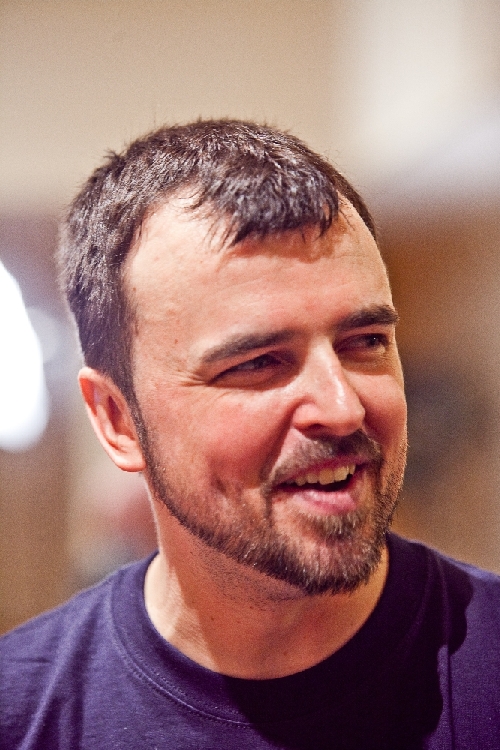
Scott StrattenOur presenter Scott Stratten, or @unmarketing as his more than 60,000 Twitter followers know him, is a leading expert in viral, social, and authentic marketing which he calls “un-marketing.” His recent Tweet-a-thon raised more than $16,000 for child hunger, in less than 12 hours. One of his viral marketing movies was chosen by the Chicago Bears as their biggest motivator toward their Super Bowl run a few years ago, while another made their client more than $5 million in seven days. Scott has recently appeared in The Wall Street Journal, Mashable.com, USA Today, CNN.com and Fast Company.

In true social media fashion, Scott and I did a 140-character interview on Twitter to preview his upcoming presentation.

@ssiewert: How do you define “un-marketing” and how is it different from marketing in the traditional sense?

@unmarketing: UnMarketing is building relationships with your marketplace so when they have a need to buy, they choose you without hesitation

@ssiewert: What is social currency?

@unmarketing: It’s what you invest into a social media platform. Your time, knowledge, emotion. The more you give, the more you get

@ssiewert: How can young pros/Gen Y apply their years of personal experience online to achieve business objectives?

@unmarketing: You have the advantage, since you’re already online. Be yourself, have an opinion but also be humble. You don’t know everything yet 🙂

@ssiewert: What’s your #1 piece of advice for successfully engaging with audiences online?

@unmarketing: Consistent conversation presence. Meaning, it needs to be habitual and engaging. Not just speaking sporadically.

@ssiewert: What new SM trend or tool are you most excited about?

@unmarketing: To be honest, we need to look at how to do “now” better, instead of what’s next. Stop looking at bright shiny objects (I do this too much)

@ssiewert: Your new book, UnMarketing, releases soon. What inspired you to write it and what can we expect to learn?

@unmarketing: Years of frustration with hypocritical marketers, marketing the way they hate to be marketed to. This is the opposite 🙂

Next Friday grab your lunch, invite some peers to share your phone line and join us for an engaging open discussion. This session is free for New Professionals Section members and PRSSA members. Register now.

Intro To Series… Healthcare PR by Heather Sliwinski

If I were a betting woman, I’d say my experience as a new professional in the healthcare industry is similar to other New Pros’ positions out there. The skills we use are generally the same—they are just applied in a different way.

The daily life of a New Pro is quite different than that of a student, or even an intern. The transition can be challenging. Working for a small, growing drug testing laboratory, I was given a great deal of responsibility early on that spanned all areas of communications. One minute I was designing our two quarterly newsletters and the next I was producing and hosting an educational video series for the Web. From day one, I was pushing past my limits and gaining responsibilities to which no company had ever entrusted me as an unpaid intern. I was dabbling in design, communications, event planning and management. If I had to sum up my biggest responsibilities into a brief job description, it would look something like this:

Design: I create and edit all promotional materials, including brochures, direct mailings and quarterly newsletters, for current and potential clients.

Exhibit coordination: I manage our attendance at over 30 conference exhibitions, working with conference sponsors and third-party vendors, as well as representing the company at a number of conferences myself.

Team leader: I coordinate larger marketing projects with third-party firms that have included the overhaul of our website, identity package and overall brand image.

Writing and editing: I write and edit copy for promotional materials, the website and our two quarterly newsletters.

What’s more important than a list of my duties, I think, is an overview of the skills expected from me on a daily basis:

Self-starter: The training wheels are off now. Gone are the days of endless small tasks at an internship or syllabi from professors. In my position, I am expected take a lead role and tackle projects before they are assigned to me, as well as bring new ideas to the table. Make suggestions, take risks, make mistakes and try again. A positive energy and willingness to participate and learn outweigh any ideas that don’t pan out.

Flexibility, multi-tasker: As I stated earlier, my position covers all areas of marketing and beyond. In the current economy, not only does a New Pro have to be flexible on what area of PR or advertising they want to work in, but they have to be willing to change direction at a moment’s notice. Companies want someone who can work well under pressure and don’t get frazzled when their typical routine (if you even have one) is disrupted. I don’t know how many times a week a printer will break down or a colleague needs a promotional piece by tomorrow, and I have to drop what I’m working on and tend to the urgent matter. It’s all part of the fun in PR.

Fast learner: To be honest, my undergrad self never would have guessed that I’d be working for a drug testing laboratory after graduation. I’ve never been that big of a science buff. USDTL didn’t expect me to know the ins and outs of the industry before they hired me, but they did expect me to be open-minded and capable at picking up knowledge quickly. Today, I am able to communicate to current and potential clients our wide range of services and the science behind them. Being a fast learner goes hand-in-hand with being a self-starter. When I come up with new projects for the marketing department, that often results in me diving head first into software I’ve never seen or a social media outlet I’ve never used. To achieve our goals in a timely fashion, I have to pick those up sooner rather than later. And, with the world of PR and technology changing at a rapid pace, there is always a new PR tactic with which to familiarize myself. I frequently attend workshops and seminars, including those provided by PRSA, to continue my professional education.

So, the only question left is, how does working in the healthcare industry differ from other areas of PR?

I can truly say that working in healthcare has been more rewarding than any other position I’ve held. What I do on a daily basis directly affects the health and lives of others. If selling just one more drug test aided in the treatment of one newborn, it’s all worthwhile, isn’t it? Healthcare may be tied with the unknown right now, but the uncertainty has opened up opportunities for great impact. Working for a lab may not be as glamorous as a “Mad Men” agency setting or working PR for an entertainment giant, but your clients and colleagues are passionate about what they do, and I consider that a privilege for any professional in the work force today.

Heather Sliwinski is the marketing communications manager at United States Drug Testing Laboratories, a forensic laboratory providing alcohol and drug testing services to hospitals, government agencies, social services and drug treatment programs. Before joining the USDTL team, Sliwinski graduated from University of Wisconsin-Madison in 2008 with a Bachelor of Arts in Journalism and Mass Communications and a Certificate in Business. She has held positions with a nonprofit, a Fortune 100 company, and her university. Sliwinski is a member of PRSA National and Chicago Chapter, as well as the New Professionals and Health Academy Sections. Feel free to connect with her at Sliwinski@uwalumni.com or find her on LinkedIn at http://www.linkedin.com/in/heathersliwinski

Intro to Series… Corporate Consumer PR by Kelly Misevich

In Corporate Consumer PR we may not work on client projects in the way PR agencies do, but we have no shortage of work to do for our customers, consumers, employees, stakeholders and other function areas within our organizations. A typical day can range from working on media relations, developing internal employee communications, fostering brand awareness through community events, issues management, and promoting corporate philanthropic programs.

As a corporate consumer PR professional, branding is key. We connect our brand with customers and consumers through strategic and creative media relations, community relations, and brand awareness programs. We also ensure that employees are engaged as brand ambassadors through the use of internal communications such as newsletters, intranet sites, and company-wide magazines. Teamwork, flexibility and enthusiasm for the brand you represent are extremely important in this industry.

Challenges in Corporate Consumer PR

Some of the challenges of the corporate consumer PR industry arise when dealing with the following areas:

  • Issues management: monitoring and researching political, economic and social environments for any potential threats to a brand
  • Crisis communications: developing clear messaging during an emergency, while ensuring timely delivery of information
  • Reputation management: ensuring trust, credibility and responsibility around a brand

Non-PR Activities to Consider

If you are considering a career in the corporate consumer sector of PR you might want to consider exploring some college courses that offer insight into other function areas within an organization, while giving you the opportunity to sharpen your communication skills. I’d recommend taking introductory courses in

  • business law
  • operations management
  • finance
  • human resources.

Kelly Misevich is a Public Affairs and Communications professional for the Midwest region of Coca-Cola Enterprises. Her four years of experience include internal communications, community relations, event planning, government relations, issues management and media relations. Kelly attended Georgia State University earning a B.B.A in Managerial Sciences.

new pros update…Gearing up for 2011 at the PRSA Leadership Rally by Sarah Siewert

The first weekend of June, more than 90 PRSA Section and Chapter leaders from across the country traveled to New York City for the 2010 PRSA Leadership Rally to learn how to best serve their members in 2011. As Chair-elect, I took my first trip to NYC to represent the New Professionals Section. Here are some of the highlights from the keynote speakers, as well as a look into what is coming for the New Pros Section:

You’re already doing it: What to do when you can’t not communicate presented by David Grossman, ABC, APR, Fellow PRSA; president & founder, The Grossman Group

  • Not communicating is communicating. Everything from what you wear, to what you do or don’t say is communicating.
  • People may be born with the natural skills to be a leader and a communicator, but they still need to be shown how to succeed and need to practice. If you’re not uncomfortable, you’re not practicing.
  • Many people assume most PR professionals are extroverts. However, extroverts tend to communicate a lot (high quantity) but what they are saying is not always high quality. Introverts communicate less (low quantity) but the quality of what they say is high.
  • The Great Eight Basics
    • Understand your audience
    • Make your messages clear, compelling and relevant (especially during times of change)
    • Plan your communication (only 10-15% of leaders do)
    • Set context and make information relevant (add value to the information by adding the “why”)
    • Listen and check for understanding
    • Select the right vehicle
    • Communicate with truth and integrity
    • Match words with actions
  • Don’t communicate with emotions. Instead, be purposely passionate focusing on what is possible rather than directing emotions at someone.
  • In negotiations, the person who talks the least usually wins. Don’t forget to listen.
  • Remember, nothing is neutral.

Putting the Public Back in Public Relations presented by Deirdre Breakenridge, president and executive director, communications, Mango!

  • PR is not dead; it is being reinvented by the social web.
  • Communication is about good conversations.
  • The C-suite is the consumer suite – consumers are taking control of communication.
  • The hybrid model is the new standard mixing traditional with social media.
  • Communication planning is more difficult now.
  • No one owns social media; it’s like e-mail or the web.
  • Social media is about sociology and how people interact within communities.
  • The new workflow process is:
    • Observe (learn the culture of the communities your audience lives in)
    • Listen (pay attention to conversations about your brand)
    • Identify (key communities based on frequency of said conversations)
    • Internalize (analyze the feedback you have gathered)
    • Route (channel the information internally to the appropriate group i.e. sales department or customer service)

What’s next for the New Pros Section and how can you get involved?

  • We are about to kick-off an effort to connect with local new pros groups across the country. We hope to create a national network of new pros groups to share ideas and resources. Are you a part of a local new pros group or hope to start one? E-mail Crystal at crystal.a.olig@gmail.com.
  • Guest blogging for this blog is open to all members. We are always looking for writers interested in being featured on this national platform. If you are interested in writing for the blog, e-mail Andi at andrea.wilmes@gmail.com or Brian at brian.camen@gmail.com.
  • Connect with other members on Twitter by using our Section hashtag #npprsa, or by adding your Twitter handle to the e-group discussion here.
  • We want to give members what they are looking for in professional development opportunities. Have a topic idea or know a great speaker? E-mail me at sarahsiewert@gmail.com.
  • Mentors are a great way to expand your network and gain a valuable perspective from a senior practitioner. We have a mentoring program in the works, so stay tuned!
  • Getting involved with the executive committee allows you to connect with new professionals across the country, and increase your credibility. Interested in helping out this year? E-mail Janet at janetqs@gmail.com for potential projects. Want to be on the Executive Board in 2011? E-mail me at sarahsiewert@gmail.com.

If you have any general suggestions or ideas please feel free to leave them in the comments. I look forward to serving the New Pros members in 2011!