Summer Book Club-July: Be Your Own Best Publicist Discussion

From the moment I read the title of the latest book club selection, “Be Your Own Best Publicist: How to Use PR Techniques to Get Noticed, Hired, and Rewarded at Work”, the human resources side of me was intrigued. Authors Jessica Kleiman and Meryl Weinsaft Cooper, offer a fresh perspective on marketing yourself by using basic PR skills to create and manage your professional reputation as you climb the corporate ladder.

Managing reputations of organizations is no different than managing our own reputation. You are representing yourself when you go into a job interview or pitch an idea, so why not put your PR experience and skills to work for you? Readjust your thinking, and view yourself as your client. How would you sell…you? The thought is a little scary, but Kleiman and Weinsaft share their tips and techniques to help you through the process. Below, I outline four of my personal takeaways from this book club selection:

Prepare Your Pitch

Spend some time thinking about your elevator pitch and perfect it. “Knowing how to communicate concisely and clearly will help you hook the interest of whomever you are pitching,” say Kleiman and Weinsaft. Concise is the key word—you want to be mindful of everyone’s time, especially someone who may hold the key to you future.

Craft Your Message

You’ve got their attention, now what? You landed an interview or that important meeting from your great pitch, so now it’s times to expand your message. Kleiman and Weinsaft say you should build out your pitch to a speech focusing on three key attributes or goals. As you create your message, keep in mind your target audience. Practice makes perfect–once you have finished creating your message, practice, practice, practice.

Build Your Network

With competition for job opportunities becoming tighter and tighter, sometimes knowing someone on the inside can help you get your foot in the door. As PR pros, we know the value of relationship building. Kleiman and Weinsaft stress, “the most important thing you can do is to build a rapport between yourself and those with whom you are looking to do business.” The title of Chapter Four says it all – It’s All About Who You Know (and Who Knows You). Build a network of trust by following-up periodically just to say hello. Avoid reaching out only when you need something.

Protect Your Personal Brand

Always put your best foot forward because you never know who is watching. You’ve worked hard to build your reputation so protect it. Kleiman and Weinsaft remind us that how we dress, how we speak and the people we choose to surround ourselves with can influence other’s perceptions of us. Social media makes it easy for us to share our personal thoughts online. Protect your online reputations by managing what you say and share online. “Before posting a comment, images or video, think like a publicist would about a client,” say Kleiman and Weinsaft. You should not only be monitoring what you say, you should also monitor what others are sharing about you as well. Again, think like a publicist, always be prepared for what could go wrong and have plan to correct what has gone wrong. 

I enjoyed reading this book, it satisfied my both the HR and PR side of me. There are many more PR tips and techniques Kleiman and Weinsaft share on self-promotion, including sections to create your own “Personal PR Action Plan”.

Let’s talk about the book…

  1. What will you do differently because of reading this book?
  2. Tell us some of your own personal tips on creating your personal brand.
  3. What are some of your favorite tips and techniques the author shared?
  4. Do you believe it’s important to integrate social media into your life? Why or Why not?
  5. What tools do you use to manage your online reputation?
  6. We all make mistakes—to err is to be human. Where have you tackled a crisis concerning your personal brand, and what did you learn from the experience?
Summer Book Club–July:Be Your Own Best Publicist

The PRSA New Pros Blog Summer Book Club continues with its selection for July—“Be Your Own Best Publicist: How to Use PR Techniques to Get Noticed, Hired, and Rewarded at Work” by Jessica Kleiman and Meryl Weinsaft Cooper.

As PR professionals (or PR hopefuls), we are used to promoting our companies or clients.  However, it is just as important to leverage our PR skills to cultivate our careers as well.  By creating a brand for ourselves, Kleiman and Cooper say we can develop our careers and create a professional image for successful advancement.  Their website summarizes topics covered in their book:

In one of the toughest job markets in more than 20 years, with the unemployment rate hovering around 10 percent, as well as dwindling job openings and promotion opportunities, standing out and making a good impression is more vital than ever.  This helpful, easy-to-follow guide shows anyone looking to land a new job, attract freelance assignments, stay essential in a current position or get that coveted promotion how they can use PR skills to achieve their goals.

Written by two seasoned public relations professionals, Jessica Kleiman and Meryl Weinsaft Cooper, Be Your Own Best Publicist: How To Use PR Techniques To Get Noticed, Get Hired & Get Rewarded At Work breaks down the fundamentals of PR and how they can be implemented to promote oneself.  Through humorous but informative anecdotes, tips and exercises, this book will arm people with the confidence, knowledge and tactics to help them market themselves in the workplace.

Grab your copy today!  Discussion for “Be Your Own Best Publicist” starts the first week of August.  Check with PRSA New Pros blog, like us on Facebook or follow us on Twitter to join in the conversation.

If you missed the June discussion, it is not too late to join in!  Share your thoughts on “UnMarketing” here.

New Pros: What topics are you hoping Kleiman and Cooper cover?  Are there specific questions you hope are answered?

Professional Development Webinar: “Managing Up: Positioning Yourself for Success with Your Supervisor” with Ken Jacobs

As a young professional, “managing up” is probably something we have all encountered in the workplace, either from our own experiences or from those around us. Working with your boss to ensure you meet, even exceed, his/her needs so that you can ultimately work your way up in the company is smart. However, where is the line between going above expectations and “brown-nosing?” While you may be familiar with both, this topic is not one on which you took a college class. In “Managing Up: Positioning Yourself for Success with Your Supervisor,” trainer and consultant Ken Jacobs will help us all get a better grip on:

·    What “managing up” is and isn’t

·    Nine tips on how to manage up more effectively

·    How managing up benefits you

·    How to make your boss the best boss for you

The webinar starts at 2 p.m. (EST) on Thursday, July 7. Interested in learning a little more about Ken Jacobs? Check out his website.

Are you on the fence about spending the money to join us? We have a solution! Chances are you have a few other young professionals in your workplace. This particular topic is something all fields of work can benefit from, so consider collaborating with them and splitting the $35 fee. It gives you a nice, educational break from the daily grind and a chance to spend some more time with the other young professionals in your office!

So, what are you waiting for? Register here!

Ken Jacobs is the principal of Jacobs Communications Consulting, which helps public relations firms grow and manage business; improve client service and enhance client relationships; as well as increase staff performance, motivation, loyalty and retention. Jacobs Communications Consulting does so via training, consulting and coaching. Prior to launching his firm, Jacobs held leadership positions at Lippe Taylor, Maloney & Fox, Marina Maher Communications, Ogilvy Adams & Rinehart and Ogilvy & Mather PR. He blogs at http://kensviews.com

The Dos and Don’ts of Building a Media Contact List by Noelle Pennyman

More than likely, you’ve dabbled in the art of building media contact lists. If you haven’t yet, this post will serve as a brief introduction because creating lists is a very common practice in public relations.

A media contact list is the foundation of any media relations campaign. For a campaign to be successful, your list must be targeted to the publications, staff and audience that will help your client or company achieve its goals.

The first step to creating a list is determining the audience of the initiative. Is it moms or foodies? Business professionals or frequent travelers? After you identify the audience, you can then target the most appropriate outlets, editors, reporters and producers.

Many industry experts will say you need to conduct extensive research such as reading every article by each media representative that you will be pitching. Although ideal, there may not be enough time to do that kind of thorough research. However, it is always important to make sure you’re selecting the appropriate people and fortunately, PR professionals have tools available to help this process.

Paid services such as Vocus, Cision and BurrellesLuce maintain media databases for communications professionals. You can also do your own research with Google and on each outlet’s websites. Fortunately, most publications, especially larger ones, typically maintain updated websites.

Below are some dos and don’ts to create an effective media contact list:

  • DO work with your company or client to determine a list of criteria in choosing the most appropriate contacts.
  • DO make sure your list is up to date. With a fluctuating industry, media contacts change positions, publications and coverage topics constantly.
  • DON’T have an overload of people from the same publications. There is no set number of contacts to have from each outlet (sometimes, this is determined by your company or superior). However, you don’t want to waste efforts by targeting six people at the same publication (especially if they’re sitting across from each other).
  • DO ask around. If you have colleagues who have pitched these publications in the past, ask them for any information as to the best people to target (if applicable), tips on how to pitch them or any new people.
  • DO create a detailed list. Include publication, contact’s first and last name, specification on the contact’s gender (for gender-neutral names), phone number, email address, position title and publication description.

Like with anything, the more lists you build, the more experienced you become. You will begin to learn which contacts and outlets are the best to target. At any experience level, remember that thoroughness, accuracy and effectiveness are key.

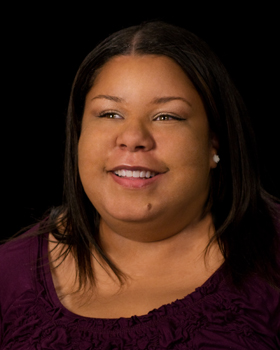
Noelle PennymanNoelle Pennyman
Public Relations Coordinator at thunder::tech

Noelle Pennyman is a public relations coordinator at thunder::tech, an integrated marketing agency located in MidTown Cleveland. As a public relations coordinator, Pennyman works with clients to develop communication strategies and tactics including brand messaging, media relations and social media. Prior to joining the team at thunder::tech, she served as the marketing assistant at Kent State University’s College of Communication and Information and account executive intern at the university’s student public relations agency, Flash Communications. Pennyman received a bachelor’s degree in public relations from Kent State University in 2009. She is an active member of the Greater Cleveland chapter of PRSA’s Young Pros group and serves as the membership co-chair of the PRSA New Professionals Executive Committee.

Intro to Military PR by Lt. Colonel Ann Peru Knabe, APR+M

Ann KnabeIt is hard to believe I have been in military public affairs – the military’s version of PR – for almost two decades. I joined the Air Force Reserve in college and along the way was commissioned as an officer. Just like in the 1990s, today’s public affairs field is very exciting.

What exactly do I do? Right now I am assigned as a Reservist to the Pentagon, serving in a public affairs role with the office of the Secretary of the Air Force – Public Affairs. My immediate role is to support the outreach, opinion and engagement division.

My primary job for the last couple of months has been working on media training for high-level defense and federal officials. I develop training scripts, play the role of reporter and help with scheduling (this is all in addition to my full-time teaching job in Wisconsin). My favorite part of this job is playing the role of a reporter live from a remote location in New York. The trainee cannot see me, so it can be quite challenging. We provide feedback, offer other scenarios and give the trainees a video of everything that occurred. The Air Force has a very comprehensive media training program at the Pentagon – it shares the same tech qualities and capabilities of regular TV.

But PA – as we call public affairs – is not limited to media training. For many years, I served as the director of public affairs at an Air Force wing. I was responsible for community relations (tours, special events, and outreach), internal communications (employee newsletters and related communications), media relations and congressional relations. As a part-time employee, I had a lot of fun and gained exceptional experience. We managed a variety of projects, ranging from military balls to Presidential visits.

More recently, I have been involved in the Reserve’s social media strategy and have supported special projects like Tour for the Troops. In the Tour for the Troops, I executed the social media plan for Air Force Reserve as we flew Kid Rock around to various concerts in the war zone. Now THAT was interesting!

It is also important to note that you do not have to wear the uniform or join the military to do public affairs. The different branches of service have hundreds of opportunities to work as a civilian in PA.  Of course, as a civilian, you are less likely to deploy to remote places.

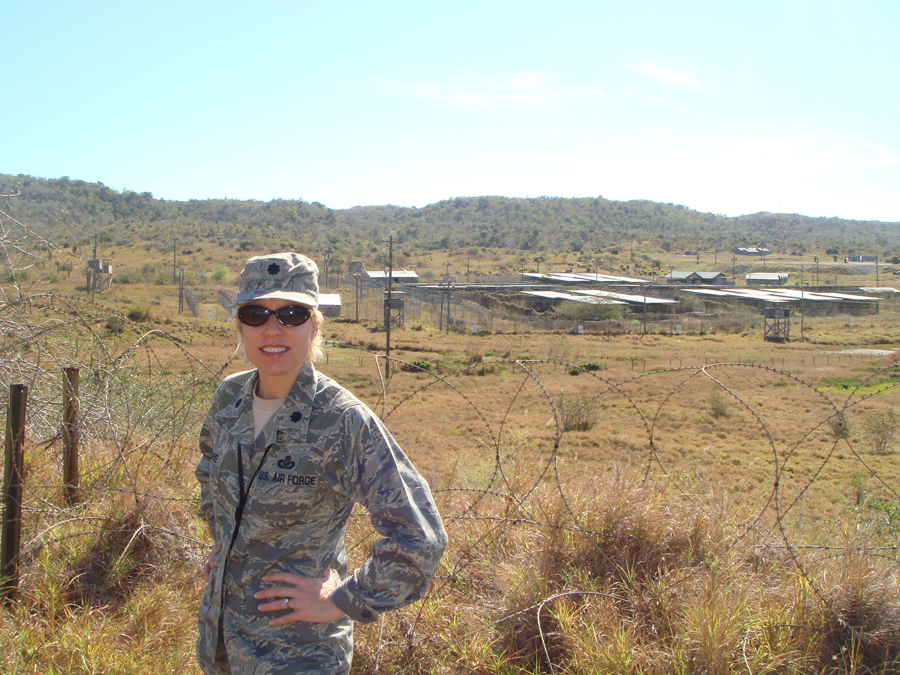
If I had to identify when my role really transformed, it would be 9/11. Ten years ago, my military job changed significantly, as did the “ops tempo” or rate we were supporting the active duty Air Force. Suddenly, we were helping activated Reservists, managing multiple media requests, honoring returning Airmen and Soldiers and executing other wartime activities in addition to our regular work. I was also activated – or deployed – three times in the last five years. I completed two tours in Southwest Asia, where we have a large base flying daily missions into Iraq, Afghanistan and Africa. I served as the Pentagon’s spokesperson for the Guantanamo Bay War Court in my most recent tour. Throughout these experiences, I have made the greatest friends of my life. After sacrificing and facing daily uncertainty with my brothers and sisters in arms, we cannot help but become closer because of the trust needed in a mission. I love this aspect of the military.

I love the Air Force, and cannot say enough positive things about my experience in the Reserve. I have worked in more than 20 different countries, met lifelong friends and mastered tough communication skills. The Reserve has also given me priceless education and extra income. There is room for more public affairs officers and civilians – the military can be a fabulous career.

It is not a piece of cake, though. On those days that seem especially hard or challenging, I always remember this quote: “If it was easy, everyone would do it.”

Ann KnabeLt. Colonel Ann Peru Knabe, APR+M, Air Force Reserve Public Affairs Officer

Knabe is a dynamic change-agent in public relations. She believes innovation and progressive thinking are keys to survival in today’s competitive global PR environment. Her 20+ years in military public affairs and international NATO settings leverage her civilian and educational experiences. Knabe is a “relationship-builder,” referring to her extensive work in media relations, internal communications, social media, community relations, international public affairs and congressional relations.