Back to PR School: Experts to Follow for Continuing Your Education

Career expert Peter Weddle advises job seekers to always work on their career fitness. We expect it of ourselves and so do our employers. Just because new professionals are no longer in school, doesn’t mean you can’t take some time this fall to go back to PR school and learn more about the burgeoning industry to which we belong.  

To be a successful public relations practitioner you need to know everything from social media, search engine optimization, reputation management, marketing and more. But how can you be all things to all people?

The Internet is a never-ending resource for newsletters and blogs to help you (and to help build Klout scores!). Many industry experts will place their presentations on Slideshare. The following are my favorite newsletters and experts to follow: 

  • Lee Odden (TopRank Online Marketing) – SEO is not just about finding the keywords that yield the most traffic. SEO is about using relevant content to attract your specific audience. Temper this in with social media and its rapidly changing venue and you need expert advice to stay ahead of the curve and to keep impressing the boss. TopRank Online Marketing produces an e-newsletter chock full of guidance and success stories written by Odden. When your employer asks you to write web content or an SEO-optimized press release, Odden is the man you want to follow on Twitter. Subscribe to TopRank’s e-newsletter, and your knowledge will soar.
  • Deirdre Breakenridge – If you haven’t been asked already, it’s only a matter of time before your employer expects you to write a social media plan. You will need to know how to set goals and use the best tactics (measurable ones) to best help you meet those goals. Following Breakenridge on Twitter and seeing what she’s pinning on Pinterest is a great start. When you are on a job interview, you want to show your potential boss you can hit the ground running. You may even consider doing a mini social media plan for the interview. You will stand above the crowd.
  • Peter Weddle and Weddle’s E-newsletter – To survive in the workforce today, being qualified is not enough. You need to be what Weddle calls a “career activist”. A recruiter, HR consultant and business CEO turned author and commentator, weddle knows what it takes to keep growing in the field. His favorite term is “work strong”. Subscribe to his e-newsletter and you’ll not only learn as a job seeker, you’ll gain knowledge from an employer perspective as well. One of his many books, Recognizing Richard Rabbit will change how you think about your current and future career.
  • Recruiting Trends – My dear friend and expert recruiter Sandy Charet of Charet & Associates always mentions the very difficult job recruiters have. They not only have to review resumes sent their way, but also need to constantly comb through LinkedIn to find the best “passive job seekers”. They are completely overworked and need to process a voluminous number of job orders within superhuman deadlines. A recent study showed that recruiters decide within six seconds whether a resume winds up in the “yes” or “no” pile. Therefore, it’s key to understand where recruiters are coming from. If you understand the pressure they are under, it will change how you approach them when following up after they have sent you on a job interview.
  • FINS Newsletter – While the advice may not be tailored directly to public relations, there’s a multitude of career and resume advice on this Dow Jones career and employment website. Their topics have universal appeal regardless of your career specialty. It is one of the best places to read about writing your career story, the 25 toughest companies for interviews and facing feedback from your employer.
  • Mashable – If you are just beginning in your career, you want to know who the heavy hitters are in making news and headlines. Mashable not only covers major technology trendsetters, it will help you show potential employers that you’re fully up-to-date understanding the challenges in the business world.

While the list of resources is always growing, consider following these experts:

  • Eric Schwartzman – With Schwartzman, you learn about social media from A to Z. His knowledge will take you from the beginning of setting up your Twitter account to blogging and expertly tagging your digital content.
  • Dawn Edmiston – Recruiters not only want to know about your resume – they will research your professional online presence. Dawn is an expert resource. The most critical resource you have is your own branding. Dawn will help you take ownership of this.
  • Sandy Charet – We all know how important LinkedIn is to recruiters. You want to present the most professional and complete profile possible. Charet knows all the ins and outs of working with LinkedIn. 
  • Brian Solis – His conversation prism will graphically show you all the facets to social media. When setting up a social media plan, you need to know which tactics will work the best. However, how many of us really know all the forms of social media out there? Solis gives the best starting point by displaying all or at least most of the available forms.
  • Andrea Nierenberg –Networking is key to your career survival, but how do you approach someone? What do you do if you’re an introvert? How do I really use the “give to get” principle? Nierenberg’s thoughts and insights will help you network with results.

We also hope that you will read the 70+ articles on PRSA Jobcenter. Having a full range of job advice and resources will ensure a very long and very happy career.


Richard Spector is the manager of client services at PRSA.
Self-Branding: Creating Your Professional Identity

Defining yourself as a public relations professional will be one of the most important tasks you will begin while starting your career. As we’ve evolved into the age of digital and social media, these networks have forced enabled individuals to create their own personal brands by creating the opportunity for us to share specific content to audiences that ultimately shape who we are, or striving to be.

With so many social networks, it may be difficult to decide which networks to use and if you should have a separate identity on each one. The best rule of thumb is to be consistent. Don’t be conservative on Facebook and rowdy on Twitter. Ask yourself, are you a Beyonce or Rihanna when it comes to social media expression? Personally, I share random thoughts and happenings via Twitter, yet I am always posting about business, news, PR and other professional, mature interests that let my followers remember what I am truly about.

Here are 7 things PR Pros should consider when branding themselves:

  • Connect LinkedIN to Facebook or Twitter. Let people see that you are a professional with an opinion and expertise in your said field of study or work. This helps build a rapport with your personal friends who may not have previously been aware of your business savvy.
  • Remove all undergrad party pictures or set them to private. What happens in college stays in college (so it should). Keep it classy with the pictures you have uploaded and the ones you share. Once something is on Facebook online, it’s there forever.
  • Take a professional headshot for your LinkedIN page. Potential employers, colleagues and networking connections will take you more seriously when your picture is formal.
  • Not sure what you want your “brand” to say? Think of 5 of your best qualities or skills and use them as foundations for content and engagement. Build from your original skill set as you gain more experience.
  • Work in your field! This should be a no brainer; however you can’t be an entertainment PR guru if you don’t have any experience with record labels, management teams, venues, artists or music in general. If you’re looking for a career in any area, start with an internship, get a mentor in that area, start making mock news releases to build your writing skills and dive in.
  • Have strong, meaningful business card. Sure you can send someone your contact file on your iPhone or Blackberry, but business cards are still imperative. Enlist a graphic designer to design a custom card with your contact info, social media links and professional headline.
  • Dress for the job you want to have in the future. Invest in a nice suit, shoe(s) and accessories. Always have this on-hand for impromptu appearances at business events.

Talk back:

  1. What are some other things new PR pros can do to build a solid brand?
  2. How have you used the digital atmosphere to build your professional identity?

Zaneta Chuniq Inpower is owner and president of Chuniq PR, an independent media and marketing management firm. Additionally, she is the digital communications coordinator for Douglas J Aveda Institutes and Salons, editor  for Supreme Design Publishing and social media manager for COIN Handlers Management. Her personal interests include reading, international travel and culture and community revitalization. Inpower received her B.A. in advertising from Michigan State University. Zaneta Chuniq Inpower is a member of the Central Michigan PRSA chapter and is the PRSA New Professionals Section Executive Committee Blog Co-Chair.


Professional Devleopment Brown Bag: “What PR Bosses Wish Their New PR Pros Would Do But Won’t Tell Them” with Michael Smart

All of us have different relationships with our bosses. Many new professionals hear from their bosses more than they’d like, while others may not hear from them enough. Some can walk into their boss’s office anytime to ask a question, while others need to get on their schedule and prepare a little bit to speak with their boss. Regardless of where your relationship with your boss falls, one thing is true – your boss is not telling you everything he/she appreciates or wishes you wouldn’t do at work.

Our next New Professionals Section Brown Bag features someone who has not only worked with countless PR executives, but has also mentored several successful young pros (who have gone on to Edelman, Waggener Edstrom, Fleishman-Hilliard and Harvard Business School). In working with these PR executives, Michael Smart has often heard them rant and rave about their young employees. Now he’s here to share it with us – the good and the bad – in our upcoming Brown Bag, “What PR Bosses Wish Their New PR Pros Would Do But Won’t Tell Them.”

Don’t miss it! Join us Monday, June 11 from 1:00-2:00 p.m. EDT. Register here.

Michael SmartMichael Smart teaches PR professionals a smarter way to get PR results. He’s regularly the highest-rated speaker at the industry’s largest conferences, including the PRSA International Conference last year. He has trained more than 4,000 communicators from Frankfurt to Bangkok how to land top-tier media coverage. Smart also coaches communications execs at companies ranging from Fortune 200 firms, such as Aflac and GlaxoSmithKline, to mid-sized companies and PR agencies. Follow him on Twitter.

The Brown Bag is only available to New Professional Section members.

The Real PR: Establishing a Positive Reputation by Zaneta Chuniq Inpower

Possibly more than in any other field, establishing a positive reputation is especially true in public relations. Everyday PR practitioners are working with clients, media, vendors, service providers or other PR pros as they work to get their job done. With the responsibility of working with so many people, personalities and work ethics, the pressure is on for PR folks to be “people-pleasers” and sometimes that task can seem impossible. As daunting it may appear, it is imperative that all PR practitioners ensure that a positive reputation is maintained or risk tarnishing their credibility as a professional, ruining their brand’s image or possibly even losing their job.

The field of public relations is evolving daily. As mentioned in the new PRSA definition for public relations, “Public relations are a strategic communication process that builds mutually beneficial relationships between organizations and their publics.” Therefore, the execution of the definition of public relations encourages PR pros to become thoughtful in behavior and in word to create a firm foundation for relationships to grow upon.

Here are traits that every PR practitioner should possess to build and maintain a positive reputation:

Credibility.

PR pros work closely with the media to garner interest in their client’s brand or product. In working with the media, it is important that relationships built with the media are based upon fact and never fluff. The more a journalist can observe your authenticity and find legitimacy in your story, the more likely a PR pro is able to leverage those connections and build confidence with their media contacts.

Reliability.

Clients want to work with PR pros who are reliable, who stick to their word and is available when news happens. Whether a client has breaking news or a crisis, clients should be able to rely on their  PR pro to help get their targeted message to the public. This means that you should be accessible by phone, email or in person for your clientele. Do not go missing in action, avoiding or ignoring your clients. This is a swift way to watch your reputation sink.

Accountability.

Its easier for people to stake claim over accomplishments than mistakes. However, as a professional it is essential that accountability is taken for wins and for losses. Did you tweet incorrect client information? Did you misinform a journalist on client news? For any situation, PR pros must be willing to stand up to be applauded and humble when errors arise.

Honesty.

Honesty is always the best policy.

Teachable.

Through mentoring, “reverse mentoring” and a dedication to furthering your professional skills, remain teachable and keep learning. Consider APR certification or graduate school to advance your skills. Brush up on your social media knowledge. Attend PR conferences and participate in webinars. With more knowledge about your field and by learning new skills, your reputation as a PR pro will increase as clients and colleagues observe your professional growth.

Maturity

Often overlooked, maturity is a very critical trait PR pros require to handle the ups and downs and PR work. A level-headed PR pro can objectively assess situations and remain in charge without being guided by emotions and risk making poor work decisions. As I work in the field of entertainment PR, maturity is required for interacting with everyone from  not-so-organized venue owners to passionate artists and even pushy management teams. Maturity develops with experience and is nurtured by understanding yourself and others while remaining accountable and responsible for your work.


An African proverb says, “Bad news travels around the world before good news puts it shoes on.” Don’t let a bad reputation precede your true talent and skills. Building relationships with clients, organizations and publics start with a favorable, positive referral. A good name is better than gold!


Zaneta Chuniq Inpower is owner and president of Chuniq PR, an independent media and marketing management firm. Additionally, she is the digital communications coordinator for Douglas J Aveda Institutes and Salons, editor  for Supreme Design Publishing and social media manager for COIN Handlers Management. Her personal interests include reading, international travel and culture and community revitalization. Inpower received her B.A. in advertising from Michigan State University. Zaneta Chuniq Inpower is a member of the Central Michigan PRSA chapter and is the PRSA New Professionals Section Executive Committee Blog Co-Chair.

Three Reasons to Get a Graduate Degree in PR

When I entered the field of public relations at the ripe old age of 22, I felt like a latecomer. I had just moved to Washington, D.C., for an internship in PR at a theater (as I thought I wanted to work at a theater, but did not know in what capacity) and quickly realized how exciting and creative PR could be. With no formal PR-focused education, I decided to take an introduction to PR class in a strategic public relations graduate program at The George Washington University, which turned out to be a great career decision.

PR is a field that doesn’t require post-graduate degrees, and professionals in the field have a variety of undergraduate majors and minors. A lot of schools do have PR undergraduate degrees, such as the Newhouse School at Syracuse, as well as PRSSA chapters. Many people, though, come to PR with a strong background in writing, speaking or community outreach and may be looking for more formalized training, which was exactly what I needed. Benefits from obtaining a master’s degree include:

Learning from classmates

Much of the knowledge I gained from attaining my master’s degree in PR came from speaking with my fellow classmates. In my introduction to PR class, filled mostly with part-time students with full-time jobs, I met people working as press secretaries for senators, account executives at PR firms, graduate interns in formal government postings, sole PR practitioners at non-profits and in a host of other positions. The class also included some less experienced people such as myself, but class conversations were more often carried by people with experience, and it was interesting to hear their thoughts. Though my classmates’ collective experience intimidated me, I appreciated being able to learn from the stories and ideas they shared.

Connecting to internship and networking opportunities

Experience is key in PR. Internships can help a new professional determine what kind of place at which he or she would like to work. (Agency? Non-profit? Government?) They can help a new pro get his or her foot in the door. Networking is also a good way to gain knowledge about the PR field in a specific area and meet people who can connect you to a job. Combining networking and the experience of obtaining a graduate degree is sure way to achieve success, and, in fact, networking and getting experience can be much easier to do through enrolling in a graduate program. Many companies may require internship candidates to be enrolled in a graduate program, such as government Student Career Experience Programs (SCEP), and university career centers often help connect students to internships or full-time positions. Graduate programs or university career centers often host helpful networking events as well, free to students. Take advantage of these if you enroll in a program.

Getting an edge on your resume

Toward the end of my graduate program, I began to look for a full-time PR position through the career center at which I worked. I found a position that required applicants to have either a certain number of years of experience (which I didn’t have) OR less years of experience and a master’s degree. Since I would had the degree, I was qualified…and got the job! In other situations, when your resume may look nearly the same as another candidate’s, but you have a master’s and the other candidate does not, you’ll come out on top.

The decision to get a master’s is a big one to make. Aside from assessing whether it will help you improve your job prospects, you’ll have to consider the cost–what program to choose (PR, communications, perhaps even an MBA), which schools to apply to, whether to go full-time or part-time and if you’ll be able to handle the work load. Try applying for a job at the school you decide to go to. After I started working full-time at GWU, my tuition costs were almost completely covered by the school. Whatever you end up deciding to do, make sure it’s something that will add to your career, that you’ll be learning new information that you didn’t know before and that you’ll enjoy the program. If you apply and get in, make sure to go out and have fun with your classmates—they’ll be your future colleagues!

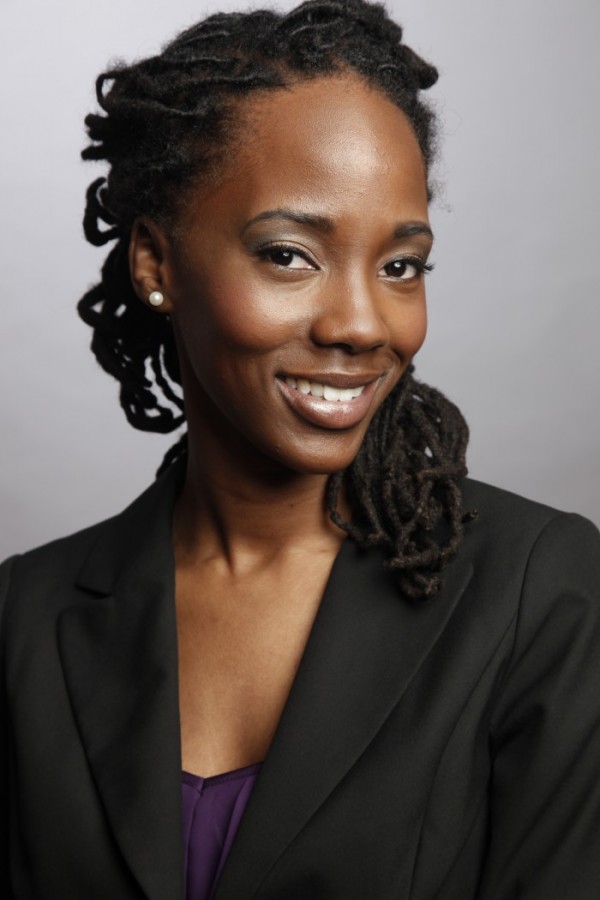
Whitney GrayWhitney E. Gray, communications coordinator for CropLife America, an international trade association of agrobusiness companies. Hailing from the snowy state of New Hampshire, Gray has been working in Washington, D.C., since 2008. She graduated with a Bachelor of Arts in theater arts and American studies from Brandeis University and has a master’s degree in strategic public relations from The George Washington University Graduate School of Political Management. Gray once served as the PRSA New Professionals Section membership co-chair.