
FREE Event! Going Pro: Taking Your Social Media Skills to the Business Setting

As new PR pros we are familiar and comfortable with using social media tools. But we also understand that it’s not all about knowing how to post a Facebook or Twitter update. How can we reach audiences in a way that delivers results, and proves the business value of social media? What’s the best way to authentically engage with customers, clients and key influencers?

During our free brown bag teleseminar next Friday, Sept. 10 at noon EST, we will explore how to effectively leverage our fluency in social media into online business communications.
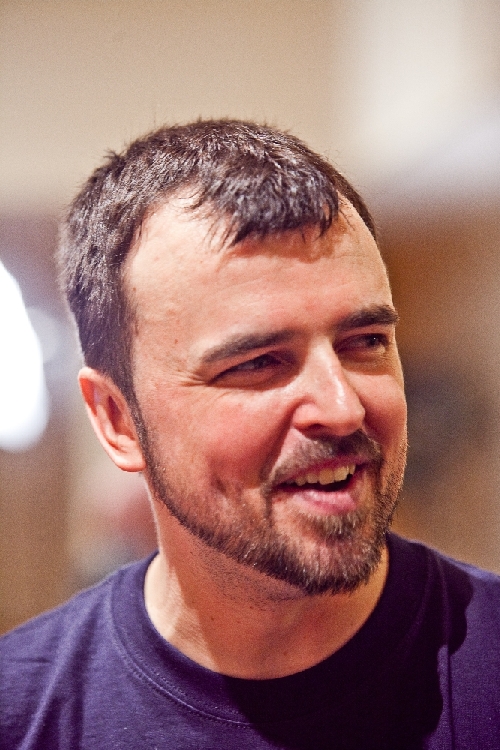
Scott StrattenOur presenter Scott Stratten, or @unmarketing as his more than 60,000 Twitter followers know him, is a leading expert in viral, social, and authentic marketing which he calls “un-marketing.” His recent Tweet-a-thon raised more than $16,000 for child hunger, in less than 12 hours. One of his viral marketing movies was chosen by the Chicago Bears as their biggest motivator toward their Super Bowl run a few years ago, while another made their client more than $5 million in seven days. Scott has recently appeared in The Wall Street Journal, Mashable.com, USA Today, CNN.com and Fast Company.

In true social media fashion, Scott and I did a 140-character interview on Twitter to preview his upcoming presentation.

@ssiewert: How do you define “un-marketing” and how is it different from marketing in the traditional sense?

@unmarketing: UnMarketing is building relationships with your marketplace so when they have a need to buy, they choose you without hesitation

@ssiewert: What is social currency?

@unmarketing: It’s what you invest into a social media platform. Your time, knowledge, emotion. The more you give, the more you get

@ssiewert: How can young pros/Gen Y apply their years of personal experience online to achieve business objectives?

@unmarketing: You have the advantage, since you’re already online. Be yourself, have an opinion but also be humble. You don’t know everything yet 🙂

@ssiewert: What’s your #1 piece of advice for successfully engaging with audiences online?

@unmarketing: Consistent conversation presence. Meaning, it needs to be habitual and engaging. Not just speaking sporadically.

@ssiewert: What new SM trend or tool are you most excited about?

@unmarketing: To be honest, we need to look at how to do “now” better, instead of what’s next. Stop looking at bright shiny objects (I do this too much)

@ssiewert: Your new book, UnMarketing, releases soon. What inspired you to write it and what can we expect to learn?

@unmarketing: Years of frustration with hypocritical marketers, marketing the way they hate to be marketed to. This is the opposite 🙂

Next Friday grab your lunch, invite some peers to share your phone line and join us for an engaging open discussion. This session is free for New Professionals Section members and PRSSA members. Register now.

Intro To Series… Travel & Tourism PR by Kay Maghan

Public relations professionals in the travel and tourism industry can generally best describe what we do in four words…..“Never a dull moment.”

Opportunities in our world exist in a variety of “client” forms – hotels, resorts, attractions (think zoos, theme parks, water parks, museums, state/national parks, campgrounds, restaurants, etc.), airlines, cruise lines, spas, golf courses, public relations and advertising agencies, convention and visitors bureaus, state tourism offices…the list really is almost endless.  Our industry is everywhere – literally.  Every state in this nation has a tourism office, and most every community in those states wants to attract visitors.  The travel and tourism industry is one of the largest employers in the United States – 7.4 million Americans work in this industry.  Opportunities are not limited just to our country; tourism is an aspect of the economic makeup of just about every country in the world.

One of the things that makes travel and tourism public relations so rewarding is that no two days are ever the same – really.  You could be part of a public relations team or you could be the sole public relations person doing it all.  So if you like variety, changing scenarios and keeping on your toes, then welcome to our world!

From my experience, many public relations professionals in our industry really are masters of doing it all – writing/editing press releases, researching media, writing newsletters, pitching story ideas, responding to media inquiries, arranging media visits and/or events, working with film crews, and – most importantly – justifying our role to our company or client through measuring return on investment (ROI).  In our current economy, when we have seen public relations and marketing staffs being downsized, the public relations professional is juggling even more hats, including that of photographer and social media guru.  As an example of this expansion into “other” job duties, programming at the recent PRSA Travel & Tourism Section Conference (May 25 – 28, 2010) was heavily concentrated on social media and included a pre-conference “Boot Camp” on “doing it yourself” photography and video.

What came across loud and clear at this conference from both media speakers and industry peers is that the field of public relations is rapidly changing, just as the field of journalism is changing.  More journalists and PR professionals find themselves having to do more with less, and both groups see the fluid landscape of social media as one of the biggest areas about which they need to be solidly educated.  In addition, the growth of bloggers has expanded the audience that travel and tourism public relations professionals must target, and “citizen journalists” armed with cell phones that capture photos and video have thrown a big curve ball into crisis management plans.  But another message that came through at the conference is that personal relationships with the media (bloggers included) are just as important to the core of public relations as ever.

Students studying public relations would be well served to take classes in marketing and advertising, if such classes are not already built into their existing curriculum. Of special importance is a strong knowledge – either through academic courses or hands-on experience – of social media, both current and emerging.  FYI Fact: Be careful what you post about yourself; hiring managers use Google Search as a tool when researching job candidates. As always, being able to show on-the-job experience via internships is very important because it shows me, as the person hiring, that you have initiative and practical experience.  Remember, unpaid internships are just as good as paid on a résumé because experience is experience regardless of funding.

If you are currently studying public relations or are a new graduate on the job search, one of the best ways to decide if travel and tourism – or any other industry – is right for you is to schedule informational meetings with professionals in your area.  See if they would allow you to shadow them for a few hours; talk with them in-depth about what they do, what they like best about the industry, what classes or skills they look for when they are hiring, and so on. These meetings also help you build a professional network. FYI Fact: Treat such meetings as an interview (i.e. dress professionally) and be sure to send a written thank you email or card as a follow up.  If you do such small, but important things for us, we know you will do them for media if we hire you.

Kay Maghan has 17 years of experience in PR. She  currently serves as Secretary of PRSA’s Travel & Tourism Section.

new pros update…Gearing up for 2011 at the PRSA Leadership Rally by Sarah Siewert

The first weekend of June, more than 90 PRSA Section and Chapter leaders from across the country traveled to New York City for the 2010 PRSA Leadership Rally to learn how to best serve their members in 2011. As Chair-elect, I took my first trip to NYC to represent the New Professionals Section. Here are some of the highlights from the keynote speakers, as well as a look into what is coming for the New Pros Section:

You’re already doing it: What to do when you can’t not communicate presented by David Grossman, ABC, APR, Fellow PRSA; president & founder, The Grossman Group

  • Not communicating is communicating. Everything from what you wear, to what you do or don’t say is communicating.
  • People may be born with the natural skills to be a leader and a communicator, but they still need to be shown how to succeed and need to practice. If you’re not uncomfortable, you’re not practicing.
  • Many people assume most PR professionals are extroverts. However, extroverts tend to communicate a lot (high quantity) but what they are saying is not always high quality. Introverts communicate less (low quantity) but the quality of what they say is high.
  • The Great Eight Basics
    • Understand your audience
    • Make your messages clear, compelling and relevant (especially during times of change)
    • Plan your communication (only 10-15% of leaders do)
    • Set context and make information relevant (add value to the information by adding the “why”)
    • Listen and check for understanding
    • Select the right vehicle
    • Communicate with truth and integrity
    • Match words with actions
  • Don’t communicate with emotions. Instead, be purposely passionate focusing on what is possible rather than directing emotions at someone.
  • In negotiations, the person who talks the least usually wins. Don’t forget to listen.
  • Remember, nothing is neutral.

Putting the Public Back in Public Relations presented by Deirdre Breakenridge, president and executive director, communications, Mango!

  • PR is not dead; it is being reinvented by the social web.
  • Communication is about good conversations.
  • The C-suite is the consumer suite – consumers are taking control of communication.
  • The hybrid model is the new standard mixing traditional with social media.
  • Communication planning is more difficult now.
  • No one owns social media; it’s like e-mail or the web.
  • Social media is about sociology and how people interact within communities.
  • The new workflow process is:
    • Observe (learn the culture of the communities your audience lives in)
    • Listen (pay attention to conversations about your brand)
    • Identify (key communities based on frequency of said conversations)
    • Internalize (analyze the feedback you have gathered)
    • Route (channel the information internally to the appropriate group i.e. sales department or customer service)

What’s next for the New Pros Section and how can you get involved?

  • We are about to kick-off an effort to connect with local new pros groups across the country. We hope to create a national network of new pros groups to share ideas and resources. Are you a part of a local new pros group or hope to start one? E-mail Crystal at crystal.a.olig@gmail.com.
  • Guest blogging for this blog is open to all members. We are always looking for writers interested in being featured on this national platform. If you are interested in writing for the blog, e-mail Andi at andrea.wilmes@gmail.com or Brian at brian.camen@gmail.com.
  • Connect with other members on Twitter by using our Section hashtag #npprsa, or by adding your Twitter handle to the e-group discussion here.
  • We want to give members what they are looking for in professional development opportunities. Have a topic idea or know a great speaker? E-mail me at sarahsiewert@gmail.com.
  • Mentors are a great way to expand your network and gain a valuable perspective from a senior practitioner. We have a mentoring program in the works, so stay tuned!
  • Getting involved with the executive committee allows you to connect with new professionals across the country, and increase your credibility. Interested in helping out this year? E-mail Janet at janetqs@gmail.com for potential projects. Want to be on the Executive Board in 2011? E-mail me at sarahsiewert@gmail.com.

If you have any general suggestions or ideas please feel free to leave them in the comments. I look forward to serving the New Pros members in 2011!

New Pros Summer Book Club – Social Pollination

Welcome to the first installation of PRSA’s New Pros Summer Book Club. Over the next three months we’ll be discussing and reviewing books that will help you succeed as a pr new professional.

The New Pros recently had an opportunity to interview Monica O’Brien, the author of “Social Pollination” about digital media and how her book can help you. Read our interview with O’Brien, and check back next week for our review of her book.

New Pros (NP):Tell us a little about yourself. Where did your passion for digital media come from?

Monica O’Brien (MO): I spent about 5 years, starting my senior year of college, trying to figure out what I wanted to do with my life. In search of “the answer,” I learned an extremely valuable lesson: Every single person has a skill set that is valuable. I don’t mean this in the Kumbaya way, like we should appreciate all of God’s children. I mean that everyone has a skill set of things they enjoy doing­—a skill set that people are willing to pay for.

So why isn’t everyone doing a job they love then? One word: Marketing! People don’t know how to package and distribute their skill set into a product or service that people are willing to pay for. Even when they get past that step, they then don’t know how to find their target customers effectively and affordably. My book helps people and companies do this using digital media.

NP: Your book helps businesses leverage their social media presence, how can your advice be translated to personal social media use?

MO: Every person is selling something. You may be trading your time and skill set to a company for monetary value as an employee, but you are still selling. Consider yourself a small business of one to take advantage of the information in the book.

NP: You write about the psychology of online sharing. More specifically you talk about whether information is important enough to share. Gen Y’ers often over share. What advice would you give to Gen Y’ers so this doesn’t happen?

MO: Two things:

  • Despite privacy settings solutions online, you should always be careful with what you say. Very obvious, but for some reason people don’t get it! So do a quick check: write a list of topics you wouldn’t want your boss or your grandma to hear you talk about. Do you share this information online anyway, even behind privacy settings?
  • Look around you and see what pointless stuff other people are sharing. Do you care if someone is at the airport three states over, heading to another airport 12 states over? Probably not. Do you care what people ate for lunch? Only if they provide a yummy picture and a recipe. Watch others to know when you annoy people. And accept that no matter what you do, you will annoy someone anyway.

NP: Do you have any advice for new professionals who are looking to break into digital media?

MP: Sure! Before getting on Twitter or even starting a blog, you should learn the logistics of how to inspire people in your every day life. You should also learn how a movement is started, because that’s what you are trying to do online. I have links to two TED videos to watch: Simon Sinek on How Great Leaders Inspire and Derek Sivers on How to Start a Movement. Once you are done watching these, you can learn the technical logistics of breaking into digital media from my book.

Special thank you goes to O’Brien for taking the time to chat with PRSA. You can purchase “Social Pollination” on Amazon.com or Barnes & Noble. Check back next week for our review of her book, but in the mean time here are a few discussion questions to get you thinking.  Feel free to post your responses in the comment section.

1)   What social tools are you currently using to promote yourself online?

2)   In your opinion, what do you consider to be too much sharing online?

3) O’Brien says before you get started online, you should learn the logistics of how to inspire. How do you inspire people in your life?

Intro to Series… Agency PR by Adrienne Bailey

As you can imagine, agency life is exceptionally eventful, fast paced, and extremely rewarding.  Unlike other areas of public relations, you are constantly working with numerous clients in a wide array of industries. A typical work week can vary depending on deadline, events, client projects, and journalists’ needs—no two weeks are ever the same. Often, you may be working on several accounts at a time; each requiring just as much attention as the others. Being able to effectively allocate enough time to each account is essential to meeting client’s needs and exceeding expectations.

Due to the fast paced atmosphere, it is imperative to think quickly on your feet. The flair to provide swift and meticulous responses and work at the drop of a hat comes from a true understanding of the evolving industry and your client’s business. As agency people, we are constantly researching, keeping with the news and latest trends, and bringing new, unique ideas to the table. The work environment is extremely conducive to learning and collaboration—and while there may be a laid back feel, people are constantly working hard to stay ahead of the game.

What kinds of things would you expect to do working for a PR agency?

While general tasks may vary based on the client, agency work in PR does involve a great deal of pitching, writing, planning, creating, and collaboration! Agency pros are regularly educating the media and the public on a wide variety of topics by effectively sharing stories in a compelling manner. My work involves consistently developing newsworthy and unique angles to pitch to the media, educating clients on social media and Web 2.0, landing placements in targeted platforms to ensure the message is reaching the right people, and much more. Taking the time to do thorough research and personalize your correspondences with editors and journalists is vital to developing great relationships. In my experience, I have come to recognize and develop several skills needed for success in an agency: persistency, organization, urgency, commitment and the ability to multi-task are just a few.

What kinds of challenges could you face working for a PR agency?

Regardless of your industry, challenges are something we face each and every day. A few challenges in the agency work include:

  • Keeping up with not only the public relations industry, but the industries of our clients
  • Work and life balance is a bit tricky- especially with the amount of professional development needed at any level
  • Pressure to bring cutting-edge ideas to our clients on a consistent basis
  • Staying atop the evolution of technology and ensuring integration when necessary
  • Being able to deliver metrics and accurate measurement of our efforts
  • Helping clients and potential new business prospects understand our industry’s work and value
  • Multi-tasking between current accounts and potential new business

What kinds of courses would be beneficial to someone working for a PR agency?

Outside of the general courses in PR and Journalism, courses in

  • marketing,
  • business,
  • economy
  • public speaking
  • various cultures and second languages


Adrienne Bailey, Account Executive at Y&L PR- a division of Young and Laramore, 2009 Butler University graduate.