Changing Jobs: Life On The Competitive Horse Show Circuit and My Need For Normalcy

Shortly after graduating from college with a degree in public relations, I was at the beach with my parents and revealed to them I wasn’t sure if I actually wanted to pursue a career that related to my degree. Thanks to a less than enlightening experience meeting with a PR executive and an internship that made me intimately familiar with the walls of my cubicle and not much else, I became a bit disenchanted with the field. So while I figured out what to do, I went back to work in my home away from home – the barn.

FTI Consulting Winter Equestrian Festival

“My office view for four months each year. Ringside at the FTI Consulting Winter Equestrian Festival.” Photo by Laura Cardon.

I’d ridden horses since childhood and had worked in the barn at least part-time since obtaining my first work permit in high school. Horses have been my passion and a huge part of my life, so when I was looking for work again a few months later, I thought, “Maybe I’ll reconsider working in PR.” A company I had followed closely for years posted on their Facebook page that they were looking for an intern for one of the most prestigious equestrian competitions in the world – The FTI Consulting Winter Equestrian Festival.

I still vividly remember reading the email that asked me to pack my bags and leave for Florida. I couldn’t have been more thrilled; the internship seemed like the perfect opportunity for me to continue working in an industry I loved, and I dove in head first. In a matter of days, I was headed south for the winter.

My internship turned into a part-time job, which turned into a full-time job that allowed me to meet some of the sport’s greatest athletes and work behind the scenes of the country’s most renowned competitions. My incredibly generous boss recommended me to her network of well-known equestrian journalist colleagues, and within a year of starting with her, my articles were published in multiple magazines. I even got the opportunity to be a freelance writer for the most prominent and respected publication in the industry.

I learned and experienced more than I could ever put into words during the last 18 months, but for all the incredible opportunities I was afforded, there was something eating at me. A need for normalcy. This job, on the outside, was very glamorous, but once you look closer, it also requires substantial sacrifice.

The horse show circuit follows good weather, and I spent my time traveling up and down the East Coast to various venues. I spent nearly four months of my year in Wellington, a small town in Florida that revolves around a horse show, far away from my friends and family. When I wasn’t in Florida, I was traveling elsewhere for a week or a month at a time.

I had just moved to Denver, and I realized I was barely able to enjoy actually living there. I have a wonderful boyfriend that I wanted to spend time with, and as my busy fall travel schedule rapidly approached, I made the decision to start looking elsewhere. I wanted an office…or even a cubicle! I wanted a place to work from in an actual building (not a tent, or a single-wide trailer) that I didn’t have to pack up every night and take home with me in a backpack.

I wanted to actually be able to collaborate with my colleagues on a regular basis, instead of having to look forward to seeing them two times a year at a horse show. It was time to move on, so I started reflecting on what else I loved and if I could find something I was equally passionate about.

Thankfully, working in PR allowed me to cast a wide net. I could work for an agency or for an individual company, and I eventually decided on a non-profit dedicated to preserving Colorado’s great outdoors. In a few weeks, I’ll go into an office at the same time each morning, dressed in clothes that are not my pajamas (bad things happen to good people that work from home too much), and sit down at my computer that stays at the office each night when I leave.

As I tell more of my co-workers that I’ll be leaving the horse show life soon, they often ask me whether I’ll miss it – or assure me that I will. The experience I have gained from a career in the equestrian industry is irreplaceable – it is difficult to find a set of harder working people. I will miss some parts of my horse show life, but I’m even more excited to have my only horse show days be the ones I will be attending as a spectator or competitor. But for now, I just can’t wait to start decorating my desk.


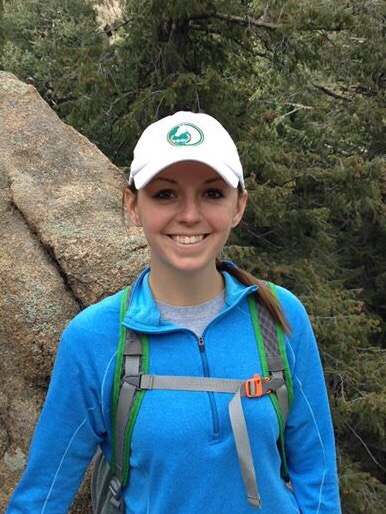
Laura CardonLaura Cardon is a public relations professional living in Denver, CO. Originally from Maryland, Laura enjoys riding horses, hiking, and volunteering at the Denver Animal Shelter. In her spare time, Laura also shares her passion for the great outdoors with fellow beginner outdoors enthusiasts on her blog, Outdoors Beginner
.

Mentor has more than one definition

We all know what a mentor means. But do we know who each of our mentors are? What about mentors who don’t have the professional title of “mentor” – what about “unofficial mentors”?

Let’s start with the first definition: mentors. These are the people you’ve either connected with through a program or have asked to provide guidance. Moreover, professional mentors.

Then, there’s unofficial mentors. These are the people who you to not only go to for career advice, but also for everyday life lessons.

Fill in the blank: I surround myself with ________ …like minded people, positive people, good-hearted people, etc. Whatever that blank is, that’s where you’ll find your unofficial mentors. Unofficial mentors are those you look up to but don’t always associate an official title with: your mom or dad, sibling, best friend, co-worker on another team, someone you met while volunteering, etc.

While mentors are usually the professional relationships you go to for career advice, unofficial mentors are the ones you go to for everything, sometimes subconsciously.

My unofficial mentors? My mom and dad who I always go to for not only family guidance, but also financial advice (I am two years out of college and still call them about insurance policies). My best friend and boyfriend who is in medical school, the most positive person I know and never lets stress overcome him (even though his field requires sick patients, surgeries and what seems like never-ending standardized tests). Also, one of my best friends and cousins who despite a few struggles has immediately and confidently started creating a new path that includes finishing school and building a family.

It’s good to find those mentors who share professional advice (when to make those career moves, how to gain leadership skills, etc.). But it’s also good to discover and not forget about your unofficial mentors. Both types of mentors can help guide you throughout life tremendously.

Who are your mentors and unofficial mentors?

NicoleBersaniNicole Bersani is the social media coordinator for Comcast SportsNet Chicago. She also serves as the PRSA New Professionals Section mentorship co-chair and volunteers at Midtown Educational Foundation as a tutor/mentor for young girls in Chicago. Connect with her on Twitter and LinkedIn

Gain A Competitive Edge with International Experience: Part 1

This is a part of our month-long participation in PRSA Diversity Month

I wasn’t just bit by the travel bug at an early age; I was rather infected. I first got my peek of the world outside of the U.S. when I visited my family in South America. Later on, I participated in short trips to Europe with my high school and university. Though, it was not until my experience of studying abroad in Spain last spring that really triggered my desire to live and work abroad.

Image credit to UCLA

As a new professional entering the market place, I strongly believe that now is the time to kick start our international experience. The older we get, the more responsibilities we are bound to, and the harder it is to just drop everything and leave. For this reason, it is better to start early in your career.

The benefits of gaining international experience are endless, however, I have narrowed it down to just three that I think are the most important and meaningful of going abroad:

1.     Gaining a different perspective on the world

Many of us grow accustomed to the same surroundings everyday. We forget about the world around us, the one beyond our so-called “bubble.” Traveling abroad is an eye opener, and for some, it is the reason why you experience culture shock. Encountering a completely different culture first hand means you are educating yourself on all aspects of a new country, such as music, food, religion, political and economical issues, and so much more.

Experiencing and understanding a foreign culture allows you to become more global minded and aware of a life different from your own. Your perspective on the world can change drastically, causing you to not only form an appreciation for the country you traveled to, but also to have an appreciation for the one where you are from.

2.     Personal Growth

Change can be a scary, yet exciting, thought for some. Going abroad means getting out of your comfort zone, and challenging yourself both mentally and emotionally. No matter where you go, there will always be different values, customs, and mannerisms. Therefore, you will learn to become adaptable. This rings a huge sense of personal achievement because you are facing and embracing change all at the same time.

According to research published in the Harvard Business Review, “People who have international experience are better problem solvers and display more creativity.” In addition to this, being abroad allows you to grow as an individual, granting you the independence and confidence to adapt to unfamiliarity.

3.     Career Advancement

International experience gives you a huge competitive and global edge in your professional career. For example, an employer is going to remember a person who had an incredible story to share about a time in South Africa compared to a person who has basic industry experience. Employers look for candidates who can contribute to their company’s diversity. Whether it is a new client or coworker, you will often encounter someone in the workplace who is of a different ethnicity or background. By having international experience and intercultural awareness, you become a bridge to a gap of cultural differences.

When you go abroad, you are also expanding your network globally. In order to do so though, you have to make the effort to create and maintain relationships. In my previous blog post with The Edge, I explained the importance of networking and staying connected. When you take networking to an international level, you not only create a large space of opportunities for yourself, but you also bring valuable business contacts to a company.

Traveling abroad is undoubtedly a life changing and valuable experience. Whether you choose to work, study, or volunteer in another country, each offers rewarding benefits to both your personal life and professional career. If any one of these global opportunities is something you seek, check out Part 2 of this blog post for things to consider before making a decision. A list of resources will be provided as well!

What has been your favorite travel experience and what is the number one thing you took away from it?


Screen Shot 2014-11-17 at 12.10.20 PMCatalina Gomez is a graduate of Philadelphia University with a Bachelor of Science in Professional Communication. She specializes in public relations and has experience working with lifestyle and consumer brands. Catalina is also an active member of the Hispanic community and currently resides in Maryland. Connect with her on LinkedIn or Twitter.


The Importance of Staying Connected with Your Network

1As I returned to New York City a few weekends ago, I overcame a feeling of nostalgia as I roamed the streets of SoHo. Last summer I completed internships in the city at two fashion PR agencies, and still to this day I can clearly remember my first day on the job. While walking down Broadway Street with my boss, she looked at me and said, “The first fundamental lesson in any career, especially in PR, is to always get everyone’s contact information that you meet.” Her advice has stuck with me ever since.

As a new professional, I am constantly growing my contacts and networking wherever I go. It’s basically second nature for me now to ask for a business card. Did you know that according to the Pew Research Center, the average American has approximately 634 ties in their overall network? However, as easy as it is to meet new people in your field, it is also just as easy to forget to reconnect with them.

Like many recent graduates, I am currently in the job search stage. During this time, I’ve had the chance to reflect on all of the people I have met throughout school, internships, and other experiences. This has made me realize how important it truly is to stay connected with your network.

They can open new doors for you

This is the most obvious, yet most important reason to staying connected. As the old saying goes, “It’s not what you know, it’s who you know.” According to the Labor of Statistics, approximately 70 percent of all jobs are found through networking. It is highly recommended for recent graduates to reconnect with as many people as they can in their network (e.g. professors, previous employers, colleagues, friends, family members). Any one of these contacts can refer you to a job, connect you to another professional, or even just provide you with advice and new knowledge.

It’s common professional etiquette

Regardless if a connection has done a favor for you or helped you in some way, it’s always appropriate to reach out and let them know you haven’t forgotten about them. Thank them for their help or simply say hello. You don’t want someone to think that you’re only reaching out to him or her for a favor. Be natural and friendly. Just as you would contact your friends to grab a coffee or lunch to catch up, it’s okay to do the same with your professional network. There are many creative ways to staying connected!

“What if I haven’t talked to them a long time, should I still reach out?” The answer is YES! This is often a worry among new professionals, but the truth is that people will always appreciate a nice message from an old colleague or friend. In this day and age, communication has become a lot easier especially with the use of social media. If you don’t feel comfortable calling  someone, then reach out via LinkedIn, Facebook, Twitter, or email.

Ideally, you don’t want to get stuck in the habit of waiting too long before you reconnect with someone in your network. Eventually, relationships will fade if you don’t attempt to keep in touch. You want to avoid this by consistently communicating with your contacts and making yourself visible. For example, I like to message and email my old professors and employers every 2-3 months. Our professional network is rapidly growing, so it’s important to prioritize and make time for those whom you have stronger relationships with.

Recent graduates and new professionals, what method of communication have you found to be the most effective and comfortable when reconnecting with people in your network?

2Catalina Gomez is a graduate of Philadelphia University with a Bachelor of Science in Professional Communication. She specializes in public relations and has experience working with lifestyle and consumer brands. Catalina is also an active member of the Hispanic community and currently resides in Maryland. Connect with her on LinkedIn or Twitter.


Notes from the Road: 3 Things I Learned on Path to a Career in PR

Beginning a career in public relations can be quite a daunting prospect. There is no point-by-point roadmap to direct you on the way to professional success, and you will encounter plenty of obstacles along the way. I found myself in the hectic world of the “entry-level” after graduating college in May 2013; and now as I prepare for the next step in my career, I can think of a few pieces of advice that I have picked up along the way:

1) Be open to whatever comes your way, and be ready for some hard work.

When I graduated with a BA in history and started exploring public relations as a potential career path I was totally overwhelmed. I had done one PR internship in college, but I quickly found out, that I was not ready to become a high-powered account executive on day one. The difficult reality for me was that I needed to get more experience, and that meant internships, and unpaid internships at that.

I realized I knew a lot of people in health care, and I managed to find an internship with my alma mater’s children’s hospital. To support myself financially, I worked nights as a technician in the hospital’s pharmacy while I interned during the day. Those long days and nights at the hospital were not exactly what I would call fun, but I managed to learn a ton from my bosses, who held me to a very high standard and dramatically improved my writing.

2) Join your professional community.

One of the best things my boss at the children’s hospital did for me was encouraged me to join PRSA and be active in the profession. At a PRSA sponsored lunch, I sat at the same table as the social media department one of my town’s leading PR agencies, and after an interesting conversation about social media I asked for an informational interview. That interview eventually led to another internship, this time focused on social media. I was given an entire account to manage, and I discovered a real passion for the work. By the time my agency internship had finished I was able to once again turn to my local chapter of the PRSA to find my current internship with Carestream Health, which will allow me to keeping building my skills while I study for my MBA.

3) Use This Time to Find Your Passion.

Finding your passion may sound like corny advice, but it really is what the early stages of your career are for. Take on any challenge or opportunity you can find. Public Relations is an unbelievably diverse profession and you will find plenty of things you love to do, and plenty of things you don’t. In my case I found a real passion for all things social media, and I found some great mentors who fostered that passion. You may very well have some false starts, some things you just can’t get excited about, but don’t let those experiences derail your future career.

If you are really serious about a career in public relations, if you are willing to put in the hard work up front, and you can find the right team of people to support you then you have a great shot at becoming a real success in one of the most dynamic and engaging career fields there is. Public Relations is all about telling a story, so get out there and share yours with the world.

Sean Delehanty headshotSean Delehanty is currently an MBA candidate at the Simon School of Business, University of Rochester, Class of 2016; as well as a digital marketing intern with Carestream Health. He graduated from the University of Rochester in 2013, and has worked as a public relations intern at the Golisano Children’s Hospital and Dixon Schwabl Advertising. Sean is a Rochester, NY native and a proud member of the Rochester chapter of the PRSA.