Three Easy Ways to Leverage Your Leadership Positions

Three Easy Ways to LEverage your leadership positionsYou’ve probably heard or experienced firsthand how hard it is to get a job (let alone a career relevant one) in today’s economy. Whether you are newly applying or just want to spruce up your resume, college leadership positions are an excellent way besides internships to showcase experience. However, it is not the title of the position that matters, but its how you emphasize those responsibilities to employers that can either make you stand out or go unnoticed.

Use the positions relative to the field.

While this might be obvious to some, having relevant positions can only be positive since it’s more in-line with the responsibilities of today’s PR practitioners. It is also a great moment to highlight the strengthening of your weaker skills, development of new ones or even the defining moment of identifying the sector that you enjoy working in. While the title can range from Publicity Chairman to Communications Delegate, make sure the duties they entail are relative to the field. Using these leadership roles can show your early dedication to advancing your career by showing interest in your professional development.  

Highlight transferable skills.

While a PR-centered position is great and easier to describe, showcasing other experiences through transferable skills is an excellent option as well.  Start by creating a list of all of your responsibilities and tailor your description of duties to emphasize relevant aspects before the non-relevant ones.  For example, as captain of the soccer team, training and assisting others, delegating responsibilities and managing conflicts are great management skills that employers are seeking. Ultimately, if transferable skills are presented in a manner that can be applicable to your next role, they become an optimal way to help your position appear much more credible and relevant.

Change your vocabulary.

It’s astonishing how just a change of words can make a world of a difference and get you hired. While “discussed and planned an event with peers/colleagues,” sounds good, “participated in an event development and execution group,” sounds much better and more professional. The key is to switch everyday words with action words. Assisted vs. helped; developed vs. planned. Don’t let your poor choice of words throughout your resume be the reason you didn’t move on to the next round.

Tip: Don’t lie. There is a difference between rephrasing and overstating. Nothing is more embarrassing or damaging to your credibility than showing up to your interview and having to explain the misrepresentation of your skills.  

While these changes might not seem brand new or revolutionary, they are easy enough to forget in the resume writing process. Remember, employers want to hire professionals and using your college leadership roles not only shows your capabilities of being a leader but more importantly your willingness to accept new responsibilities. Who wouldn’t want to hire someone like that?

Stephanie VelardeStephanie Velarde is a graduate of Virginia Commonwealth University with a Bachelor’s of Science in Mass Communications with a concentration in Public Relations and a minor in Business. She has a knack for crisis management, an interest in global communications and a guilty pleasure for event planning. Connect with her on LinkedIn or follow her on Twitter or Pinterest.

Finding a Home for Career and Personal Growth in Your Local PRSA Chapter

It was a cold Tuesday night in January of 2014. We didn’t really know what to expect that night. Would people be nice? Would people want to talk? Will everyone else already know each other? Well, at least there’s free wine.

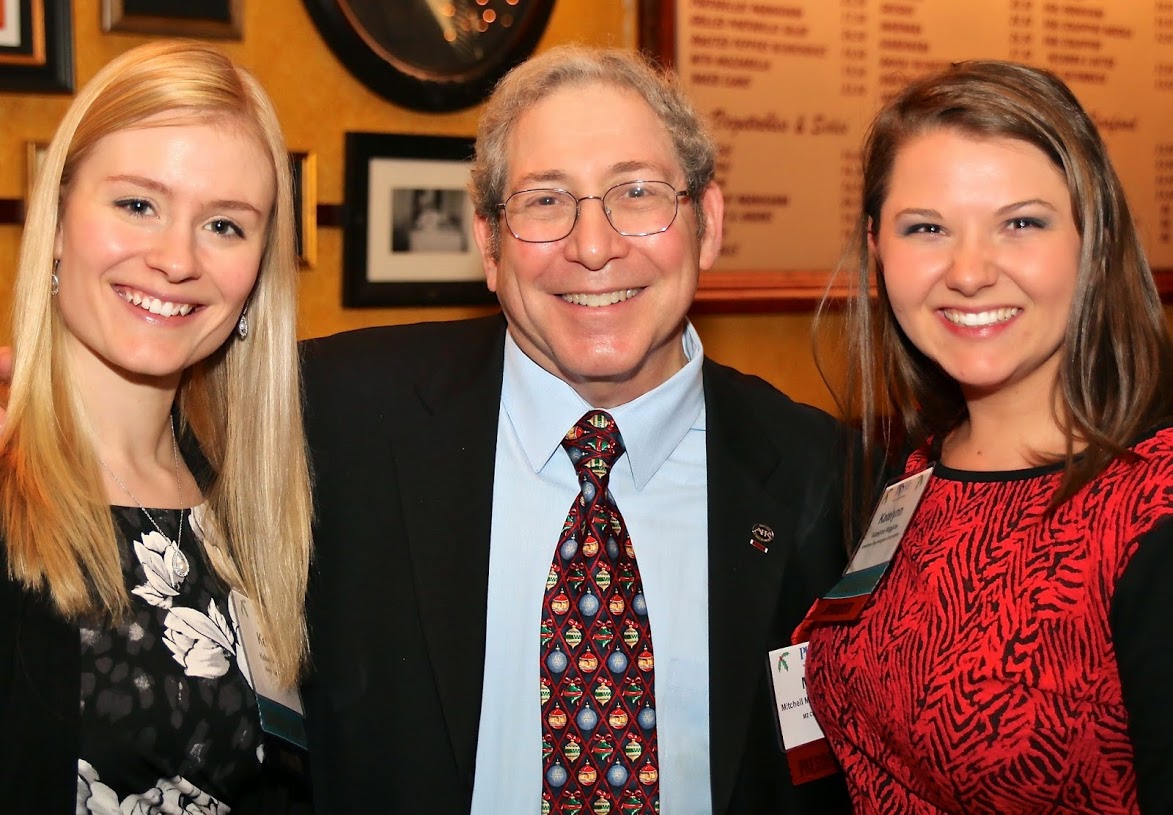
We met each other that night at the PRSA-NCC Leadership Rally – and within the next year we would become co-chairs of the newly developed New Professionals committee, and one of each other’s closest friends in this beautiful, historical, pant-suit wearing, House of Cards city.Finding a Home for Career and Personal Growth in Your Local PRSA Chapter

As melodramatic as that description might be, PRSA-NCC has provided us both a home in the District of Columbia PR community. It has offered us an avenue to improve and expand our skills and talents and a venue in which to connect with other professionals at all different stages in their careers.

Our professional skills and networks have grown exp
onentially since embarking on this journey of chairing a committee. Planning and executing monthly events, managing a committee of nearly 20 people and constantly being on the lookout for job opportunities for PRSA-NCC’s newest professionals has given us the opportunity to learn skills we might not have ever been exposed to in our day-to-day work.

In the world of PR, a good network can be just as important as a skill set. So while the PRSA-NCC New Professionals committee does host a couple of professional development events each year, most of our events are networking heavy. They enable new professionals of all ages to go through this journey together. We share ideas, challenges, lessons learned – and a lot of laughs.

For example, in 2015 we have planned six happy hours – one with free professional headshots – two professional development events, one networking baseball game and one cross-industry networking event. We could not have done this without the help of the wonderful New Pros committee members and the support of our local chapter, PRSA-NCC.

Don’t have a New Professionals committee in your local chapter? Start one! It’s a great way to get even more out of the already great experience PRSA membership has to offer. If your chapter already has one, join the committee. Get out there, network, challenge your skill set and offer your talents.

Katelynn Wiggins and Kelsey Pospisil are co-chairs of the National Capital Chapter’s New Professionals Committee. Katelynn is the public relations associate at the American Psychological Association and Kelsey is the client engagement and media relations manager at News Generation.

The Power of Perception in Your Career

The power of perception in your careerHow many clichés have we heard about perception? “Beauty is in the eye of the beholder.” “It’s the thought that counts.” Or a slightly deeper and personal favorite, “The difference between a flower and a weed, is a judgment.”

Our perception of the world around us influences our reality in more ways than we can imagine. And I think recognizing this, that the way we look at a situation can either improve or worsen our experience, gives us a great deal of power that few tap into.

Take rejection for example.

Rejection is often seen as a bad thing. And people aren’t wrong; it hurts to not get the raise you were hoping for, the dinner date you’d been looking forward to, the media placement you put SO MUCH time and energy into. Having to turn off the happy-ending movie of expectations playing on repeat in your head really, really sucks. No one likes being told “no.”

But there is a power in understanding the significance of the situation. If we can shift our vision of failure from a dead-end street, to instead an alley with many alternatives, we gain the ability to mold our future into something not only desirable, but preferable. Rejection doesn’t have to immobilize you into a mere spectator.

No, things may not be going according to plan… So what are you going to do about it?

There’s an offbeat idea that floats around the outskirts of mainstream acceptance, that with every decision we make, those pivotal fork-in-the-road moments, there is a parallel timeline that continues without us. The “what if” timeline. It’s a repeated theme we find in movies all of the time. You fail to catch your train before an important meeting at work… You may lose the account and in turn your job, forcing you dig deep to find your true passion and make a new life for yourself. OR… You might find a way to keep your job, move closer into the city and end up meeting the love of your life next door. If either timeline is an equally viable option at the start, the possibilities in how drastically different your timeline could unfold is enticing… What if there were no wrong decisions? (If you haven’t already, watch Sliding Doors staring Gwyneth Paltrow circa 1998.)

Now, while I don’t recommend dwelling on the literal idea dual timelines, I have to wonder; why can’t we see rejection in this philosophical light?

Getting told no, when you step back and think about it objectively, is simultaneously getting told yes (or at least maybe) to a handful of doors that would’ve otherwise been closed had you never been rejected in the first place. It is the pivotal step in scientific theory! Hypothesis, test, fail, repeat until a solution is found. Rejection isn’t a period at the end of a sentence; it’s a semicolon that can guide you on to something better.

It’s all about the way you look at it.

Couldn’t rope an investor to help get your start up off the ground? That doesn’t have to be a bad thing. Think about this possible alternative: You’ll likely find an interim job and build your skillset in the meantime, continue to improve your start-up and perhaps meet your new business partner during the downtime. Then, without investors, you’d be free to run things your way, an option that would have never been available had the initial plan followed through.  

This idea isn’t limited to the business world, either. Think about how, if you dropped your initial snap-perceptions of people, places or situations, how things would look different (perhaps even more friendly) to you.  

Self-awareness of our perceptions can be an incredible superpower when used properly. When you recognize this, you won’t immediately act on those preconceived ideas of how you see the word “no.” You’ll pause. You’ll soak in both sides, and feel before reacting.    

Understanding that there are always (at least) two sides to every story means accepting that our perception of reality is likely dramatically different from someone else who experienced the exact same thing. It’s a scary thought, but it’s also a little bit liberating when you think of how you can change your reality, simply by changing the way you interpret the things presented to you.

In life, you can’t move significantly forward without taking a few risks. And we all know that walking on those rocky, risky, unpaved roads typically comes paired with a few unexpected missteps along the way. If you can take these speed bumps in stride, looking for the next alternative route without getting stuck at a dead-end in the road, you’ll be able to handle whatever rejections may come your way. Because being unstoppable isn’t about receiving all green lights, but hitting red lights, stop and “Do Not Enter” signs and persevering onward anyway.

rsz_megan_nicole_oneal_headshotMegan O’Neal graduated from UCLA in 2011 with a Bachelor of Arts in Communication Studies, emphasizing in mass communications. She is currently the PR Specialist at Marketing Design Group and volunteers with the National Multiple Sclerosis Society, freelancing for the public relations department. Connect with her on Twitter @megannenicole.

6 Tips for Leading a PRSA New Pros Local Chapter

Whether you’re in a current leadership position or your looking to take on a lead role with your local New Pros chapter, it never hurts to seek advice. PRSA writes that “New Professionals membership is a mark of distinction that demonstrates your confidence and desire to succeed.” They’re right. That’s why you’re here, to succeed and to help others succeed.

PRSA New Pros Event Cincinnati

Rebecca Potzner, PRSA Cincinnati New Pros Chair, at one of their many successful New Pros events!

Becoming a New Professional member and now leading my local chapter, I’ve come to learn a lot about leadership and myself. Here are a few tips that I’ve learned from leading my local New Pros chapter that I hope will help you and your chapter.

1. Don’t be a lone wolf. While you’re leading the chapter, this doesn’t mean that you should be doing absolutely all of the work on your own. Forming a leadership committee will not only strengthen the bond of your chapter but it allows members to take initiative and to help shorten your to-do list. Don’t be afraid to delegate or to ask for assistance. Remember, two heads are better than one!

2. Communication is key. As cliche as it sounds, keeping a strong open communication channel between your members, leadership team and PRSA board is crucial. Scheduling board meetings, emailing updates or even meeting for a quick coffee can help keep everyone accountable and in the know. This tip falls hand in hand with the next two.

3. Collaborate. As New Pros, we are essentially the middle man between PRSA and PRSSA giving us the opportunity to open new doors and spark new relationships. Take advantage of this. Connect with local PRSSA chapters by inviting them to events or offering to work with them on future events. The same goes for your PRSA chapter. They want to know what the younger generation is up to, so keep them in the loop! Even better, reach out and work together on a future program. After all, PRSA offers all the perks!

4. Be Socially Connected. Considering our demographic, social media has become the best outlet to reach members and potential new members. Networks like Facebook and Twitter are great to share content and to help to spread the word on your upcoming events. While your organization’s profiles are important, a great tool to take advantage of is Facebook groups and Google Drive. These both allow you to reach your board and start an ongoing conversation without bombarding their email inbox or clogging their hard drive.

5. Map it out.  It’s no secret that people like consistency. It makes things easy. Taking the time to map out chapter events for the year helps to keep a consistent calendar and makes for easy planning. After establishing your chapter’s goals for the year, brainstorm program ideas and line them up throughout the year. This helps establish a plan you can stick with and promote.

6. Make it fun. It’s not all work, promise! Take time to relax and enjoy some time with your members to catch up. As for events, think outside of the box. Events don’t always have to consist of sitting in a stuffy room listening to someone speak or just a simple happy hour.  Go behind the scenes somewhere, attend a sports game. or take a tour around the city. Your opportunities are endless and each option offers a chance to make a new connection.

Rebecca Potzner is the PRSA Cincinnati New Professionals chair, and runs her own blog, Twist on PR. Follow her on Twitter @BeckuhBeck for great PR insights & tips! 


How to Make the Most of PRSA New Pros

When I graduated from Michigan State University in 2010, I moved to Chicago to begin my career at Edelman. I was active in PRSSA and had interned with Edelman before starting full time, but once I was there, I had a feeling of ‘what do I do now?’

Nick Lucido, PRSA New Professionals Section Chair

Nick Lucido, PRSA New Professionals Section Chair

That’s when I decided to get active with the PRSA New Professionals Section.

Being involved with the New Pros group, I learned and networked my way through challenging career situations, learned how to advance my career and broadened my knowledge of the profession. While PRSSA is designed to help you start your career, and PRSA is broader in nature, the New Professionals Section is the buffer group designed for those with less than five years of public relations experience. We have more than 1,200 new professionals across the country covering different industry verticals and settings – this means there’s definitely someone out there in the same boat as you.

Questions like – Should I try to negotiate my salary? When is it time for me to move to a new position? How can I advance to the next level? – were all things I learned from programs and other members.  I can promise you that whatever question or doubt you have about your career, there’s someone else out there with advice and experience to share. While we offer a long list of benefits for our members, the most powerful thing we offer is the connection to others.

This virtual support group has ‘traveled’ with me to Brazil, where I’m now stationed at Edelman’s operations in São Paulo. As I proudly lose my New Professional title, I’m proud to have been part of the organization and look forward to continuing my PRSA membership in other areas of the organization.

My piece of retirement advice is to make the most of your membership. If you’ve not yet taken advance of the membership benefits, there’s no better time to test it out than our annual New Professionals Week. Here’s a few ways to get involved:

  • Be sure to tune in to our free webinar on Tuesday, August 25th at 11 a.m. ET – How to Activate an Influencer Network with Converged Media.
  • There are 13 local events happening across the country – check out the full list here to see where the closest event is near you.
  • Follow along to conversations online about the week and network with fellow members across the country: #npprsa
  • Make sure you’re making the most of your membership – follow our content on the blog, participate and ask questions to other members in our Linkedin group and check out our database for past programs.

If you have any questions about your membership, don’t hesitate to reach out to me or any other executive committee member. Happy New Pros Week!

Nick Lucido was the 2015 PRSA New Professionals Section Chair.