Not There, Yet; Advancing Women in PR

Not There, YetWith March playing host to International Women’s Day and Women’s History Month, it’s safe to say there’s been a lot of “girl power” making its way to our screens. But take note, this isn’t just spring fever. Ads like the Always #LikeAGirl commercial that aired during the 2015 SuperBowl and GoldieBlox’s campaign to encourage young girl’s interests in science and engineering are slowly countering the everyday messages and mindset our society has adopted. And I have to admit, I’m nervously excited by it.

Celebrated men and women are taking the public stage to support initiatives like #HeForShe and pay equality; however, simple policy enforcements aren’t necessarily going to change things. We people as a whole need to rewire the way we think, the way we act, and there are a few things us women (particularly those in PR) can do to aid this mental shift on an everyday level.

Create a culture of collaboration. “Can you send me your media list?” Why does this simple question cause so much tension and drama? If a friend or PR pro from another agency has something of value to contribute to a journalist you know, why Regina George them with a “you can’t sit with us” attitude? Wouldn’t the journalist be happy and in turn, thank you for making the introduction? Though society typically uses the term catty, in reality this mentality is just competitiveness on steroids. We fear sharing our media contact would somehow translate to losing our contact and/or opportunities in the future. But this way of thinking is self- deprecating.

Be confident in yourself and the work you do, enough so to lift and inspire others to join you on your level. How can we expect the world to treat us fair and kindly when we cannot treat each other that same way? Help out and support your female (and male) peers at every opportunity! Because I’m willing to bet that if you scratch her back, she’ll likely scratch yours back and probably invite you to join her on the next buy-one-get-one Starbuck’s happy hour. A small act of kindness without strings attached can form a deep impression, and I find that the more we work together and pay it forward, the stronger the cycle of supportive reciprocation becomes. This is public relations after all.

Ask and you shall (maybe) receive. A recent PR industry analysis was released this March, revealing a disturbing $46,000 pay gap between male and female professionals of equal experience level in the field. (No, I am not making this up. You can find it here.) The same study also found women were less likely to negotiate their salaries “due to the social costs of advocating for themselves.” It seems, women fear contending their worth will get them labeled as “pushy” or “bossy.” And for good reason. In an analysis of 450 million texts printed over the past 20 years, women are twice as likely to be called “pushy” over their male counterparts.

Ladies, repeat after me: You is Kind. You is Smart. You IS Important. Go to bat for yourself! Ask for that last slice of pizza, that guy you like out for a date, that journalist to feature your client, that promotion at work; it doesn’t have to be scary. The worst you can hear is “no,” and then you’ll be in the exact same spot as you are now, only less stressed about the pain of peeling the Band-Aid slowly. The answer is always yes until it’s a no. If you never dare to ask, you’ll never experience the joy of hearing it. (Click to tweet!)

Stand Tall. Real talk for a second: I was once, during a department-wide meeting, patted on the head by my (male) boss after discussing an initiative I’d successfully completed. Granted, I stand just about 5ft 3 inches tall, but that is beside the point. This seemingly innocent gesture is how you treat a child or a puppy, not a regarded colleague; it’s incredibly belittling, both literally and figuratively, and was never carried out on my male coworkers of short stature or otherwise.

It was after that moment I fully understood what all of the gender equality fuss is about. It’s not about gaining a position of power. It’s about starting the game standing on an even playing field, and getting a pat on the back, not the head, just like everyone else. Unfortunately there’s no hideaway from it; as a woman, you’re going to face inequality and sexism in many forms, from men and women, sometimes intentional, sometimes not. And when you do, you have the power to decide how you want to be treated. Don’t accept anything less than respect, and if you must, gently remind people what that looks like.

It’s a genuine smile when you see your fellow female coworker get recognition for her excellent work. It’s a firm handshake when you meet a client for lunch. It’s fearlessness after you counter your salary for a new job offer. It’s a woman who doesn’t feel the need to say “sorry” before asking a question, and a woman who has the confidence to jump from safe ground without looking down.

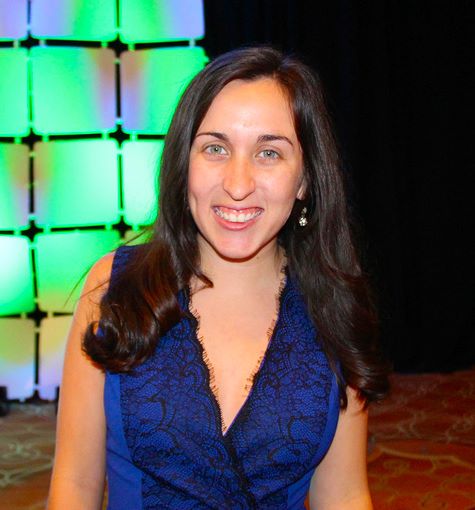
rsz_megan_nicole_oneal_headshotMegan O’Neal graduated from UCLA in 2011 with a Bachelor of Arts in Communication Studies, emphasizing in mass communications. She is currently the PR Specialist at Marketing Design Group and volunteers with the National Multiple Sclerosis Society, freelancing for the public relations department. Connect with her on Twitter @megannenicole.

Why a Blog Can Change A Business: Three Arguments to Back You Up in the C-suite

Why a blog canIf your client or organization is looking to implement an integrated marketing strategy, a blog may be one vital tool for success. However, proposing the idea of a blog many times comes with resistance from the C-suite. If you’re trying to sway this crowd, make sure you’re prepared with these three arguments to get them on board:

1. Blogs are shareable. There is no limit to the amount of times a blog can be shared online. Start by creating great content on your site, and then use social media to promote links back to that content. You’ve heard that adage, “If you want to catch more fish, cast a wider net.” The same principle applies here. Shareable content helps you reach the maximum amount of potential customers. And an added bonus – blogging can help your SEO rankings if you include clickable links and keywords in your posts.

2. Blogs give you an opportunity to engage your audience. Audiences won’t believe your brand is better just because you say it is. Your potential customers need to trust you and your products or services, and the best way to build trust is through engagement. Blogging gives you the prime opportunity to interact with your audience – if you do it the right way. You have to make an effort to build a rapport with your audience by responding to comments on your blog, answering questions or interacting on social media.

There are several reasons why marketing and public relations are shifting away from the traditional TV and radio approach, and one reason is because they don’t give audiences the opportunity to talk back. Blogging does, but it won’t be effective if the audience doesn’t feel like you’re listening. The interaction in blogging creates the two-way communication that is the basis for trusted relationships. (Tweet this!) 

3. Blogging makes you look like a genius. Customers want to believe that they are getting service from the best of the best. Blogging is a great way to show how much you know about your product or field of service. When you share information about what you know, audiences can put trust in your experience (it always circles back to trust). Blogging about tips or inside information about your product or service lets customers know that you care about helping them.

To make an extra impact on your customers, get your organization’s leadership involved in blogging. They can blog about the industry, or they could blog about their hobbies. It really doesn’t matter what they are writing about as long as they are open, honest, and engage with the audience. When customers trust an organization’s leadership, they are more likely to be loyal to the brand. You need to convert potential customers into customers, but then you need to convert customers into repeat customers. Blogging can help you do that by renewing your audience’s faith in the organization with each post.

What results has your company or organization seen from blogging? 

Jennifer MaterkoskiJennifer Materkoski is a graduate of Kent State University with a Master of Arts in Journalism and Mass Communications with a specialization in Public Relations. She has worked as a writer and editor for both newspaper and television and as a member of a non-profit marketing and development team. Materkoski is the owner and principal consultant of a boutique public relations firm, Songbird Public Relations. She is an avid sports fan and a yogi and also owns and operates an online store selling essential oils and natural products. Materkoski resides in Wheeling, West Virginia with her husband and son. Find her on LinkedIn or follow her on Twitter @MrsMaterkoski. She can be reached via email at jen@songbirdpublicrelations.com.

The Basics of an Integrated Campaign

DIGITAL ARTSIntegrated marketing campaigns are tricky to perfect, but if properly executed the results can be rewarding for your brand or company. To execute a successful campaign, there’s several aspects that need to properly implemented; budget, content, tools, events, social, emails, advertising, sales, and media… just to name a few.

With so much content and “noise” out there, what is the best way to get your voice heard? When creating an integrated marketing campaign remember these key things to help guide you.

1. Research. So you want to create an integrated marketing campaign – now what? Doing your research is the first step to help guide your entire strategy from gauging what has previously been successful to what content will most effectively relay your messaging.

2. Consistency. This goes further than determining what hashtag you’re going to use and making sure you’re using the proper logo. The proper look and feel needs to be established, followed by key messaging as its support to guide the campaign.

3. Clear & Concise. Speaking of messaging, having a well-defined voice is a must for making sure you are getting your message across. Simplistic, well thought-out messaging that conveys your strategic goals and objectives for the campaign to be executed properly must be in place. With so many ways to share content, you want to also make sure that what you’re creating can be repurposed for additional forms of sharing and integration to drive results.

4. Audience. So, who are you targeting your campaign to? Defining your audience helps to create the messaging and how to best promote the content. Thinking on a global scale is not an easy task, and as much as we would all like for our target audience to be “everyone”, research can help determine what demographics you should be targeting.

5. Content. You know what you want to say and who to say it to, so now you have to decide what kind of content to produce that will be most successful. Is it a commercial? An event? Online? Create the most effective content based on who and how you want to engage audiences – and it may be a combination of a variety of platforms.

6. Measurement. How are you keeping track of how your campaign is doing? Tracking results not only helps you establish what is successful, but also what is not working for you. Did you reach your original goals? Proper analytics are key to ensuring how you are achieving this success.

What other components do you implement for an integrated campaign? 

Marcy McMillanMarcy McMillan is the Marketing Communications & Events Coordinator for York University’s Campus Services and Business Operations department. When she’s not working, you can find Marcy discovering new restaurants in downtown Toronto, attending and writing about events or spending some time at the public library. Find her on Twitter @marcy113 or visit her site.

March 2015 #NPPRSA Twitter Chat Highlights: Preparing for a Crisis

Twitter Chat 3-18 SquareWe’d like to thank everyone who participated in the March #NPPRSA Twitter chat as we discussed crisis communications–how to prepare and how to react.  We would especially like to thank Jonathan Bernstein, President of Bernstein Crisis Management.

Join us again on April 15 for our next #NPPRSA chat and stay up-to-date with PRSA New Professionals on Facebook, Twitter, LinkedIn and Google+.

Review highlights of the chat below. What did you learn from the March chat? How can you prepare for your brand’s vulnerabilities before a crisis? What can you do to minimize damage once a crisis hits?


You can receive FREE New Professionals Section membership for PRSA throughout March!

Lauren Headshot 1.3MBLauren Rosenbaum is the PRSA New Professionals Social Media Co-Chair and Co-Founder of Soversity, a public relations and digital marketing company. You can connect with her on Google+LinkedIn or Twitter.

Meet Your 2015 New Pros Executive Committee

It’s hard to believe we’re already a couple months into the year, but the Executive Committee has already been brainstorming and implementing ways to serve PRSA New Pros members throughout the year.

With a mix of returning and new chairs, we’re excited for what 2015 has in store. Read on to learn more about each person on the committee and feel free to get in touch. While you’re at it, don’t forget to join in our monthly Twitter chats and register for PRSA ICON in November. Click here to contact the New Pros Executive Committee members directly.


Nick Lucido
 – Section Chair Untitled design (6)
Location: São Paulo, Brazil
Work: Account Supervisor, Edelman Digital
Education: Michigan State University: B.A. in Advertising with specialization in Public Relations, B.A. in Public Administration
How PRSA benefits me: Now in my 5th year of membership, PRSA has helped me expand my network and meet incredible professionals from across the country and world. Working with my fellow New Professions Section committee members has been a really rewarding experience and helped me make the transition from student to professional.
Fun fact: I moved to Brazil 10 months ago and since I have arrived, I’ve experienced the World Cup hosted in this country, protests against the Cup, a water crisis, a presidential election and a scandal affecting Brazil’s largest company and political party. It’s been an interesting year!

Jessica Noonan – Section Liaison and 2016 Chair-electJessica Noonan
Location: New York, NY
Work: Associate, Burson-Marsteller
Education: American University: B.S. in Business Administration and B.A. in Public Communication
How PRSA benefits me: Since I was a student PRSA has been a go-to resource for the standards of the PR industry. By being an active member of the society I’ve had numerous opportunities to network with some of the stars of our industry.
Fun fact: PR runs in my family – my parents met working in PR nearly 30 years ago!

Amy Bishop – Programming Co-chairAmy Bishop
Location: Indianapolis, Indiana
Work: Senior Digital PR Strategist, DigitalRelevance
Education: Indiana University: B.A. in Journalism
How PRSA benefits me: PRSA helps me take an active role in national industry discussions and also allows me to connect with my local PR community.
Fun fact: I love dubstep music, naps and strategy board games.

Brian Price – Programing Co-chairBrian New
Location: Chicago, Illinois
Work: Assistant Account Executive, Edelman
Education: Northern Michigan University: B.S. in Communication Studies, Graduate Certificate in Public Management
How PRSA benefits me: PRSA benefits me through providing a network of peers and seasoned professionals to work with and guide me as I begin my career. It’s also given me opportunities to grow through leadership opportunities at my Chapter and insight into the profession.
Fun fact: I’ve never been one for caffeinated drinks in the morning or for energy.

Stephanie Vermillion – Blog Co-chairStephanie Vermillion
Location: Cincinnati, Ohio
Work: Senior Account Executive, Wordsworth Communications
Education: Boston University: M.S. in Public Relations; University of Dayton: B.A. in Journalism
How PRSA benefits me: I love having the chance to meet so many like-minded people both locally and nationally. I’m also a big fan of the ongoing education resources, because that’s critical to ensure we’re all staying at the top of our game.
Fun fact: Outside of work, running is one of my favorite hobbies. I just completed my fifth marathon, the Disney World Marathon, in January 2015.

Ashleigh Mavros – Blog co-chairrsz_1ashleigh_mavros
Location: Columbus, Ohio
Work: Account Associate, Fahlgren Mortine
Education: Ohio University: B.S. in Journalism
How PRSA benefits me: I couldn’t imagine making the transition from student to professional without PRSA. The organization creates a web of guidance, support and continuous learning to help you discover your aspirations and abilities.
Fun fact: I grew up in a small farm town where I was fair queen and showed heifers for 4H; I definitely enjoy the change to the city life in Columbus!

Erica Brown – Social Media Co-chairErica Brown
Location: Sacramento, California
Work: Account Associate, AugustineIdeas
Education: Sacramento State: B.A. in Communications/Public Relations
How PRSA benefits me: PRSA benefits me by continuing to learn more about the field of communications as well as networking with professionals not only in Sacramento but across the nation and the world.
Fun fact: I don’t drink coffee, my favorite drink to get is an iced soy chai tea latte!

Lauren Loxterman – Social Media Co-chairLauren Loxterman
Location: Houston, Texas
Work: Founder, Soversity
Education: University of Houston: B.A. in Communications, Public Relations
How PRSA benefits me: PRSA has given me a place to grow. I can learn from industry vets and not be afraid to fail because of the support I receive from the society.
Fun fact: I’ve recently been getting back into film acting.

Simon Oh – Newsletter Co-chairScreen Shot 2015-03-05 at 9.51.09 PM
Location: Campbell, California (San Francisco Bay Area)
Education: San Jose State University: M.S. in Transportation Management (in progress); Cal State Fullerton: B.A. in Communications, Public Relations
How PRSA benefits me: Connecting with and learning from fellow PR professionals about how I can succeed as an emerging professional myself.
Fun fact: Fan of tacos, light rail and Simpsons references (“I was saying Boo-urns”)

Hanna Porterfield – Newsletter Co-chairHanna Porterfield
Location: New York, New York
Work: Assistant Account Executive, Development Counsellors International (DCI)
Education: Michigan State University: B.A. Advertising, Specialization in Public Relations
How PRSA benefits me: PRSA has allowed me to connect and relate with public relations professionals working in a variety of industries. Not only that, but I continually gain leadership experience, stay up on industry news and am making friends around the country.
Fun fact: I ran my first sprint-distance triathlon in 2014 and am obsessed with spin class.

JR Rochester – Membership Co-chairJR Rochester
Location: Charlotte, North Carolina
Work: Digital Media Strategist, AAA Carolinas
Education: East Carolina University: B.S. in Public Relations & Interpersonal/Organizational Communications
PRSA Benefits: PRSA has been instrumental in my success as a new professional in and out of the office. It has given me leadership development, professional development and personal life long friends.
Interesting Fact: I was in the United States Army for 11 years and I attended Saddam Hussein’s trial.

Hilary Jurinak – Membership Co-chairHilary Jurinak
Location: Arlington Heights, Illinois
Work: Communications Coordinator, Binny’s Beverage Depot
Education: Columbia College Chicago: B.A. in Marketing Communications
How PRSA benefits me: PRSA provides countless education and networking opportunities.
Fun fact: Midwestern girl addicted to exploring Chicago, networking and enjoying craft beer.

Mike DeFilippis – Mentorship ChairMike DeFilippis
Location: Washington, D.C.
Work: Assistant Project Manager, Direct Impact (subsidiary of Burson-Marsteller)
Education: Boston University: B.S. in Mass Communication with a concentration in Public Relations
How PRSA benefits me: PRSA is a group where I can learn more about the profession from seasoned executives, as well as develop my career alongside like-minded new professionals;
Fun fact: I’m an Eagle Scout.

Lauren Gray – PRSSA Liaison Lauren Gray
Location: Stamford, Connecticut
Company: Project Manager,The Visual Brand
Education: Western Carolina University: B.A. in Communications with a concentration in Public Relations
How PRSA benefits me: PRSA benefits me with networking opportunities that have brought me great friends and connections and by allowing me to continue to learn and grow in various leadership opportunities and from various conferences.
Fun fact: I’ve been to 29 states and 8 countries and plan to add more this year!

Henry Cervera – PRSSA LiaisonUntitled design (10)
Location: Salt Lake City, Utah
Work: Independent Practitioner for small business owners
Education: Utah Valley University: Communication with an emphasis in Public Relations, currently finishing a degree in Business Management
How PRSA benefits me: PRSA has given me access to an abundant amount of learning channels (on-demand webinars, case studies, the Edge and the PRSay blogs, that help me stay up to date with the latest trends and news of our industry. As a PRSSA member, I started building my professional network. Now as part of PRSA, I can continue to connect with more professionals nationwide through the New Professionals Section.
Fun fact: Committed to run a race each month of the year and is currently training to run his first marathon in April, the Salt Lake City marathon.