
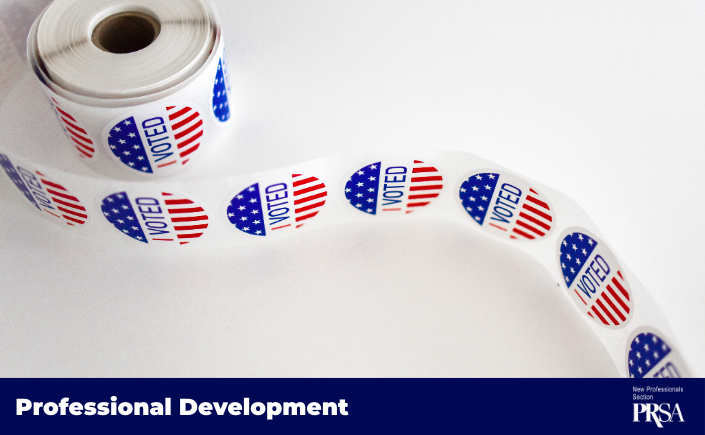
Political news shapes public sentiment, brand perception and communication trends. For PR pros, especially new professionals, understanding political developments can improve audience awareness, crisis management and campaign creativity.
By Nigel Becker
The last few weeks have been busy ones in American politics: Voters in Virginia and New Jersey elected new governors, New York City chose a new mayor and the federal government shutdown disrupted air travel, public assistance programs and more.
If you’re a political nerd like I am, or if your clients operate in policy-related spaces, you may have been following these events closely.
But even if politics don’t excite you and your day-to-day role isn’t tied to public policy, it’s still worth keeping an eye on political news as a new pro. Here’s why.
Political issues may impact your audience
As communicators, we need to understand what’s happening in our audience’s lives. Maybe they’re stressed about losing access to a government program, or they’re anxious about the outcome of an upcoming election.
Being mindful of these stressors can help your organization avoid appearing out of touch. For instance, if your audience is stressed about finances, you might proceed with caution when promoting pricey products, or highlight how your organization is supporting community nonprofits.
Politics can appear in surprising places
In recent years, brands have found themselves in the middle of political debates over everything from DEI programs, to commercials perceived as dogwhistles, to controversial logo redesigns.
These controversies can seem to come from out of nowhere, but by staying aware of hotly debated topics, you can help your organization tweak non-political communications to avoid taking an accidental stand — or decide how best to weigh in when a cause aligns with its values.
(PRSA’s daily “Issues and Trends” newsletter, which all members can sign up for, regularly highlights trends like these.)
Campaign communications can inspire non-political comms
Political communicators exist in the same ecosystem as the rest of us: They’re navigating AI, deepfakes, shifting social media algorithms, distracted audiences and a public that’s increasingly skeptical of both political and business leaders.
Despite these challenges, they continue to find creative ways to cut through the clutter, simplify complicated concepts and craft messages that resonate. Trade publications like Campaigns & Elections offer a glimpse into how campaigns are reaching voters and communicating under pressure.
Many of the challenges campaign communicators tackle — like navigating shrunken budgets and experimental influencer partnerships — can spark ideas for non-political communicators, too.
A note for outside the office:
Local politics and civic participation depend on communication, too
Even outside of work, following politics can help you be a more engaged citizen… and can open opportunities to use your skills for causes you believe in.
Maybe a local advocacy group needs help running social media or promoting events. Perhaps a school board or city council candidate needs help sharing their ideas with the community. You might even find yourself writing a letter to the editors or speaking at a city council meeting about an issue that matters to you.
Many of us were drawn to PR by a love of explaining complex issues and connecting with people. Those same skills lend themselves perfectly to civic involvement.
About the author
Nigel Becker serves as the Social Media Chair of PRSA New Professionals, overseeing the section’s Instagram and Facebook. He graduated from The Ohio State University in 2024 and is an account associate at Slide Nine, a communications, public relations and digital marketing agency based in Columbus, Ohio.
One of his majors at OSU was Political Science, as you may have guessed!