Carving Out Time For Hobbies

Juggling your many responsibilities as a new PR pro probably leaves you wanting to curl up on the couch with your Seamless and Netflix to recharge before you face another day. Set that remote down though, because research has found that engaging in a hobby is a much better way to decompress and re-energize yourself.

According to a 2013 study by Concordia University, people who have hobbies are generally healthier and have a lower risk of depression and dementia as they age. Similar research by a team at San Francisco State University noted that professionals who engage in hobbies, particularly creative activities, are better able to conceive creative solutions for problems in the office. Seems like hobbies are all-around good for you, but what can they do to improve your day-to-day life as a new pro?
Hobbies

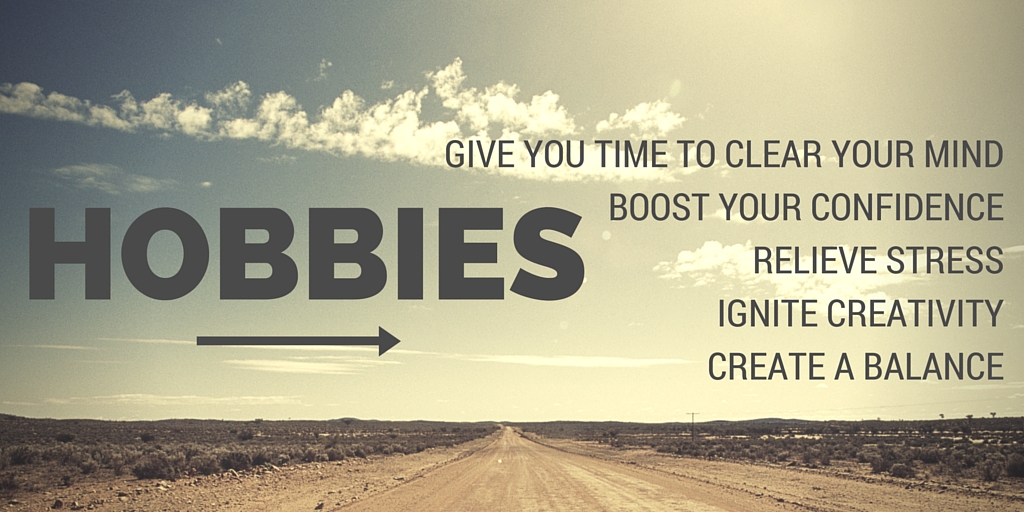
Hobbies give you time to clear your mind.

Focusing on a task or project that requires your full attention gives you the opportunity to disconnect from the world around you. The more difficult your hobby, the better. Concentrating on one task for an extended period of time allows your brain to reboot. Just like shutting off your computer every once in awhile is good for it, giving your brain a chance to restart can bring you back refreshed and with a new perspective.

Hobbies boost your confidence.

Think about the last time you were really excited about something you accomplished. That rush of adrenaline, the joy of completing something you’ve been working towards, the pride you felt knowing your hard work had paid off – it felt good right? Maybe like you were on top of the world? Mastering a hobby or a skill can have the same confidence-boosting effects. Whether you’re learning to knit, working on your golf game, cooking your way through Chrissy Teigan’s Cravings or learning to code, conquering your own mountains can make you more confident when approaching other obstacles.

Hobbies relieve stress.

It doesn’t matter if you’ve been struggling with the same problem for days or if your roommate is the source of your angst, spending time on something that is solely for you can wash all that tension away. Concentrating your time and energy on a hobby can put you into a relaxing meditative state. Your brain only has a set amount of room and if you fill it up with fun things, there’s no room left for whatever was bothering you. Plus…

Hobbies ignite creativity.

Zoning out a bit and doing something out of the ordinary can get your creative juices flowing. Spend a little time using your brain in different ways and you’ll start to find new ways to connect the dots of your everyday life. Creativity is just like muscle or math, if you don’t use it, you lose it.

Hobbies create a balance.

Everything is good in moderation. Work, sweets and Netflix are just a few of the things that should be balanced with other things. Every hour of every day shouldn’t be spent on work, work, work. Making time for things you’re interested in is a way of giving yourself a break that you shouldn’t feel bad about. Hobbies aren’t wasting time or frivolous; they’re life-enriching ways to explore new interests and learn new things without feeling like you need to dedicate your life to them. Balancing work and play makes doing things you’re not-so-excited for not-so-bad.

Robyn Rudish-Laning (1)Robyn Rudish-Laning is a member of South Carolina’s PRSA chapter and is communications coordinator for the South Carolina Council on Competitiveness. Robyn is also a member of the New Professionals executive committee. She is a graduate of Duquesne University and is currently located in Columbia, SC. You can connect with her on LinkedIn or Twitter or read her blog here.
They Are Not Gray Hairs…They Are Experience Highlights

As a 40-something with no career direction and an imminent layoff, I was at a crossroads in life. A friend recommended a life coach where I discovered an important aspect of my personality. The personal motivator for my feeling happy and successful was a need to elicit reactions from people. It was not about needing positive reinforcement or pats on the back from bosses, but simply having people react to something I wrote, designed, organized, or created. Unfortunately, acting was not an option, so I chose the closest field…public relations.

Twenty years in higher education presented opportunities to dabble in parts of PR. Plan an event here, make a presentation there, learn how to update a website, establish a social media presence, craft a new message to alumni. Rejection reasons for not getting PR jobs was due to not possessing the “right” writing skills or a degree in the field. Job offers actually received were entry-level and half the salary. There were moments of feeling I made the jump to this career too late in life.  Possessing the skills but not the job titles appeared to be holding me back and prohibiting any chance for becoming a PR professional.

Not having aspirations of staying unemployed for 26 weeks led to applying for and getting a position with a non-profit organization via LinkedIn. The job title is far from glamorous (Executive Assistant); however, the salary is competitive and matches the duties. Job tasks land in all facets of social media, branding, media relations, strategic planning, and marketing of the organization.

If you are debating making the transition or feel you have made a mistake with your mid-life change over to public relations, understand that it is not too late! Do not limit yourself to looking at corporate positions or competitive firms. As a more seasoned employee, you are what non-profits and small businesses are looking for. They appreciate broad experience and need individuals who are ready to hit the ground running.

If you are debating making the transition or feel you have made a mistake with yourmid-life change over to public relations, understand that it is not too late!

A recent article by Jenny Blake in Real Simple magazine provided strategies to keep in mind when contemplating a new career:

  • Never obsess about what happened in the last job. Those who are over the age of 30 remember the parental lectures of staying loyal to a company. It is not the norm any longer. Take the best parts of your previous positions and move along.
  • Self-Assess. Do the life/career coach thing. Even if you do not want to work with a professional, ask a friend. Take a stab at the StrengthsFinder 2.0 to look at your experience and get some direction.
  • Break up your job search: People, Skills, Opportunities. Jump on that LinkedIn page and schedule some Starbucks time. Register for a class on Coursera. Let Monster do the searching for you with job alerts.
  • Never stop looking. Always look at what else is out there, how you can improve your skills, and who can benefit in the long term. I am always scanning the job sites for the newest titles/duties to develop ideas for skills I may need or want down the road.

Do not lose sight of who you are and the years you have under your belt. Those articles for the company newsletter, Christmas parties planned, and posts on Twitter can transition nicely into a successful public relations career.

MeFiguring she will never have her dream job of writing jokes for Jimmy Fallon, Carrie Mihalko decided to pursue a new career in Public Relations. With over 20 years in higher education and non-profits, she feels like she has seen it all in event planning, fundraising/development, social media, website design, and marketing. Residing in Pittsburgh, Pennsylvania, Carrie works for the Steel Valley Authority as their in-house communications writer/graphic designer/jack-of-all trades. She also does freelance-work creating publications, websites, and social media plans with small businesses and non-profits. Connect with Carrie on Twitter and LinkedIn.


Work-Life Balance: Life Outside of PR

“Work hard. Play hard.” This is every PR pro’s mantra, but let’s be real—emails can be relentless and sometimes there is zero time or energy left for ourselves or our families. I consider myself a lucky guy, I have an awesome wife and we just welcomed our second child. Balancing a great career while raising a family is arguably the best “problem” one could ask for, though that’s not to say it’s anything short of challenging.  While we all have different aspects of our lives outside of work we are juggling, I’ll let you in on some secrets for balancing those demanding work weeks with a “work hard, play hard” lifestyle.

1.) Communication: Of course communication is my number-one! Communication is the foundation for any complex system and balancing work and family life is no different. Maintaining an open line of communication with your team is key, especially when accommodating a commitment that may call for some wiggle room in your schedule. Communication can also be equally important when it comes to keeping in touch with your family throughout a work day. Oftentimes, I like to take a break at work and squeeze in a quick FaceTime call with my family. This helps me stay in the loop at home, and lets them know that while I am busy, they are still a priority.

2.) Organization: Balancing work and family demands can get hectic, which makes organization crucial – especially when expectations and responsibilities at work may seem tenfold at home. We’re all human. Forgetting things is inevitable. Take notes and stay organized.  Personally, keeping a calendar of important dates and tasks somewhere easily accessible is key to helping me stay on top of the things that need to get done.

3.) Equity: For me, this is where I have another cup of coffee and gear-up to handle business at home.  Attempting to devote equal efforts to a work and home life may seem near impossible, but setting a goal that reflects this is a great step toward being successful at work, and having a peaceful, happy home life.  To start, consider taking stock of the things you find yourself devoting the most time to at work, and make sure you have the resources and training in place to be successful.  Sometimes, learning a new skill or simply asking for a little help can be the ticket to achieving greater stability in both areas. You need enough in the tank to be alert and effective after work too.

4.) Gratitude: Positivity is important and optimism is infectious. No matter how stressful the days may get, making an effort to maintain a thankful, positive mindset is crucial. A good attitude at work goes a long way toward building relationships with your colleagues and supervisor, which ultimately paves the way for a less stressful work environment overall.  In the end, a positive outlook is the first step to perseverance and success.

Find something you enjoy and commit a portion of your week to it.5.) Balance: Find something you enjoy and commit a portion of your week to it. Often, we fail to make this a priority due to an already tight schedule, but creating a window of time for yourself, and sticking to it, can create a more balanced you.  For me, I enjoy riding my skateboard a few times a week, as it is the perfect solution to creating that balance we all strive for. Plus, it allows me to be outside and relax. How do you balance your hectic life? If you have any of your own tips for balancing work and family life, we’d love to hear!

Ronald_1

Ronald Barnes is a member of Sacramento’s PRSA chapter and an account coordinator at Prosio Communications, a California certified small business, and woman/minority owned public relations and marketing firm in Roseville, which specializes in media relations, crisis communication and community outreach.  Ronald earned a public relations degree from California State University, Sacramento, where he successfully passed the Principles of Public Relations beta-examination. Connect with Ronald on LinkedIn and Twitter.

Pros and Cons of the “Always On” PR Culture

Although public relations is exciting and engaging, it ranks as one of the most stressful professions. This unfortunate ranking may be due to the idea (or reality) that public relations is a fast-paced industry where professionals have to be ready to manage a crisis at any hour, with lots to know and learn at all times. To be frank, we’re always on — but is the “always on” culture necessarily a bad thing?

The answer varies. An eager new professional may love being immersed in their work, thinking that the commitment and long hours is what it takes to climb the corporate ladder. From an executive’s point of view, they may deem the long hours inhibiting from personal activities like spending time with loved ones or taking care of their health.

There’s the saying, “When you love what you do, it’ll never feel like work.” Most aspects of public relations are exciting for those who truly love it. When there is passion for the work, it is natural to always be on — in many sectors of public relations, key events happen after “office hours.” Passionate professionals genuinely want to keep up with the latest trends and build relationships with influencers and journalists who cover niche subject matters.

On the opposite end of the spectrum, always being on means there is no clear distinction between work and play. Because public relations professionals often choose to work in a niche industry they enjoy, things that were pleasurable before starting a career can now be incorporated into work projects and as a hook when pitching journalists. But at the end of the day, where is the balance?

For those who find the always on culture to be taxing, there is a solution for more work/life balance. Professionals can limit their working hours to a set amount of hours per week, including the time spent returning emails, working on press releases, and managing budgets. During designated free time, turn on your out of office, do an activity that will help clear your head, attend community events, and spend time with those who mean most to you.

Are there any other work/life balance tips that you practice in the “always on” public relations industry?

i-zthGPGn-XL-230x300 Jasmine L. Kent, a member of PRSA-LA, is a fan of all things food and beverage, pop culture, and media. Combining all three passions, Jasmine builds community through engaging online marketing and dynamic events as a communications professional in Los Angeles, CA. Keep up with her on Twitter at @LoveJasPR or visit LoveJasPR.com.