Book Review: Mastering Micromedia

I’ll admit – when I picked up Mastering the New Media Landscape, I was a little skeptical. I’m generally skeptical of any book or article that claims to help its readers master anything. We know that Malcolm Gladwell’s 10,000 hour rule isn’t exactly accurate, but can you really master a skill in 200 pages or less?
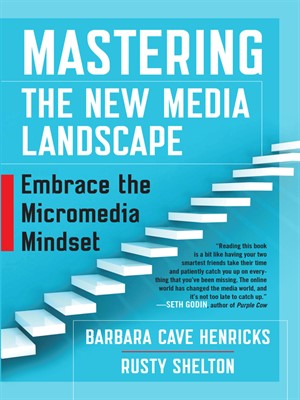
mastering-the-new-media-landscapeThe answer is almost unequivocally no, but with a caveat in this case. Mastering the New Media Landscape’s subtitle “Embrace the Micromedia Mindset” is a more accurate description than its actual title. Authors Barbara Cave Hendricks and Rusty Shelton outline the key principles, define the necessary terms (earned, rented and owned media, anyone?), and relate new media ideas to their traditional counterparts.

By setting the book up this way, Hendricks and Shelton give readers the tools needed to build an effective strategy for leveraging every bit of traditional and new media out there to communicate effectively with your audiences.

Mastering isn’t an end-all, be-all guide for mastering the tools at your disposal, but rather a guide to help you craft your own plan for understanding the opportunities available and conquering internet publishing, the heart of what “micromedia” really is.

The information presented is helpful for managing a corporate or organization’s brand or creating a personal brand, new pros or seasoned practitioners. Two of the best chapters – “Earned, Rented and Owned Media” and “Online Brand Audit” – gave the information and steps I found most useful.

After defining what earned, rented and owned media are, the authors explained something I had never thought of: it is most important for you to have information on media you own and for at least one piece of owned media to show up on the first page of search results. I had always thought that it was just most important for items like my LinkedIn profile, blogs I had authored and things like that to show up before any other less professional items, but that’s not entirely the case. Since those things tend to live either on a social media site (LinkedIn) or on someone else’s site (a blog post), I have no control over how they show up or even if they show up. Those pages could be taken down or edited at any point and there would be nothing I could do about it. If I didn’t keep copies or host my work on my own site that I controlled, it could all be lost forever with no warning.

“Online Brand Audit” piggybacked off of that theme and broke down where and what to look for when assessing and managing your brand. Doing a brand audit can seem daunting, just because of the sheer amount of sources and content you might have to sift through. Making sure that you’re properly represented online. Performing a personal brand audit is particularly important for new professionals while job searching. Employers rely on social media and online information just as much as resumes, portfolios and interviews when filling a position.

In addition to these two chapters, Hendricks and Shelton offer a lot of great information on how to make the most of all of the new media tools out there to use. There are plenty of tips and ideas for types of content, statistics on which users are on each of the social media networks and getting the most out of each network, strategy and piece of content. Most chapters also offer a “Stories from the Front” section in which the authors share an Q&A with a professional on the topic covered in the preceding chapter. All in all, this book won’t make you a master of media by the time you finish, but it is a worthwhile read for anyone looking for a guide to conquering today’s media landscape.

Robyn Rudish-Laning (1)Robyn Rudish-Laning is a member of South Carolina’s PRSA chapter and is communications coordinator for the South Carolina Council on Competitiveness. Robyn is also a member of the New Professionals executive committee. She is a graduate of Duquesne University and is currently located in Columbia, SC. You can connect with her on LinkedIn or Twitter or read her blog here.

Personal Branding: What is it and Why Should I Care?

“Be the real you because everyone else is taken and replicas don’t sell for as much.” – Dan Shawbel

As a PR professional, you’re probably familiar with branding, but have you ever stopped to think about your personal brand? If not, you’re not alone. During the day we’re busy promoting and supporting the brands of the companies and accounts that we represent. Why would we want to think about branding outside of our jobs?

Developing a personal brand is important for every professional, regardless of your job or industry. In today’s ever changing environment it has become more important than ever to embrace the idea of “career management” on an ongoing basis instead of waiting to think about your career until you need a new job.

Managing your career begins with developing and living your personal brand.

What is a Personal Brand?

A personal brand is just that-it’s personal. It encompasses everything that people think and say about you. It’s the sum of everyone’s experiences with you–the good, the bad, and the ugly.

Think about your favorite restaurant or grocery store. You expect a certain level of service every time you go there because they’ve established their brand. The same is true for you. Your personal brand is what people come to expect when they interact with you professionally or personally.

Evaluate Your Brand

Evaluating people’s perceptions of you is the first step in developing your personal brand.

Step 1 – Honestly ask yourself, “What are the five words most often used to describe me?” If you can’t think of anything ask a mentor, coworker, or friend.

Step 2 – Ask yourself, “What are the five ways that I’d like to be remembered?”

Step 3 – Compare the two lists. If what you’re known for doesn’t align with what you want to be known for, then you have some work to do on your personal brand.

People may think about you in ways that don’t initially align with your brand and that’s okay, but don’t stop there. Every company experiences similar problems, but they don’t assume that it’s their customer’s fault. They recognize that while you need to take all negative experiences with a grain of salt, you may be losing a loyal customer if you don’t address it. Take a few minutes to reflect on what part of that interaction you can control and strive to improve your relationship and provide that individual with a positive experience.

Define Your Brand

Now that you’ve evaluated your personal brand it’s time to define your brand. To get started, answer the following questions:

  1. What are your core strengths?
  2. What ONE thing sets you apart from your competition?

Now that you’ve identified the important ingredients for defining your personal brand–how you want to be remembered, your core strengths, and your differentiator – take a few minutes to write your brand essence in the form of a 45-60 second commercial.

I know it sounds cheesy, but writing a personal commercial can be extremely helpful. For example, if you’re looking for a job this commercial can used to answer the question, “Tell me about yourself,” in an interview. If you’re not looking for a job right now this will help you as you meet new people and build better relationships within your network.

Live Your Brand

You’ve evaluated your brand and delicately crafted an eloquent 45-60 second commercial. Now what?

As with any company brands don’t work unless you do. Take every opportunity to represent your brand so people start to believe about you what you believe about yourself.

Here are some areas to help you get started:

Refine Your Online Presence

    • “Google” Yourself. If you haven’t already search the internet to find out what information about you is available. If you’re looking for a job, remember, recruiters can and will use the internet to screen you. If you find something that doesn’t reflect you in the best light, remove it. It’s not worth the risk.
    • Get Social. LinkedIn is essentially a “virtual rolodex” of connections. This makes it a great tool to build and reinforce your personal brand. You can represent your brand in your profile and through the information that you publish and post. You can also include elements of your brand in your Twitter bio and other social media accounts.
    • Demonstrate Your Brand. If you have a blog or online portfolio make sure to represent what’s important to you so the network you build online has the same impression of you as your in-person connections.

Build Real Relationships

There’s no excuse to avoid networking in today’s connected world. Take advantage of the opportunities available to you through professional associations, community groups, and organizations to meet people and begin to build real relationships with real people. Technology has allowed us to connect with people faster than ever before, but it is no substitute for getting to know the real person.

Personal branding is important for every professional. It’s a part of your career whether you choose to acknowledge it or not. It’s not just a buzzword or a new trend. It’s principles are timeless.

Be real and be the best you that you can be. Work hard and demonstrate what’s important to you to the people around you. In the end you’ll be able to look back at how you’re remembered and see that by striving everyday to stay true to your personal brand, you’ve left a legacy.

11a4f30Ruthann Campbell is a marketing and communications problem solver that specializes in getting the right message to the right people every time. She graduated from Pensacola Christian College with a bachelor’s degree in advertising and public relations and currently works as Marketing & Communications Coordinator for a non-profit organization in Tallahassee, FL. You can connect with her directly to network or share ideas on LinkedIn or Twitter.

New Pros Chapter Spotlight: PRSA Central Michigan

There are many PRSA chapters that are doing great work to bring together New Pros and creating an inclusive group to make the transition from student to professional a little easier. This month, we sat down with Hannah Leibinger and Greg Rokisky, chair and vice-chair, respectively of PRSA Central Michigan’s New Professionals group.

New-Pros-Chapter-Spotlight_CMPRSA

The Edge: Tell us about Central Michigan PRSA’s New Pros group:

Hannah: Central Michigan PRSA New Professionals is the premier networking group for up-and-coming public relations professionals in the greater Lansing area. The group is for new professionals – up to five years new to the field – to network, hone public relations skills and transition into the public relations field with a group of familiar peers. Members of CMPRSA New Professionals don’t need to be CMPRSA members and most activities have little or no cost.

TE: How many members do you have?

H: Since we launched our group in February 2015 after it was inactive for several years, we essentially had to cultivate a group from scratch. We’re currently at around 35-40 new professionals.

TE: What kind of programming have you put together for New Pros?

H: Our goal is to provide programming our members want, which means we frequently have discussions about what everybody is interested in and what they’ve liked so far. Our events have included casual happy hour mixers, a tour of a print shop (which included putt putt golf!), launching a book club (we’re currently reading No Cape Needed by David Grossman, ABC, APR, FELLOW PRSA), LinkedIn peer reviews with free professional headshots by a local photographer, a graphic design workshop for the holidays, a Q&A happy hour with some of our chapter’s more experienced professionals and more.

TE: How does your group fit into the bigger picture of the chapter?

Greg: Essentially, the CMPRSA New Professionals section is the key network that bridges the gap from new graduates to new professionals in our region’s public relations industry. We encourage PRSSA students on the cusp of graduation to attend our events and get a feel for the mid-Michigan professional world. Most students don’t escape the bubble of Michigan State University’s campus and miss out on the great opportunities Lansing has to offer. From there we give new professionals an outlet to comfortably express the highs and lows of transitioning to new professional life, in order for them to become fully integrated members of the larger PRSA community.

TE: What resources do you provide for New Pros?

G: We provide resources from PRSA national, PRSA New Pros national and opportunities to strengthen their resume such as pro bono professional headshots, contributing to The Edge and networking opportunities with more seasoned professionals. But what Hannah and I believe is most valuable for a new professional is a network of like-minded individuals that can come together and communicate any hurdles or achievements we experience in our workplaces. It’s a safe place to learn, vent and grow to become the talented public relations leaders that we look up to, both in our chapter and beyond.

TE: What do some of your members see as the benefit of being a part of the bigger New Pros group?

H: We’ve had a lot of great feedback from our members. Some of the best things we’ve heard are:

“I like being able to connect with and share experiences with other PR new professionals in the community. We can bond together, whether it’s sharing successes or occasionally venting.”

“It’s great to collaborate with other professionals who are experiencing the same success and failures as they navigate the PR profession. I joined for networking opportunities but have now made some great friends!”

“I love new pros because it’s the perfect outlet to engage with other new professionals and establish strategic relationships.”

TE: How do you engage and recruit New Pros?

G: We do a blast for every new professionals event to our full chapter membership, and then ask our board to inform interns/new professionals that might not be on our list. We also have our own Google form for our new professionals section that allows us to easily capture emails via social media posts and at events. Overall, it’s been a lot of grassroots and word-of-mouth effort on our part.

TE: What advice do you have for New Pros for using PRSA to their best advantage?

H: PRSA offers a variety of resources, so it’s just a matter of taking advantage of them. I stay in the loop by following all the social media accounts for PRSA, PRSA New Pros and my local chapter.

G: Don’t be afraid to reach out to others, virtually or in-person, that you think you could learn from. Attend Twitter chats for both PRSA and PRSA New Pros and put yourself out there and go beyond the “four walls” of your city.

TE: What is the best way for New Pros to get involved in the PR community?

H: In regard to advice, I’d say to take initiative and step up for leadership roles, such as spearheading your new professionals group or volunteering on a committee. It makes meeting PR and other professionals in your region a lot easier, plus you get great experience to add to your resume!

G: It’s tempting as a new professional to want to blend in to fit in, but that’s not the case. Be yourself, as only you can offer your unique set of skills and abilities. Look for mentors that can help guide you, and that often means looking outside of your organization. Above all else, never stop learning! The more you can provide value in your presence, the harder it will be for your company, PRSA chapters, etc. to ever let you go.

Don’t forget to connect with CMPRSA on Facebook, Twitter or by visiting their  website. You can also connect with Hannah (Twitter or LinkedIn) and Greg (Twitter or LinkedIn).

Just Keep Swimming: 4 Things to Remember During a New Chapter of Your Career

You’ve seen the memes complaining that adult-ing isn’t all cracked up to be. Truth be told, it isn’t easy but it is nothing you can’t handle. Believe it or not, your time in school has prepared you for the task at hand. One thing I admire about the public relations profession is that it is full of critical thinkers and crisis managers who think creatively.

As you navigate the real world, think of yourself as your first public relations client. What is your mission statement, what are your goals for the next six months to a year, what tactics will you use to reach them, and how will you set yourself apart from other brands? Now that you don’t have defining markers like grade levels to help you advance through life, you have to learn to identify both small daily achievements as well as significant milestones that move you closer to success. Below are some tips to remember as you start a new chapter.

Set 6 month or yearly goals…

Whether it’s a creative project you want to complete, a personal achievement like reading one novel a month, or a career goal such as getting a promotion. Setting goals are important because unlike when you were in school, the fall “back-to-school” season, and even a new calendar year, don’t present much change in the “real world.”

Remain poised, passionate, and professional…

Although millennials and Generation Z are driving change in the workforce, we must remember that professionalism never changes. Put your phone away at work, take notes during meetings, and ask questions. It’s the little things that will set you apart from your peers when it’s time for a promotion.

Be curious…

Yes, your role is to manage communications for your company’s brand but there is much more to your organization or agency. Talk to everyone! Initiate small talk with someone in the finance department or reach out to someone on LinkedIn in a different industry; you never know what knowledge you will gain and how it can contribute to your personal or professional self.

Just keep swimming…

Your career is a marathon, not a sprint and things don’t always pan out as planned. Plan A can turn it to Plan B which turns into Plan C all the matter of a few months but don’t let that discourage you. Before you know it, you’ll realize you needed Plan B and Plan C to be ready for Plan A. Remember that success is relative and is dependent on what makes you fulfilled. Success doesn’t happen overnight and if it were easy, everyone would have it.

As you start a new chapter of your career, remember to stay creative, give 110% to your work, and most importantly have fun!

i-zthGPGn-XL-230x300

Jasmine L. Kent, a member of PRSA-LA, is a fan of all things food and beverage, pop culture, and media. Combining all three passions, Jasmine builds community through engaging online marketing and dynamic events as a communications professional in Los Angeles, CA. Keep up with her on Twitter at @JaVerne_xo or visit LoveJasPR.com.

New Pros Week is Coming: Here’s How to Get Involved

Celebrate PRSA New Professionals Week Aug. 1-7, 2016

Each year, PRSA New Professionals Week (Aug. 1-7, 2016) encourages new public relations professionals to share resources and advice with fellow new professionals across the country as we celebrate current members and encourage new members to join.

During this week, we encourage local Chapters to host events focused on providing networking and career development for professionals new to the industry.

Here are a few ways PRSA Chapters, new professionals and employers can get involved with New Professionals Week.

PRSA Chapters

Plan a New Pros Week event

While the PRSA New Professionals Section provides national programming, each PRSA Chapter can host an in-person event of its own. Here are a few ideas:

  • Ask a new professional in your Chapter to help plan an event
  • Arrange a mentor meet and greet in which young professionals are paired with seasoned mentors
  • Sponsor a networking mixer at a popular happy hour location
  • Host a “What I wish I knew as a Young Pro” panel featuring seasoned public relations professionals; invite students and recent graduates
  • Host a viewing of a PRSA New Professionals webinar over coffee, lunch or drinks

Once you set a date, be sure to register your event here.

Recruit new professionals to join your Chapter

New Professionals Week is the perfect opportunity to plan a membership campaign targeted at young professionals. Use this week to target your communications to new professionals who are not members.

New professionals

Participate in national programming

During PRSA New Professionals Week, we will provide national programming such as a Twitter chat, webinar and blog series. Stay tuned for more details, and continue to monitor our website for upcoming dates.

Organize an event

If your Chapter isn’t already planning a New Professionals Week event, volunteer to organize one. Once you set a date, be sure to register your event here.

Employers

Work with PRSA to host an event

If your company has a lot of new professionals, consider working with a PRSA member to organize an event to recognize your company’s newest hires. Here are a few ideas:

  • Promote your local PRSA Chapter’s New Professionals Week event to employees
  • Invite a PRSA member to host a training for new professionals at your agency or corporation
  • Write letters welcoming your new professionals to the company and thanking them for their work
  • Sponsor your new professionals’ PRSA membership and use the code AM16 to get a free New Pros Section membership

PRSA New Professionals Week 2016 will be here before we know it. How are you planning to celebrate?

AAEAAQAAAAAAAAl1AAAAJGM5NWQyMTZkLWFlZTAtNDU1OS05NDZiLTgxYTU2ZDNjZGJmNgHeather Harder is the PRSA New Professionals co-programming chair and an account executive at Capstrat in Raleigh, North Carolina. Contact her with questions about getting involved with New Pros Week.