Three PR skills they don’t teach you in college (and three skills they do!)

College-Classroom-stockbyte-592px-304Whether you consider college the glory days or workhorse days, one thing is certain: You sure learned a lot.

But, once college is over, new pros quickly discover that the learning has only just begun. Real world success requires a mix of on-the-job lessons and your years of college training.

If you’re in the early stages of your PR career – or you’re a seasoned pro looking to enhance your experience – here are three skills they didn’t teach you in college that you should add to your toolkit.

  1. Be proactive. For most students, college is all about procrastinating. But, once you enter the real world, procrastination could become your worst enemy. Instead of waiting until the last minute, set personal project deadlines a few days ahead of your actual deadline so you can review and deliver your assignment early. Proactivity also extends beyond deadlines. You should constantly be looking for new growth opportunities within your workplace, asking for assignments that challenge you and build your career. Getting ahead of deadlines and demonstrating your desire to learn all things PR will help you stand out to company leadership – and who doesn’t want that? 
  2. Be flexible.  While in college, students usually know all assignment deadlines and tests dates from day one. The syllabus rarely changes, and when it does, the change is followed by complaints and chaos. But it’s different on the job. You must be flexible and open to last-minute changes and adjustments. This may mean you have to stay late to finish a project one day, or you must work through lunch to finish a last-minute presentation. Don’t get huffy about it. Adapt with a smile and get the job done. Your supervisor will notice and remember it. 
  3. Be engaging. This tip is two-fold. First, try as they might, it’s tough for professors to teach students how to be engaging on social media. You have to be natural when you engage with followers on behalf of a client, and it takes time and real world practice to build the right tone and develop your brand’s voice. Second, you need to develop interpersonal relationship skills early on. Whether it’s client relationships or interacting with superiors, the more comfortable and confident you are engaging, the better off you’ll be in the long run.

With so much to learn, the first several years on the job can be overwhelming. Fortunately, you did learn quite a few important skills in college that will come in handy down the road. You must remember and leverage these skills from day one. Some of these include:

  1. Research, including the SWOT analysis and communication research,
  2. AP Style, a requirement for pitching and writing in the PR world, and
  3. Public speaking in front of your peers and professors.

As you enter and thrive in the real world, don’t be intimidated by the amount you have to learn. Embrace it. You’re being paid to learn from some of the brightest leaders around – your co-workers!

What did you learn in your first year on the job? Share your thoughts below!

Stephanie Vermillion headshotStephanie Vermillion is a senior account executive at Wordsworth Communications, a public relations agency in Cincinnati. She is on the PRSA Cincinnati Leadership Team and is part of the PRSA Cincinnati New Pros Committee. Connect with Stephanie on LinkedIn and Twitter (@SMVermillion).
Book Review: Thrive

This post is part of The Edge monthly series of book reviews on books relevant to new PR professionals.

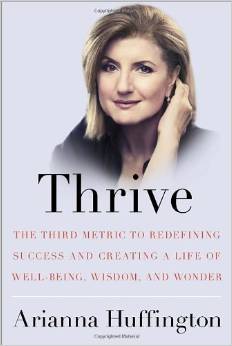
downloadFor those who have been considering Arianna Huffington’s book Thrive, it’s worth reading.  Huffington’s book focuses on our society’s ever pressing demands and offers advice on how to handle, these challenges.  The book begins by describing a life changing moment for Huffington personally, providing the reader with the background and inspiration for her book and then continues with four pillars or sections, of well-being, wisdom, wonder, and giving.

In Thrive Huffington’s main argument is that instead of constantly striving for money and power, success should be measured in other ways, in this the pillars of well-being, wisdom, wonder, and giving.  Some of the advice offered by Huffington may seem self-evident, but it never hurts to be reminded.  The following points on technology and information I think most young professionals can relate to, and I know I did.

Huffington focuses on meditation and mindfulness, ways in which to live more in the moment and to combat stressors in our lives.  One thing she indicates that constantly vies for out attention is technology, she mentions “technology has been very good at giving us what we want, but not always what we need.” Huffington also acknowledges that the workforce emphasizes get more done and faster, but that at some point we can’t function if we don’t make time for ourselves.  I know personally I can’t constantly have my A-game if I don’t give myself some downtime.

More words of wisdom in the book discuss how we constantly desire to have information and how we consume our information via social media.  “The quest for knowledge may be pursued at higher speeds with smarter tools today, but wisdom is found no more readily than it was three thousand years ago … In fact, ours is a generation bloated with information and starved for wisdom.” She later goes on to say, “I believe our job in the media is to use the social tools at our disposal to tell the stories that matter-as well as the stories that entertain- and to keep reminding ourselves the tools are not the story.” Being constantly bombarded with information is not really always the best for us, but in our fast paced world it sometimes feels like we need to keep up.  Sometimes I think it’s good to remember we need limits in our lives we don’t have to stay on top of everything, and there is nothing wrong with that, the only hard part is knowing when to establish your own limits.

All in all, Huffington’s advice is great not only for people who already have 9 to 5 jobs but also people starting out in the working world.  Guiding us new professionals towards discovering a career that we enjoy and in the process remembering as we advance in our careers to still take the time to enjoy the things in our lives, making sure we live life and not let it pass us by.  Coming to understand that success should not have to be living to the point of exhaustion and creating hazardous lifestyle is important, and something I know I connected with.  What we prioritize and what we value really can and does make a difference.

P1070457 croppedStephanie Raso is a graduate of Linfield College and earned her BA in Communication Arts. She is a new pro-member and volunteer with PRSA’s Portland Metro Chapter. Connect with her on Linkedin or on Twitter @StephanieRaso1

New Professionals Week is Just Around the Corner!

New Professionals WeekThere’s still time to join in on the New Professional Week festivities. On behalf of the PRSA New Professionals Executive Committee, we’d like to invite you to be a part of our New Professionals Week, November 10-14, 2014.


What’s On Tap

#NPPRSA Twitter Chat: Navigating the Future of PR & Marketing
Thursday, November 6, 9-10 p.m. ET

Read more about the event & RSVP here

PRSA Webinar: How Polarizing Scotch Brand, Laphroaig, Built a Social-Centric Global Campaign
Tuesday, November 11, 2:30-4 p.m. ET

Matt Day, social and content strategist for Beam Products, will discuss tips for how to build a global social campaign. Click here to register for the webinar.

Host a Local Chapter Event for New Pros Host a New Pros Happy Hour: 
There’s still time for you and your Chapter to submit an event for New Professionals Week. Some ideas include…

  • Host a New Pros Happy Hour: Invite new pros in your area to a set location for networking, socializing and learning about the resources available and member benefits from PRSA. Allow members to receive a discount on drink tickets (optional). 
  • Host an Educational Panel:  Using a panel of local experts, allow new pros to gain insights into the burgeoning PR industry in your city or help them in launching their early careers. Offer catered breakfast/lunch/drinks (optional) as part of networking before/after the panel.
  • Host a Career Connection:  Connect employers looking for talent in your area with new professionals eager for experience in PR. Hosting a mini-job fair for Chapter members adds great benefit to their membership, enables networking and helps develop new pros to be future leaders within the organization.
  • Host a private showing of a New Pros webinar. During New Pros Week, we feature a national webinar on a topic of interest for new pros. We anticipate the webinar will be held in the afternoon on Monday, Nov. 11. To host a private showing – invite local new pros to an office, bring a bag lunch and have a discussion after the presentation. The playback will also be available through PRSA’s on-demand service, and our guest speaker can be reached throughout the week for questions via Twitter. 


If you have any questions please feel free to contact New Professional Programming chairs Hilary or Janelle.  

Top Tips for First Time Conference Attendees

2014Conf504 x 275

The PRSA 2014 International Conference “Leading the Way. A fearless future for PR” is less than a week away, October 11-14 in Washington D.C.!  If it’s your first time attending PRSA Icon here are some tips from previous first-timers (and New Pros committee members) to help you prep and get the most out of your experience:

151f848Hilary Jurinak, Binny’s Beverage Depot

  1. Perfect your intro. What do you do? Where are you from? Agency or corporate? You are going to hear these questions more than you can imagine. Have a 30 second intro ready as it’ll help when you’re looking to network with many individuals.
  2. Take your time. Spend some extra time talking to vendors at the expo. Stick around for the full dinner and luncheons. You might feel the need to rush around the venue, but you’ll feel less anxious if you try to take more in.
  3. Create goals. What do you want to learn? Who do you want to network with? If your employer is sending you, sit down beforehand with your boss. Let them know what sessions you plan on attending and what you hope to get out of them.
  4. Start digging. Check out the attendee roster that PRSA will have available. Connect with other PR pros beforehand. Plan happy hour meetings, see who’s attending similar sessions or connect with other New Pros attending.
  5. Plan time for fun. This is probably your first big conference working in the “real world.” Plan time for yourself to explore Washington, DC. You deserve it.

Amy BishopAmy Bishop, DigitalRelevance

  1. Plan out your top 6 must-attend sessions. It can feel overwhelming when you look at the PRSA International Conference program 5 minutes before a set of professional development sessions starts. Before you get to Conference, select your top 2-3 sessions for each day to prioritize your time and avoid the feeling rushed.
  2. Make New Connections. It comes naturally to use PRSA International Conference as a reunion with your long-standing PR friends. But take time to get to know a few new connections. Invite your new PR connections to join you for drinks or dinner sometime during Conference.
  3. Sleep. I know PRSA International Conference only comes around once a year, and many PR professionals consider it a holiday in itself. But to make the most of your days and evenings, make sure you get a good nights rest. Also, being well rested will help you transition back into post-conference work more easily.
  4. Remember your job responsibilities. International Conference is a great time for learning and connecting with other professionals. But don’t forget to take a few minutes each day to check your work email and catch up on any work assignments you need to complete that week. You’ll be grateful you took the extra time when you return to the office with a slimmed down inbox.
  5. Join the PRSA New Pros Mixer at Conference. Join the PRSA New Professionals for a happy hour New Pros Mixer on Sunday, October 12 at Mission Restaurant in Dupont Circle.

Bio_PhotoJessica Noonan, Burson-Marsteller

  1. Take handwritten notes. Putting away the laptop is something all of us multi-tasking PR pros have issues with, but you’ll get more out of your sessions if you pay attention. If your employer paid for you to go, make sure to share your notes when you return.
  2. Use social media. As you may have learned from PRSSA conferences, connecting through hashtags is an easy way to engage with fellow attendees. Meet your tweeps in real life at Monday’s #PRSAICON Tweetup.
  3. Meet a board member. While networking in general can be intimidating, go out of your way to say hello to a PRSA board member. It will be well worth your time for a brief conversation that could lead to you understanding more about PRSA or even a future leadership role.
  4. Get to sessions early. I’m not just being Type A here. Some of the most popular sessions fill up even 15 minutes prior to the start time. You’ll have enough time to go to your hotel room and take a nap in between sessions, but consider if the time would be better spent speaking to a presenter or checking out the exhibition. Furthermore, have a back up session you’re also interested in.
  5. Download the app. For those times that a session is full, it’s handy to look in the phone you already have in your hand. Additionally, you can engage with fellow attendees ahead of time. If you don’t know where to start check out our PRSA New Pros session – Navigating the Future of Business as a Hybrid PR Professional – on Monday!

Get the most out of your experience by planning ahead and make sure to have fun too!


The Importance of Staying Connected with Your Network

1As I returned to New York City a few weekends ago, I overcame a feeling of nostalgia as I roamed the streets of SoHo. Last summer I completed internships in the city at two fashion PR agencies, and still to this day I can clearly remember my first day on the job. While walking down Broadway Street with my boss, she looked at me and said, “The first fundamental lesson in any career, especially in PR, is to always get everyone’s contact information that you meet.” Her advice has stuck with me ever since.

As a new professional, I am constantly growing my contacts and networking wherever I go. It’s basically second nature for me now to ask for a business card. Did you know that according to the Pew Research Center, the average American has approximately 634 ties in their overall network? However, as easy as it is to meet new people in your field, it is also just as easy to forget to reconnect with them.

Like many recent graduates, I am currently in the job search stage. During this time, I’ve had the chance to reflect on all of the people I have met throughout school, internships, and other experiences. This has made me realize how important it truly is to stay connected with your network.

They can open new doors for you

This is the most obvious, yet most important reason to staying connected. As the old saying goes, “It’s not what you know, it’s who you know.” According to the Labor of Statistics, approximately 70 percent of all jobs are found through networking. It is highly recommended for recent graduates to reconnect with as many people as they can in their network (e.g. professors, previous employers, colleagues, friends, family members). Any one of these contacts can refer you to a job, connect you to another professional, or even just provide you with advice and new knowledge.

It’s common professional etiquette

Regardless if a connection has done a favor for you or helped you in some way, it’s always appropriate to reach out and let them know you haven’t forgotten about them. Thank them for their help or simply say hello. You don’t want someone to think that you’re only reaching out to him or her for a favor. Be natural and friendly. Just as you would contact your friends to grab a coffee or lunch to catch up, it’s okay to do the same with your professional network. There are many creative ways to staying connected!

“What if I haven’t talked to them a long time, should I still reach out?” The answer is YES! This is often a worry among new professionals, but the truth is that people will always appreciate a nice message from an old colleague or friend. In this day and age, communication has become a lot easier especially with the use of social media. If you don’t feel comfortable calling  someone, then reach out via LinkedIn, Facebook, Twitter, or email.

Ideally, you don’t want to get stuck in the habit of waiting too long before you reconnect with someone in your network. Eventually, relationships will fade if you don’t attempt to keep in touch. You want to avoid this by consistently communicating with your contacts and making yourself visible. For example, I like to message and email my old professors and employers every 2-3 months. Our professional network is rapidly growing, so it’s important to prioritize and make time for those whom you have stronger relationships with.

Recent graduates and new professionals, what method of communication have you found to be the most effective and comfortable when reconnecting with people in your network?

2Catalina Gomez is a graduate of Philadelphia University with a Bachelor of Science in Professional Communication. She specializes in public relations and has experience working with lifestyle and consumer brands. Catalina is also an active member of the Hispanic community and currently resides in Maryland. Connect with her on LinkedIn or Twitter.