

A successful mentor-mentee relationship begins with asking meaningful questions. These key questions help you gain a deeper understanding, guide your growth and foster a stronger relationship with your mentor.
By Jesse Burke
The first few weeks of the year can be the perfect time to reflect on the previous twelve months by evaluating goals, celebrating successes and acknowledging the obstacles that led you to grow. Much like the gifts we exchange around the holidays, this time can bring a sense of wrapping things up – and, of course, excitement for what’s to come!
One of my favorite traditions around this time is choosing a New Year’s resolution. Each year, I try to set personal and professional goals that align with where I am and where I want to be. In 2025, I aimed to keep myself moving forward by setting a personal goal of walking 10,000 steps daily and a professional goal of joining a professional organization, which led me to my current role as Co-Mentorship Chair of PRSA New Professionals. This year I’m aiming for 11,000 daily steps and officially launching our New Pros Mentorship program.
If you’re a new pro still looking for a New Year’s resolution, a meaningful option to consider could be finding a mentor for yourself. Building a relationship with a mentor can be a great way to navigate not only the start of the year but also the early stages of your career. It’s a resolution that can turn simple meetings into a powerful tool for your professional growth.
Ten Questions to Get You Started
To help you kick off a new year and a new mentor-mentee relationship with confidence, consider these ten thoughtful questions to get to know your mentor:
1. Can you tell me about your career journey?
2. What advice would you give to yourself when you were just starting?
3. What skills or certifications would you prioritize if you were new in your career today?
4. How can I make the most significant impact as a new pro in my role?
5. How do you establish a healthy work-life balance?
6. What inspires you outside of work?
7. How do you stay on top of PR, MarComms and industry trends?
8. What are some common obstacles I should prepare for in my career path?
9. What are you most proud of in your career so far?
10. What additional information can I share to make our relationship successful?
These questions serve as a good starting point for getting to know your mentor. However, some of the most meaningful relationship-building can happen through spontaneous and casual conversations. Ultimately, it’s essential to come prepared with organized thoughts and ensure that everything reflects your authentic self.
Join Our Program
Of course, the above questions are irrelevant if you don’t have a mentor to ask them. If you’re looking, there are several ways to find one, such as through your workplace, a personal connection or by joining our New Pros Mentorship Program. We’re currently gathering names of individuals who are interested in participating as mentees. To join, please fill out this form by January 30, 2026, at 11:59 PM. .
Note: Filling out this form does not commit you to anything at this stage. It simply helps us gauge interest, form a waitlist and better understand what you’re looking for in a mentorship experience. Once we’ve finalized program details and secured mentors, we’ll follow up with next steps!
Have a question? Feel free to contact me at jesseburke2020@icloud.com.
About the author:
Jesse Burke serves as the Mentorship Co-Chair of PRSA New Professionals, managing the section’s mentorship program. He graduated from The Ohio State University in 2024 and is an account executive at Slide Nine, a communications, public relations and digital marketing agency based in Columbus, Ohio.
 This is absolutely the wrong way to approach finding a fulfilling career. Instead of pursuing opportunities only when we think we desperately need them, new pros should keep an open mind and eyes peeled for any new opportunities, no matter how satisfying their current position may be.
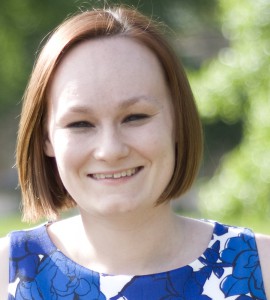 byn Rudish-Laning is a member of PRSA SC and communications coordinator for the South Carolina Council on Competitiveness. Robyn is also a member of the New Professionals executive committee. She is a graduate of Duquesne University and is currently located in Columbia, SC. Find her on