Book Review: Jab, Jab, Jab, Right Hook: Telling Your Story In A Noisy Social World

Training. It’s a part of an athlete’s life, but it’s also important to PR pros.
From newbies to veterans, we all need to train ourselves to be storytellers for our companies, our clients and even our personal brands, on all the right social networks.

jab jab right hook book reviewConferences are great for training, but if you’re on a tight budget, especially as a new PR pro, your best bet is to hit the books. Enter Gary Vaynerchuk and his third book, “Jab, Jab, Jab, Right Hook” which will train you how to tell your story in a noisy social world.
 
Vaynerchuk asks readers to consider “Jab, Jab, Jab, Right Hook” as a “training camp to prepare you to storytell on today’s most important social media sites.” 
The objective of great storytelling is to create outstanding content on the right platform, and he compares doing that to the sport of boxing (hence the jabs and right hook).
 
Key takeaways
I highlighted a lot of great points throughout my copy of the book, and the following three takeaways stood out to me most.
 
1. “Content is king, but context is God.” 
You can create really great content that is compelling, but if you put it out on the wrong platform—or it misses what a certain platform is all about—it won’t be the hit you expect it to be. And as Vaynerchuk points out, content for the sake of content is pointless.
 
2. “No matter who you are or what kind of company or organization you work for, your number-one job is to tell your story to the consumer wherever they are.” 
It could be on Facebook, Instagram, Twitter , etc., but it is most likely that customers are on all three and even more than that. You need to make sure that your content is relevant to your customer on the platforms they utilize most.
 
3. “Skillful, native storytelling increases the likelihood that a person will share your content with a friend.” 
That increases your brand’s audience further and further. Shareable content makes your brand more memorable in the future and tells your story beyond your network of consumers.
 
Train by example
If you’re the typical new PR pro, you were probably a first adopter of many social platforms (Facebook, Twitter, Instagram, Pinterest) that Vaynerchuk covers in “Jab, Jab, Jab, Right Hook.”
You know the ins and outs of these sites. But don’t think that means this book isn’t relevant to you!
It is easy for brands to get in the grind of posting the same content to Facebook, Twitter and Instagram (I’ve seen it happen before), but that way of promoting content is a great disservice for the very reason why context is so important.
 
The best way to complete the training that this book offers is to flip through to the “color commentary.” This is where he breaks social networks up by chapter and gives countless examples of good and bad content with screenshots of various campaigns.
Some will make you rethink your strategy, and others will make you cringe, asking “what were they thinking?!”
 
Do you believe in the power of storytelling and context? What do you consider to be the most important way to get your brand noticed?

 
Victoria BepplerVictoria Beppler is a graduate of Waynesburg University where she received a Bachelor of Arts in Public Relations as well a Master of Business Administration in Market Development. She currently manages social media, email marketing, the annual fund and more for her alma mater as the Assistant Director of Alumni Relations. When she isn’t in the office or traveling to alumni events around the country, you can find her working on a DIY project or hanging out with her husband, Josh, and their dog, Brinkley. Connect with Victoria on Linkedin and Twitter (@victoriabeppler).
June 2015 #NPPRSA Twitter Chat HIghlights: Pitching With Purpose

June recap picWe’d like to thank everyone who participated in the June #NPPRSA Twitter chat to discuss media relations best practices. We would especially like to thank Mallory Musante, Social Media Manager for Media Maison.

Join us again on July 15 for our next #NPPRSA chat and stay up-to-date with PRSA New Professionals on Facebook, Twitter, LinkedIn and Google+.

Review highlights of the chat below. What did you learn from the June chat? How can you strengthen your relationships with the media?

You can receive FREE New Professionals Section membership for PRSA by using code AM15!

Lauren Loxterman is the PRSA New Professionals Social Media Co-Chair and Co-Founder of Soversity, a public relations and digital marketing company. You can connect with her on Google+, LinkedIn or Twitter.

Between You & Me: Book Review

As public relations pros, we often forget to refine our grammar in communication, and instead focus on mastering new pitching techniques or simply creating content.

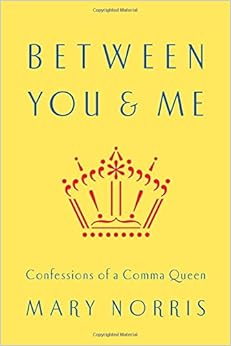
Between You & Me: Book ReviewStrong writing starts with grammar though, and reading “Between You & Me: Confessions of a Comma Queen,” by Mary Norris, is a painless, enjoyable way to review grammatical rules.

In her book, Norris–a former copy editor at the New Yorker–writes about her many years editing, while sprinkling in in actual grammar lessons and tying in short memoirs of her life. After reading the book, I was surprised to realize that I hadn’t reviewed some of the rules of grammar since learning them in junior high English!

Below are five of my favorite fun facts and rule reminders from the book:

  • Danglers: the dangling participle. Everyone has written a sentence with a dangler, which can be fixed by changing the subject of the sentence to match the participle or giving the participle its own phrase
  • “Who” does not change to “whom” just because it’s in the middle of a sentence
  • Serial comma: the one before “and” in a series of three or more things
  • The editors of Webster’s Third dictionary saved 80 pages by cutting down on commas
  • Copy editors will never be replaced, unless spell-check learns to recognize context

Each chapter is as cleverly named like the book title, such as “Comma Comma Comma Chameleon” and “A Dash, a Semicolon, and a Colon Walk into a Bar.”

For not being a history-buff myself, I found myself interested in learning how the different pieces of language came to be.

As the New York Times book review says, copy editors’ “obsessions, typographical and otherwise, make hilarious reading.” I would have to agree! Part linguistics, part grammar, part history and part memoir, Norris will captivate you with her book.

Hanna PorterfieldHanna Porterfield is the Newsletter Co-Chair of PRSA’s New Professionals section and an Assistant Account Executive at Development Counsellors International. She graduated from Michigan State University in 2014 and is actively involved in the alumni club’s New York chapter. Connect with Hanna on LinkedIn and Twitter (@citygirlhanna).

Likeable Social Media: Book Review

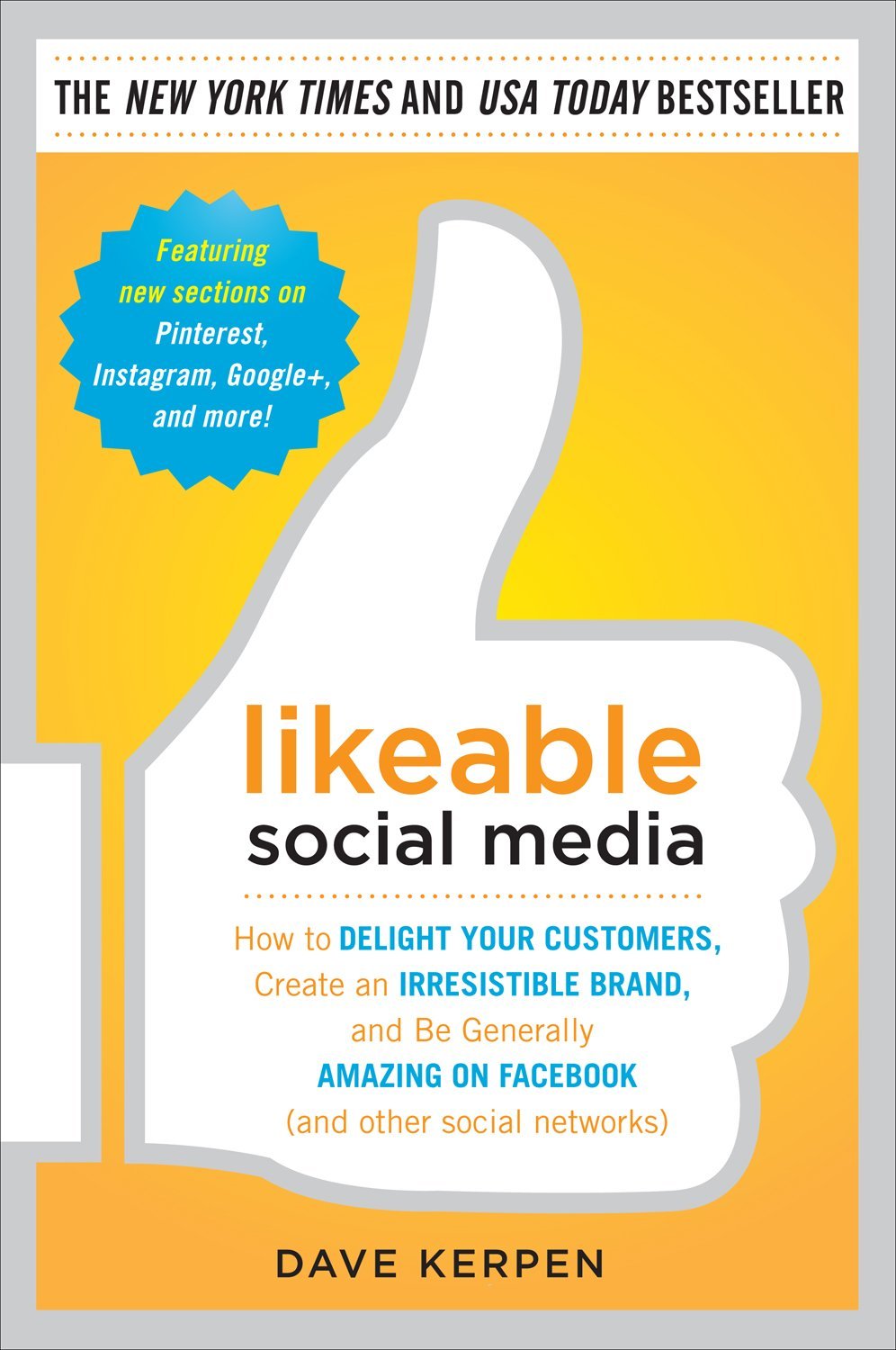
714bRDv3idL._SL1500_As a new PR pro, one of the many roles you may play on your team is to manage the social media accounts for various clients. I already know what you’re thinking. How hard can it be to post on a client’s page once a day?

When you take on this responsibility, it’s important to keep in mind what you think might be common sense, isn’t after all. I was reminded of this after reading Dave Kerpen’s “Likeable Social Media: How to delight your customers, create an irresistible brand, and be generally amazing on Facebook and other social networks.”

A New York Times and USA Today bestseller, the book explores the basics and fundamentals of managing a Facebook page on behalf of a client while offering real-life examples from Kerpen’s own experience. Cofounder and CEO of Likeable Media, Kerpen uses his own experience with national brands such as 1-800-Flowers.com, Neutrogena, Uno’s Pizzeria and more to paint a picture of real-time case studies.

What was interesting about Kerpen’s approach and what I especially appreciated were the action items found at the end of each chapter. While I was highlighting ferociously every time I came upon something I found relevant or applicable to my client, I found it super helpful that there were three to five quick takeaways for how the reader could apply what was covered in the chapter on their own.

Here are my own three quick takeaways from Likeable Social Media that hopefully can serve as food for thought in your own social media strategies:

Be human.

When posting and engaging on behalf of your client, converse with your followers in the voice and tone that is appropriate for the client. But be careful to not come off as a robot. For example, a luxury eyewear brand wouldn’t respond to a customer’s compliment with “That’s totally awesome. Thanks for sharing!” Instead, their response would likely sound a bit more like “Thank you so much for your kind comment. We appreciate you taking the time to share your great experience with us.”

Respond to your positive comments, too.

This might be a no-brainer, and a bit of a “duh” moment. No matter how simple it might seem positive comments might get overlooked more than a negative comment would. Think about it – one negative comment from a customer complaining about customer service or a product on your website and the entire team can go up in arms, trying to respond to the customer in a timely and appropriate manner. A simple thank you from a customer, however, could go unacknowledged from the company for hours – even days.

Take the time to respond to your positive feedback. After all, these are the people who could possibly be brand ambassadors for your company down the road by sharing your company’s news with their friends.

Create a community.

Kerpen shared various examples such as Stride Rite that successfully created a community using their Facebook page. The shoe company achieved this not by posting about shoes every day, all day. Rather, the company decided to shift gears and take the approach of sharing content that would be interesting and relevant to their target audience: moms – and their kids who wore the shoes.

Now, this community of moms is consistently engaging on Stride Rite’s Facebook page on tips for new moms, pictures and videos of babies and milestone moments, and general questions for raising a child. And what’s key is that Stride Rite has embraced this and responds to comments, questions and shared items. As a result, Kerpen says the company online sales increased steadily week over week since the initiative launched.

Finally, my one criticism of the book was that I was searching and hungry for additional best practices on other social media platforms, specifically Instagram and Twitter. If Kerpen decided to come out with a book on best practices for Instagram, I’d read it.

If you’ve just started your first PR job and will be handling social media for a client, I’d highly suggest this book. It will take you from the newbie in the office to the rock star rookie with stellar social media strategy in no time.

If you have any questions or want to chat more about what I found interesting from this book, find me on Twitter at @shandihuber!

Shandi HuberShandi Huber is a senior account executive at Wordsworth Communications, a public relations agency in Cincinnati, Ohio. An enthusiast for all social media platforms, you can often find her pinning her dream closet on Pinterest or posting photos of her new puppy on Instagram. Connect with Shandi on LinkedIn and Twitter(@shandihuber).

The Tools: Book Review

9780679644453_p0_v2_s260x420As the first half of the year comes a close, I began looking for inspiration to accomplish my goals for 2015. “The Tools: 5 Tools to Help You Find Courage, Creativity, and Willpower, and Inspire You to Live Life in Forward Motion” is the perfect book to help you finish what you’ve started in 2015.

There are five tools can be applied to any problem or situation you may encounter on your way to achieving your goal.

Authors Phil Stutz and Barry Michels, a psychiatrist and psychotherapist, respectively, outline five common issues we all experience – procrastination, grudge-holding, insecurity, anxiety and lack of self-control – and developed these tools to help move past mental blocks, break down resistance to change and  connect what they call the “higher forces.”

“Real happiness is the constant presence of higher forces in our lives.”

Their theory is that the higher forces are available to everyone, you’ve just got to tap into them. So what are they?

  1. Reversal of Desire connects to the force of Forward Motion.

  2. Active Love connects you to the force of Outflow.

  3. Inner Authority connects you to the force of Self-Expression.

  4. Grateful Flow connects you to the force of  the Source.

  5. Jeopardy connects you to the force of Willpower.

Each chapter provides an in-depth discussion of the tool with real life examples from Stutz and Michels, what you are fighting against and cues of when it’s time to use it.

If you are looking for to make an immediate change as we prepare for the second half of the year, “The Tools” is a great place to start.

Victoria LightfootVictoria Lightfoot graduated from Georgia State University in 2012 with a Bachelor of Arts in journalism, concentrating in public relations. She is currently the PR coordinator at the Atlanta Convention & Visitors Bureau and volunteers on PRSA Georgia’s College Relations Committee and co-chairs the Travel & Tourism Special Interest Group. Connect with Victoria on LinkedIn and Twitter (@Victoria_Lenese)