How to Network as an Introvert

If you’re an introvert reading this, you probably have read many blogposts and articles on the said subject. You may even groan each time you read another post written by another author talking about how to overcome shyness and networking.

One of the most important things to remember is as an introvert or an extrovert is that everyone works and does things differently. One size never fits all. As an introvert, you need to figure out what works best for you when it comes to networking. Why? Only you know yourself.

The dominant characteristic which makes you introverted is your need to recharge alone or with a small manageable crowd after a long period of being “on” and socially active all day. How and when you recharge depends on you.

A few ways that may help you feel more comfortable with networking:

  • Schedule time before and after a networking event to work alone and to prepare for the on period and to recharge.
  • Take solitary walks after events, and even before events to help you feel calmer.
  • Listen more than you talk, which you’re already good at. Find the right time to talk and never interrupt, which are already some of your strengths you can show.
  • If you notice you fidget a lot, hold something in your hands. This will allow you to stay focused on the conversation, instead of you playing with your hands.
  • Take breaks! It’s perfectly okay to take a five minute break every once and a while to reenergize yourself and give yourself a small break. This will do wonders for you.

It does not matter where you fit in the introverted-extroverted scale, everyone needs to work on networking tips such as practicing, having a networking plan, buddying up, connecting instead of sales pitching, following up, etc. These exercises and tips will help you maximize your networking efforts.

Practice may not make perfect, but it will make you more comfortable. Make networking and socializing a habit in your everyday activities and opportunities. For example, you can take small breaks at your office to walk around and introduce yourself to someone new at least once a week.

Read Quiet: The Power of Introverts in a World That Can’t Stop Talking by Susan Cain. My former boss recommended it to me. I devoured it while travelling to the PRSSA 2012 National Conference.  It accurately captures what it means to be an introvert. Understanding yourself goes a long way and will help in the long run with your career.

You would be surprised to find how many communicators identify as introverts. So, if you identify as an introverted in public relations, marketing or integrated communications, you are not the only one. The person next to you just might be.

 

0a8e016Murewa Olubela is the Founder of The Single Story Foundation and was a past PRSSA Chapter President at the University of South Florida. Connect with her on Twitter and LinkedIn

Five Ways to Raise the Bar in Your First Six Months

Raise_the_barThe first six months of your career are incredibly important. Throughout this period, you are setting expectations for what people can expect from you, and also what you can expect from yourself. You are learning a ton about your company and co-workers and simultaneously establishing the habits and work-ethic that can make or break a career.

I recently had my first six-month review as an account coordinator at Text100. While it was great to receive feedback from a number of colleagues and clients, it was also a great opportunity to reflect on my own about what has gone well since I began and what I could still improve upon.

If you are a new professional, consider these tips to push yourself through the first six months of your new job.

  1. Be present

Of course, it is (or should be) a given that you are physically at work when you need to be. But that isn’t exactly what I mean by being present.

This tip applies much more broadly. For example – if your company hosts happy hour events, you should be there. If your colleagues participate in volunteering opportunities, fundraising efforts, fantasy-football leagues, etc., try to be a part of the fun.

Being present extends to the online realm, as well. If your company is active on social networks, you should do your best to be active in those communities.

  1. Raise your hand

Raise your hand whenever it’s possible to get involved in something. This could be in the form of new business pitches, helping out a team with some work that needs to be turned around on a tight deadline, or more operational activities like joining an HR committee or holiday party planning committee.

Not only will raising your hand and saying “yes” show your colleagues your flexibility and dependability, you will also be exposed to more projects and activities. Ultimately, you will learn more and be a more-rounded professional.

  1. Ask questions

You’re young and you’re new; nobody expects you to jump into the job already knowing how to do everything. And, frankly, if you did – it probably wouldn’t be a challenging enough job for you in the first place.

Admitting when you need some extra help and guidance shows a level of maturity to your colleagues, and it makes it much more likely that you will deliver exactly what they need from you.

  1. Make suggestions  

Diversity is important in every workplace. Don’t forget that part of what you have going for you as a young professional is that you come from a different background than some of your more senior colleagues. Your different training and unique mix of experiences can sometimes allow you to see opportunities for change that others can’t. You could be the change catalyst needed to improve long-standing policies and processes.

Making suggestions in a very respectful way signals to others that you are thinking critically about the business, and that you care enough about constant improvement to put your own reputation on the line.

  1. Have a side-hustle

Much has been said about the benefits of working on something else other than your typical “day-job” work. In fact, some forward-looking companies even allow employees to use a certain percentage of their time on the job to work on other things important to each individual.

While you may not work at Google or Apple, you should still be using some of your personal time to foster a hobby or develop new skills. That could take the form of blogging, volunteering for your local PRSA chapter or practicing your graphic design skills.

What other tips would you provide for new professionals just starting out in PR?

Iso 50 200sec f4.5 AlienBee 1/32 Speedlight ½ -.3 Jim Mignano is an account coordinator at Text100. He recently graduated with a Bachelor of Science in Communication Studies from The College at Brockport, SUNY and he is a member of PRSA Rochester. He loves making new friends on Twitter (@J_Mignano).

Three Daily Habits to Help You Get Ahead

Between pitching the media and creating continuous content, we have little – if any – time to focus on personal career growth. But, with the industry rapidly evolving, we should make this a priority.
While nurturing your career can take hours on end, and ultimately feel like a job within itself, these three simple habits can help you get ahead – while staying sane – in this ever-changing, competitive PR world.

Rise early to shine on the job

If you’re not a morning person, you’re probably sick of reading about all those powerful entrepreneurs who swear waking up early is the key to success.

Now, I may not be a powerful entrepreneur, but I’m a true believer in this early-morning habit. By waking up an hour earlier, you have ample, uninterrupted time for those little things you often put off when the workday begins.

Exercise? Finish it early, before you have time for excuses. Reading the news? You’ll be more informed and prepared throughout the day. Writing a PRSA blog post? With fewer distractions, morning is the perfect time for writing.

But night owls fear not: If you can accomplish these tasks later in the evening, more power to you. Just make sure you get enough sleep to operate efficiently the next day.

Read, read and read some more

As a PR pro, you probably spend a majority of the day reading already, but the outlets and content likely revolve around your company or clients’ industries. Try thinking of yourself as another client.

You have to be well versed in, well, everything, to demonstrate your depth of knowledge to clients, leadership and peers. Here are a few suggestions to start:

  • Illustrate your industry expertise by reading sites like PR Daily, Spin Sucks, and PRSay.
  • Read local news to be aware of your city’s issues and happenings. It will help you lead informed conversations at networking events, happy hours and daily encounters. And, if you’re pitching locally, you’ll quickly learn reporters’ beats.
  • Be aware of national and international news for pitching trend stories and being an informed citizen in general. Try an app like Cir.ca for a brief overview of important worldwide news.

Prepare and prioritize your next day’s to-do list

Before you leave work in the evening, prepare your to-do list for the following day. It will make your mornings more efficient and ensure you don’t lose track of any projects overnight.

We all have our own to-do list processes, so find what works best for you. In my case, I use the app 2Do to input every single deliverable with deadline as it’s assigned so I don’t miss anything.

Every evening, I reference the app and handwrite my to-dos on a sticky note. Then, I highlight three major projects for the day so I know where to start as soon as work begins.

Are you ready to get ahead? Take the next few weeks to adopt these habits and evaluate which fit your lifestyle so you can develop a personalized, daily routine to expedite career success.

What habits help you build your personal brand? Please add your suggestions in the comments section below.

Stephanie Vermillion headshotStephanie Vermillion is a senior account executive at Wordsworth Communications, a public relations agency in Cincinnati. Connect with Stephanie on LinkedIn and Twitter (@SMVermillion).

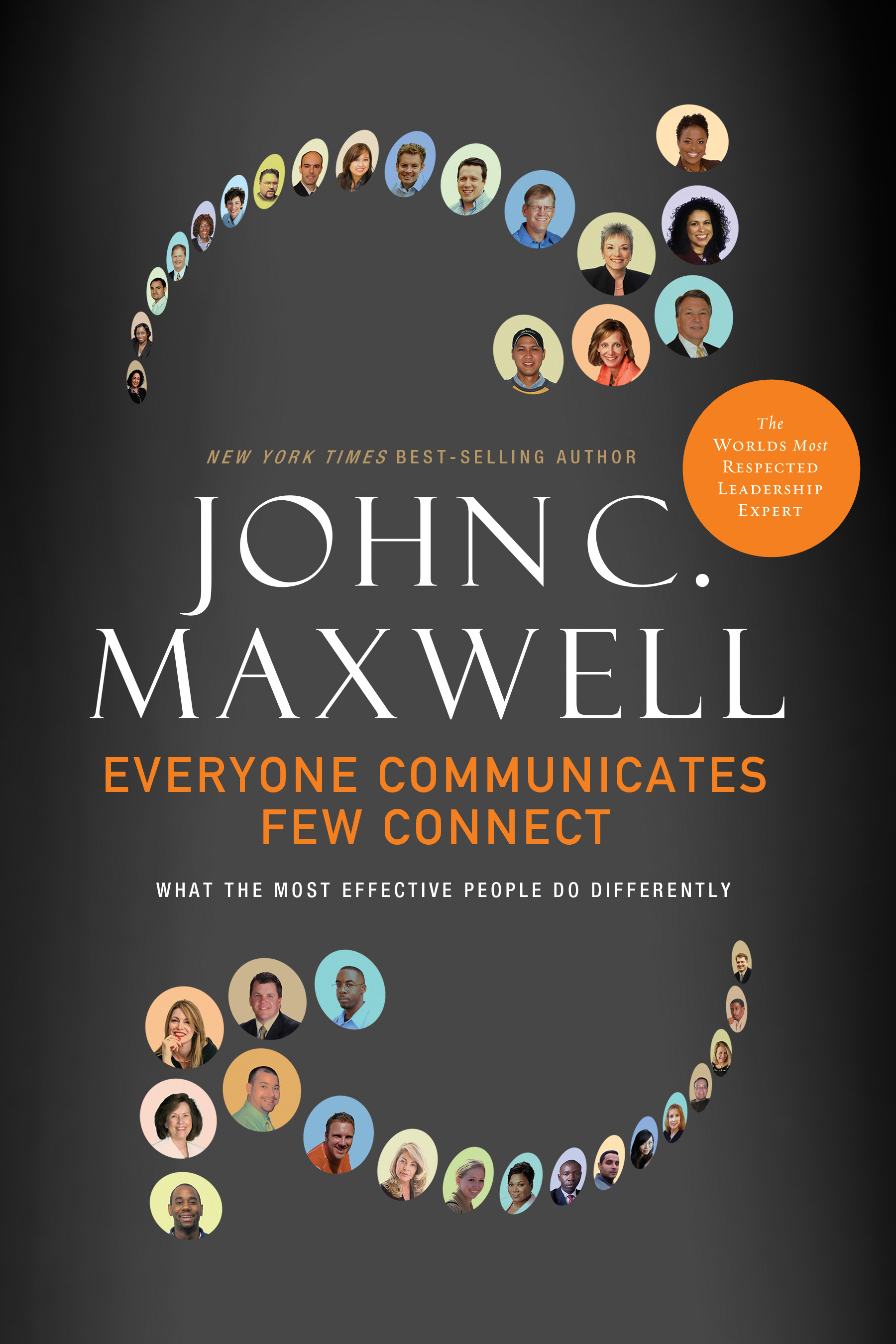
Book Review: Everyone Communicates, Few Connect

This post is part of The Edge monthly series of book reviews on books relevant to new PR professionals.

As young communicators, we can learn a valuable lesson from John C. Maxwell: communicating isn’t the same as connecting.

The famed leadership expert, and author of over 70 books, uses this publication to teach us the difference.

“Connecting is the ability to identify with people and relate to them in a way that increases your influence with them,” says Maxwell.

As PR/communications professionals, connecting is an important aspect of our job, but are we being as effective as we can be? That’s what Maxwell challenges us to examine with Everyone Communicates, Few Connect.

These lessons are critical for professionals across all industries. Writing, speaking, presenting, pitching, and selling are critical skills in any job, regardless of industry or field.

Your head will spin from the number of times you read the word “connect” – mine did – but when you begin to grasp the importance of making connections not just for yourself, but for the sake of your customers/clients, you will thank Maxwell for driving the point home. Improving the customer experience should always be priority number one.

Where this book provides exceptional value – particularly for young professionals – isn’t in practical advice or knowledge, but in the confidence readers can gain from the material. Confidence can be a fragile thing, especially for young professionals. But it can also help young pros excel beyond their entry-level expectations.

The book is also a ‘must read’ for the challenge it presents to its readers to audit their own communications processes. In this regard, you can take as much from this book as your attitude and openness allow.

As a resource, the text also aggregates some of the best principles from respected communication and leadership experts and philosophers. Maxwell also shares his Five Principles and Five Practices, which include:

  • Finding common ground
  • Keeping your communications simple
  • Capturing people’s interest
  • Inspiring people
  • Staying authentic in all your relationships

Maxwell posted chapters of Everyone Communicates on his website, and used the commenter feedback to add anecdotes, quotes and advice – each commenter was rewarded with their photo on the inside cover of the book. This helps to make material relatable to every level of professional.

Maxwell may rely a little too heavily on his on triumphs as examples within the book, but the positive attributes of Everyone Communicates can be helpful as you begin mapping a path to leadership positions within your company.

HeadshotRobert Martin is a Corporate Relations Intern at Allstate and the 2014 Co-Editor of the PRSA New Professionals Newsletter. He resides in Farmington Hills, MI.

How to Design Your Office to Support Your PR Activities

Spending a vast amount of money on PR campaigns can make good sense if by doing so you are able to establish and maintain a desirable public image that helps to attract new customers and to retain old ones. However, it is not an activity that should be carried out in isolation, but rather something that should form part of an overall marketing strategy, including the interior design of your corporate headquarters.

Image Credit: Legozilla, license (click for source)

Many business owners may feel that office design has very little to do with their public relations campaigns but if you want to make sure that your target audience does not perceive your PR activities to be nothing more than smoke and mirrors, it is a good idea to reinforce the image you are trying to project with something tangible such as the colour scheme and layout of your head office.

Visitors to your headquarters cannot help but be influenced by what they see and their perception of your organisation is very likely to be coloured by the décor of your offices. The following design tips should help to ensure that this is a positive and not a negative.

Corporate colours – if you have made a big effort to get potential customers to associate your company with a particular logo, you should seriously consider using the colours that appear in that logo when deciding on colour schemes for your office interiors.

In particular, an impressive reception area painted in your corporate colours is sure to make a good impression on visitors and leave them in no doubt that yours is an organisation that stands behind its advertising slogans 100%.

An appropriate layout – if you spend a great deal of money in an effort to convince people that yours is a forward thinking company where corporate hierarchies have been swept aside in favour of a more inclusive working environment that is conducive to innovation and the rapid evolution of new products, you need to back this up with your office layout.

If visitors to your headquarters are met with closed doors and lifts to executive floors that can only be accessed with a special proximity card, which only the chosen few are issued with, there is a very good chance that they are going to start to question everything that your marketing campaigns have tried to establish as fact. Do not confuse your customers by sending mixed messages about what your company stands for and how it likes to operate.

Relevant themes – if your organisation is making a big push to sell its products to environmentally aware consumers who are genuinely concerned about the effect that their activities have on the natural world, this is something that can be carried through to the interior design of your offices. Instead of having panoramic windows that frame impressive views of the local countryside or cityscape, consider going for a more sustainable design with less glass, which will be cheaper to heat in the winter and to keep cool in the summer.

Many organisations make the mistake of trying to dazzle their visitors with the magnificence of their corporate headquarters when in reality all they are doing is demonstrating their lack of consideration for what really matters in life.

As you can see, the way that you choose to decorate your offices and how they are laid out could have a big effect on how your customers and members of the public in general perceive your business.

Always remember that actions speak louder than words so what your company does is just as important as what is says.

Author: Juliet Martin is writing for Saracen Office, one of the leading Commercial office Refurbishment Experts within the UK.