Book Review: Mastering Micromedia

I’ll admit – when I picked up Mastering the New Media Landscape, I was a little skeptical. I’m generally skeptical of any book or article that claims to help its readers master anything. We know that Malcolm Gladwell’s 10,000 hour rule isn’t exactly accurate, but can you really master a skill in 200 pages or less?
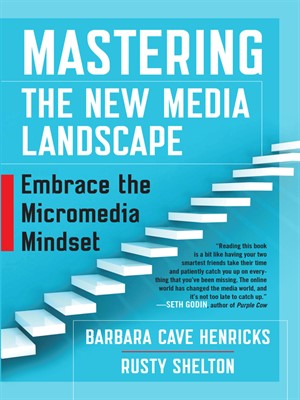
mastering-the-new-media-landscapeThe answer is almost unequivocally no, but with a caveat in this case. Mastering the New Media Landscape’s subtitle “Embrace the Micromedia Mindset” is a more accurate description than its actual title. Authors Barbara Cave Hendricks and Rusty Shelton outline the key principles, define the necessary terms (earned, rented and owned media, anyone?), and relate new media ideas to their traditional counterparts.

By setting the book up this way, Hendricks and Shelton give readers the tools needed to build an effective strategy for leveraging every bit of traditional and new media out there to communicate effectively with your audiences.

Mastering isn’t an end-all, be-all guide for mastering the tools at your disposal, but rather a guide to help you craft your own plan for understanding the opportunities available and conquering internet publishing, the heart of what “micromedia” really is.

The information presented is helpful for managing a corporate or organization’s brand or creating a personal brand, new pros or seasoned practitioners. Two of the best chapters – “Earned, Rented and Owned Media” and “Online Brand Audit” – gave the information and steps I found most useful.

After defining what earned, rented and owned media are, the authors explained something I had never thought of: it is most important for you to have information on media you own and for at least one piece of owned media to show up on the first page of search results. I had always thought that it was just most important for items like my LinkedIn profile, blogs I had authored and things like that to show up before any other less professional items, but that’s not entirely the case. Since those things tend to live either on a social media site (LinkedIn) or on someone else’s site (a blog post), I have no control over how they show up or even if they show up. Those pages could be taken down or edited at any point and there would be nothing I could do about it. If I didn’t keep copies or host my work on my own site that I controlled, it could all be lost forever with no warning.

“Online Brand Audit” piggybacked off of that theme and broke down where and what to look for when assessing and managing your brand. Doing a brand audit can seem daunting, just because of the sheer amount of sources and content you might have to sift through. Making sure that you’re properly represented online. Performing a personal brand audit is particularly important for new professionals while job searching. Employers rely on social media and online information just as much as resumes, portfolios and interviews when filling a position.

In addition to these two chapters, Hendricks and Shelton offer a lot of great information on how to make the most of all of the new media tools out there to use. There are plenty of tips and ideas for types of content, statistics on which users are on each of the social media networks and getting the most out of each network, strategy and piece of content. Most chapters also offer a “Stories from the Front” section in which the authors share an Q&A with a professional on the topic covered in the preceding chapter. All in all, this book won’t make you a master of media by the time you finish, but it is a worthwhile read for anyone looking for a guide to conquering today’s media landscape.

Robyn Rudish-Laning (1)Robyn Rudish-Laning is a member of South Carolina’s PRSA chapter and is communications coordinator for the South Carolina Council on Competitiveness. Robyn is also a member of the New Professionals executive committee. She is a graduate of Duquesne University and is currently located in Columbia, SC. You can connect with her on LinkedIn or Twitter or read her blog here.

Personal Branding: What is it and Why Should I Care?

“Be the real you because everyone else is taken and replicas don’t sell for as much.” – Dan Shawbel

As a PR professional, you’re probably familiar with branding, but have you ever stopped to think about your personal brand? If not, you’re not alone. During the day we’re busy promoting and supporting the brands of the companies and accounts that we represent. Why would we want to think about branding outside of our jobs?

Developing a personal brand is important for every professional, regardless of your job or industry. In today’s ever changing environment it has become more important than ever to embrace the idea of “career management” on an ongoing basis instead of waiting to think about your career until you need a new job.

Managing your career begins with developing and living your personal brand.

What is a Personal Brand?

A personal brand is just that-it’s personal. It encompasses everything that people think and say about you. It’s the sum of everyone’s experiences with you–the good, the bad, and the ugly.

Think about your favorite restaurant or grocery store. You expect a certain level of service every time you go there because they’ve established their brand. The same is true for you. Your personal brand is what people come to expect when they interact with you professionally or personally.

Evaluate Your Brand

Evaluating people’s perceptions of you is the first step in developing your personal brand.

Step 1 – Honestly ask yourself, “What are the five words most often used to describe me?” If you can’t think of anything ask a mentor, coworker, or friend.

Step 2 – Ask yourself, “What are the five ways that I’d like to be remembered?”

Step 3 – Compare the two lists. If what you’re known for doesn’t align with what you want to be known for, then you have some work to do on your personal brand.

People may think about you in ways that don’t initially align with your brand and that’s okay, but don’t stop there. Every company experiences similar problems, but they don’t assume that it’s their customer’s fault. They recognize that while you need to take all negative experiences with a grain of salt, you may be losing a loyal customer if you don’t address it. Take a few minutes to reflect on what part of that interaction you can control and strive to improve your relationship and provide that individual with a positive experience.

Define Your Brand

Now that you’ve evaluated your personal brand it’s time to define your brand. To get started, answer the following questions:

  1. What are your core strengths?
  2. What ONE thing sets you apart from your competition?

Now that you’ve identified the important ingredients for defining your personal brand–how you want to be remembered, your core strengths, and your differentiator – take a few minutes to write your brand essence in the form of a 45-60 second commercial.

I know it sounds cheesy, but writing a personal commercial can be extremely helpful. For example, if you’re looking for a job this commercial can used to answer the question, “Tell me about yourself,” in an interview. If you’re not looking for a job right now this will help you as you meet new people and build better relationships within your network.

Live Your Brand

You’ve evaluated your brand and delicately crafted an eloquent 45-60 second commercial. Now what?

As with any company brands don’t work unless you do. Take every opportunity to represent your brand so people start to believe about you what you believe about yourself.

Here are some areas to help you get started:

Refine Your Online Presence

    • “Google” Yourself. If you haven’t already search the internet to find out what information about you is available. If you’re looking for a job, remember, recruiters can and will use the internet to screen you. If you find something that doesn’t reflect you in the best light, remove it. It’s not worth the risk.
    • Get Social. LinkedIn is essentially a “virtual rolodex” of connections. This makes it a great tool to build and reinforce your personal brand. You can represent your brand in your profile and through the information that you publish and post. You can also include elements of your brand in your Twitter bio and other social media accounts.
    • Demonstrate Your Brand. If you have a blog or online portfolio make sure to represent what’s important to you so the network you build online has the same impression of you as your in-person connections.

Build Real Relationships

There’s no excuse to avoid networking in today’s connected world. Take advantage of the opportunities available to you through professional associations, community groups, and organizations to meet people and begin to build real relationships with real people. Technology has allowed us to connect with people faster than ever before, but it is no substitute for getting to know the real person.

Personal branding is important for every professional. It’s a part of your career whether you choose to acknowledge it or not. It’s not just a buzzword or a new trend. It’s principles are timeless.

Be real and be the best you that you can be. Work hard and demonstrate what’s important to you to the people around you. In the end you’ll be able to look back at how you’re remembered and see that by striving everyday to stay true to your personal brand, you’ve left a legacy.

11a4f30Ruthann Campbell is a marketing and communications problem solver that specializes in getting the right message to the right people every time. She graduated from Pensacola Christian College with a bachelor’s degree in advertising and public relations and currently works as Marketing & Communications Coordinator for a non-profit organization in Tallahassee, FL. You can connect with her directly to network or share ideas on LinkedIn or Twitter.

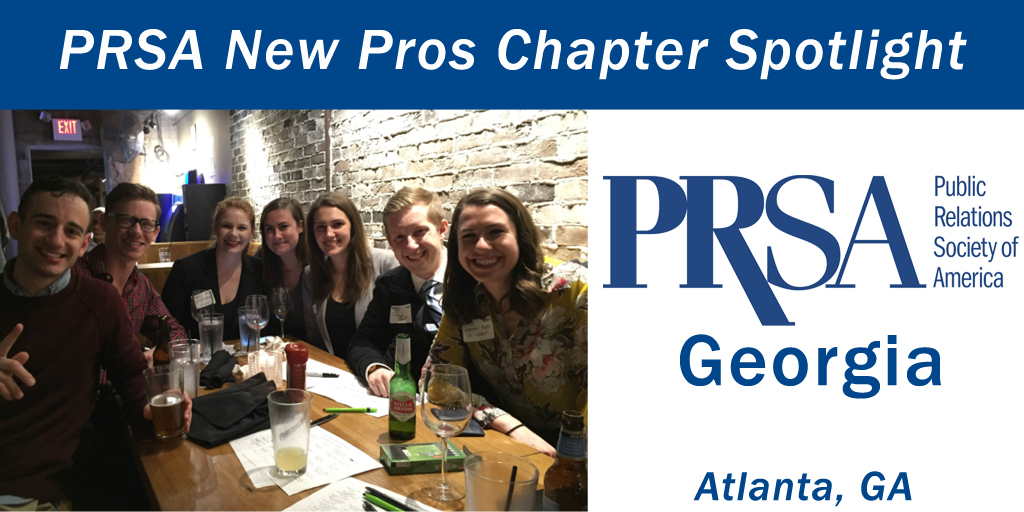
New Pros Chapter Spotlight: PRSA Georgia

PRSA Georgia, PRSA’s second largest chapter, has a vibrant, growing Young Pros group. Founded in 2004 by two current PRSA Georgia members, PRSA Georgia’s Young Pros special interest group engages young pros by finding fun ways to get together, learn new things and meet other new PR pros.

Currently, PRSA’s Georgia’s group is comprised of about 20 young pro members, four committee members and two co-chairs, Daley Michael and Sarah Bell. This month, The Edge sat down with Daley and Sarah to learn a little more about what’s going on down in Georgia.

New-Pros-Chapter-Spotlight

The Edge: What kind of programming you’ve put together for New Pros?

Sarah Bell: We try to mix it up with a variety of topics that appeal to the young professionals in our industry. In the past year, we have hosted events ranging from Being Indispensable – How to Adapt and Succeed in Your Career, Starting Now!, How to Drop the Y from YP: A Panel Discussion with PRSA Georgia’s Veteran YP’s, PR Trivia Night, Crisis Communications 101: What Your Boss Hasn’t Taught You, How to Build Lasting Relationships with the Reporters who Matter, etc.

TE: How does your group fit into the bigger picture of the chapter?

Daley Michael: We try our best to engage new PR pros and recently graduated PRSSA members who move to Atlanta and are looking for a way to get connected in their industry. As the second largest PRSA chapter in the country, we have a vast and experienced network of PR professionals who can help them transition and provide career development opportunities. The YP special interest group tries to create opportunities to help young professionals get plugged into the community and the PRSA Georgia chapter.

SB: We also partner with other special interest groups to host events. These events provide a good opportunity for our YP members to get to know others in the chapter and involved in other areas.

TE: What resources do you provide for New Pros?

DM: At each paid event, we provide a tangible takeaway for attendees to bring home with them. The handout captures key points from the meeting that they can easily reference in the future.

SB:We also offer a couple of free events focused on networking and socializing as a means to connect not only members, but potential members considering joining PRSA.

TE: What are the benefits for your members?

DM: Connectivity, learning opportunities, professional development, sharing key learnings, occasional free food, delightful beverages at select events, good company.

TE: How do you engage and recruit New Pros?

SB: The primary way we recruit new pros is by hosting free networking mixers a couple of times each year. These events typically attract a good number of non-members and oftentimes our members will also bring their colleagues and friends as well. The mixers serve as a great way to build relationships with members and non-members alike and provide many opportunities to get to know one another better.

TE: What advice do you have for New Pros for using PRSA to their best advantage?

DM: Get connected! Don’t be afraid to attend events, even if you don’t know anyone. You never know where your next job might come from and PRSA is a great resource for not only job searching, but also becoming better at what you do.

TE: What is the best way for New Pros to get involved in the PR community?

SB: Join PRSA! Attend conferences, join a committee, submit awards, network with your peers in the PR community.

From Intern to Full-Time

As graduation season is among us, college seniors are throwing their caps in the air and entering ‘the real world’. For many, entering the real world starts with a post-grad internship as PR agencies often take on recent grads as interns. As an intern supervisor, and former intern turned full-time employee, I’ve seen many seniors take internships after graduation, stay on full-time and go on to have successful PR careers.

Consider these tips to turn your internship into a full-time offer.

Be in the right mindset: Treat your internship like an entry level position. In many cases there’s minimal difference between intern duties and entry level responsibilities, so take each day seriously and don’t view it as a temporary position.

Learning experience: View your entire internship as a learning experience, so every assignment and task gives you additional experience and skills that can transfer to your full-time job. Also take advantage that while you’re an intern you’re not expected to know all the answers and your colleagues are excited to teach you what they know.

Network: Build a strong network within the company. At least once a week during your internship aim to sit down with colleagues to get to know them and see what you could work on with them. One of the best pieces of advice I ever got was to seek out a mentor, advocate and sponsor. A mentor can help coach and develop you into a full-time employee, while an advocate is your champion to fellow colleagues and a sponsor elevates your career.

Focus on the work: Remember that at the end of the day, it’s about the work you produce. Make sure your work is high-quality and delivered before deadlines. As the summer goes on and you get a feel for the company seek work and projects that will last beyond your internship so you can carve out a place for you full-time. Also consider if you’re at an agency the financial implications of your hire and look for accounts to be on.

Test the waters: An internship is not only a time for the company to evaluate you, but for you to evaluate the company and see if you are a good fit before signing on full-time. Think of your career goals and if a full-time job at the company would help get you where you want to go.

In short, make yourself a valued employee that the company and your colleagues see you as an entry-level employee before you technically even are.

What did you do to land a job from your internship?

Lj3eYZIEJessica Noonan is an Associate at Burson-Marsteller and serves as Chair of the PRSA New Professionals Section. Connect with her on Twitter @jess_noons and LinkedIn.

Transitioning from PRSSA to PRSA

You’ve put in the work, your finals are in and graduation is finally right around the corner. You’re making your post-grad to-do list and checking it twice. Joining PRSA as an Associate Member should also be at the top of your to-dos.

Why Join PRSA?

As a graduating PRSSA member you likely already know that being a member of PRSA is a step you should take to further your career. You probably also know that joining the world’s largest public relations professional organization gives you unlimited opportunities to connect with and learn from more than 21,000 other public relations and communications professionals at all career levels. You may also understand that participating in PRSA, volunteering and taking on leadership roles give you the opportunity to actively shape the future of the profession, as well as shaping yourself as a professional.

By investing in joining a professional organization like PRSA, you’re investing in your career and your own development. Beyond connecting with other professionals, PRSA membership offers the opportunity for continued professional development, career advancement, mentoring and more.

So how do I join?

Joining PRSA couldn’t be easier. All you need to do is fill out the online application, list your Alma Mater, select your local Chapter and special interest sections (please keep in mind both of these are optional) and submit your payment. Don’t forget to keep your receipt since professional organization dues are tax deductible.

Membership dues for PRSA are tiered, depending on experience level. Associate Membership is ideal for recent grads and young professionals. As an Associate Member, you have access to all of the benefits of PRSA with discounted dues. Current students who are within five months of graduation and PRSSA graduates (within two years of graduation) can join at $60 a year. Professionals with less than a year of experience, or those who weren’t PRSSA members, can join at $115 a year; those with one to two years of experience, $155 a year; and those with two to three years of experience, $200 a year. Associate members may also join the New Professionals Section at no additional cost with the promo code AM16. Professionals with more than three years of experience are simply classified as members. Regular membership dues are $255 a year for the duration of your career.

How is PRSA different from PRSSA?

PRSA differs from PRSSA  because it offers professional development for members in all stages of their careers. As a PRSA member, you can seek out ways to get involved and serve your Chapter by contacting your Chapter president or the chair of a committee you’re interested in helping with. PRSA has more than enough opportunities for every member to get involved, but it’s up to each member how much time and energy they want to invest in the organization.

What role does my local Chapter play?

PRSA and its New Professionals Section offer great opportunities for networking with other professionals all over the country, but your local Chapter is the most important piece of your professional puzzle. If you’re looking for a job, to relocate or both, searching your Chapter or prospective Chapter’s online job board is a great way to find positions located near you. Connecting with members of your local (or prospective) Chapter and meeting with them to discuss the opportunities that are available, who you are and what you’re interested in is another often overlooked way to become aware of new jobs within your area. Most new opportunities are passed around and come across the desks of seasoned professionals before they’re posted online, if they ever make it there. Having yourself fresh on your colleagues minds is the best way to become aware of what’s out there, whether you’re looking for a new job or not.

Are there any groups or benefits specifically for recent grads?

Joining the New Professionals Section, one of the organization’s 14 Professional Interest Sections, is a great way to make the transition from student to professional. If you already have an idea of which industry you’d like to work in or would like to have a little extra guidance in the industry you’re currently (or soon-to-be) working in, check out any of the 10 industry specific Sections PRSA offers. If you only join one though, make sure it’s the New Professionals Section. Membership is reserved to those with three years of experience or less and is a great community for young pros to get advice from peers, begin to get involved and give back to the organization, and learn to navigate the working world.

In addition to PRSA’s national New Professionals Section, many Chapters have their own New Professionals group to help connect members and offer resources on a local level. Chapters typically list special interest groups and contact information on their websites. The New Professionals Section also keeps a list of New Professionals groups and their parent chapters.

Will my employer pay my dues?

Some employers will pay professional organization dues for its employees, either through group rates or as part of an employee benefit package. Whether PRSA membership is included as a benefit depends entirely on the company or organization, but it can’t hurt to ask. If you’d like to discuss PRSA and its membership benefits with your supervisor or boss, mentioning items like the industry-focused publications, networking opportunities and the library of free resources and professional development opportunities may be great information to help make the case for employer investment in PRSA memberships.

How can I make the most of my PRSA membership?

All of these benefits are great, but the best way to get the most out of your membership is to get involved with the organization. It can be as simple as volunteering to help with an event or writing for your Chapter’s blog or as involved as taking on a leadership role. Jumping right in and getting your hands dirty is the best thing you can do to put yourself out there, make those important connections, gain experience and make your membership work for you.

Robyn Rudish-Laning (1)

Robyn Rudish-Laning serves on PRSA’s New Professionals Section’s executive committee and is an active member of South Carolina’s PRSA chapter. She holds a master’s degree in Media Arts and Technology and a bachelor’s degree in Public Relations, both from Duquesne University in Pittsburgh. Robyn is a native of Southern New Jersey and currently resides in Columbia, SC.  You can connect with her on LinkedIn or Twitter, email her or read her blog here.