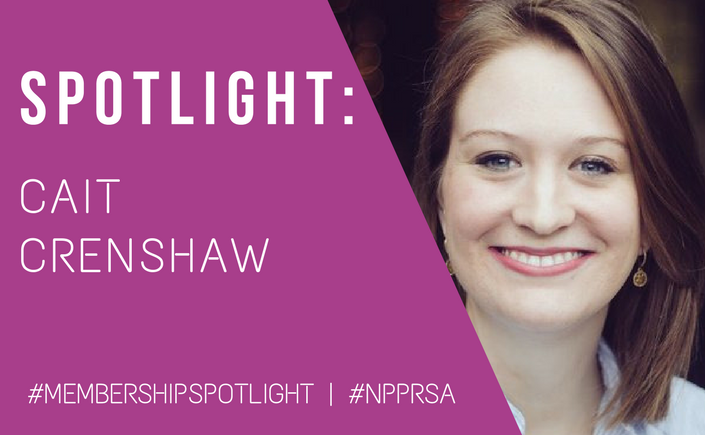
Member Spotlight: Cait Crenshaw

Name: Cait Crenshaw
Position/Company: Communications Manager at Signature HealthCARE
Location: Louisville, Kentucky
Education: M.A. Communication from University of Louisville
Social Media Handle: @Cait_Crenshaw

How and when did you first become interested in PR and communications?
I changed my mind about my career twice, without ever changing my major. Changing from high school English teacher, I discovered a real love for journalism and storytelling in college. I was hooked. I spent entire weekends in the basement office of our university newspaper. After a few years, I realized it is the storytelling, editing, details, and strategic planning that I love and switched to corporate communications.

How did you find internships/jobs?
My professors were my best resource for internships. I checked our university career center’s listings and department’s listings, too. Actually, one of my professors recommended me for an internship, and that internship led to my current job. I found my full-time job when someone I had previously worked with during an internship emailed me the application. It was a fit!

What was the biggest challenge you’ve ever faced in your career? How did you overcome it?
The biggest challenge I’ve faced in my career so far has been when someone, who had power and pull at the organization I worked for at the time, said, “Oh, she can’t do it. That’s not what she does.” I felt deflated for a moment, but the experience taught me an important lesson.

The experience taught me to create growing opportunities for myself. Instead of waiting for an invitation to sit at the table, I flipped my thinking and directly asked for a seat at the table.

What has been the most valuable thing you have learned through classes or experience?
Working hard is important but working smarter and strategically is even better. School only required me to do the work but starting my career has challenged me to work smarter. I start every week with a list. The things that I can automate in Outlook I do.

What has been the best piece of advice you have received?
At the end of my very first internship, my boss gave me an honest evaluation, and I am incredibly thankful for her. I don’t remember any of her compliments or praises, but I do remember her telling me, almost commanding me, “Take more risks.”

Also, it’s not really advice, but here is a favorite of mine, especially when I think about the future of my career. A wise professor in my master’s program at the University of Louisville said, “People work for daily meaning, as well as daily bread.”

Do you have any advice for future PR pros?
Be a sponge and learn. Ever have a meeting where afterwards you google the acronyms they were using? Oh, just me, okay. The point is there are limitless resources to learn at our fingertips. We just have to grab one, learn, and apply it.

Also, your greatest asset is the ability to adapt and communicate at different levels of an organization and with different types of people.

What do you think is the best benefit of PRSA and the New Pros section?
In the New Pros section, I like that I am connected to people who have or are going through the same professional growing pains. There isn’t a time when I login to PRSA and do not learn something new. In an industry that changes so quickly, learning from other pros is a big resource.

Is there anything you wish you would have known before starting your career?
I wish I would have had a better sense of the things no one wants to talk about, such as salary negotiation and time off. My tendency is to work, work, and work, so the idea of work life balance is very much still in-progress for me.

Tell us a little-known fact about yourself.
My first job was working as a soccer referee at the age of 13.

Headshot 2018
If you are interested in being featured, or interested in nominating someone to be featured as a part of our #MemberSpotlight, please complete the following form.
 

Three Tips for Reaching Out to Other PR Pros

An intentional, well-written networking email can lead to a new job opportunity, a new mentor or a new perspective. You will find that most professionals, especially those involved in PRSA, are more than happy to help you, offer advice and share their expertise. But even if you have a strong relationship with the professional you are reaching out to, it is always important to establish professionalism.Whether you are a graduating senior seeking job opportunities or a young professional simply looking to make new connections, here are a few tips you should always keep in mind.

Be considerate.

It’s important to remember the person you are reaching out to has a full-time job, and is graciously taking time out of their schedule to help you. Be considerate of how much you are asking from this professional and understand it may take time for them to respond.

I recently got an email from someone “hoping to move to NYC” wanting to know “which companies they should apply to.” Seems harmless, right? Wrong. There are thousands of companies in New York City, and this young pro was essentially asking me to do their job search for them. You should make it as simple as possible for them to reply, which leads me to my next point.

Be specific.

About a month ago, I received a text from a recent grad from my university, who asked if I could tell them more about my last job. It was typical PR agency, so what exactly did they want to know? About the culture? The clients? Once I followed up and asked for more information, I discovered they wanted to learn more about the differences of working at a large agency versus a small agency, as I’ve done both.

When reaching out to a professional, avoid vague requests like this, and instead ask specific questions and make sure your goal is evident. Do you want to set up a call or meeting? Offer up a few days and times you are available in the next couple weeks for the professional to choose from. The more details the better. Speaking of details…

Be detail-oriented.

Before you reach out to a professional, triple check the body of your email and any documents you’ve attached. Then, ask a few friends to review everything. Don’t send a resume with grammar errors, formatting mistakes or a lack of specifics to a professional. It comes across as lazy and unprofessional.

Too often I receive emails with a low quality resume attached and the request to pass it along to one of my contacts. I’m always shocked when this happens because I’d never recommend someone I don’t truly believe in.

Hope this helps you as you prepare to reach out to a pro you admire!

–Arielle Schrader, @RELschrader

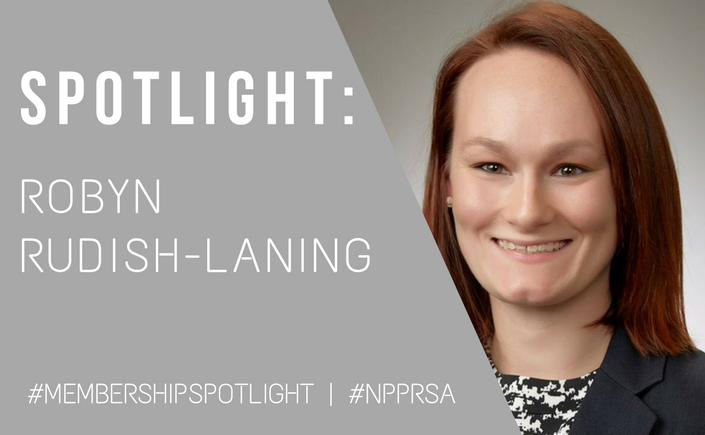
Member Spotlight: Robyn Rudish-Laning

Name: Robyn Rudish-Laning
Position/Company: Senior Manager, Marketing for Airports Council International – North America (ACI-NA)
Location: Washington, DC
Education: B.A. in Public Relations, Duquesne University
M.S. in Media Arts & Technology, focus in Creative Media Practices, Duquesne University
Social Media Handle: @robyn_rl

How and when did you first become interested in PR and communications?
When I was in high school. My first job was waitressing at a small restaurant in my hometown and towards the end of my junior year of high school, I started coming up with ideas to reach more people in the community and engage with customers through community events, promoting specials, using social media, connecting with the local newspaper and helping our happy customers to spread the word. Since we were a small staff, I took on the responsibility of planning & executing these ideas too. When it came time to look for colleges and think about what I was interested in the following year, I already had a pretty good idea & looked for schools specifically for their PR programs, not just general communications. Everything I learned while pursuing my degrees and on the job has only made me more curious.

How did you find internships/jobs?
I came up with a list of places I wanted to intern and hit the ground running applying and figuring out if I knew anyone who could help me get in the door. That method worked and I landed my first internship with the Make-A-Wish Foundation in Pittsburgh. Everything after that I’ve found by just being open to opportunities and making sure my network knew that I was interested in new things, even if I was enjoying what I was doing at the time. I found my last two jobs by making connections through PRSA, particularly local chapters, and being honest that I was new in the area and looking for a new opportunity.

What was the biggest challenge you’ve ever faced in your career? How did you overcome it?
Learning how to be the one making the plan and communicating the importance of a comprehensive communications strategy to guide the communications, PR and marketing efforts. Taking things from tactical and responsive to strategic and proactive is tough, especially when you’re not exactly in a decision-making role. The experience I had gained through volunteering for my PRSA chapter was incredibly helpful in knowing what needed to be done and the importance of a forward-thinking strategy. I’m also grateful for the guidance of more experienced PRSA members who often offered to be a sounding board for ideas and mentors.

What has been the most valuable thing you have learned through classes or experience?
I think learning to speak up and how to be a leader have been the most valuable things I’ve learned. It’s easy to say “I don’t have enough experience” or “what do I know, this person probably knows better than I,” but that’s not always the case. There’s no such thing as too little experience when it comes to leading or coming up with new ideas. The most dangerous trap anyone can fall into is believing that just because something has always been done one way, that you shouldn’t shake it up once in a while.

What has been the best piece of advice you have received?
“Give yourself some time and give yourself some hope.” – PRSA’s 2017 National Chair Jane Dvorak while speaking to a mixed group of SCPRSA and PRSSA members at the University of South Carolina.

Do you have any advice for future PR pros?
Practice, practice, practice. You can never learn too much. Volunteer, take on some pro bono work, take on new roles and responsibilities in internships and jobs – whether the job is in the profession or not, everything uses communications in some way. Get into a habit of learning whenever you can and being inquisitive. The more time and energy you invest in yourself and your career, the better the returns will be and the more likely an employer is to invest in you and helping you develop your skills.

What do you think is the best benefit of PRSA and the New Pros section?
Definitely the opportunities to network, get involved and lead. It’s incredibly easy to turn down opportunities to get involved and lead by thinking that lack of experience is a barrier, but being a part of the New Pros section has shown me otherwise. We’re a group of pros with five years of experience or less, so it’s a pretty level playing field and there’s plenty of room for everyone to get involved in some way. Leading the section has given me the opportunity to gain experience and has boosted my confidence in my own abilities, making me more sure of myself and my work and leading me to take seize leadership opportunities in my chapter and my workplace.

Is there anything you wish you would have known before starting your career?
I wish I had understood the importance of practical experience and application of the theories and ideas discussed in the classroom. While it’s all important, it can be overwhelming when you’re first starting out to translate that knowledge into practice.

Tell us a little-known thing about yourself.
I once competed in a local-level preliminary Miss America pageant. My issue platform was literacy across America & I competed to prove to myself that I could & to push myself to step outside of where I was comfortable.

If you are interested in being featured, or interested in nominating someone to be featured as a part of our #MemberSpotlight, please complete the following form.
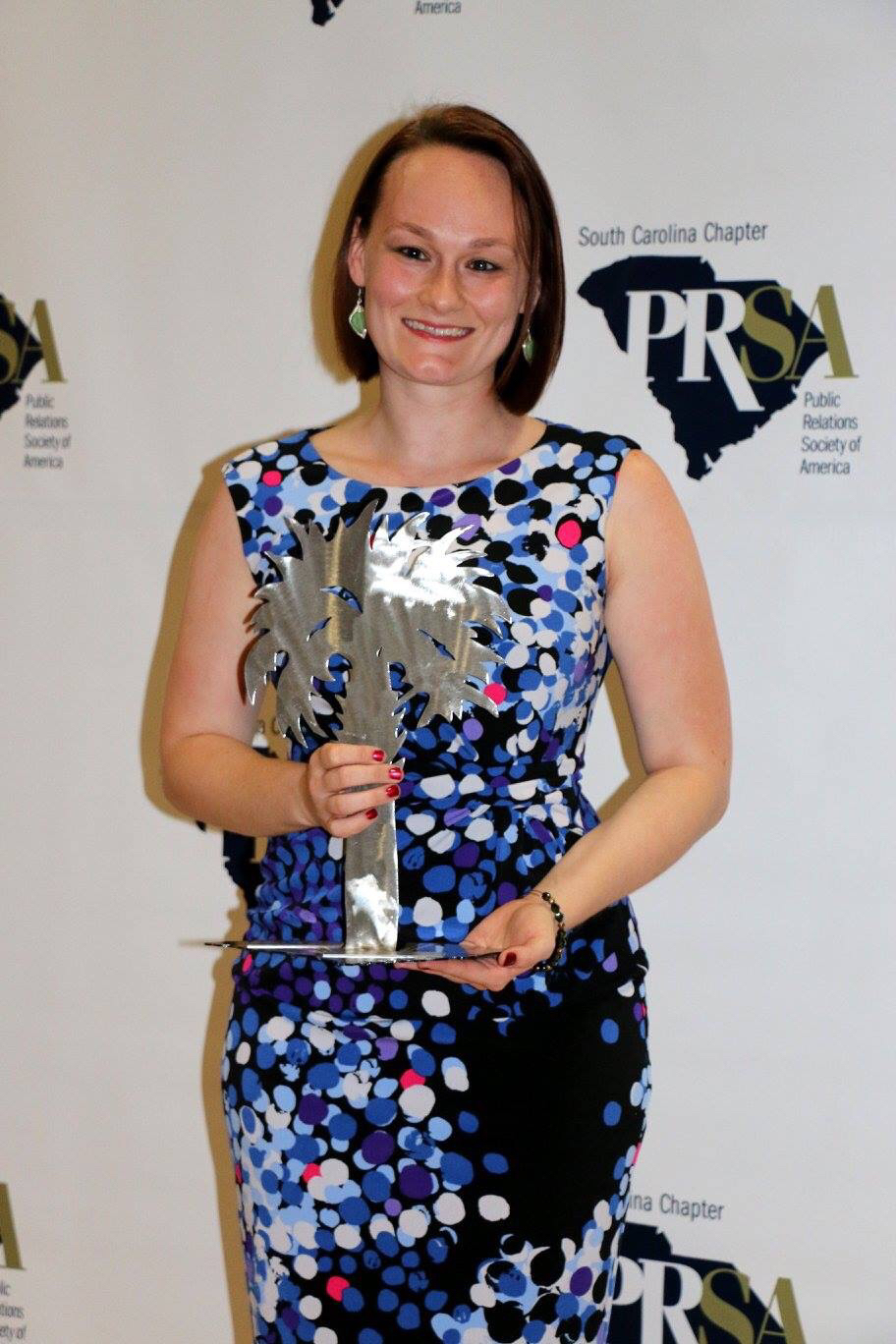
Image uploaded from iOS (1)

Managing Up: What Does That Even Mean?

Stat: 85% of millennial managers worldwide have moved into management in the past five years (Ernst & Young).

Coming from a new professional classified as a millennial, and who recently moved into a management position last year, this is a terrifying daunting statistic.

Making the transition from an early-staged new professional to a mid-level new professional can happen before you even realize. Nonetheless, you still must be prepared as you make this transition to set yourself up for success (and ensure minimal stress-induced sugar binges).

What could this new transition include . . .

Overseeing staff? Say what?

Giving hard feedback instead of only receiving it? You’ve crossed the line, Greg!

Managing up? What does that even mean?

These are all questions we have to face as we produce solid work and move up the professional ladder, whether we’re ready or not. Let’s focus on the last of those three facets of mid-level new professionalism: managing up.

I was fortunate enough to deliver a presentation at 2017’s PRSA International Conference with two of my fellow colleagues (“colleagues” is what you say when you’ve transitioned into mid-level new professionalism, by the way) from the PRSA New Professionals Executive Committee. The topic in which we delivered captivating content to our session attendees? You guessed itmanaging up.

I’ll let you look over the presentation on your own time HERE (there are some pretty interesting stats and tips in there), but I want to pull out two main points:

  1. Managing up, the act of managing upwards to your superiors, is not something that’s often taught outside of real-world experience (and even that’s if you’re lucky).
  2. When done well, managing up takes foresight, strong two-way communication and a grounded perspective.

“But Greg, you say it’s only taught in the real world? I’m in dire need of this skill; where can I learn more?!”

Well, I just happen to know of the perfect event to recommend and it’s coming up next Wed., Jan. 24 from 3 – 4 p.m. EST in the form of a virtual teleseminar!

This session, PRSA New Pros’ first of the year and entitled Maximize Your Career Potential by Learning to Manage Up, will be presented by Scott W. Thornburg, APR.

This session is a crash course on managing up and you’ll end being armed with tangible takeaways! I met Scott last October and I’m so excited to hear what advice he’ll be offering attendees. Needless to say, I’ll be showing up with my Do Not Disturb active on my phone and the door shut to my office (no distractions, you know, as a mid-level new professional you’re now being pulled in 200 different directions both upward and downward).

>> REGISTER FOR THE TELESEMINAR HERE <<

So register, buckle up and get ready for a worthwhile learning experience to rock your mid-week next Wednesday.

With that kind of hype, how could you not register?

jan-24_teleseminar

greg-rokisky

Greg works full-time as the Marketing Manager for the Michigan Association of School Boards, as well as a freelance creative services consultant. With several years of strategic communications experience, he specializes in digital and creative marketing and public relations. His experience spans agency, corporate and nonprofit arenas. He serves as the social media co-chair for both the New Professional and Association/Nonprofit PRSA sections. When he’s procrastinating not working he enjoys pretending he’s Twitter famous @GregRokisky and checking off items on his never-ending Goodreads shelves.

Answering The Tough Questions

Weighing the ethics of any situation may seem like something better left to those with more experience under their belts than we New Pros. Questions of ethics are the tough questions.

But being an ethical professional isn’t magically bestowed on PR pros once they have a certain amount of experience. That would be nice, right?

As PR professionals, the closest thing we have to an ethics fairy godmother is PRSA’s Board of Ethics and Professional Standards, or BEPS. BEPS is responsible for developing PRSA’s Code of Ethics and counseling professionals through ethical dilemmas and practices.

Since an ethical professional can’t be born overnight, New Pros has teamed up with BEPS to answer any and all ethics-related questions to celebrate Ethics Month. Throughout the month of September, we’ll be collecting questions from New Pros via this form. BEPS will answer each question and we’ll share the answers in a blog post and across our social media between Sept. 25 and Sept. 30.

Have a question, but prefer to remain anonymous? No worries! Just select that option on the form before you submit your question.

ethics-banner