Make Your Message Stronger With Lessons From …1776?

Semiquincentennial. At the beginning of the year, I believed that would be the word for 2026.

It may not have caught fire like I thought it would, but as summer approached, it became clear America’s 250th anniversary would become the focal point of countless organizations’ strategic plans.

The question many of us found ourselves asking was: How do we approach it?

How does our organization connect the founding of our country to advanced manufacturing, human resources, B2B sales, or whatever story our company has charged us as PR professionals to share with our audience? What kind of campaign can honor both our company and our country without coming across as performative or forced?

The answer is far from common sense.

Or is it?

Where It All Began

Naturally, we could look to the country’s bicentennial celebration in 1976 for inspiration, but would that offer much insight? After all, so much has changed over the past 50 years. So what if we went even further back? What if we went all the way back? Back to 1776, or even before the American Revolution? What lessons could we possibly glean from 250 years ago that would be applicable today?

Long before the age of press releases, social media content, crisis communication plans, and AI assistants, public relations came in the form of messengers, pamphlets, slogans, and symbols. We’re all familiar with Paul Revere’s famous midnight ride from Boston to Lexington, warning the revolutionary leaders of the advancing British army.

Although the phrase “The British are coming!” was never actually said (no, not even in Henry Wadsworth Longfellow’s epic poem “Paul Revere’s Ride”, published 85 years later), Revere would be known throughout history for his speed on that night; however, it was not his speed which made the message effective. In fact, he was not the only rider that night. 

Revere was actually one of several riders who were part of an organized system designed to sound the alarm with haste and alert the Patriots to mobilize their militia. Being a part of a trusted network made the warning effective.

What can new pros take away from this? In a 24-hour news cycle, many consider being first matters less than being accurate, prepared, and credible.

And then came Thomas Paine.

Common Sense, Uncommon Clarity

Paine’s bombshell pamphlet,Common Sense,made a persuasive argument for independence at a time when reconciliation with Great Britain was still a common view. His missive became the colonial version of viral content – spreading as fast as possible to as many people as possible. It inspired individuals to believe a split from the British Empire was the only logical course of action. In today’s terms, it was a hearts-and-minds campaign that helped shift public opinion in a country on the brink of revolution.

But why did “Common Sense” resonate with so many? How did this essay convince countless readers to rethink their assumptions? What persuasive writing techniques did Paine use so effectively that they helped shape the course of American history?

I’m afraid the answer is not exactly earth shattering. In fact, it was likely one of the first principles of communications you ever learned. To convince people to use common sense, you need to use uncommon clarity.

In other words, simplicity.

Paine wrote for the everyday audience, not the elites. He wrote with passion and purpose but avoided flourish. He did not frame the call for independence around a legal dispute over taxes but rather a moral right to freedom. His words carried weight because people could understand them. He met the audience where they were, using familiar language and making an insurmountable idea seem attainable.

Today’s PR pros know the best communicators don’t make simple things sound complex; they make complex things sound simple. In a landscape full of noise, jargon, and automated content, clarity is your strongest defense.

It’s About the Message, Not the Author

When Thomas Jefferson was tasked with writing the Declaration of Independence, he famously went to great lengths to ensure the draft he presented to the Continental Congress embodied the all-encompassing vision of this great experiment they were about to undertake.

But as every communicator knows, the first draft is never the final draft.

After being reviewed by John Adams and Benjamin Franklin, the document then went to a larger committee of representatives before it was ready to be brought before the full Continental Congress. Edits were made to the original text at each stage. Even so, the Continental Congress spent four days reviewing, debating, voting, and revising the document until the final version was adopted on July 4, 1776.

This review process, as we all know too well, has not changed much in 250 years!

But the lesson remains. A strong message is never created in a vacuum. A message is never the train of thought of one person. Jefferson was not writing a message for himself. He was writing a message for a country that would thrive for 250 years… and counting. The committee and the Congress knew this document would be shared – not only with King George, not only with General George Washington, but with the people for whom this country was being created.

Sometimes the editing process isn’t about making changes. It’s about making the message clearer, more accurate, and more useful to the audience. Once the message is published, it no longer belongs to the author. It represents the organization behind it. The audience should always remain at the heart of that message.

We the PR People

Two hundred fifty years ago, what we now recognize as public relations was nearly unrecognizable. None of the tech tools we now take for granted were available – or even conceivable. Nevertheless, the fundamental principles remain unchanged.

Paul Revere reminds us that trust in the messenger matters. Common Sense reminds us that clarity in the message matters. The evolution of the Declaration of Independence reminds us that the audience is always the ultimate editor of the message.

Working as a new PR pro in the 21st century can feel like an uphill climb. With information moving faster than ever before and trust being increasingly harder to earn, it’s our responsibility to be trustworthy, to be clear, and to be thoughtful.

We don’t know what the next 250 years will bring, but if we look to our history, we can find the tools that no technology can replace. 

About the Author

Kristin Durand is the Blog Chair for PRSA’s New Professionals Section. She serves as the Director of Communications & Public Information Officer for St. Tammany Economic Development Corporation where she leads strategic communications, public relations, media relations, digital content, and stakeholder outreach in support of the organization’s business development and community engagement efforts.
Roche Communications Specialist Kelsey Jones Talks Ball State University, Healthcare PR & Internal Communications

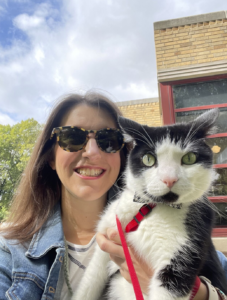
Kelsey Jones is a communications specialist for Roche’s Diabetes Care division and a Ball State University alumna. She graduated in 2011 with her bachelor’s in hospitality and food management and once again in 2017 with her master’s in public relations.

Today, she shares advice for new communications professionals.

Q: What are your job responsibilities as a communications specialist in the healthcare and medical device industry?

A: At Roche, I drive integrated strategies based on best practices for employee communications, internal events, and programs. I draft content for various internal communications channels such as email, video, digital signage, newsletters, and social media. What I do ultimately impacts business results, as I help decide what employees need to know and when they need to know it to drive engagement and productivity.

I also facilitate Diabetes Care collaborations with patient advocacy organizations like the American Diabetes Association, College Diabetes Network, and Juvenile Diabetes Research Foundation to reduce health and racial disparities in our communities. Through this work, I build meaningful, mutually beneficial nonprofit partnerships.

Additionally, I manage Roche Gives Back, our internal employee giving program, as a portal administrator. The company matches employee donations and volunteer time in the community, and I review all match requests. I also plan and execute engaging volunteer events for more than 4,500 Indianapolis-based employees. Our most notable event is our annual Day of Service with Keep Indianapolis Beautiful, where we identify an Indianapolis neighborhood or park to beautify.

“Storytelling is a large part of my role when communicating what Roche and our employees are doing in the local community, how we give back, and how we contribute to important causes.”

Q: What advice do you have for students wanting to pursue a communications career in the medical industry?

A: Initially, I had no desire to work in the healthcare and medical device industry — I generally perceived healthcare and large corporations as very stuffy and uninviting. Roche completely changed my perception. Roche is very welcoming and inclusive and provides fantastic benefits for employees. Plus, some of my closest friends are my colleagues.

If a student is interested in pursuing a communications career in healthcare or another large corporate environment, I highly recommend job shadowing. Spending a day with a current corporate communications professional will provide insights into their role and help students see if it aligns with their interests.

I also recommend taking a business course or two. Having basic business knowledge is extremely important in the corporate setting.

Q: What valuable lessons about the communication field have you learned throughout the pandemic?

A: I would definitely say to meet employees where they are. The pandemic has created so many additional challenges for our employees: at-home schooling, childcare, illnesses, and even the death of loved ones due to COVID-19. It is crucial with internal communications that you convey empathy and meet employees where they are.

Q: In what ways did Ball State’s master’s in public relations prepare you for the role you currently have?

A: Ball State’s master’s in public relations prepared me to be a critical thinker in a corporate environment. It equipped me with the issues management skills needed to succeed in a large, matrix organization. The program provided strong relationship-building lessons that are critical to any industry’s communications or public relations role. It challenged us to work in new ways while utilizing strategic communications and encouraging collaboration.

Q: Why would you recommend Ball State’s public relations program to new professionals?

A: Ball State provides a personal, hands-on approach to public relations. Graduate students receive regular one-on-one sessions with their graduate advisor and esteemed professors. In addition, on-campus graduate students have the opportunity to work at the student-run strategic communications and public relations agency. Coming from a non-public relations background to graduate school, this experience was invaluable to my learning experience.

The public relations graduate program is continually ranked as one of the best in the nation and one of the only programs accredited by the Public Relations Society of America. The individualized, entrepreneurial learning and award-winning curriculum made Ball State’s program my number one choice.

The program is also available entirely online for working professionals who can’t come to campus. The online courses are asynchronous, meaning you can complete them whenever they fit into your daily schedule. The same faculty who teach on-campus also teach online, so there is no difference in curriculum or course quality.

Q: Any final words of advice about your experience or for new communication/PR professionals?

A: Keep an open mind regarding career opportunities and always take the initial interview. You never know; you may end up being surprised about the company or role like I was with Roche!

Lastly, always keep learning. Your education doesn’t stop when you are handed your diploma. Continue to network with industry professionals and like-minded individuals. Consider attending relevant conferences, taking additional classes, or completing a certificate program once you identify your communications and public relations interests.

If you’re interested in pursuing a master’s in public relations from Ball State, visit our website for more information or contact the program director Dr. YoungAh Lee.

Kelsey Jones is a communications and corporate social responsibility professional who enjoys keeping up with giving trends and connecting employees to causes important to them.

Not only is philanthropy part of her day job, but it’s also a part of who she is. Whether she’s planning events for the Indianapolis Cultural Trail or raising funds for various causes important to me, giving back is in her DNA.

LinkedIn: Kelsey Jones, M.A.

Asian American and Pacific Islander Heritage Month: How to Help Your Employer Be More Inclusive

As employees demand more inclusive work environments, many businesses are moving into 2021 with a focus on diversity, equity and inclusion (DEI). And while DEI shouldn’t be anything new, it may be for your workplace.

If that’s the case, you’re probably the one leading the DEI conversation. After all, working in PR means it’s your job to represent and protect your business’s reputation and help your employers bridge the gaps they simply haven’t made yet. That includes working with human resources or the larger marketing team to ensure your company priorities and values align with staff concerns to create a safe, welcoming environment that’ll continue attracting top talent.

If your business is taking a little longer to get the DEI ball rolling, here are three ways to begin the conversation during Asian American and Pacific Island (AAPI) Heritage Month.

1. Share the Bigger Picture

Even as the world gets smaller and smaller with live social media updates and 24/7 access to national news, some people simply won’t know where to look to gain an outside perspective. And if their personal bubble is unaffected by larger conflicts taking place out in the world, they may think it’s not worth addressing — to their shareholders, their staff or their customers.

That’s where you (and other PR pros) come in.

It’s your job to give them perspective. You can share a number of resources to support action, including:

  • Mainstream news relevant to this event that will get their attention (local coverage, opinion pieces, responses by other businesses)
  • Any key performance indicators (KPIs) or metrics that may support a spike in interest by your customers (a related product you sell that’s out of stock, an uptick of pageviews on related articles/press releases on your newsroom site, comments made on recent social media posts)
  • PR-specific responses suggested for businesses (helpful webinars, recorded town hall videos or even crisis communications examples of what not to do)

Using AAPI Heritage Month as an example, you’ll want to make sure leadership is aware of the recent shootings in Atlanta. Lead them into a larger conversation about the rise of anti-Asian violence and hate. Bring up the fact that Asian Americans are the fastest-growing ethnic group in the U.S. If you have any Asian Americans on staff, remind your employer. How could this be affecting them, or the larger staff?

Once you’ve got their attention, it’s time to suggest a plan.

2. Introduce an Action Plan

Strategy is key here, mostly because it’s a language your employer will understand. Make sure you pluck the low-hanging fruit:

  • Are there any pre-existing company values you can relate a response to?
  • What goals do you have that stakeholders are interested in? (This will help get higher leadership on board.)
  • Look back at a recent employee survey. Is there any dissatisfaction that DEI could solve and further bolster the argument you’re making?

Talk through any next steps with them. Make sure they’re a part of the process to grow their own involvement and investment.

Using AAPI Heritage Month as the example, this celebration of heritage concerns a lot of different people. Those of Chinese, Indian, Filipino, Vietnamese, Korean, Japanese, Micronesian, Melanesian and Polynesian descent are included in AAPI. Make sure your workplace gets the “inclusion” part of DEI right by considering all involved.

3. Involve Your Employees

Public relations can be a very secretive and tight-knit profession by nature, but DEI is the time to reach out and include the larger staff. Whether you’re holding a company-wide business meeting, sending out a specific survey or conducting one-on-one interviews, their insight is invaluable.

Here’s some DEI-specific information you’ll want to cover in your meetings:

  • What does DEI mean for your company? (If you celebrate one month’s ethnicity, will you celebrate the next?)
  • How will strategic planning with DEI in mind change your company? (What actual differences can employees, customers and shareholders look for to back up your business’ DEI claims?)
  • How else can the company make positive changes in the DEI space? (Ask everyone you can. The most important insight can come from an unlikely place.)

With a few open, honest conversations, these three areas can help your employer properly include DEI in future strategic planning for your workplace. Just remember that this is only the beginning of the conversation; follow-through is imperative to make real change. Luckily, they have you on their PR team.

Has your company recently added DEI to the conversation? Let us know the role you played in the comments below!

PRospects for New Pros: Finding Your Footing During COVID-19 and Beyond

On Wednesday, April 7, 2021, public relations professionals came together virtually to discuss current hiring trends and how to move forward during COVID-19 and beyond. The webinar, sponsored by the New Professionals Section of the Public Relations Society of America (PRSA), brought together four experienced PR professionals who shared their experiences and tips with new professionals.

Webinar panelists included Taylor Bryant, an assistant professor (clinical track) in the mass communications department at the University of West Georgia; Kirk Hazlett, APR, adjunct professor of communication at the University of Tampa; Christina Stokes, Vice President and Director of Talent Acquisition at Rubenstein; and Mike Neumeier, APR, CEO of Arketi Group.

With the current COVID-19 pandemic, many new professionals have struggled to find their footing, whether as new graduates looking for employment or employed new professionals looking for ways to hone relevant skills and advance their careers. Stokes said that, despite the challenges over the past year, “things are looking up.”

Bryant reminded recent graduates that the virtual workplace forced onto companies by the pandemic has created an environment where new professionals in particular can excel. “The virtual environment for us is new, but for students, they are tech savvy…you have what it takes in terms of the technical aspects.” And that’s a huge advantage.

Seek Out Professional Development Opportunities

Hazlett said that, while companies may not be hiring as much because of the pandemic, there are still ways to get ahead in your professional careers. For example, while internships are not jobs, Hazlett said, “it doesn’t hurt to add more experience to your resume.” Every panelist encouraged new professionals to find ways to use this time to take advantage of the unique opportunities provided by the pandemic, such as online conferences and certificate programs.

New professionals should specifically focus on ways to develop professionally that will help get you where you want to be in your careers. “It’s important to know your why and what. What you want to do next and why you want to do it,” said Bryant. She recommended finding a few desirable jobs and looking at their roles, responsibilities, and required skills, and then taking a look at where you can improve and get professional development in those areas. “It’s like mapping your career,” said Bryant.

Make Networking Part of Your Plans

As part of your professional growth, new professionals should focus on networking and making connections. “I believe in authentic connections,” said Bryant. “Focus on building genuine relationships. People are more likely to recommend you when they know you and have a real relationship with you.”

Stokes emphasized the benefit of using LinkedIn to stay connected once you’ve established those relationships. “Stay connected to them…it takes work, but opportunities will come to you that will help elevate you in your career.” Neumeier added that networking “is a numbers game, like the lottery. If you don’t play, you can’t win.”

Neumeier also said that being part of groups like the PRSA New Professionals Section is key because “these are your peers. These are the people you’re going to grow up in the industry with…take advantage of that and use your network,” said Neumeier.

Aside from insights into professional growth and networking, panelists also provided advice for landing jobs early in your new professionals’ careers.

Interviewing Insights for New Pros

When it comes to interviewing, Bryant says to practice. She recommended writing down a list of essential things you want your potential employer to know about you, and then compare that to common interview questions so you can practice making sure those essential points come up during the interview.

Hazlett said that potential candidates make an impression when they come prepared to ask their own questions.

Stokes added, “Interviewing is a conversation with a potential colleague. So look at it that way and it might make you feel more comfortable.” She also recommended doing research about the interviewer and the company. “What’s interesting about them to you and why? I love having a conversation with a candidate and learning what they’re interested in about the company,” said Stokes.

Virtual interviews can present its own set of challenges, but the panelists encouraged new professionals to make the most of it. Make sure your room is clean and that what the camera captures is professional. Virtual interviews can be problematic, but panelists say that’s just part of how things are. “We’re at a weird time where home is work and work is home and the lines are blurred. The reality is that you can’t avoid crying kids or the dog barking in the background…so I like to see how they navigate that…Use your unique environment to your advantage,” said Stokes.

Even with the challenges created by the pandemic, there are ways for new professionals to find their footing and progress in their professional careers. Find a way to get started and move forward. “Get a job, even if it’s not your dream job. Perform well, learn what you like, and your career will develop,” said Neumeier.

What Seasoned PR Professionals Want You To Know When Starting Your PR Career

We are faced with a multitude of choices in our career journeys. If you’re anything like me, you were relieved and excited when the pieces fell into place and you decided what your dream career would be. But that relief was short-lived when you graduated college and realized that getting a first job that’s related to your career goals is not as easy as you thought it would be.

Things seem so simple when you are inside the structured environment of your university, but once you leave that, you must figure out the answer to the dreaded question: “What’s next?” Trying to break into a career on your own is intimidating, and it’s difficult to know what steps you need to be taking to make progress. But the good news is, there are plenty of things that you can be doing now to make yourself a valuable candidate for your dream job in public relations.

I interviewed 5 seasoned PR professionals who are members of PRSA’s College of Fellows to see what their advice is to those of us who are just starting our PR career journey. They provided wonderful insights that were so helpful and encouraging.

Here are the 6 tips to be successful at the start of your PR career:

1. Be Curious

The most common theme that came up in the interviews was the idea that you must be curious to be successful in the public relations industry. The concept of curiosity comes into play with public relations for several reasons. PR is a job that requires the ability to be dynamic and flexible in your approach. According to the seasoned professionals I interviewed, one important aspect of this is being a life-long
learner.

Katrina Schwarz, APR, Fellow PRSA explained, “You must be willing to put yourself out there and learn, even if it means putting in extra time and effort to get done what needs to get done.”

Dr. Joe Trahan, APR, Fellow PRSA said, “You must have a drive to be the very best, be open to challenges and to take on responsibilities, even if they are not in your specific area.”

Dianne Danowski Smith, APR, Fellow PRSA articulated how important it is to continue your development. She explained, “Your development doesn’t have to necessarily mean getting another degree. It could also be placing a value on growing your skillset. Show an interest in bettering yourself, and you show a willingness to learn.”

Gerry Corbett, APR, Fellow PRSA said, “Have big ears, listen well! This is the key to building knowledge and ability.”

2. Read

A recurring piece of advice from the pros was to be an active reader. I thought this was especially interesting because it’s not something that is commonly associated with professional development, but hearing the interviewees discuss it made me think that it should be! Reading does wonders for training up your mind and keeping you sharp.

Gerry explained, “The more you read, the better you write. Reading trains your brain to be able to write well, simply and quickly; and being able to write is your first key to success in your first PR job.” We all know how crucial it is to be an excellent writer if you want to be successful in public relations, and reading is an amazing way to maintain and grow your creativity and writing abilities.

In addition to this benefit, reading also provides valuable insight that you can use to stay up to date in your industry. Gerry said, “Think about what industry you want to work in and read as much as you can about that. Become a jack of all trades based on what your interests are. Explore blogs on what you want to do, and search PR blogs made by people who are doing what you want to be doing.”

3. Be a Self-Starter

The advice to be a self-starter seems to be everywhere, but what does it mean? A self-starter, according to the pros I interviewed, is all about taking initiative and finding creative ways to find solutions.

Have you been told that you don’t have enough experience to get that job you applied for? Don’t let frustration get the best of you. Be creative and find a way to get that experience. Dr. Joe advised that students can gain experience by reaching out to nonprofits. You can volunteer to write for them and end up with some stellar writing samples and valuable experience to talk about in your next interview.

Are you unhappy with your current job? Make the most out of what you have. Dianne said, “Remember that you may not love your first job, and that’s okay. Your first job is what you make it. If it’s not the perfect job, do what you can to make it the perfect job for now, and try to stay there for two years. You may have to work in opportunities you don’t love, but you can still be an asset to them and grow in the process.”

Being a self-starter is an attitude that employers can sense from you. When asked what she looks for in job candidates, Dianne said, “I assume they have training in writing/communication. I hire for attitude; you can’t teach that. You must always be curious, always interested in what’s going on beyond the surface level. You must show a company what you can do for them, not what they can do for you.”

4. Love Your Client

Kathy Hubbell said that her first mentor taught her the importance of loving your client. Working in public relations means you are constantly absorbing the values and stories of other people and companies. You must absorb them and resonate with them in order to successfully share their story with their audience in a meaningful way. Therefore, you must be passionate about the stories that you are telling. Otherwise, you will not compel any audience.

Kathy advised that new pros be careful when choosing who to work for. She said, “It is important to choose your company as carefully as they choose you. In PR, we promote a company’s values and ethics. If they don’t match yours, you’ll do a terrible job and you’ll be miserable.”

Dianne explained that she had learned something similar in her job. “When you work to make me look good, and I work to make you look good, it benefits everyone!”

5. Be Active

Every single pro who was interviewed discussed the importance of being active in professional organizations and in networking — especially new pros.

When asked what people can do to prepare themselves for success in getting their first PR job, Kathy noted, “Have broad contacts and make yourself available to other people. You can do this in PRSA by attending webinars, online chats — the more the better! PRSA is a non-competitive organization, which means you can search the directory and find someone to ask for advice. As long as it’s not a conflict of interest, they’ll help.”

When asked if there was something that she wished she’d known when starting her career in PR, Katrina said, “I was a late bloomer in taking advantage of networking groups. Get out there and network as soon as possible. Building relationships is something you should start early on.”

Gerry emphasized his belief that having a board of mentors is crucial to your professional development. He said, “it’s good to have a mentor, but it’s better to have a board of them. Find people who are doing what you want to do, get to know them, strike up a conversation with them. Don’t limit yourself to one person, different people can bring different perspectives.”

6. Know Your Value and Be Able to Communicate It

I think Gerry said it best: “KISS: Keep It Simple, Stupid.” We’ve heard this phrase in relation to preparation for interviews, and I think it is especially applicable for landing a position in public relations. You must show that you can communicate your value to your employer, because if you can’t market yourself, how would you be able to market the company?

When asked what he looks for in candidates, Gerry said, “I look for someone who can communicate very succinctly on what values they could bring to an employer. This translates to knowing your value so you can communicate it to them. A candidate is memorable when they can do this. Your resume must also communicate your value.” He added that taking the time to create and practice your 30-second elevator speech is a key to communicating your value to an employer.

Breaking into a new career is not always easy, but is definitely possible. The main takeaway that I got from hearing the advice from these seasoned pros is that we have more control over our career than we may think. It is easy to feel like we must follow a set path to success that is built for us by an employer or professor. And while it is true that development through education and your job experiences is highly important, we can’t forget that the most crucial key to success is the attitude we have and the growth we create on our own.

Being an asset to a company is a skill that we must develop within ourselves. Developing yourself professionally and personally takes dedication, motivation, and creativity. Development is the way to make yourself stand out from everyone else, and it is the way to maximize the value you can bring to an employer — and to yourself.