10 Questions to Make the Most of a Relationship with Your Mentor

A successful mentor-mentee relationship begins with asking meaningful questions. These key questions help you gain a deeper understanding, guide your growth and foster a stronger relationship with your mentor.

By Jesse Burke

The first few weeks of the year can be the perfect time to reflect on the previous twelve months by evaluating goals, celebrating successes and acknowledging the obstacles that led you to grow. Much like the gifts we exchange around the holidays, this time can bring a sense of wrapping things up – and, of course, excitement for what’s to come! 

One of my favorite traditions around this time is choosing a New Year’s resolution. Each year, I try to set personal and professional goals that align with where I am and where I want to be. In 2025, I aimed to keep myself moving forward by setting a personal goal of walking 10,000 steps daily and a professional goal of joining a professional organization, which led me to my current role as Co-Mentorship Chair of PRSA New Professionals. This year I’m aiming for 11,000 daily steps and officially launching our New Pros Mentorship program. 

If you’re a new pro still looking for a New Year’s resolution, a meaningful option to consider could be finding a mentor for yourself. Building a relationship with a mentor can be a great way to navigate not only the start of the year but also the early stages of your career. It’s a resolution that can turn simple meetings into a powerful tool for your professional growth. 

Ten Questions to Get You Started

To help you kick off a new year and a new mentor-mentee relationship with confidence, consider these ten thoughtful questions to get to know your mentor:

1. Can you tell me about your career journey? 

2. What advice would you give to yourself when you were just starting?

3. What skills or certifications would you prioritize if you were new in your career today?

4. How can I make the most significant impact as a new pro in my role?

5. How do you establish a healthy work-life balance? 

6. What inspires you outside of work?

7. How do you stay on top of PR, MarComms and industry trends?

8. What are some common obstacles I should prepare for in my career path?

9. What are you most proud of in your career so far?

10. What additional information can I share to make our relationship successful?

These questions serve as a good starting point for getting to know your mentor. However, some of the most meaningful relationship-building can happen through spontaneous and casual conversations. Ultimately, it’s essential to come prepared with organized thoughts and ensure that everything reflects your authentic self. 

Join Our Program

Of course, the above questions are irrelevant if you don’t have a mentor to ask them. If you’re looking, there are several ways to find one, such as through your workplace, a personal connection or by joining our New Pros Mentorship Program. We’re currently gathering names of individuals who are interested in participating as mentees. To join, please fill out this form by January 30, 2026, at 11:59 PM. .

Note: Filling out this form does not commit you to anything at this stage. It simply helps us gauge interest, form a waitlist and better understand what you’re looking for in a mentorship experience. Once we’ve finalized program details and secured mentors, we’ll follow up with next steps!

Have a question? Feel free to contact me at jesseburke2020@icloud.com.  

About the author:

Jesse Burke serves as the Mentorship Co-Chair of PRSA New Professionals, managing the section’s mentorship program. He graduated from The Ohio State University in 2024 and is an account executive at Slide Nine, a communications, public relations and digital marketing agency based in Columbus, Ohio. 
Three Ways to Get Involved With Your Local PRSA Chapter

unnamed

Graduation is around the corner and the job search is on! But what happens after you secure your first gig? It is important to stay involved in professional organizations like PRSA even after graduation for continued professional development and networking. Here are three ways that you can get involved in your local PRSA chapter:

  1. ALL ABOARD!

A great way to get involved with your local chapter is to join the board. This allows you to plan the best year yet for the local chapter. Whether you want to be the historian or happy hour coordinator (like me), you are in a space where you can contribute ideas on programming and network closely with like-minded individuals.

  1. Be Hands On

If you’re not ready to be a board member yet, volunteering is a great way to start getting involved. There are fundraising events, award ceremonies and networking mixers that need planning and support. Contact your local chapter to see how you can play a part.

  1. Show Up!

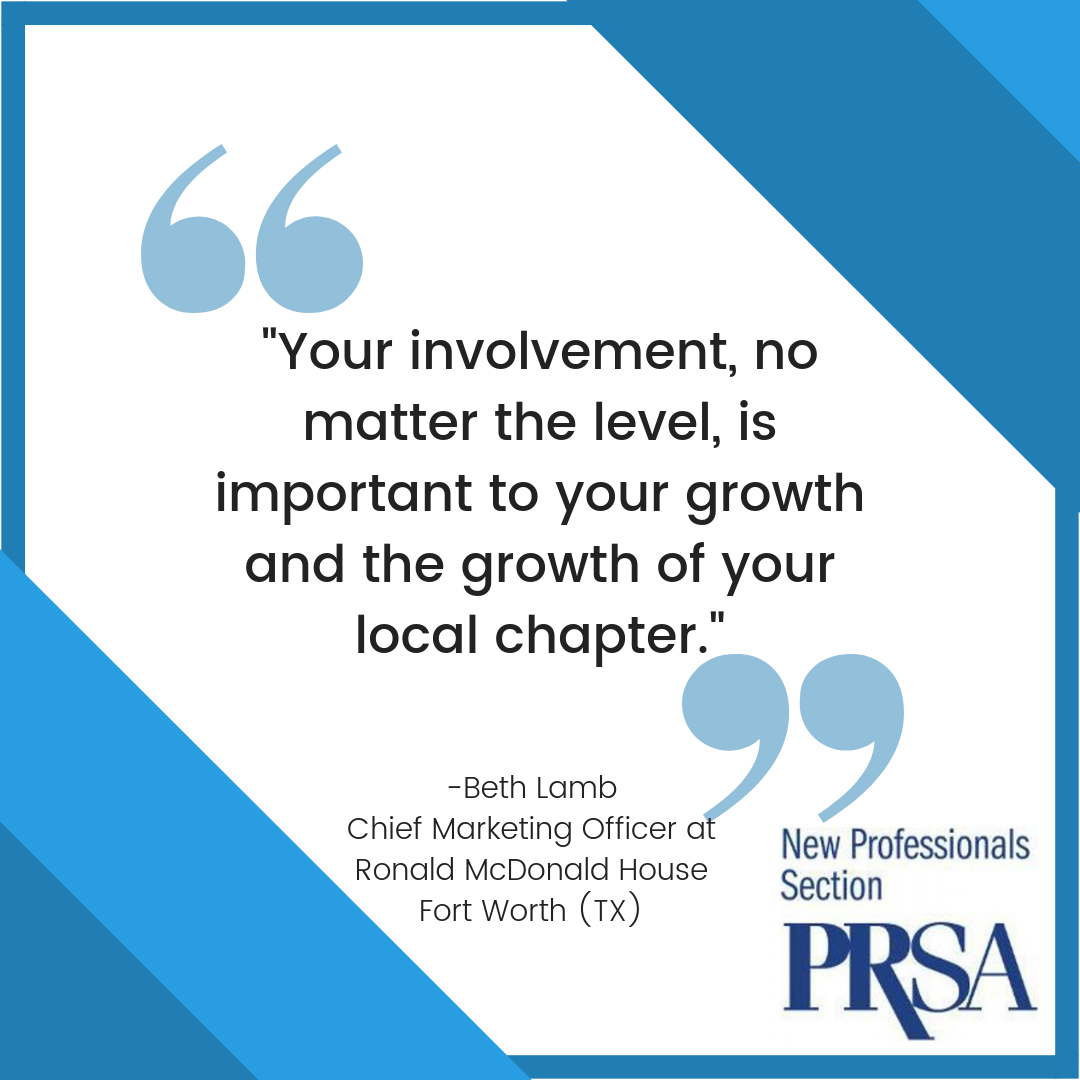
Beth Lamb, Chief Marketing Officer at Ronald McDonald House Fort Worth (TX) said “it can be very easy to get involved with your local chapter, and the easiest way is to simply attend chapter programming. Get to know your fellow members and leadership board through the various events. If you are ready to serve the chapter, ask. Boards always love to know who is ready and willing to fill committee chairs. If your schedule does not allow you to do more than attend programs, offer your ideas on luncheon topics or event programming.”

PRSA is a great way to enrich your professional life through networking and career development. “Plus, your involvement, no matter the level, is important to your growth and the growth of your local chapter,” said Lamb. Find your local chapter today at PRSA

By – Jade Fails

Jade Fails is a Baylor University public relations graduate. She is currently the Marketing Administrator at The Shops at Clearfork in Fort Worth, TX. 

One Mentor is Not Enough – Build a Board of Directors

There is no such thing as an ideal mentor.

That’s an idea it took me a long time to understand. Every person I had heard speak about mentoring spoke about their mentor as if he or she were a omniscient fairy godmother guiding them through life.

I tried finding that one person who would guide me through the ups and downs of my career, imagining teachers and professionals I admired as that go-to person, trying out formal mentoring programs to no avail.

Then I heard a take on mentoring that completely changed the way I looked at it – the idea that everyone should have their own personal board of directors filling that role of mentor and advisor.

It took a while for the ideas to stick, but when it did, it made so much sense. I don’t depend on just one person for advice in any other area of my life, why would I expect one person fill that need professionally?

Like an organization needs a board full of people from different backgrounds with varied experiences and perspectives, so too do professionals. No lone person will have had the same exact experiences you will, so having a pool of trusted advisors will help you grow and develop in a variety of situations.

For your board of directors to be effective, your group needs to be varied. Having two people whose careers and lives mirror each other won’t necessarily be the most helpful to your development. Look for people in your life and your network who fill roles like:

  • Someone who’s career you admire
  • Someone who’s experience is similar to yours
  • Someone who is in your field, industry or niche
  • Someone who is not in your field, industry or niche
  • Someone who is at your experience level
  • Someone just a couple steps ahead of you experience-wise
  • Someone with a lot of experience
  • Someone who will help connect you to others to grow your own network

You don’t need to fill out your board of directors all at once – that will happen over time. You do need to make sure there is variety in who you’re approaching for advice, though. It may seem like quite an undertaking to find people, but I’m sure if you take a good look at your own network, your board of directors will begin to take shape.

Looking amongst your own circles makes a lot of sense when you think about it. For a mentorship to be successful, there needs to be trust, common values and common interests. A mentor needs to be someone you respect and with whom you mesh, so looking to people you already have a connection with is a great place to start.

If you feel there’s little variety in your network, try casting your net just a bit wider to your PRSA chapter, your alma mater’s alumni network and your network’s network. Asking to connect with strangers becomes a bit easier when you already know you have something in common.

One-on-one coaching like a traditional mentoring relationship may work for some, but it’s not the only way. Like any other relationship, a mentorship should grow and change over time. Being mentored is an ongoing process, not an accomplishment or item to check off along your career path. It’s something that takes work, time and dedication. And much like other things in your life – your relationships, your professional development, your own well-being – you get out of it exactly what you put into it.

Looking to learn more about building a successful mentoring relationship? Join us as we partner with the College of Fellows for Supercharge your career: How finding or being a mentor can transform your professional development, a webinar to discuss the ins and outs of mentoring. Register now.

(P.S. The first draft of this post contained an ode to my own personal board of directors –  a zany group of professionals who have helped guide me through my career. While everyone should have their own board of directors, no two groups will ever be identical and I think it’s important for everyone to find what works for them. They know who they are and know how deeply I value them. However, the story of how our paths have crossed is one I’m always happy to tell to anyone who asks.)

Image uploaded from iOSIn her fourth year on PRSA’s New Professionals Section’s executive committee, Robyn serves as 2019 chair. She’s a native of southern New Jersey and currently resides in Washington, D.C., by way of Pittsburgh and South Carolina. Robyn currently works for Airports Council International – North America (ACI-NA), a trade association representing North America’s airports, and holds a bachelor’s degree in Public Relations and a master’s degree in media arts and technology, with a focus on creative media practices, both from Duquesne University. She likes to spend her spare time cooking, reading, exploring, crocheting and spending time with her tail-less cat, Izzy. Learn more about her on her website or find her on Twitter & talk to her!

New Pros Week Q&A with Pat Ford of Burson-Marsteller

Editor’s note: as part of PRSA New Professionals week, The Edge sat down with Pat Ford, Vice Chair, Burson-Marsteller for inspiration and advice.

How did you get started in PR? 

I got my start with a small public affairs firm in Washington, DC, for which I had already been doing freelance writing assignments as a side job when I was still a newspaper reporter.  I didn’t know much about PR then – and in those days (early 1980) – I didn’t ever see the kinds of amazing resources we have today for students and young professionals, such as PRSSA and the PRSA New Professionals program.  Once I joined the profession, I loved it and my enthusiasm has only grown stronger over the past 36 years!

What was your biggest challenge when you were a new professional?

The first priority was to learn all I could about how to be an effective communications professional.  Because I worked in a small firm and simply didn’t know about PRSA or other organizations from which I could have received training and met with role models/mentors, I really had to drive that process myself.  

I immersed myself in anything I could read about PR, and gained a lot from several books on PR.  One that sticks in my mind even today is a work by Edward Bernays, one of the most important pioneers in the PR profession, called Crystallizing Public Opinion.  It was written in 1923 but still resonated in the 1980s and is still worth a read today.  The other key priority was to find and enlist the help of great mentors.  I’m so grateful as I think back now about a number of individuals who invested time in my professional development and generously shared the benefits for their vast experience and insight on PR, on public policy, which was the focus of my early days in this business, and of journalism, so I could learn far beyond the limited experience I had.  

I’ll never forget those mentors and I feel a sincere responsibility to honor their selfless dedication to me and other young professionals.  That’s why I am committed to make that same kind of investment in emerging talent today – and every day of my professional life.  

What makes a new professional stand out and advance in the PR industry/to senior leaders?

Your professional persona is, in essence, your brand.  So how do we grow brand strength?  The most important factors in growing any brand are differentiation and relevance: if someone has made it through our screening process, we expect they will have had good grades in school and be smart; we assume a certain standard of writing ability; we expect they will strive to complete a task when they get an assignment; we expect they are or should be voracious consumers of news and media content from the wide range of channels available to all of us today.  Those are table stakes – everyone has to be able to demonstrate those core skills.  

What differentiates you as a young professional are the ways in which you go beyond the expected to the exceptional.  You do this by learning all you can about how business works and how your company’s (and client companies’) business works.  You do it by being proactive and looking for ways to do even the most routine task in an exceptional way, including through flawless execution.  You do it by continually enhancing and improving your writing ability and adapting it to each specific business situation.  And you do it by asking smart questions that show a keen insightful thought process.  And you do it by demonstrating passion for the mission – don’t just say you are passionate or dedicated; show it!

How can new professionals find a mentor?

If you ask them, most will come!  

To paraphrase a lyric from one of the best songs in the musical Hamilton: “Look around, look around, at how lucky we are to be alive (in PR) right now!”

  • Look around in your own office – not just your bosses, but colleagues at every level.
  • Look around in other professional settings like the PRSA, or the Plank Center for Leadership, or The LAGRANT Foundation.
  • Look around and seek out people who seem exceptional at some aspects of the business (or, if you’re lucky, all aspects of the business).  I can’t think of one who ever declined to be helpful.  Some are better than others, but all or most really want to help.  These are priceless opportunities for young professionals, but you need to make them happen.

As a whole, what areas do young professionals come in with the least amount of experience or understanding and how can they make up that ground?

Business acumen and exceptional writing ability.  I can’t emphasize these points enough. I wish I could connect with every future PR professional while they are still in their early college years and convince them to build more business and economics courses into their course loads.  They should also be reading the top business books/publications/sites to build a strong working knowledge of business trends.  It will give you an immense advantage.

Even in our new social media world that is heavily driven by video and 140-character messages, you gain a huge, differentiated advantage if you are an exceptionally talented writer.  Like any special skill, that requires a passion for excellence, a rigorous devotion to honing your skills, and practice, practice, practice.  

What is your top piece of advice for new professionals?

You have NOT reached your destination: this is the beginning of a journey that will have its biggest opportunities and benefits down the road.  These early years of your career are incredibly important for establishing a strong foundation for that journey, so think of them that way: soak up as much knowledge and experience; keep asking the right questions; look for ways to differentiate your personal brand; constantly broaden your horizons with the profession and in business generally.

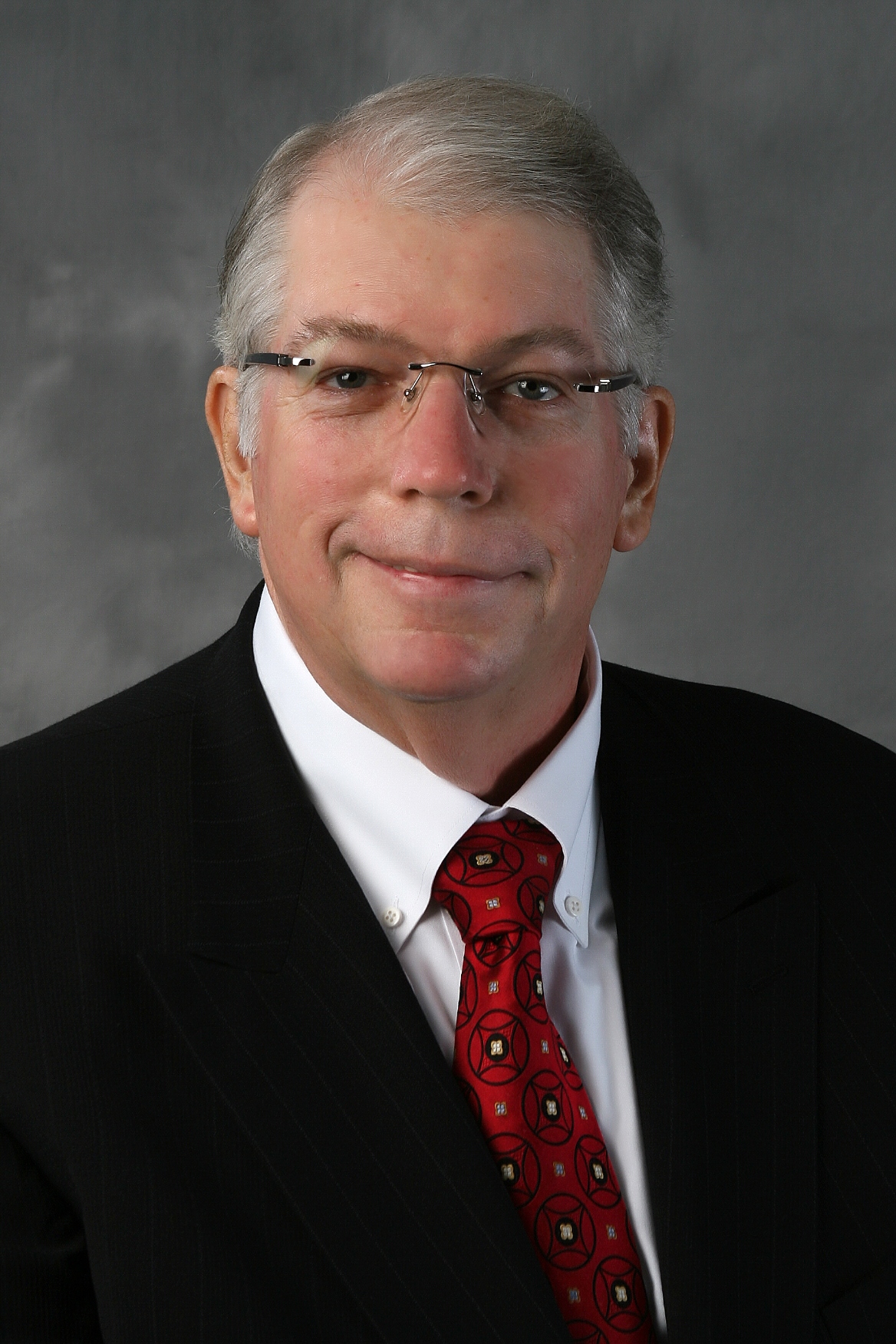
FordPatrick Ford is Burson-Marsteller’s vice chairman and chief client officer. Over 27 years at B-M, he has held numerous positions including North American CEO and Asia-Pacific Chairman. Pat is a trustee of three leading PR organizations: the Institute for Public Relations; The LAGRANT Foundation; and the Plank Center for Leadership in Public Relations. He was recognized in 2014 with the Plank Center’s prestigious Milestones in Mentoring Legacy Award. Follow Pat on Twitter @fordpat.

How My Mentors Helped Me Decide to Make a Career Change

Editor’s Note: This post is part of our ongoing #MemberMonday series. Each week, we will share content focused on our New Pros members and how PRSA benefits them. Follow us on Twitter at @PRSANewPros and share your stories using #MemberMonday.

Deciding whether or not to leave your first job isn’t easy. There are a lot of questions to consider. Is it the company you don’t like or is it the industry? Is it the agency world or your particular agency? Have you done all you can to grow and love your job? Do you want to relocate and, if so, can you afford it?

Deciding whether or not to

Fortunately, mentors and other resources can help. As I debated whether to leave the agency world, here are a few lessons I learned from my mentors.

Build a network before you need one

When I started considering a career change, I decided to consult my mentors. Fortunately, I’d been building up a network for the past couple years, so it was easy to think of people to reach out to.

Here are the three types of mentors I consulted:

  1. Seasoned professionals. These are the well-connected, executive-level people who can relate best to the hiring managers who will be looking at your resume.
  2. Young professionals. Mentors who were where you are just a few years ago can relate to what you’re going through and offer timely advice.
  3. Mentees. I’ve found my mentees are so wise that they end up mentoring me in the process.

Don’t have mentors yet? PRSA Mentor Match is a great tool PRSA members can use to connect with seasoned professionals. I developed a corporate mentor who was very helpful in my decision.

Stop worrying about appearing like a job hopper

I, like most Millennials, was worried my résumé would look bad if I left my first job before the two-year mark. But then a mentor told me that’s a myth. Sure, some PR people may think you look like a job hopper, but it all comes down to the story you tell.

As long as you have a good story for why you jumped and if you are truly concerned with finding the right long-term fit, it shouldn’t matter if you leave your first job earlier than expected.

The key is to make sure you are making this change for the right reasons and that you’ve done all you can to be happy in your first job. Before leaving, outline the path you’d like your career to take. Will your current job help you get there? Have you done everything you can to carve the path you want? Have real conversations about your goals with your supervisor before deciding to leave.

Make a decision you can live with

Two people recently told me, “Your career is too short to be unhappy with your job. Why stay if you aren’t happy?” It seems so simple, but it can be hard to come to terms with. Just remember, there’s a difference between having a bad week and having a bad job.

Everyone will have opinions about your career path. But no matter what they tell you, you’re the only one who will be with your employer for 40-plus hours a week. You’re the one whose career is on the line.

Sure, some people will still tell you that you have to stick it out for a year or two. But in the end, it’s your decision. Make the one that feels right.

AAEAAQAAAAAAAAl1AAAAJGM5NWQyMTZkLWFlZTAtNDU1OS05NDZiLTgxYTU2ZDNjZGJmNgHeather Harder is the programming co-chair for PRSA New Professionals and a former national president of PRSSA. Follow her on Twitter at @HeathHarder.