How to Get Your First Promotion

You’ve made it through your first full-time position, congratulations! Getting the first position is the hardest part, but you’ve managed to break into the industry. You’ve got the experience and some new skills, but how do you take it to the next level?

Getting a promotionBelow are five ways to get to the next level in your career.

Act like you are already in the next position.

Once you’ve mastered the requirements of your current position, start learning about what’s required at the next level.

Let’s say you are the assistant account executive for your team. You are charged with maintaining media lists, keeping the department clip report updated and assisting the team as needed. What does an account executive do? They might take your efforts further and build relationships with contacts on the media lists, they might create custom media lists, they use the clips in the report to share results with clients, etc. Start emulating those actions.

Take inventory of your job responsibilities and see how you can take them a step further.

Become a resource for your department

Is your boss having trouble getting a client invoice approved through accounting? Having trouble getting timely numbers and results from your research department?

It pays to network, even inside of your organization. Get to know the different parts of your organization and make yourself a resource for getting important but tedious tasks done quickly.

Continue your education

Become involved in your local PRSA chapter. Attend monthly luncheon or happy hours. Join a committee or participate in a Twitter chat or webinar. There are so many ways to get involved with PRSA and it shows that you are invested in becoming a better PR professional.

A positive attitude goes a long way

We’ve all had days when you are just not feeling up to it, whatever it maybe. Or things may be stressful in your personal life. But remember, work is not the place to take out your frustrations.

Maintaining a positive attitude may seem insignificant, but your coworkers and most importantly your boss will notice if you have a negative attitude. Shooting down others’ ideas, not participating in team activities, showing disgust for tasks that you believe are beneath you will not get you promoted, but they can get you fired.

Learn to take constructive criticism

No one likes to be criticized. However, constructive criticism is crucial to advancing your career. Learn how to effectively take criticism and apply it to future situations and assignments. Incorporating feedback shows that you are a good listener and are mature enough to learn for criticism.

Most importantly, advancing and excelling in your career is a process. Learn from mistakes, apply criticism and feedback accordingly and cultivate your skills. You never know when the next opportunity will appear.
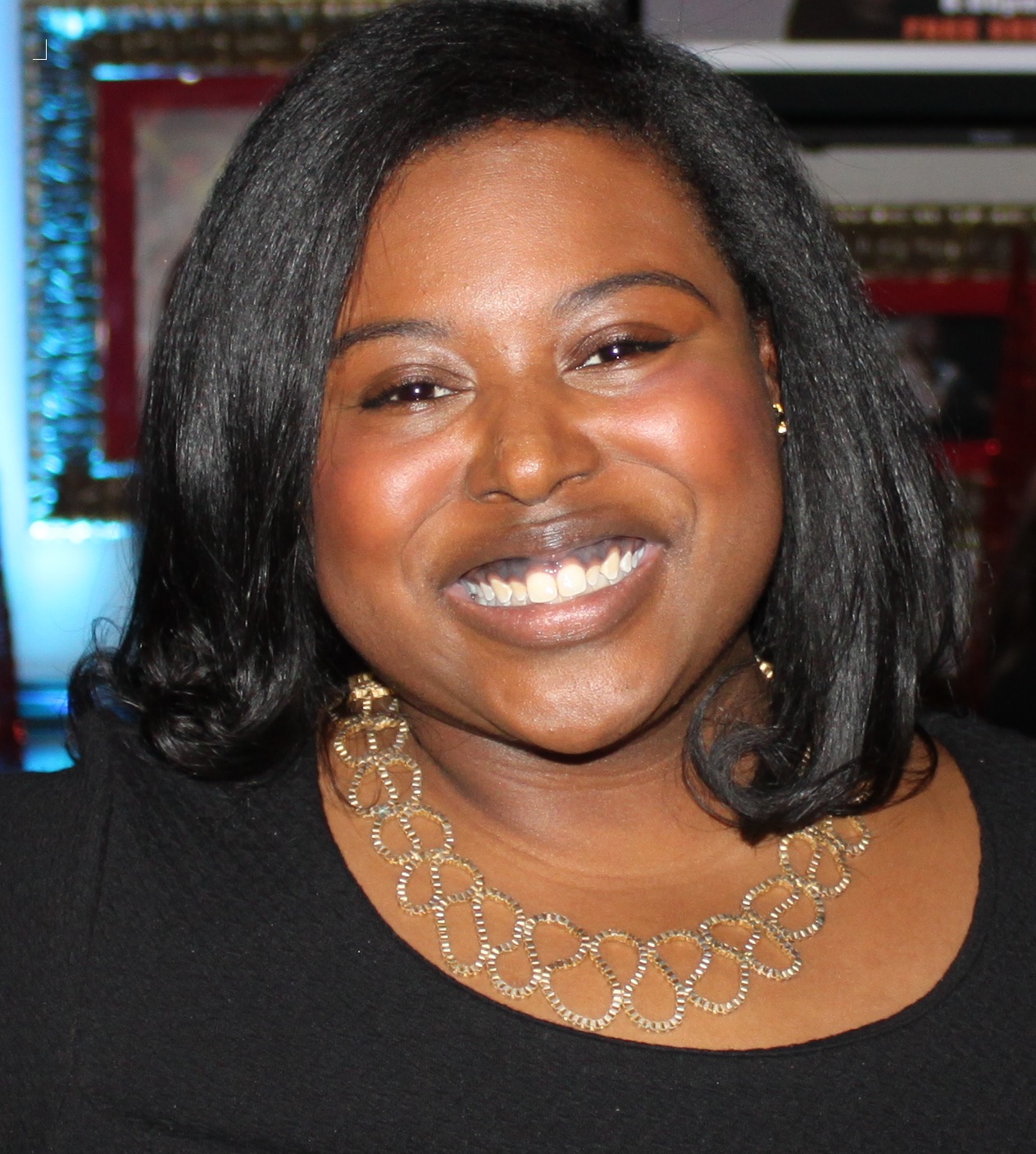
Victoria Lightfoot (1)Victoria Lightfoot graduated from Georgia State University in 2012 with a Bachelor of Arts in journalism, concentrating in public relations. She is currently the PR coordinator at the Atlanta Convention & Visitors Bureau and volunteers on PRSA Georgia’s College Relations Committee and co-chairs the Travel & Tourism Special Interest Group. Connect with Victoria on LinkedIn and Twitter (@Victoria_Lenese)


The Plank Center’s Value to Young PR Pros {New Pros Week Series}

Betsy-Plank-QuoteThe namesake of The Plank Center for Leadership in Public Relations, Betsy Plank, commonly referred to as the First Lady of Public Relations, dedicated more than 60 years to the industry. As a distinguished leader in PR, Betsy was an advocate for its education and young professionals. Betsy believed, “Public relations people must be eternal students.” She recognized the importance of leadership and mentorship, and envisioned creating an avenue in which PR students, educators and professionals had resources to continue leading and mentoring throughout their careers.

In 2005, The Plank Center was founded at her alma mater, The University of Alabama. Established to help develop and recognize outstanding diverse public relations leaders, role models and mentors, The Plank Center continues to implement Betsy’s ideals to advance ethical public relations in an evolving, global society.

As new public relations professionals, are you recognizing the importance of leadership and mentorship? Betsy believed in the power of leadership and mentorship and you should, too.

Learn to Lead

You may be thinking that you cannot be a leader, because you’re beginning your career in public relations. Guess again. Leaders are needed in our industry at all levels, not just at the top. The Center debuted its first leadership report card, which revealed a “Grand-Canyon-sized gap between leaders’ evaluations of their own performance and those of their employees.” As new PR pros, learning to be an effective leader early in your career can help close this gap.

It’s been said, “Those who become involved with the Center will truly become better leaders.” From interviews with PR legends, material from the best experts in the industry to the latest research, the Center has value for everyone. Here you will find inspiration from the legends such as Betsy Plank, Harold Burson, Ofield Dukes and many more. Their paths to success remind us to keep learning, dreaming and, of course, leading.

Learn to Mentor

Some may say the Center introduced them to the true definition of leadership in public relations. Others, such as Brian Price, assistant account executive for Edelman, mention how the Center has expanded their network and motivated them to continuously find mentorship, and also seek out ways to be a mentor.

Betsy had many quotes, but one in particular truly sums up what mentorship means to our profession, “Mentoring is one of the strongest ways to spell success in public relations.”

And remember, you don’t have to always have an answer to your mentee’s questions. Sometimes, it’s best to be a sounding board and ask thought-provoking questions. At the end of the day, take Betsy’s advice, “You’re never too young—or too old—to mentor others.”

Pay It Forward

Wendi Strong, executive vice president of corporate communications with USAA, said, “No matter how experienced or knowledgeable one is, if you can’t leverage your skills to motivate, inspire and lead others to be superior practitioners then you haven’t fulfilled your duty to our profession.”

Leadership and mentorship go hand-in-hand. Don’t think of it as a challenge, but rather an opportunity to grow professionally and personally. How many times do we talk to someone about our experiences and offer advice to those who are seeking answers? Experience equals knowledge. Whether you see it or you don’t, you’re already incorporating leadership and mentorship into your life by sharing your experiences and advice with others.

We were taught to be strategic, ethical communicators, and it’s our time to start leading and mentoring the future of our profession. It’s important to note that you are making an impact. While it’s not going to happen overnight, sharing your knowledge with others will lead to our industry’s advancement.

The Center, with the help of its board of advisors, has carved out a direction that makes it of “distinctive value to anyone wishing to learn more—or be more—in public relations.” The value of leading, mentoring and paying it forward is there, not only for new professionals, but students, educators and practitioners. Why not start your leadership and mentorship journey today?

J White

Jessika White graduated from The University of Alabama with a master’s degree in sports management as well as a bachelor’s degree in telecommunication and film. She is the communications specialist for The Plank Center for Leadership in Public Relations. Find her on Twitter or LinkedIn and follow The Plank Center on Twitter, Facebook, Instagram and LinkedIn.


Conquering the Awkward Stage at Work: A Young Pro’s Guide

Being a young professional is hard sometimes. Between work/life balance and climbing the career ladder, it’s a challenge to navigate this stage of life.

Conquering the Awkward Stage at Work: A Young Pro’s GuideAs a young PR professional, hard work alone is not enough to get you noticed. You must learn to build and leverage relationships, develop leadership skills, and stand out amongst your peers to achieve success in the awkward stage between an entry level position and a managerial role.

Here are a few ways to navigate your career when you’re in the stage between recent graduate and mid-level employee, so you don’t feel like you are in career purgatory:

Raise Your Hand

Build your reputation at work by volunteering for side projects or taking on extra responsibility. You want to show your team and bosses that you are willing to take initiative to help the team stay on track, are reliable and engaged in the company, and committed to the growth of your career.

When working on projects out of your day to day task, you are able to network with colleagues in different departments and learn skills that will benefit you in the long run. Your superiors will take note and soon enough you’ll get the promotion you’re dreaming of.

Attend Conferences

The learning doesn’t stop after college. In addition to reading the news and case studies, attend conferences and webinars. There is a wealth of information out there to help you grow as an employee and it’s even better when you can learn from industry professionals.

Conferences and webinars give you the ability to learn about new industry trends, network with professionals of all levels, and hopefully encourage a new way of thinking about your career. As markets evolve, you have to make sure you stay sharp and ahead of the curve.

Join Professional Groups

There is power in numbers and professional groups are a great way to get ahead. Networking opportunities and mentor/mentee relationships are great reasons for joining professional groups but the biggest perk is being able to serve on a committee.

When you are active in an organization, you see the impact of the different functions that make an organization work.

Pick Up a Side Hustle

All work and no play makes John and Jane dull employees. As much as you invest in your career, invest in your passion.

Your side hustle can be anything from doing PR for a local band in your city or planning events for a non-profit you believe in. Stay well rounded and follow your heart. You don’t have to go through a quarter-life crisis!

Speak Up

Don’t be intimidated in meetings and brainstorming sessions; you were hired for a reason so show the team what you can bring to the table. It is your job as a young professional to give a fresh perspective.

Have the confidence to speak up on opportunities a client can take advantage of, share your viewpoints while developing strategies, and most importantly don’t be afraid to ask questions.

The road to success is not a straight one, but you steer the wheel. Taking initiative and developing leadership skills is key to your success as a young professional. Do you have any suggestions on navigating your career when you’re not quite a recent graduate but not yet a manager?

Jasmine L. Kent, a member of PRSA-NCC, focuses on building community through dynamic events and engaging online marketing as a freelance integrated communications professional in Washington, DC. Keep up with her on Twitter at @LoveJasPR or visit LoveJasPR.com. 

Five Costly Mistakes For New Pros to Avoid

5Have you ever wished that you’d done something differently? For most of us, there is at least one mistake we wish we hadn’t made. Hindsight is 20/20 and no matter how prepared you are for your career, mistakes will inevitably happen. To make your transition from student to new professional as smooth as possible, keep any eye out for these common (and potentially costly) mistakes.

Misspelling a Journalist’s Name.

When pitching, this is one of the easiest mistakes to make. While it’s not necessarily fatal – if the journalist is interested in the content, they may pick it up anyway – it’s certainly embarrassing and could devalue your credibility.

Being a new pro, you’ll always want to put your best foot forward and show that you bring professionalism and valuable skills to the team. Don’t jeopardize that by not taking 15 more seconds to double check someone’s name. While you’re at it, run spell check to make sure there aren’t any other errors that may have slipped under the radar.

Not Prioritizing Deadlines.

You may have days when you have your to-do list planned out, but another (more time sensitive) project pops up just as your day is getting started. These little projects are one thing I personally like about being a PR pro because each day truly is different, but having a dynamic schedule also presents risks.

Don’t let the small project become a huge project because you put it off for a week and it’s due tomorrow morning. It’s so easy to get caught up in the urgency of sporadic assignments, but you need to be disciplined in carving out time for larger, long-term projects.  If you find that you are struggling to keep up, communicate that to your supervisor or colleagues who can help.

Referencing the Wrong Media Outlet.

Just like misspelling a journalist’s name, this is an easy one to make when pitching. If you are working for an agency, you may talk to people from numerous media outlets each day. You’ll want to avoid telling the guy from The NonProfit Times that what you have to offer would be of interest to readers of The Chronicle of Philanthropy. As much as we love to be quick and responsive, it’s worth it to slow down a little for the sake of accuracy.

Not Keeping Your Supervisor Updated.

Keeping your supervisor and team members updated with how your projects are going is so invaluable. Teamwork makes the dream work, but not without clear communication. As mentioned previously, this comes in handy if you are struggling, but it’s also critical to establishing expectations. Allowing others to draw their own conclusions about when you will have a project finished will come back to haunt you more times than not.

Sending Out the Wrong Version.

Out of all these mistakes, this one may have the potential to be the most costly. Anyone who has internally edited content before it’s made public knows that the process can be long and tedious. A minor change may not seem significant, yet the change may have been in reference to financial or other information that needs to be completely accurate. Before you send something out, always check to be sure that you have the final version.

Being a new professional is about learning, but you’ll be one step ahead of the game when avoiding these little mishaps. Attention to detail is invaluable and it’s something that gets stronger over time. The more you practice, the more effective you’ll be at predicting potential mistakes and spotting them should they arise. In time, you’ll find a style that works for you. Keep calm, stay focused and enjoy your new career as a PR pro!

JeffJeff Adkins is a public relations associate for Henry Ford Hospital and Health Network in Detroit, Michigan. An active member of the Detroit chapter of PRSA, Jeff enjoys connecting with fellow PR pros and seeking out new professional experiences. He’s a 2014 Wayne State University alum, where he obtained a Bachelor’s in Public Relations and was a member of the university’s PRSSA chapter. In his free time, Jeff enjoys being active outdoors and volunteers as a public relations officer with Portal Paranormal Society. Feel free to connect with him on Twitter at @jeffadkins14 and LinkedIn.


Achieving PR Goals through Media Events

Achieving PR goals through media eventsAs PR professionals, we wear many different hats on a day-to-day basis: some days, we feel glued to our computers; others we are racking up mileage for various client requests around town. Sometimes we schmooze for eight hours a day, and some days we’re heads-down writing content that was due to the printer yesterday. PR work is varied but variety is the spice of life, am I right? However, one of the most sought-after aspects of the #prlife is a sparkling gem that we call a media event.

I don’t think it’s an overstatement to call media events inspiring and invigorating, and I don’t think it’s a coincidence that I leave most events with a renewed sense of purpose and a head full of new, relevant story ideas. Often times, events can transcend the press releases, pitches and follow-up calls that comprise a large amount of our public relations duties. Events give the audience something tangible to see and feel, and emotionally connect them with a company or organization.

If you pay attention to the media/competitor landscape, you’ll notice that events always cluster around the same times of the year, usually before and during large cultural events (here in Miami, there’s a lot of activity surrounding Art Basel and Miami Swim Week). You can host as many media events as your client’s budget will cover and plan it impeccably, but your effort will be for naught if you do not cut through the clutter and leverage your assets in a strategic manner. You’ve been given an incredibly effective public relations tool… let’s learn how to use it!

Give the media something that is uniquely compelling.

If you’re like me, you struggle with finding a timely hook for your stories. I’ve heard “well, I can run this story any time. Why now?” more times than I would like to admit. This is something special and unique about media events – you have the freedom to blend something that might not be as “sexy” with something that is. With events, you are free to have subject matter experts, interactive components and a highly visual presentation. Not only does this make for a highly engaging and memorable experience, but makes the company compelling and at the top of the mind for relevant future stories.

Request interview questions ahead of time.

You should do this for two reasons: one, the act of formulating and communicating interview questions fosters a deeper commitment to the event and potential story. I have found that doing this great reduces the disparity between RSVPs and actual attendees. Secondly, knowing the questions beforehand helps you better prep your clients for interviews and helps you more effectively draft key messages and suggested responses.

When media isn’t your only audience, steward the situation.

Most times, your media events will be coupled with consumer events. Generally, I like to jump this hurdle by suggesting that the event be broken into two sessions: one for media and one for consumers. If your wish is granted, use this to your advantage by allowing media “exclusive access” before the event opens to the public.

If you are not able to get two different, targeted sessions/presentations, you should request for a quiet space to be reserved for media interviews. Doing so ensures that the journalists will not be interrupted or distracted by curious bystanders. You can add additional value by pre-selecting and preparing consumers for “man on the street” interviews. This way, you can easily and quickly provide the consumer testimonials that the journalists needs while respecting the consumer’s valid third-party opinion.

Be Flexible.

We recently held a client event with DJ Irie with an outdoor photo opportunity scheduled for the early afternoon. By midmorning, the sky was threatening to ruin our perfectly timed event with a rainstorm. After some one-on-one discussions with the media, we decided it would be best to switch the indoors and outdoors component so our guests could take as many photos as their hearts desired.

Flexibility is not limited to schedule, though – you need to be able to accommodate different requests and make the most of what you have.  Is the member of the media seeking more information on a topic that is not the focus of the event? As long as your spokesperson is media trained and prepared with some key messages, let them chat – monitor their conversation and d follow-up with the journalist. Does a television stations need to get in and out of the event in order to make it to some breaking news on the other side of town? Be understanding and accommodate their needs with an empty, quiet room in which they can record an interview. No need to stop the whole show to accommodate one request; just ensure that you are giving them what they need to best tell your story.

Post-event follow-up.

“Media relations” is a state of mind that you never completely slip out of, even after the event has concluded and the client has gone home. After the event is over, you’re in a special window of time where you can make an impact on the media as a respectable PR professional. In addition to an event recap, press release and event photos, you should also follow up with the individual journalists on social media. From there, be sure to stay in touch by liking and commenting on their posts. By promoting their articles and retweeting links to their stories, you can show that a professional relationship with you has even more benefits.  Creating this multi-dimensional relationship helps boost your credibility and will elicit respect from the journalism community.

There is a difference between merely staffing an event to fulfill your professional obligations and thriving as a PR expert in the situation, using every avenue available to you to go above and beyond the call of duty. Use media events and various face-to-face interactions as a chance to learn more about your media contacts as people who have likes, dislikes, goals and a social life. This strategy, more often than not, becomes second nature and you form a reflex for connecting people and uncovering opportunities. By doing so, you will slowly and surely build the respectable network that will make you highly valued as a PR/Media Relations professional.

Rachel is a graduate of Florida State University (Go ‘NHeadshotoles!) and is currently pursuing a Master’s degree in Strategic Public Relations from George Washington University. Currently residing in South Florida, Rachel is an Account Executive at the integrated communications firm Moore Communications Group.  Rachel is a talented writer, skilled in event planning and have provided valuable account support to national and local clients including Ford Motor Company. Connect with Rachel on Twitter or LinkedIn.