Pro Bono Work: Professional Development for a Good Cause

By Elizabeth McGlone

My pro bono work for nonprofits started with a rejection letter.

I had applied for a position at a PR agency but wasn’t selected. I was disappointed but also determined to learn from the experience. My first step was to get advice about how to become a better job candidate for future opportunities. A contact at that same PR agency suggested

pro bono work as a great way to build my own skillsets while also helping an organization that was probably short-handed when it came to PR.

It was one of those, “Why didn’t I think of that?” moments.

Finding the right organization.

I began researching nonprofits in my area that do work for causes I am passionate about. One non-profit in particular stood out to me, National Alliance on Mental Illness, or NAMI, Indiana, and with my top choice in mind, I reached out to the organization.

NAMI was thrilled that I was interested in doing pro bono work for them! In fact, my point of contact had been a PR volunteer who later transitioned into a full-time role in their communications department.

Getting the right experience.

In my first conversations with NAMI, I made it clear that I was looking for an opportunity to gain experience in areas of PR that I hadn’t previously had exposure to, namely media relations.

Fortunately, this fit with NAMI’s needs and my timing was perfect. Their annual mental health and criminal justice summit was approaching and they needed help writing promotional content and getting media coverage.

The summit has since concluded, but it was incredibly satisfying to see the results of my hard work. I was tasked with finding media coverage of the event and secured a local reporter who published an article on the mental health program discussed in the workshop. This is publicity and attention that the program may not have received otherwise.

Working through the challenges.

Although my pro bono work for NAMI was extremely rewarding, it hasn’t been without its obstacles.

One of the biggest challenges was nurturing the relationship with NAMI and meeting the deadlines and goals that I set for myself. This wasn’t easy with a full-time job, other volunteer commitments, and my own hobbies that I also had to balance. NAMI’s employees also had their own responsibilities and it was my responsibility to maintain open lines of communication. I had to be proactive and persistent, providing updates on my tasks and asking for new ones. Each week I blocked out time on my calendar to work on NAMI-related items so I could make steady progress and meet deadlines.

Overall, my experience was enjoyable and invaluable to my professional development. It is fulfilling to know that my expertise is helping a cause I am passionate about, and it’s exciting to watch my skillsets grow. I’m excited to see how this opportunity grows and changes, and also what other opportunities the future holds.

What do you do to volunteer your PR services to nonprofits? What is most important to you when you look for a volunteer opportunity?

Picture1

Elizabeth McGlone a native Hoosier and a Digital Marketing Coordinator at Pinnacle Solutions Incorporated. She is an active member of the PRSA Hoosier Chapter, serves as a committee member of the Professional Development Special Events/Networking Committee, and is a co-chair for the New Pros Committee. In her spare time, Elizabeth does pro bono PR work for local nonprofits, including NAMI and Phi Beta Kappa Alpha Association of Indiana, and also enjoys biking and backpacking. You can connect with her on LinkedIn here.

Leveraging your PRSSA Leadership Experience to Launch your Career

Leveraging your PRSSA Leadership Experience to Launch your Career
By: Emma Finkbeiner, PRSSA Immediate Past President

For recent graduates, standing out amongst your peers in the job search is crucial. In a competitive industry, leveraging the leadership experience gained through PRSSA membership can help you do just that. I spoke with four former PRSSA National Committee members about skills they learned through PRSSA involvement and how they used their experiences to help launch their careers.

Brian Price, PRSSA 2013-14 National President
Corporate Communications Manager, Starwood Retail Partners

Heather Harder, PRSSA 2014-15 National President
Communications Manager, RSE Ventures

Laura Daronatsy, PRSSA 2015-16 National President
Communications Leadership Development Program Associate, Lockheed Martin

Veronica Mingrone, PRSSA 2015-16 National Vice President of Career Services
Analyst, Canvas Blue

What did PRSSA leadership experience teach you about professionalism?

Brian: “I think it showed I took my profession and professional development very seriously. But, you need stories to back it up to show why and how PRSSA experiences are so valuable. Seek out leadership positions not just to have the line on your resume, but for the development that comes with it.”

Laura: “PRSSA helped me launch my career because it allowed me to learn what professional behavior looked like and how to emulate it.”

Veronica: “PRSSA taught me how to interact with professionals at much different stages in their careers than I was. Now, I feel better prepared to engage with senior leadership at my company and, more broadly, at networking events. Knowing how to approach others confidently and keep in touch with them has been instrumental in my career.”

Heather: “Engaging with senior PR professionals as a student taught me a lot about when to speak up and when to listen.”

PRSSA leadership positions are volunteer positions. How is this type of leadership experience different because of that fact?

Laura: “PRSSA taught me it’s not enough to just show up. Raise your hand. Be a volunteer! Help someone else out. You have to be a giver, contributor and follower before you can truly be a respected leader. By thinking about what you can contribute, you’re already doing a crucial part of leading — leaving the place, organization or person better than the way you found it.”

Veronica: “Regardless if your aspirations are to serve students as a Chapter leader or on the National Committee, the operative word is “serve.” Any position you hold in the society – at whatever level – will likely be a time commitment and a good amount of work.”

What did you learn from leading a group of your peers?

Brian: “Much more than group projects in classes, PRSSA taught me to work with a group of my peers. Now, I do it all the time at work, especially when I was at Edelman with so many like-minded colleagues. In PRSSA, you work for clients, projects, fundraising programs with people you (hopefully) like personally, but also respect professionally even when there are competing ideas and different approaches. It’s just like a good workplace in that sense.”

Laura: “I referred to my leadership positions multiple times throughout my interviews because I had learned so many lessons — both good and bad — by leading my peers. It definitely helped (still helps) me in my job now because I know how to manage a project when working with people completely different from me.”

Heather: “Coming into a PR firm with leadership and management experience, I was immediately recognized as someone with the potential to manage our interns and given more responsibility because of the skills I’d developed in PRSSA.”

How did the network you built from involvement in PRSSA benefit you as you began your career?

Brian: “PRSSA prepared me the most by developing my network. I was active in PRSSA outside of just my Chapter, and met many influential professionals and rising new professionals. They became mentors and trusted resources who helped me through the job search process.”

Veronica: “I was able to leverage PRSSA in the job hunt by tapping on the connections – both peer and professional – that I had made in the four years I was a member. These people knew the value of PRSSA and what it meant for my professional development.”

Heather: “You have to continue to cultivate the network and keep in touch with everyone interesting that you meet. It really was useful for obtaining the recommendations that helped me get two very important jobs in my career. I don’t know that I’d have gotten those jobs without being able to call up some PRSSA/PRSA mentors and have them put in a word, because I’d kept a genuine connection with them.”

How did your leadership experience help you stand out among the crowd?

Laura: “You can set yourself apart as a teammate and a leader simply by putting in a little extra time and effort.”

Veronica: “PRSSA gave me an opportunity to lead – and I don’t think I would’ve had experience managing a team this early in my career were it not for the society. It allowed me to become confident in my leadership abilities, to explore my career interests, to travel and figure out where I wanted to move post-grad, to become an ambassador for my university and well-known in my program – and the list goes on and on.”

Heather: “Once I brought it up and explained how much management, leadership and hands-on experience it had given me, I was able to immediately standout as someone with a unique experience and a passion for the industry. These skills helped me prove myself to get more responsibility very early in my first job.”

It’s important to note that the leadership journeys of these four individuals are far from over. All four have continued their development by joining PRSA, serving on the New Professionals Executive Committee and getting involved in local PRSA Chapters. Leadership and professional development is truly never finished, and dedicating time to an organization like PRSSA or PRSA shows your continued interest in the industry and your own professional growth.

The Ever-changing Landscape of Press Trips

It is crucial public relations professionals understand how to balance working with editors, bloggers and social media influencers in today’s digital world. News is abundant, and everyone is consumed with information overload so staying updated on current trends and who is controlling it is key.

Mixing Traditional and Modern Media
Hotels and resorts need money and resources and with the constant changes, public relations professionals need to ensure the resorts are getting their return on investment. It can’t be ambiguous. Unlike editors, freelancers and influencers don’t always have a confirmed assignment with a major publication, but there needs to be substantial information to properly vet clients.

“I can write something using your blurb, but to actually see with my own eyes and to use all of my senses to experience a place produces a quality piece full of descriptive language and palpable passion,” says Michelle Winner LuxeGetaways Lifestyle Editor and freelancer. “The result of a good press trip is exactly what writers are taught to do in their work: don’t tell me, show me. In the end the writer’s job is to compel the reader to visit, taste, see and do, too.”

You can learn more about press trips from Michelle Winner, Jill Robinson and Tamra Bolton at the PRSA Travel & Tourism Conference in New Orleans for their session, Press Trips: The Evolving Necessity.

It’s much easier to vet a New York Times travel editor versus a travel blogger. It’s easier for clients to understand the value of a national newspaper than a personal blog. However, these days people want to hear about other’s experiences because it’s raw and word-of-mouth is still one of the leading ways to create buzz.

We work with travel bloggers, but the vetting process is usually much more in depth than an editor with a confirmed assignment. We start by reviewing their work, checking statistics, social media presence, and if their niche audience works for the client. We need to have solid information to back up our recommendation. For example, a family focused travel blogger would be more appropriate than a fashion blogger at a family-friendly resort.

Newsrooms are Nearly Nonexistent
Newsrooms have cut budgets and many travel writers were the first to go. With the rise of social media, many influencers have been successful in their efforts while others abuse it. Many influencer requests show a loyal following, but lack of interest in a mutually beneficial relationship.

According to PR Moment, up-and-coming influencers think that numbers are what matters and not engaged audiences. Many requests, such as videographers who film models and night clubs requesting a complimentary stay at a five-star family-friendly luxury resort are, solely focused on themselves and not showcasing the destination and resort.

How are you adapting to this ever-changing landscape?

View More: http://fremontphotography.pass.us/ericarawErica Hammett is a PRSA member and the Public Relations Account Executive at MP&A Digital & Advertising in Virginia. She is a graduate of Virginia Tech. She’s also a member of the PRSA New Professionals and Travel and Tourism interest sections. Connect with her on Twitter and LinkedIn.


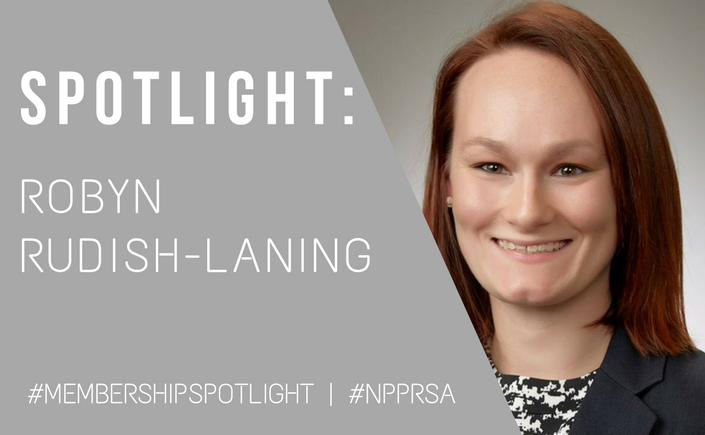
Member Spotlight: Robyn Rudish-Laning

Name: Robyn Rudish-Laning
Position/Company: Senior Manager, Marketing for Airports Council International – North America (ACI-NA)
Location: Washington, DC
Education: B.A. in Public Relations, Duquesne University
M.S. in Media Arts & Technology, focus in Creative Media Practices, Duquesne University
Social Media Handle: @robyn_rl

How and when did you first become interested in PR and communications?
When I was in high school. My first job was waitressing at a small restaurant in my hometown and towards the end of my junior year of high school, I started coming up with ideas to reach more people in the community and engage with customers through community events, promoting specials, using social media, connecting with the local newspaper and helping our happy customers to spread the word. Since we were a small staff, I took on the responsibility of planning & executing these ideas too. When it came time to look for colleges and think about what I was interested in the following year, I already had a pretty good idea & looked for schools specifically for their PR programs, not just general communications. Everything I learned while pursuing my degrees and on the job has only made me more curious.

How did you find internships/jobs?
I came up with a list of places I wanted to intern and hit the ground running applying and figuring out if I knew anyone who could help me get in the door. That method worked and I landed my first internship with the Make-A-Wish Foundation in Pittsburgh. Everything after that I’ve found by just being open to opportunities and making sure my network knew that I was interested in new things, even if I was enjoying what I was doing at the time. I found my last two jobs by making connections through PRSA, particularly local chapters, and being honest that I was new in the area and looking for a new opportunity.

What was the biggest challenge you’ve ever faced in your career? How did you overcome it?
Learning how to be the one making the plan and communicating the importance of a comprehensive communications strategy to guide the communications, PR and marketing efforts. Taking things from tactical and responsive to strategic and proactive is tough, especially when you’re not exactly in a decision-making role. The experience I had gained through volunteering for my PRSA chapter was incredibly helpful in knowing what needed to be done and the importance of a forward-thinking strategy. I’m also grateful for the guidance of more experienced PRSA members who often offered to be a sounding board for ideas and mentors.

What has been the most valuable thing you have learned through classes or experience?
I think learning to speak up and how to be a leader have been the most valuable things I’ve learned. It’s easy to say “I don’t have enough experience” or “what do I know, this person probably knows better than I,” but that’s not always the case. There’s no such thing as too little experience when it comes to leading or coming up with new ideas. The most dangerous trap anyone can fall into is believing that just because something has always been done one way, that you shouldn’t shake it up once in a while.

What has been the best piece of advice you have received?
“Give yourself some time and give yourself some hope.” – PRSA’s 2017 National Chair Jane Dvorak while speaking to a mixed group of SCPRSA and PRSSA members at the University of South Carolina.

Do you have any advice for future PR pros?
Practice, practice, practice. You can never learn too much. Volunteer, take on some pro bono work, take on new roles and responsibilities in internships and jobs – whether the job is in the profession or not, everything uses communications in some way. Get into a habit of learning whenever you can and being inquisitive. The more time and energy you invest in yourself and your career, the better the returns will be and the more likely an employer is to invest in you and helping you develop your skills.

What do you think is the best benefit of PRSA and the New Pros section?
Definitely the opportunities to network, get involved and lead. It’s incredibly easy to turn down opportunities to get involved and lead by thinking that lack of experience is a barrier, but being a part of the New Pros section has shown me otherwise. We’re a group of pros with five years of experience or less, so it’s a pretty level playing field and there’s plenty of room for everyone to get involved in some way. Leading the section has given me the opportunity to gain experience and has boosted my confidence in my own abilities, making me more sure of myself and my work and leading me to take seize leadership opportunities in my chapter and my workplace.

Is there anything you wish you would have known before starting your career?
I wish I had understood the importance of practical experience and application of the theories and ideas discussed in the classroom. While it’s all important, it can be overwhelming when you’re first starting out to translate that knowledge into practice.

Tell us a little-known thing about yourself.
I once competed in a local-level preliminary Miss America pageant. My issue platform was literacy across America & I competed to prove to myself that I could & to push myself to step outside of where I was comfortable.

If you are interested in being featured, or interested in nominating someone to be featured as a part of our #MemberSpotlight, please complete the following form.

Image uploaded from iOS (1)

Maximize Your Career Potential by Managing Up

Picture this: you’ve just started a new job, but your new manager isn’t as hands-on as previous supervisors or professors. Instead, you get 30-minutes of one-on-one time with them every other week and—before you can even learn how to use the printer—they expect you to show results. Yikes! Other managers may report into someone that is too hands-on—an entirely different challenge. Whatever your situation may be, learning how to work with your direct supervisor can make or break the early days of your career. The right manager can be your mentor, guide and biggest cheerleader, and it all comes down to how you manage up.

Changing Workplace Dynamics and the Keys to Managing Up
According to the Pew Research Center, Millennials (ages 21 to 38) have overtaken Baby Boomers in the workforce. Did you cringe at the word “millennials”? It’s Ok. I hate that word, too. Younger generations get a bad rep – we are often pegged as needy, entitled, narcissistic, unfocused, lazy – the list goes on. What’s interesting is that we see ourselves as motivated and purpose-driven, trying to make a difference in the world.

Simon Sinek’s video about Millennials in the workforce highlights a key point that unlocks a lot of our problem here: Millennials tend to have difficulty developing meaningful relationships—especially in the workplace. They also tend to be impatient about getting to where they’re going.

The reality, as stated by Sinek, is that the key to managing up is found at the intersection of patience and relationship development.

We’ve all heard the saying, “People leave managers, not companies.” According to Gallup CEO Jim Clifton, “The single biggest decision you make in your job—bigger than all the rest—is who you name manager. When you name the wrong person manager, nothing fixes that bad decision. Not compensation, not benefits—nothing.” (Source: Inc.)

But what makes a good manager? In my experience, the best managers are available when you need them, capable of sharing quality feedback, and able to recognize the strengths and weaknesses in others. While it’s easy to demand those of others,  best way to bring these characteristics out in your manager is to portray them yourselves.

Millennial psychology aside, there are some clear ways to “hack” managing up—no matter which kind of manager you have.

The Power of Quick Wins
If you’ve worked at an agency, you’ll be familiar with this concept. This is the first rule of onboarding a new account—deliver quick wins. However you define a “win,” immediately delivering on your promises and showing success can go a long way in getting the right attention from your manager.

This doesn’t only work for new relationships. In fact, this works after every performance review, weekly one-on-one meeting and more. Remind them of why they hired you and remind them that it was a good decision.

How to Ask for Feedback
How many times have you felt criticized or unappreciated at work? In those situations, I would say it’s probably because you were lacking quality feedback. There are hundreds of articles and books about giving and receiving feedback for a reason—it’s the key to every good relationship.

When giving feedback, first make sure they’re open to it. Ideally you would have already established a relationship with your manager so you can go to them with your questions and concerns. If you have a weekly 1:1 with your boss, then it’s easy—that’s your chance to talk about things that are/aren’t working.

If not, then you need to ask. It’s easiest to do that in the context of your work with them. When they come to you with a new project ask if you can discuss your concerns one-on-one. Some helpful phrases to try out:

  • “Would it be helpful to have another perspective?”
  • “Now that I’ve gotten my head around this assignment, can I talk to you about how things are going?
  • “Do you have a minute to discuss ____? I need more clarity from you on [my role, my responsibility, how we are approaching the assignment].

The key with this is to be specific and don’t get personal. If you start making generalizations or start attacking them as an individual, you could put them on the defensive, and lose your chance to be effective.

It’s worth noting that some relationships will not allow for feedback. In those situations, it’s usually a senior executive so empower yourself to do your best to see things from their perspective.

Receiving feedback is simple—all you need to do is ask:

  • “Do you mind providing feedback on this project? I’m interested in getting your thoughts so I can learn and make adjustments next time.”
  • “Did this meet your expectations?”
  • “Am I getting closer to your vision for this project? If not, where should I focus?”

Feedback should be honest (not brutal, but direct) and real-time. If you only get feedback once per year, then you only have one chance per year to improve. If you get generic responses to your questions, follow up: “Tell me more about that.”

How to Discover “Unwritten Rules”
I’m a fan of discovering “unwritten rules” by befriending the gatekeepers—like the receptionist or your boss’s assistant. You should also work to get to know the people that have been at the company longer than you—they will be a tremendous asset to you as you get to know the “way” of a company’s culture. They can also share tips for working with certain individuals (like your manager).

Unwritten doesn’t usually mean secret, so also don’t be afraid to ask. You’re probably not the first person to do so.

Why Personalities Matter in the Workplace
In Meyers-Briggs, I’m an ENTJ. That means I’m extroverted, intuitive, a thinker and judging (i.e., logical and decisive). The better you understand yourself, the better you can help others to understand you. And for someone to truly manage me, they need to understand me—it works the other way, too.

Understanding how your manager processes information is something I’m still learning—my manager internally processes information and needs more time to think before coming back to me with feedback. I, on the other hand, externally process everything—meaning I like to talk it out with you right then and there until we come to a resolution.

Get to know your manager and be curious about how they think. Learn to anticipate their questions based on their priorities. Understand that everyone is different, and it would be unreasonable to assume otherwise.

What it Means to Set Expectations
Understanding what your manager wants from you—and vice versa—comes down to how you communicate expectations. Be clear about what’s expected up front so there are no surprises (or disappointments) down the road. How do you do that? Have a process. First, ask questions and repeat what you’re hearing. Then, put it in writing (e.g., in an email) and get them to agree to it.

Communications for Communicators
Practice what you preach. Sometimes we can be so client-focused that we forget to utilize our own best practices. Try creating your own formal strategy, just as you would with any client, for how you communicate with your manager. Pre-empt their asks by being proactive. If your manager ever has to come to you and ask you for a status report, you’re too late in getting it to them.

Learn to anticipate the questions of your manager: what are they being held accountable for? That’s what they’re going to ask you about. Find a way to let them know the status of what you’re working on so they don’t have to come looking for you.

In closing, managing up is a challenge because managing people is hard. Be patient with yourself and with your manager. Everyone is on a journey and learning at their own pace.

And the key to any management relationship—up or down—is not management, but the relationship. Take your boss out for coffee and get to know her. That relationship will be the key to your success.

Scott ThornburgAbout the Author
Scott W. Thornburg, APR, is an accredited marketing communications leader with nearly a decade of global agency and in-house experience. Passionate about his work, he is known for thoughtful management of complex issues, careful attention to detail and high-impact leadership. Scott has been a strategic communications adviser for top global brands like Oracle, ExxonMobil, Dell, Cirque du Soleil, Hard Rock, Nasdaq, lynda.com (acquired by LinkedIn) and more. He now works as a senior public relations manager for Sojern, a travel marketing and advertising technology company. He’s a graduate of The University of Southern Mississippi (2010), with a degree in journalism, and an emphasis in public relations. Scott is a member of the Public Relations Society of America (PRSA) and serves on the organization’s national board.