
This month, PRSA New Professional section committee members hosted a chat on managing as a new professional, based upon their earlier presentation of the same topic at PRSA ICON.
Read below for the recap of the chat with Hanna, Ruthann and Andrea!
Editor’s Note: This blog originally appeared on the PRSSA Progressions blog. Whether you’re a college student or a New Pro, it’s important to build strong chapter relationships between PRSA and PRSSA.
The dynamic nature of the public relations profession, coupled with the current market saturation of recent and soon-to-be graduates, requires that students go above and beyond to create meaningful connections and make themselves stand out. One of the most valuable benefits of PRSSA membership is the opportunity to befriend and learn from local PRSA professionals.
The relationship between PRSSA and PRSA Chapters is an important one. PRSA sponsor Chapters provide mentorship, programming and fundraising assistance, training and industry insights, and students preparing for their careers need talented and engaged professionals to emulate. However, the day-to-day rigors of life, school and work can make managing these relationships especially challenging. As a PRSSA Chapter member or leader, here are some things you can do to kick-start your Chapter’s relationship with PRSA:
Help them help you. PRSA members are working professionals and contribute to PRSSA during their limited free time. They’re happy and eager to help, but it’s up to you to reach out and establish the foundation of a relationship. Don’t be afraid of the follow-up and always come prepared to talk about what help your Chapter could benefit from. Many times, PRSA professionals won’t know how to help you create a better member experience until you tell them.
Establish a constant. Because of the high turnover rate in PRSSA leadership, it’s difficult for Chapters to maintain meaningful relationships with PRSA annually. If you really want to leave a mark on your Chapter, create or utilize assets that can stand the test of time. Here are a few examples:
Be resourceful. PRSSA National has a wealth of resources available to you, as both a member and a leader. If you’re a Chapter leader and struggling to contact PRSA, you can reach out to: the vice president of professional development, the National Faculty Adviser or any other person on the PRSSA National Committee. Furthermore, consider reading the PRSSA/PRSA Relationship Manual or contacting someone in your area through theChampions for PRSSA directory — an exclusive PRSSA member benefit.
PRSSA members are the future leaders of the communications industry, and will one day be the CCOs and CMOs of the world’s most influential companies. It’s imperative professionals do a better job engaging, and students do a better job asking for that engagement.
 Gary Bridgens is a project assistant in APCO Worldwide’s New York office and the former PRSSA National vice president of Chapter development. You can contact him via email at garybridgens@gmail.com and add him on LinkedIn.

The Public Relations Society of America’s annual International Conference was held Oct. 23-25, 2016 in Indianapolis, Ind. We’re thrilled that a number of New Professionals section members were able to attend, and if you weren’t, read on for our recap.
New Pros Breakfast
The conference officially kicked off Sunday, with New Pros gathering for a networking breakfast.
Thanks to all who joined our New Pros session at PRSA International Conference – it was great to meet some fellow new pros and hear from seasoned professionals from the College of Fellows. We covered tips including first jobs and how to get involved in PRSA. If you’re interested in getting more involved and volunteering for the New Pros section, reach out to get involved! – Jessica Noonan, Chair, PRSA New Pros
Planning to join PRSA in the next couple months? Use the code AM16 to get a free New Pros Section membership when you apply to become a PRSA Associate Member.
“Where Are They Now?” – New Pros Panel at #PRSSANC
The New Pros section also hosted a panel for students at the PRSSA National Conference. Top tips included:
My advice to my 21-year-old self would be to relax. Don’t worry so much about graduation and focus on making the most of your last classes, internships and time as a student. – Nick Lucido, Immediate Past Chair, PRSA New Pros
You can rely on your network for support and guidance for the job search. But if you’ve gone dark on a person for a nine months and reappear asking for help it may not be as helpful as if you kept the relationship strong over time, so stay in touch with your connections. – Brian Price, Chair-Elect, PRSA New Pros
I was once told, “The only person holding you back is yourself.” Don’t be a roadblock to your own success. Believe you can achieve everything you dream of, be confident, and don’t let fear keep you from trying. – Heather Harder, Programming Chair, PRSA New Pros
Management Session Recap
On the final day of conference, the section led a session for New Pros (and their supervisors) on how to manage your first intern/new hire, client, project, and more. Top takeaways include:
To effectively manage up or be managed from below you must clarify and manage expectations and respect the boundaries and communication style preferences of the people that you work with on a daily basis. – Ruthann Campbell, Programming Chair, PRSA New Pros
When it comes to first-time managers, you have to be flexible. Remember that you are combining someone with little experience in management, with someone who has little experience in being managed. To effectively support your new hires, remember the 5’s: set expectations, structure, share (time, knowledge and networks), support and self-growth (because new pro managers learn too!). – Andrea Gils, PRSSA Liaison, PRSA New Pros
New Pros should begin managing their first client account or project once they have a successful track record of work, can handle an increased workload and have set expectations. It’s good exposure for them, especially with upper management and for mentorship opportunities. – Hanna Porterfield, Blog Chair, PRSA New Pros
Want to learn more on this topic? Join our next #NPPRSA Twitter chat on Tuesday, Nov. 15 at 9:00 p.m. EDT.
ICON Testimonials
Wondering if it’s worth going to PRSA ICON as a New Pro? Looking to convince your employer to help you attend next year? Simply want to learn more? We’d love to see you!
This was my first time experience with a PRSA conference. Attending would not have been possible without my involvement with PRSA New Pros as it was through volunteering for the national committee that I was presented with the opportunity to speak. It was invigorating to be able to meet new people and hear about the similar struggles and challenges being faced by professionals in all stages of their career and industries. I learned a lot about new tools and strategies to help me be more effective in my role at a non-profit. If you have the opportunity to get involved and participate at any level of PRSA, I highly recommend that you do so and in the words of a College of Fellow representative, don’t’ just join, join in! – Ruthann
#PRSAICON has been THE highlight of my year. I can’t believe it was my first conference and I was able to present too – all thanks to PRSA New Pros! My favorite part of this year’s conference was being able to talk to a new pro after our session. She was so engaged not just during our presentation but afterward as well. She was facing challenges that we’ve all have faced as new pros and it was very rewarding to be able to listen to her and help her tackle her challenges. I think there’s a perception that PRSA New Pros is for those who just graduated from college or PRSSA – and it is – but it’s also for those who are seasoned pros and may be new to public relations. Our session showed me that there are a variety of New Pros, who are all equally interested in our section and what it has to offer. – Andrea
Check out more recaps from general sessions on PRSA’s website. Contact any of our section committee members to learn more and see you at PRSA ICON in Boston, Oct. 8-10, 2017.
Editor/Guest post note: The Edelman Immersion Program is a highly competitive program where participants spend 18 months rotating across different Edelman departments to learn the business and determine long-term career goals.
Are you a new PR pro looking to succeed in this fast-paced and ever-changing environment? Graduates and current participants of the Edelman Immersion Program have gathered their wisdom to share with PRSA New Pros. Take a look at what members from all three of the company’s Immersion classes had to share from their unique experiences.
Herschel Kissinger, Class of 2015 – Currently in Program
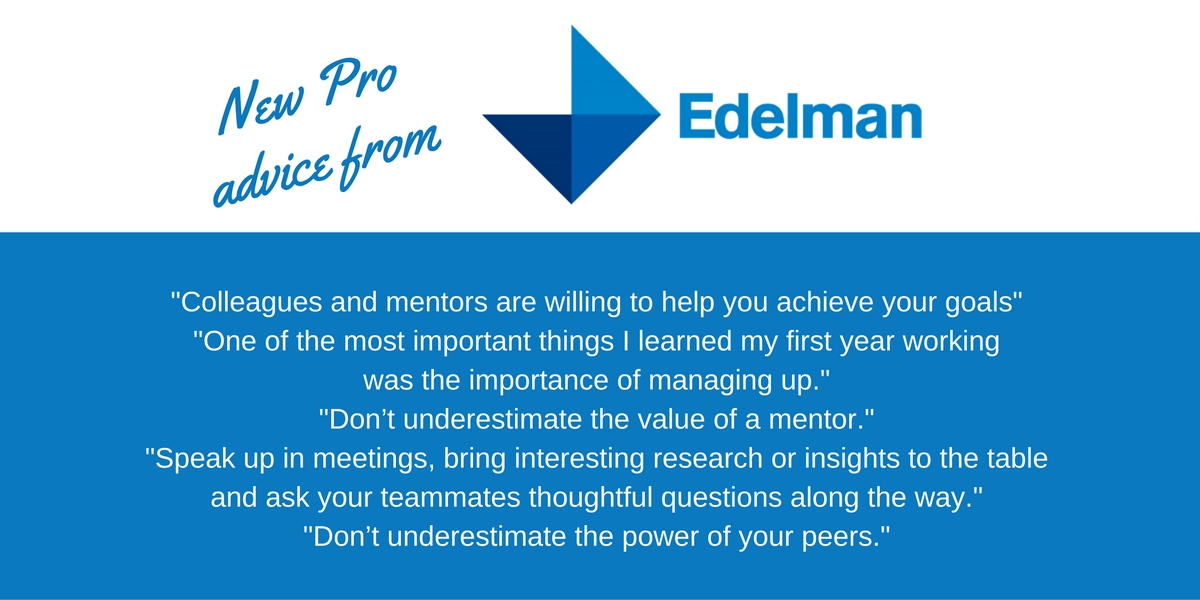
A piece of advice that I often need to remind myself of: nobody is a mind reader. Colleagues and mentors are willing to help you achieve your goals—if they know what those goals actually are. Don’t be afraid to start those conversations yourself.
From working across five different practices at Edelman, I’ve learned that we have an expert or specialist for nearly everything. If you’re starting a new project in an unfamiliar space, the good first question to ask is “Have any of my colleagues done this before?” Often a 15-minute conversation with a subject matter expert gets you a lot more information than an hour of Googling.
Molly Shaheen, Class of 2015 – Currently in Program
Allow yourself to think of your role as you thought of college. In a communications agency, your clients and projects are your curriculum and each is an opportunity to gain knowledge on new things.
During your career, you’re going to have those core accounts that you always work on, much like the core classes for your degree. If you navigate things right, you’ll have room to take a couple electives down the line. Keep your eyes open and raise your hand for projects that pique your interest and are outside of your day-to-day role.
Don’t forget what your professors preached – participation! Speak up in meetings, bring interesting research or insights to the table and ask your teammates thoughtful questions along the way. It will help make you stand out.
Lissa Pavluk, Class of 2013
Don’t underestimate the value of a mentor. Find someone a few levels above you who is willing to help you navigate complex situations, give sage advice based on their own experiences and help you understand how to best grow your career. Your HR department should be able to help you facilitate this if you have trouble identifying someone on your own. The best part? You may end up with not only a mentor, but a good friend!
Jenna Wollemann, Class of 2011
One of the most important things I learned my first year working was the importance of managing up (or simply put, making the lives of your managers easier). Entry level employees are expected to be one step ahead, paying close attention to project timelines and various tasks for the team. When I joined Edelman, I quickly learned that you sometimes have to over-communicate with managers and team leaders so they know what the status of your projects are and when they can expect various deliverables. Over-communicating and managing up can be tough at first, but managers have no way of knowing what’s going on unless you tell them.
Additionally, be resourceful and don’t be afraid to ask questions! These traits go a long way. It’s always better to raise your hand to your manager before diving into a task if you’re unsure about something. Also, don’t underestimate the power of your peers. Other colleagues at your level can be fantastic resources if you have questions or ideas, considering it’s likely they have encountered similar experiences or issues.
Interested in applying for Edelman’s Immersion Program? More information can be found here.

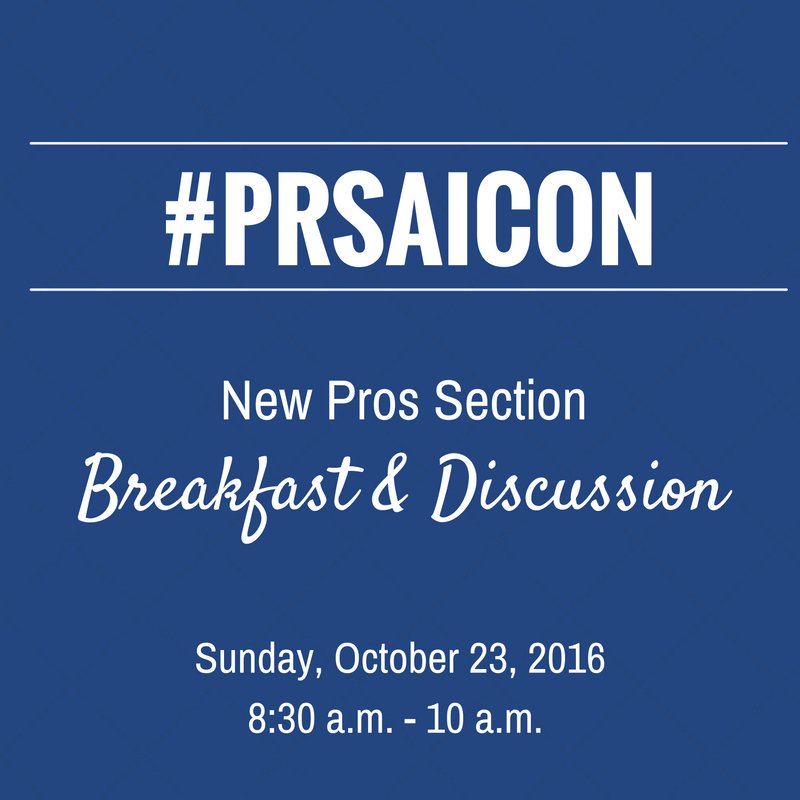
The PRSA New Professionals Section is very excited to announce our networking session during the upcoming PRSA International Conference in Indianapolis from Oct. 23-25!
PRSA New Pros will host a networking breakfast and discussion on Oct. 23 featuring:
We would love our members’ input on what you would like included during the networking time. Please comment below with any ideas around what would be most beneficial to you during the networking session. Feel free to also pre-submit questions you would like to ask during the Q&A portion, which will include discussion with other New Pros to help solve challenges you’ve faced professionally. You may also submit ideas and questions via email to Jess Noonan, Heather Harder and/or Ruthann Campbell or tweet us @PRSANewPros.
Please RSVP for the breakfast here.
We look forward to seeing you at #PRSAICON!
—The New Pros Committee Chairs