Tips for Mentoring a PR Newbie on the Art and Science of Media Relations

So you’ve been asked to train, mentor, or manage a PR newbie on all things media relations. Congrats! Now what? Media relations is an art and a science. Mastering the balance takes practice, and can be challenging to new PR pros starting out in the workplace as an intern or account coordinator. While some colleges teach media relations, many do not, and those that do often only skim the surface.

That being said, those starting out in the PR world could use media relations guidance – a task that often falls on more senior account coordinators, or account executives and account supervisors. Often the shift from new pro to “less new” pro, responsible for helping out the greenest team members, can be tricky. Here are some helpful hints that I’ve found to be helpful, both as I’ve been mentored and have mentored others.

1. Remember that patience is a virtue, and encourage questions.

lauren-leger_media-relations-mentoring

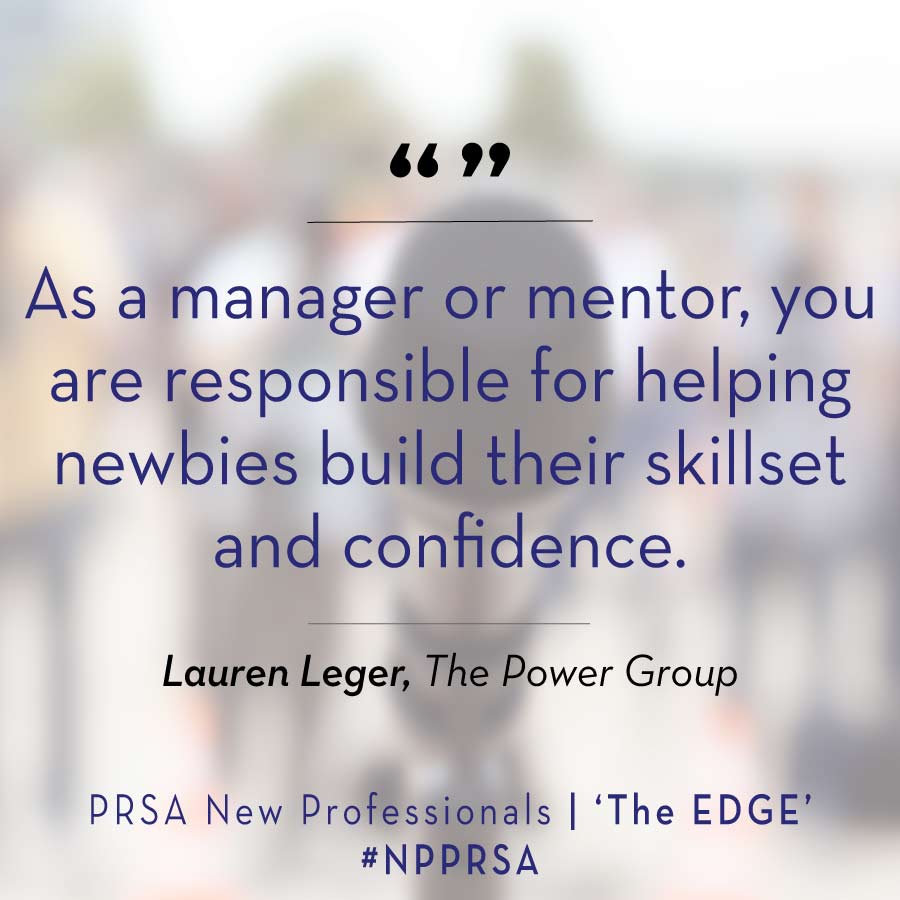
Be patient with newbies – while you might be an ace at media relations, this is totally new to your mentee, and they will need some time to become an expert. Being patient with them will both encourage and motivate them, and create a more positive experience for both parties. As a manager or mentor, you are responsible for helping newbies build their skillset and confidence. As The Power Group’s account supervisor shared with me when I asked for her advice for this blog post,

Always have an open door policy for questions. If your new account team member is afraid to ask questions, chances are they’ll come up with their own answers, which can be risky and potentially damage your outreach campaign.”

2. Show and tell – employ a “face-to-face” edits model.

If you receive a less-than-stellar media list from a new pro, don’t be afraid to call him or her over to your desk and go through the list, talking through your thought process. It’s easy to hide not-so-nice feedback behind an email chain, but I’ve found that sharing insight into your own process can be really helpful for new pros. If you’re making a personal connection and talking through your own media relations lessons learned, even better. Don’t hesitate to talk through mistakes made by the intern or account coordinator. It can be tough to deliver that feedback, but it’s crucial for the mentee to hear in order to improve.

3. Give your mentees plenty of opportunities to watch and learn.

I learned so much from my first media relations manager simply by watching how she composed an email to a journalist, coordinated an editorial, or approached booking trade show press appointments. A great (and risk-free) way to learn is simply to soak up everything like a sponge. As a mentor, that means including your mentee in every media relations activity you possibly can. Sitting in on client interviews, tagging along to broadcast segments, and observing media training are all great learning opportunities. Leveraging industry publications and organizations, such as PRSA and Cision, is also a great way for mentees to learn. Mandatory webinars and lunch and learns are a great way for an intern or account coordinator to “familiarize faster,” according to my account supervisor Jordan Liberty.

What are some of the more helpful things your direct supervisors have done to guide you in your media relations learning? What are some tips that you would add to this list?

lauren-leger

As digital account executive at The Power Group, Lauren creates custom digital strategies, crafts tailored social media content, and manages social media accounts on behalf of clients. She also leads Power’s inbound marketing efforts, and is certified by HubSpot Academy in Inbound Methodology. Lauren’s expertise is in B2B and technology. She started at Power in the fall of 2014 as an account executive, and manages select PR accounts. (Connect with Lauren on LinkedIn and Twitter)

February 2016 Twitter Chat Recap

The February #NPPRSA Twitter chat, earlier this month, was all about big ideas on a small budget.

Special guests during this month’s chat were Adrienne Wallace, Managing Director/COO, at 834 Design & Marketing and Todd Butler, President & CEO, at Causewave Community Partners. Delivering big results on a small budget can be challenging as you work around the parameters, but it can also challenge your creativity and help you break through with new ideas and successes. Click through the Storify below to see highlights from the conversation.

Mark upcoming Twitter chats on your calendar and view past chat recaps here.

Redefining the Mentor-Mentee Relationship

When most of us think of a mentor-mentee relationship, images of a seasoned expert offering sage wisdom and experiences to an aspiring pro probably come to mind. We tend to think that a mentor needs to have many years of experience and the mentor-mentee is an exclusive, hard-to-find relationship that helps to guide the mentee’s career.

Some of these assumptions may be partly true, but it’s past time that we redefine our definition of what a mentor-mentee relationship should look like. A mentorship doesn’t typically begin by seeking someone out and asking “Will you be my mentor?” It’s usually a relationship that evolves from a previous connection – a professor, a supervisor, a leader in your PRSA chapter, a friend of your family, etc. – to help guide you through your career.

What we get wrong about a mentor is that it has to be someone with a lot of experience, that we only need one and that a mentor will be able to guide our careers to perfection instantly and without much input from us. A mentor isn’t a fairy godmother for your career anymore than you’re a pumpkin who dreams of being a carriage. Dispelling some of these incorrect notions and understanding a mentorship needs can make you both a fantastic mentee and a phenomenal mentor, no matter where you are in your career.

A good mentee…

… knows his or her goals.

A mentorship is all about guidance and no one can guide you if you don’t know where you want to go. It’s important to at least have a general idea of what your goals are and where you’d like to be, because otherwise, you and your mentor will just keep going in circles with no real benefit.

…asks for what he or she wants.

Are you looking for advice? Assistance making some connections? Help fine-tuning your resume? An “in” to agency life? You have to be able to ask for what you need. A mentor can provide all kinds of help, but only if they know what will benefit you.

…is gracious.

There’s a difference between using someone for his or her connections and building a relationship that you can benefit from. It’s gratitude. Be gracious about any and every bit of assistance and help that your mentor provides. Beyond just saying thank you, you can send a handwritten note, a little gift, anything to show that you appreciate his or her time and help. The best thank you that you can give, though, is to follow through with their advice or introductions and building something better for yourself.

…knows that it takes a village.

There isn’t one person that will be able to help you with all the career questions you’re bound to have. It’s ok, actually essential, to have more than one person to turn to for advice. Having mentors at varying levels of their careers, with different backgrounds and experiences can help you get a better picture of the professional landscape as you navigate it and pave your own way.

…takes the lead.

If you’re seeking a mentor, you’re probably looking for someone currently working, with good experience and active in your professional interests. So they’re probably going to be busy, too. Take the lead by knowing what you want to know, scheduling meeting time ahead of time and meet them where they are. Don’t be afraid to follow up and nudge a bit if your mentor doesn’t respond within a day or two.

A good mentor…

…gets to know his or her mentee.

A mentorship is a relationship just like any other. It takes nurturing and connecting a multiple levels to keep it alive and beneficial. Learn other things about your mentee – interests, hobbies, family, etc. – and build a connection beyond professional interests.

…is available.

It’s understandable that you’re busy, but if you’re committed to being a mentor, you have to make time for it like anything else. It’s important to be available to your mentee, whether that’s by email, phone, Skype, social media or in person. You don’t have to be available 24/7 or at a moment’s notice, but you should have consistent communication with your mentee.

…isn’t afraid to share.

Sharing your mistakes and missteps is just as important as sharing your nuggets of wisdom and best practices. Knowing that everyone makes mistakes in their career and accepting that is an important part of professional development.

…knows age is just a number.

You can be a good mentor at any age and any career level. A mentorship should be focused around learning and growing together. As you progress in your career, you’ll have different experiences and advice to share. New pros can be just as good a mentor for aspiring young professionals as any master practitioner.

…is open to dialogue.

There’s nothing worse than trying to talk to someone who is stuck in their ways and unable to entertain any other viewpoints. No matter where you are in your career, it’s important to keep an open mind to new ideas and methods, no matter how big or small, or who they’re coming from.

The best mentors and mentees know…

…that mentorship is a two-way street.

Like any other relationship, a mentorship should be beneficial for everyone involved. Mentors can learn just as much from their mentees as they can teach them. Investing time in your mentorship, no matter which role you’re fulfilling, is a worthwhile contribution to your professional development.

Robyn Rudish-Laning (1)


Robyn Rudish-Laning is a member of South Carolina’s PRSA chapter and is communications coordinator for the South Carolina Council on Competitiveness. Robyn is also a member of the New Professionals executive committee. She is a graduate of Duquesne University and is currently located in Columbia, SC. You can connect with her on LinkedIn or Twitter or read her blog here.

Leadership in 2016

Editor’s Note: This is guest blog #1 of three that David Grossman will be contributing. Stay tuned for the others this spring.

What does effective leadership look like today?

Over the past several years, the sheer volume of high-profile business leadership and ethics scandals has dominated our headlines, causing scores of people to ask, “What’s wrong with business leadership today?” 

Some of the more recent scandals include Toyota concealing vital information about a car defect that caused cars to accelerate faster on their own, and GM replacing ignition switches that key company officials had known were faulty for years. Before that, there was money laundering at Enron, fraudulent accounting at WorldCom, securities fraud at Tyco, ethics and compliance violations throughout the pharmaceutical industry, and countless stories of executives inflating their resumes to present a more impressive public face.

That may leave young professionals wondering what it really takes to be a high-integrity, great leader in today’s business environment, when it seems so easy to stray from the right path. At the same time, there’s clearly a terrific need for great leadership that can elevate our business culture and transform organizations. 

leadership-2016

Given this reality, I’m very curious to know what you think:

How do you define leadership today?

What does it take to be a great leader? What are the most important qualities that great leaders possess? Are there leaders you admire, and if so, who are they and what have they done to impress you? 

I welcome your thoughts on this important question. Send me your insights and I look forward to synthesizing your thoughts and providing my own answer to this question in my next blog. 

So, let’s dialogue! What does it really take to be a great leader today? 

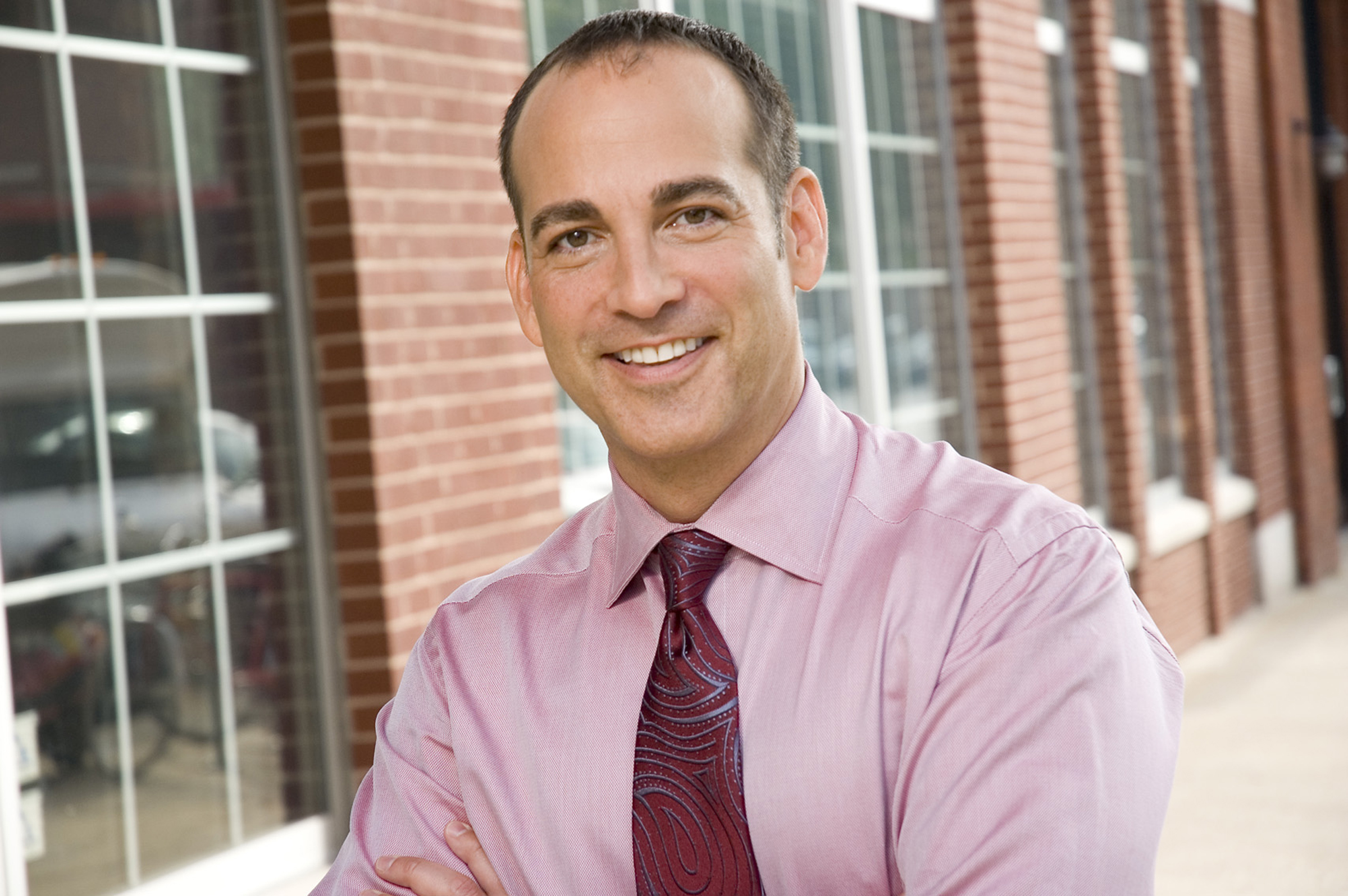
David Head Shot High ResDavid Grossman, ABC, APR, Fellow PRSA is both a teacher and student of effective leadership and communication and helps leaders drive productivity and get the results they want through authentic and courageous leadership communication. He’s a sought-after speaker and advisor to Fortune 500 leaders. A three-time author, David is CEO of The Grossman Group, an award-winning Chicago-based strategic leadership development and internal communication consultancy; clients include: Hill-Rom, Eastman Chemical Company, Kimberly-Clark, McDonald’s and Motel 6, to name a few. His newest book, “No Cape Needed: The Simplest, Smartest, Fastest Steps to Improve How You Communicate by Leaps and Bounds,” was published in the fall of 2015 and recently won the Pinnacle Book Award for the “Best in Business” category. In addition, David teaches Internal Engagement at Columbia University, in New York City. To connect with David you can find him on LinkedIn and Twitter.

The Do’s and Don’ts for Making 2016 YOUR Year

I believe 2016 is going to be a big year. You know what I mean, how some years take much more space in your memory than others when you look back. It’s an overwhelming inkling, like the way you feel a sticky summer breeze and can just know it’s going to rain. Yes, 2016 is going to be a big year. It’s an election year for starters, but I think it’s something in our collective energy that’s buzzing for change. So as we take our early steps into 2016, here are some tips to be more intentional and make sure our efforts go toward making this new year bigger and better than those that came before it.

TAKES

  1. Drink more coffee.

Kidding! Though new health standards say you can have up to five cups a day now. Which is great news for those of us who need a little java courage to tackle early morning segments. So, to good health!

1.5 Don’t check your email/social media pages until an hour after you wake up.

Email, Facebook statuses, news headlines all can have a major affect on your mood, which can alter the way you frame your day. Let yourself have a media-free hour and put the reigns back in your hands. Whether you chose to blast a pump-up morning mix or eat breakfast with your original thoughts. Use the time to touch base with your kick-ass self and start each day with your best foot forward.

  1. Write things down.

This is not just to make your 3rd grade cursive teacher feel validated. Studies show that handwriting notes facilitates memory, cognitive function and also helps with your creative process. (Click here or here for proof.) Maybe it has something to do with how writing in ink relinquishes your ability to backspace, making it a more permanent declaration. Whatever the reason, if handwriting my to-do list could ensure I don’t accidentally skip a thing, I’ll hand-sign myself up for that.

  1. Don’t be afraid of a phone call.

Speaking of going old-school… Humor me. Tap your phone and click on your recent calls; how many outgoing calls did you make besides those to your mother? It’s widely agreed that things like sentiment, sarcasm and even the contents of conversations get shortchanged through text, and yet 90% of the time when presented with both options, we chose the less efficient. Don’t be afraid to dial. An hour-long texting conversation can be communicated more personably over a ten-minute phone call. I mean this for both our personal and professional lives. PR is all about relations. It’s hard to have relations with a digital ghost.

  1. Put effort into “doing you.”   

The worst thing you can do – at any point in your life, not only at the start of the year – is allow yourself to feel comfortable coasting on autopilot. I understand life tends to throw a lot at us and sometimes all you have time for are “survival tactics:” sleep, work, eat, work, Netflix. And that’s fine. We’re at a unique stage in our lives where the effort we put in now can and will shape the course of our careers. But I think we need to stay mindful in making sure we don’t forget to build a life as well. We all have interests besides work that make us tick, and if you can’t remember what those are, go discover them! Be it painting, running, photography, cooking, traveling, guitar etc. Dedicate time for it and don’t lose touch of that part of you. It’ll likely be what sparks your next big idea into a full flame.

The new year can either be seen as another month, no better nor worse than that before it (besides the lack of holiday sweets delivered at your door), or as a wonderful opportunity; to evaluate what we’ve done well, what we maybe didn’t do so well at and set goals (not resolutions) to gradually build on for the months to come. I challenge you to look at 2016 as a blank canvas of opportunity. Choose one thing you’d like to accomplish, professionally or personally, and add a brushstroke each day. It’s going to be a “big year” after all, so don’t be afraid to choose bold colors.

gtzQK8HpMegan O’Neal graduated from UCLA in 2011 with a Bachelor of Arts in Communication Studies, emphasizing in mass communications. She is currently the PR & Social Media Manager at Marketing Design Group and volunteers with the National Multiple Sclerosis Society, freelancing for the public relations department. Connect with her on Twitter @megannenicole.