March Twitter Chat Highlights: Crisis Communications

We’d like to thank everyone who participated in the March #NPPRSA Twitter chat focused on crisis communications planning. We discussed what is required for any thorough crisis communications plan, which departments to include and how to prepare employees.

PRSA Twitter Chat Highlights: Crisis CommunicationsSpecifically, we’d like to thank Valerie Merahn Simon, senior marketing executive and Director of Marketing Communications for Plymouth Rock Assurance. She is also the co-founder of the #HAPPO and #PRStudChat Twitter chats.

Join us again on April 3 for our next #NPPRSA chat and stay up-to-date with PRSA New Professionals on Facebook, Twitter, LinkedIn and Google+.

Review highlights of the chat below. What did you learn from the March chat? How can you plan for unanticipated events for your brand? What methods can you use to prepare co-workers and executives for dealing with the public? Who can you collaborate with or who should you include in a crisis plan?


Lauren Rosenbaum

Lauren Rosenbaum is the PRSA New Professionals Social Media Co-Chair and Co-Founder of Soversity, a public relations and digital marketing company. You can connect with her on Google+LinkedIn or Twitter.

.

.

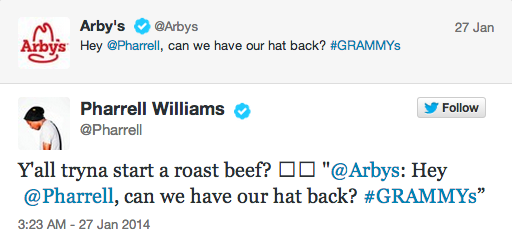
PRSA New Pros Teleseminar: March 13 on Real-Time Marketing with Arby’s

Josh Martin, Social Media Manager at Arby’s, will host our first PRSA New Professionals Section Brown Bag Discussion of the year. Josh gave us a preview of what you will be able to learn from his teleseminar on Real-Time Marketing Done Right. Register for the March 13th teleseminar today.

Screen Shot 2014-03-06 at 9.43.54 AM

How would you personally define real-time marketing? 

To me, real-time marketing is simply making timely responses to mainstream events.

What are some notable differences when executing RT marketing with an agency vs corporate?

Agencies bring a lot of creativity and strategic thinking to the table when it comes to RT marketing. Corporate lives/breathes the brand on a daily basis and often has a better understanding of what will work with their audience. The magic happens when both agency & corporate can work together seamlessly.

What are some of your goals when planning/executing RT marketing? 

My goal for RT marketing: Don’t do anything stupid. RT marketing is about two things: listening and engaging. We want to make sure we’re listening first and understand the conversations that are taking place. If we decide to pursue an opportunity, our goal is for the content to not feel forced and stays consistent with our brand voice.

What advice do you have for brands/companies that don’t have a budget to promote/push out their content?

Brands can still be effective in social media, even with a limited budget. They need to be laser-focused on developing a content strategy and be patient with results.

In your opinion, is there a good ratio to be used of pre-planned content and real-time content?

Specifically during a major event, when brands are trying to stay relative. It’s important to have pre-planned content at the ready so you can move quickly during a major event, but it’s as equally important to be flexible and pivot to real-time content when an opportunity presents itself.

Want to learn more from Josh? Register here.


Get Social with Your Next Pitch

Social media has changed the way we do a lot of things. Instead of instant messaging and emailing friends, we’re more likely to send them a Facebook message or a SnapChat. Instead of buying magazines to keep tabs on our favorite celebrities, we follow them on Instagram and Twitter. And instead of spending hours on hold with a customer service hotline, we send a tweet to the company’s customer support account (my personal favorite).

If social media has changed all of these things, shouldn’t it also change the way you interact with reporters? According to Vocus’ 2014 State of the Media Report, 91% of reporters still prefer being pitched via email, so those days aren’t completely behind us. But that doesn’t mean social media shouldn’t become part of your pitching strategy.

Here are three ways it can help you land that next great piece of coverage:

Before the pitch: Foster name recognition

We all know that journalists receive a ton of pitches, and seeing a name they recognize in their inbox could be the difference between landing in their email’s trash folder and becoming their next story. But if you’ve never met or worked with the reporter before, how can you make that initial introduction?

Start a relationship on social media. Follow them on Twitter and retweet them, share their stories mentioning their handle, etc. The Cision 2013 Social Journalism Survey found that 80% of the journalists that responded used social media for professional networking at least once a week. This is a great way to start a relationship and increase the probability that your name will stand out in their overflowing inbox full of pitches.

A helpful way to keep tabs on reporters in your niche is to put them all into a private Twitter list or Facebook Interest List and check them each at least every few days. Interact with those you already have a relationship with, and make new connections that could be beneficial in the future.

During the pitch: Conduct reconnaissance

While flattery definitely won’t ever get you everywhere, as the adage goes, it can definitely get you somewhere. Not only does letting a journalist know you follow their work help in that regard, it also shows that you’ve done your research.

Set aside 15 minutes before writing your pitch to go through the journalist’s social media updates. What have they written about recently? What’s their opinion on a recent piece of big industry news? This information can be helpful when writing your email’s intro. Diving straight into the pitch might be quicker, but you want to foster a relationship, not throw information at them.

After the pitch: Follow up

One of the things journalists hate the most is a phone call saying “Did you get my pitch/press release?” or a another email asking “Did you get my email?” For your follow-up, try going a less invasive route.

When it’s time to follow up with a reporter, try reaching out on Facebook, Twitter, or LinkedIn. If they haven’t seen your pitch yet, it’s likely because their inbox is so crowded. By comparison, their mentions stream on Twitter is probably a lot emptier.

I frequently follow up with reporters via social media and am met with a much quicker response than sending another email. Even if it’s a rejection, at least I know that the pitch was seen and not lost in cyber land, and I know not to follow up a second time. If I had emailed them, I likely wouldn’t have seen a response.

While journalists will probably prefer being pitched over email for at least the next few years, there’s no reason your online communication with them should be limited to just email. Reaching out to them on more than one channel will add a depth to the relationship, which can help all parties down the road.

Have you had any success pitching journalists via social media?

 

710T3ue1Brittany Berger is the Content Marketing Coordinator at eZanga.com, a search engine and online advertising company in Delaware. Connect with her on TwitterLinkedIn, and Google+.

Post-grad Internship Turned Full-time Job: A Checklist for Before, During and After

There are a number of reasons to take a post-grad internship: specific agency, certain city, more skills in a niche PR industry, test out a new area of PR, no solid job offers, and the list goes on. For me, I interned a handful of times in college and taking on one last internship during my post-grad was my foot into the door of a large agency in a city I love, Chicago.

first-day-at-new-job

Here some tips I learned before, during and after, that helped turn my post-grad internship into a full-time job.

 BEFORE You Apply/Accept:

  • Narrow your search. Whether you want more experience in a certain industry, to work at a certain company or in a specific city, narrow it down and only apply to places you can see yourself working full-time.
  • PRSA and LinkedIn are your best friends. Use them to find, research and apply for opportunities.
  • Look for paid opportunities. At this point, you probably already had one or two unpaid internships (which is more than enough). So don’t take another one.
  • Ask their hiring rate. During the interview, ask them how many interns they have hired recently. If it’s a summer internship program where they have 20+ at one time, the hiring rate might not be as high. But if they hire on need base (when they have new business/client work), there’s a better shot they are looking for an intern to eventually hire full-time.
  • Ask about their environment & professional development. Make sure it’s a place you’d like to continue to work if you were hired on full-time.
  • Ask questions like: do you have events where employees can get involved and get to know each other outside of work? Does the company encourage trainings, workshops, industry events and professional groups inside and outside of the office?
  • Be prepared and set expectations beforehand. You’re transitioning from post-grad and need to be thinking long-term. Ask yourself if you don’t get hired full-time, what’s your next step? If you do get hired, will you want to work there? For how long?

DURING Your Internship/Freelance:

  • Join PRSA. Even as an intern you can join PRSA. As a post-grad, you can use it to not only network in your area, but also discover additional opportunities and build your resume.
  • Act at the level you want to be hired for. Yes, you’re an intern, but that doesn’t mean you can’t take on more responsibility. Make sure to show them that if they could, they would hire you on the spot.
  • Ask for feedback. As an intern, there may or may not be a formal review process. However, that doesn’t mean you can’t check with your team on a regular basis and ask for ways to improve. Set personal goals and communicate them with your boss. This shows how serious you are about what you can learn from the company as well as provide the team.
  • Touch base about two-three weeks before your deadline approaches. Along with your reviews, you want to make sure you’re on the right track to hopefully getting hired. Sit down and meet with your boss to talk over your next steps: if they foresee a full-time position opening up, if there is a possibility it will be extended or if your position will come to an end with the contract. Sometimes they don’t have all the answers – it could depend on budgets with the client or company. Either way, you won’t know until you ask them.
  • Network: Inside and outside of work. Seek out co-workers who you’d like to learn from, grab a drink with an old classmate, or meet for coffee with a fellow PRSA member. Constantly continue to expand your network. The more people know you and the more experiences you have, the greater opportunity you will have to discover your next position.

To find more tips on networking, check out an earlier blog post here.

  • Keep resume updated. Halfway through your internship, begin researching and applying for other jobs. If you have an interview somewhere else, take it and be upfront with your boss about it. The bottom line is that you need to get hired. Your boss understands that. Not only is interviewing at other places helping you line up additional opportunities, but it also shows your boss how serious you are about full-time position.
  • If your position is extended, don’t worry. This means they want to hire you full-time, but can’t right now. Take this time to re-evaluate where you really want to work: is at this company or somewhere else? If you take the extension, make sure to continue asking for feedback, touching base, networking and applying for other positions in the meantime.

AFTER: You’ve got the job offer, now what?

  • Negotiating the contract. urlIf you can, ask fellow co-workers you trust about their salary when they were interns and offered a full-time position. When you’re given the contract, take it home and read through every detail. Look for all it includes: responsibilities, salary, insurance and other perks such as compensations for a phone, gym membership, professional development, etc. When negotiating, make sure to talk about all the work you’ve completed and if you’re asking for an increase, give a range or a few options and reasons for why you believe you deserve more (for example, between 3-5K more because of X or PRSA membership compensated because X).

  • Check all other opportunities. If you were pursuing other jobs and in the middle of other interviews, decide what’s best for your career move. Creating a pro vs. con list and talking with your mentors are always helpful.

Finally: Find that work/life balance. As an intern, you weren’t expected to work more than 40 hours a week. As a full-time employee, it doesn’t always work that way. Just make sure to strive for a work/life balance. You’re expected to meet deadlines, but you also need to enjoy yourself.

NicoleBersaniNicole Bersani is an assistant account executive Social@Ogilvy and also serves as the PRSA New Professionals Section mentorship co-chair. Connect with her on Twitter @NicoleBersani and on LinkedIn.

Solo PR Life Isn’t Easy

open-4-bizDid that headline catch your attention? Good. If there is one thing that I appreciate in friends, colleagues, and experts, is honesty. Don’t sugar coat anything; tell me how hard something is going to be so I’m prepared.

This isn’t meant to scare you if you are looking to become a solo public relations professional. It is meant as an honest post to show that being your own boss can be great, but can also be very rough.

Being a solo PR pro is a ton of sweat and incredibly hard work. Don’t be fooled into thinking that you’ll have clients knocking down your door when you are solo. Just like working for an agency, you need to focus and put in long hours at times. At the end of the day, you’ll be wiped.

Feeling overwhelmed? Don’t be. While I’m being honest, there are strategies get you on the road to success in your solo career. Organization and balance are two of the more important things to have as a professional, solo or otherwise. You may have one, but not the other. It doesn’t happen in a day or month. It takes time. Since I became a solo PR pro, I’ve learned that balance is integral to your home and work success. Here is how I’m doing it.

1.      Create a comfortable work environment. We’ve all seen that Facebook post or Twitter pic of a messy desk. There’s no way you can be productive with your desk cluttered with papers, yesterday’s snack and the over abundance of photos of your dog. Take a moment to set up a desk that will allow productivity and inspiration. You want to feel as good as possible to work. I have my inbox, inspirational quotes and a notepad on mine.

2.      Start your week out by setting goals. At the beginning of each week, put your clients and the tasks you have for each. Then, look at the tasks that are “must do’s.” This will not only help keep you focused, but on point as well. No more of the “I have nothing to do!”

3.      Work is work, home is home. You do need that separation, especially when you are a solo pro. While I enjoy working on some projects after the kids go to bed, your mind needs to reboot. Don’t push the brain too much. Set a time to shut it down for the day and make a note where you need to pick up. You aren’t a robot, so take a break.

Also, don’t be afraid to ask questions. I’ve taken advice from many solo PR pros and asked questions about what to expect and how to handle my own business. This helped me in more ways than I can count. Don’t be afraid to hear “NO!” You’ll get hung up on or told a business isn’t interested. It’s not because you aren’t good at what you do. It is all about timing (and money). Sometimes it’s just not a fit. Lastly, You have to want it… badly. If you don’t like your job and think that being on your own will solve everything, you are going about it all wrong. Running my own business and the challenges that go along with it invigorates me. BUT, there’s been plenty of frustration and bumps. If you just go halfway, you are halfway to failing.

Ultimately, your chances at success are greater if you know the truth. I’m still learning… and don’t want to stop doing so. My current and future clients will be better for it. So will you.


Jason MollicaJason Mollica
 (@JasMollica) is the president of JRMComm, a public relations and social media marketing consultancy. He combines knowledge of the broadcast news industry, traditional public relations expertise and today’s new and innovative social media tools. Mollica operates his own blog and has guest blogged on several others, including the respected Ad Age-ranked PR Breakfast Club, Ragan.com and PRSSA’s Progressions.