
No Carbon Copy

I’ll preface this by saying I’ve been fortunate in ways that some of my colleagues may not have been. I have always believed, deep in my bones, that public relations is how I will do my greatest good for the world. I have no conflict and no doubts.

make-your-own-pathI wandered but never faltered, and always felt like I was exactly where I needed to be. I know a lot of young professionals don’t feel that way. Maybe PR wasn’t even your first choice. Some of the best PR pros I know fell into the industry by accident.

Like so many of us, I spent six years in college diligently studying AP style, the social psychology of public communications and the prevailing theories in our field. My education was top priority for my dad, who raised me to believe that a college degree was the holy grail, and my key to success and stability. As my final semester of college (and my 18-year scholastic career) drew to a close, I entered the panicked phase known as, “Now what?” I was morbidly preoccupied. Simply leaving college to join the ranks of the educated, but unemployed, was inexcusable mediocrity in my eyes.

I realize this is a very common fear. I had never done things quite like my classmates though. As a pierced and tattooed metalhead belly dancer with a penchant for lighting things on fire, I had cultivated an identity that I couldn’t just set aside for a job. Call me naive, but I don’t think you always have to compromise. In college I’d interned with two heavy metal record labels, held a job as community relations manager for a company that made fire dancing props, and volunteered as communications director for a Burning Man-inspired event that attracted more than 1,000 San Diegans to a fully-participatory art party.

When I’d filled in the last bubble of my last exam, I knew I wasn’t (ever) going to be done learning. But I had to make a choice between spending the next 20 years digging myself out of crippling debt for the sake of a master’s degree, or get to doing things the way I always had: my own way.

Instead, I embarked on a self-guided master study. I started taking probono clients the week I graduated. My first gig was a burlesque company for whom I directed marketing strategy and also performed as a guest fire dancer and hosted VIP absinthe tastings. Next, I worked media relations for a fine artist in New York, then a nationwide art event for elementary school children. I’ve just been asked to manage publicity for a fire dancing retreat and also for a prominent horror literature convention, both of which will be coming to Los Angeles very soon. I love the way my work has integrated so organically with my oddball hobbies. It was just a matter of promoting my skills where I was already passionate. Everyone needs PR.

Now I’m a year out of school, working my tail off for clients who count on me. I’ve been rejected, I’ve been discouraged, and I’ve failed. And I love that. Now, I’m at a turning point where I must value my time and stop working for free. I’m good at what I do, and being able to say that is priceless.

My mentor in college told me I’m not a carbon copy, that I’m not destined to do things the way everyone else does. I will always be grateful to her for that, because I can’t imagine doing things any way but mine.

audcontactAudrey LaBenz is a freelance marketing and public relations consultant from Los Angeles, CA. She earned her bachelor’s degree from Cal State Long Beach in 2013 and has been working PR since 2009. She spends most of her off time designing costumes, hiking with her dogs and learning to spin flaming objects. 

Three Daily Habits to Help You Get Ahead

Between pitching the media and creating continuous content, we have little – if any – time to focus on personal career growth. But, with the industry rapidly evolving, we should make this a priority.
While nurturing your career can take hours on end, and ultimately feel like a job within itself, these three simple habits can help you get ahead – while staying sane – in this ever-changing, competitive PR world.

Rise early to shine on the job

If you’re not a morning person, you’re probably sick of reading about all those powerful entrepreneurs who swear waking up early is the key to success.

Now, I may not be a powerful entrepreneur, but I’m a true believer in this early-morning habit. By waking up an hour earlier, you have ample, uninterrupted time for those little things you often put off when the workday begins.

Exercise? Finish it early, before you have time for excuses. Reading the news? You’ll be more informed and prepared throughout the day. Writing a PRSA blog post? With fewer distractions, morning is the perfect time for writing.

But night owls fear not: If you can accomplish these tasks later in the evening, more power to you. Just make sure you get enough sleep to operate efficiently the next day.

Read, read and read some more

As a PR pro, you probably spend a majority of the day reading already, but the outlets and content likely revolve around your company or clients’ industries. Try thinking of yourself as another client.

You have to be well versed in, well, everything, to demonstrate your depth of knowledge to clients, leadership and peers. Here are a few suggestions to start:

  • Illustrate your industry expertise by reading sites like PR Daily, Spin Sucks, and PRSay.
  • Read local news to be aware of your city’s issues and happenings. It will help you lead informed conversations at networking events, happy hours and daily encounters. And, if you’re pitching locally, you’ll quickly learn reporters’ beats.
  • Be aware of national and international news for pitching trend stories and being an informed citizen in general. Try an app like Cir.ca for a brief overview of important worldwide news.

Prepare and prioritize your next day’s to-do list

Before you leave work in the evening, prepare your to-do list for the following day. It will make your mornings more efficient and ensure you don’t lose track of any projects overnight.

We all have our own to-do list processes, so find what works best for you. In my case, I use the app 2Do to input every single deliverable with deadline as it’s assigned so I don’t miss anything.

Every evening, I reference the app and handwrite my to-dos on a sticky note. Then, I highlight three major projects for the day so I know where to start as soon as work begins.

Are you ready to get ahead? Take the next few weeks to adopt these habits and evaluate which fit your lifestyle so you can develop a personalized, daily routine to expedite career success.

What habits help you build your personal brand? Please add your suggestions in the comments section below.

Stephanie Vermillion headshotStephanie Vermillion is a senior account executive at Wordsworth Communications, a public relations agency in Cincinnati. Connect with Stephanie on LinkedIn and Twitter (@SMVermillion).

Book Review: Everyone Communicates, Few Connect

This post is part of The Edge monthly series of book reviews on books relevant to new PR professionals.

As young communicators, we can learn a valuable lesson from John C. Maxwell: communicating isn’t the same as connecting.
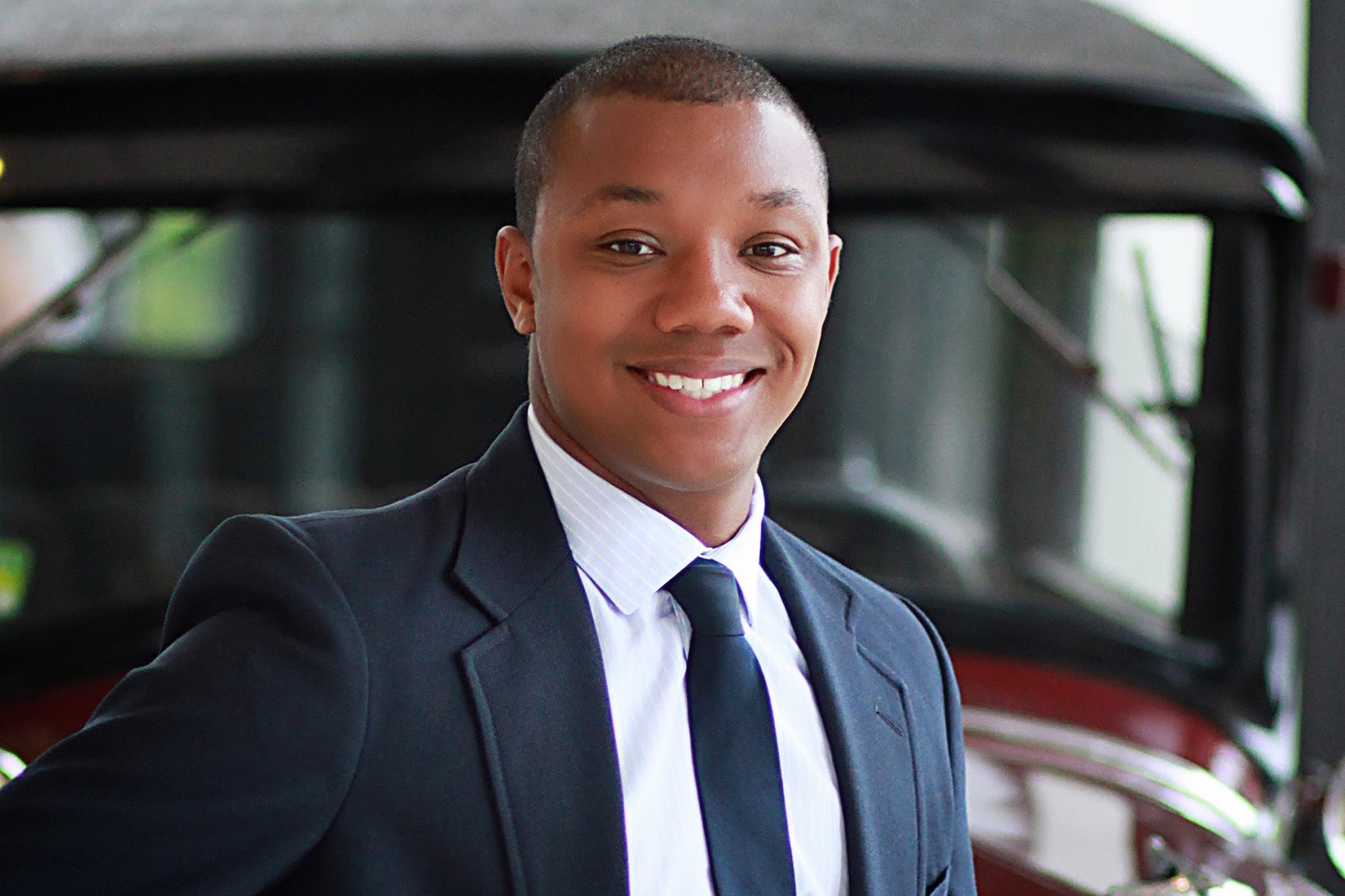
The famed leadership expert, and author of over 70 books, uses this publication to teach us the difference.

“Connecting is the ability to identify with people and relate to them in a way that increases your influence with them,” says Maxwell.

As PR/communications professionals, connecting is an important aspect of our job, but are we being as effective as we can be? That’s what Maxwell challenges us to examine with Everyone Communicates, Few Connect.

These lessons are critical for professionals across all industries. Writing, speaking, presenting, pitching, and selling are critical skills in any job, regardless of industry or field.

Your head will spin from the number of times you read the word “connect” – mine did – but when you begin to grasp the importance of making connections not just for yourself, but for the sake of your customers/clients, you will thank Maxwell for driving the point home. Improving the customer experience should always be priority number one.

Where this book provides exceptional value – particularly for young professionals – isn’t in practical advice or knowledge, but in the confidence readers can gain from the material. Confidence can be a fragile thing, especially for young professionals. But it can also help young pros excel beyond their entry-level expectations.

The book is also a ‘must read’ for the challenge it presents to its readers to audit their own communications processes. In this regard, you can take as much from this book as your attitude and openness allow.

As a resource, the text also aggregates some of the best principles from respected communication and leadership experts and philosophers. Maxwell also shares his Five Principles and Five Practices, which include:

  • Finding common ground
  • Keeping your communications simple
  • Capturing people’s interest
  • Inspiring people
  • Staying authentic in all your relationships

Maxwell posted chapters of Everyone Communicates on his website, and used the commenter feedback to add anecdotes, quotes and advice – each commenter was rewarded with their photo on the inside cover of the book. This helps to make material relatable to every level of professional.

Maxwell may rely a little too heavily on his on triumphs as examples within the book, but the positive attributes of Everyone Communicates can be helpful as you begin mapping a path to leadership positions within your company.

HeadshotRobert Martin is a Corporate Relations Intern at Allstate and the 2014 Co-Editor of the PRSA New Professionals Newsletter. He resides in Farmington Hills, MI.

Notes from the Road: 3 Things I Learned on Path to a Career in PR

Beginning a career in public relations can be quite a daunting prospect. There is no point-by-point roadmap to direct you on the way to professional success, and you will encounter plenty of obstacles along the way. I found myself in the hectic world of the “entry-level” after graduating college in May 2013; and now as I prepare for the next step in my career, I can think of a few pieces of advice that I have picked up along the way:
1) Be open to whatever comes your way, and be ready for some hard work.

When I graduated with a BA in history and started exploring public relations as a potential career path I was totally overwhelmed. I had done one PR internship in college, but I quickly found out, that I was not ready to become a high-powered account executive on day one. The difficult reality for me was that I needed to get more experience, and that meant internships, and unpaid internships at that.

I realized I knew a lot of people in health care, and I managed to find an internship with my alma mater’s children’s hospital. To support myself financially, I worked nights as a technician in the hospital’s pharmacy while I interned during the day. Those long days and nights at the hospital were not exactly what I would call fun, but I managed to learn a ton from my bosses, who held me to a very high standard and dramatically improved my writing.

2) Join your professional community.

One of the best things my boss at the children’s hospital did for me was encouraged me to join PRSA and be active in the profession. At a PRSA sponsored lunch, I sat at the same table as the social media department one of my town’s leading PR agencies, and after an interesting conversation about social media I asked for an informational interview. That interview eventually led to another internship, this time focused on social media. I was given an entire account to manage, and I discovered a real passion for the work. By the time my agency internship had finished I was able to once again turn to my local chapter of the PRSA to find my current internship with Carestream Health, which will allow me to keeping building my skills while I study for my MBA.

3) Use This Time to Find Your Passion.

Finding your passion may sound like corny advice, but it really is what the early stages of your career are for. Take on any challenge or opportunity you can find. Public Relations is an unbelievably diverse profession and you will find plenty of things you love to do, and plenty of things you don’t. In my case I found a real passion for all things social media, and I found some great mentors who fostered that passion. You may very well have some false starts, some things you just can’t get excited about, but don’t let those experiences derail your future career.

If you are really serious about a career in public relations, if you are willing to put in the hard work up front, and you can find the right team of people to support you then you have a great shot at becoming a real success in one of the most dynamic and engaging career fields there is. Public Relations is all about telling a story, so get out there and share yours with the world.

Sean Delehanty headshotSean Delehanty is currently an MBA candidate at the Simon School of Business, University of Rochester, Class of 2016; as well as a digital marketing intern with Carestream Health. He graduated from the University of Rochester in 2013, and has worked as a public relations intern at the Golisano Children’s Hospital and Dixon Schwabl Advertising. Sean is a Rochester, NY native and a proud member of the Rochester chapter of the PRSA.  

Back to School?: 5 tips to surviving graduate school as a working professional

As the use of social media and web-based PR tactics grows, current public relations professionals may consider earning a master’s degree to keep up with current trends. Working a full-time job and managing a home life can be challenging enough, so is it possible to add graduate school onto your plate and survive? It is. Here are a few tips to make the process more manageable:

1. Do your research.

Not all graduate programs are created equal. For the working student, a distance learning program might make the most sense. But even some online programs require a visit to campus once a semester. Be sure to research admission requirements and curriculum to determine where you’ll be most successful, and reach out to enrollment counselors with any questions. Thebestcolleges.org recently put out a list of the seven best online PR graduate programs. It might be a good place to start your search.

2. Build a support system (and use it).

Doing school assignments during the work day usually isn’t an option, so be prepared for your home life to get a little hectic. If you’re having trouble balancing your school work and home responsibilities, don’t be afraid to accept help. If a neighbor offers to drive your kids to soccer practice, take him up on it. Your support system should also include your instructors. They are there to guide you, and they want you to succeed. If you’re struggling with something, reach out and ask for assistance.

3. Set a routine.

Most graduate programs that cater to working professionals have developed their course schedules to give students a fair amount of flexibility. During your first course, get a feel for the format, schedule, and pace, and then set a routine for yourself. For example, do reading assignments on Monday, Tuesday, and Wednesday, and then work on any corresponding writing assignment during the rest of the week. Sticking to a routine will keep you from falling behind in your work load and having to fit a cram session into your already busy schedule.

4. Don’t forget to take some personal time.

If you work full time and have kids, you already have little time to yourself. Add graduate school into the mix and your “free” time is now non-existent. But it is still important to carve out some personal time, even if it is ten minutes a day to walk around the block and decompress. If your stress levels get out of hand, you’re likely to want to throw in the towel. It is much easier to take the occasional time out than it is to melt down and quit.

5. Cut yourself some slack.

You’ll be devoting roughly two years to earning your graduate degree, and you may have to bump some things down your list of priorities. If you don’t have time to make your signature hand-crafted cards this year, Christmas will still be just fine. If you’re ordering pizza rather than cooking a little more frequently, at least dinner makes it on the table. Don’t beat yourself up about taking some shortcuts at home in order to fit graduate school into your life. It’s easy to compare yourself to others, but what you’re doing is far more impressive than building outdoor furniture from wooden pallets.

It won’t be easy, but earning your master’s degree is an impressive accomplishment. In the grand scheme of things, the amount of time you’ll have to deal with a crazy, stressful life is short, but the accolade of having your graduate degree will last forever. In the end, the feeling of accomplishment and the relationships with instructors and peers will make it worth the effort.

Are you considering a graduate degree? Have you completed one while working?

Materkoski HeadshotJennifer Materkoski is a graduate of Kent State University with a Master of Arts in Journalism and Mass Communications with a specialization in Public Relations. She has worked as a writer and editor for both newspaper and television and as a member of a non-profit marketing and development team. Materkoski recently opened her own boutique public relations firm, Songbird Public Relations. Materkoski resides in Wheeling, West Virginia with her husband and son. You can find her on LinkedIn or follow her on Twitter @MrsMaterkoski. She can be reached via email at jen@songbirdpublicrelations.com.