Gain A Competitive Edge with International Experience: Part 1

This is a part of our month-long participation in PRSA Diversity Month

I wasn’t just bit by the travel bug at an early age; I was rather infected. I first got my peek of the world outside of the U.S. when I visited my family in South America. Later on, I participated in short trips to Europe with my high school and university. Though, it was not until my experience of studying abroad in Spain last spring that really triggered my desire to live and work abroad.

Image credit to UCLA

As a new professional entering the market place, I strongly believe that now is the time to kick start our international experience. The older we get, the more responsibilities we are bound to, and the harder it is to just drop everything and leave. For this reason, it is better to start early in your career.

The benefits of gaining international experience are endless, however, I have narrowed it down to just three that I think are the most important and meaningful of going abroad:

1.     Gaining a different perspective on the world

Many of us grow accustomed to the same surroundings everyday. We forget about the world around us, the one beyond our so-called “bubble.” Traveling abroad is an eye opener, and for some, it is the reason why you experience culture shock. Encountering a completely different culture first hand means you are educating yourself on all aspects of a new country, such as music, food, religion, political and economical issues, and so much more.

Experiencing and understanding a foreign culture allows you to become more global minded and aware of a life different from your own. Your perspective on the world can change drastically, causing you to not only form an appreciation for the country you traveled to, but also to have an appreciation for the one where you are from.

2.     Personal Growth

Change can be a scary, yet exciting, thought for some. Going abroad means getting out of your comfort zone, and challenging yourself both mentally and emotionally. No matter where you go, there will always be different values, customs, and mannerisms. Therefore, you will learn to become adaptable. This rings a huge sense of personal achievement because you are facing and embracing change all at the same time.

According to research published in the Harvard Business Review, “People who have international experience are better problem solvers and display more creativity.” In addition to this, being abroad allows you to grow as an individual, granting you the independence and confidence to adapt to unfamiliarity.

3.     Career Advancement

International experience gives you a huge competitive and global edge in your professional career. For example, an employer is going to remember a person who had an incredible story to share about a time in South Africa compared to a person who has basic industry experience. Employers look for candidates who can contribute to their company’s diversity. Whether it is a new client or coworker, you will often encounter someone in the workplace who is of a different ethnicity or background. By having international experience and intercultural awareness, you become a bridge to a gap of cultural differences.

When you go abroad, you are also expanding your network globally. In order to do so though, you have to make the effort to create and maintain relationships. In my previous blog post with The Edge, I explained the importance of networking and staying connected. When you take networking to an international level, you not only create a large space of opportunities for yourself, but you also bring valuable business contacts to a company.

Traveling abroad is undoubtedly a life changing and valuable experience. Whether you choose to work, study, or volunteer in another country, each offers rewarding benefits to both your personal life and professional career. If any one of these global opportunities is something you seek, check out Part 2 of this blog post for things to consider before making a decision. A list of resources will be provided as well!

What has been your favorite travel experience and what is the number one thing you took away from it?

 

Screen Shot 2014-11-17 at 12.10.20 PMCatalina Gomez is a graduate of Philadelphia University with a Bachelor of Science in Professional Communication. She specializes in public relations and has experience working with lifestyle and consumer brands. Catalina is also an active member of the Hispanic community and currently resides in Maryland. Connect with her on LinkedIn or Twitter.

 

Book Review: Thrive

This post is part of The Edge monthly series of book reviews on books relevant to new PR professionals.

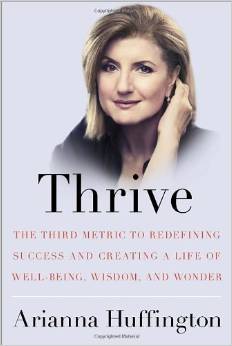
downloadFor those who have been considering Arianna Huffington’s book Thrive, it’s worth reading.  Huffington’s book focuses on our society’s ever pressing demands and offers advice on how to handle, these challenges.  The book begins by describing a life changing moment for Huffington personally, providing the reader with the background and inspiration for her book and then continues with four pillars or sections, of well-being, wisdom, wonder, and giving.

In Thrive Huffington’s main argument is that instead of constantly striving for money and power, success should be measured in other ways, in this the pillars of well-being, wisdom, wonder, and giving.  Some of the advice offered by Huffington may seem self-evident, but it never hurts to be reminded.  The following points on technology and information I think most young professionals can relate to, and I know I did.

Huffington focuses on meditation and mindfulness, ways in which to live more in the moment and to combat stressors in our lives.  One thing she indicates that constantly vies for out attention is technology, she mentions “technology has been very good at giving us what we want, but not always what we need.” Huffington also acknowledges that the workforce emphasizes get more done and faster, but that at some point we can’t function if we don’t make time for ourselves.  I know personally I can’t constantly have my A-game if I don’t give myself some downtime.

More words of wisdom in the book discuss how we constantly desire to have information and how we consume our information via social media.  “The quest for knowledge may be pursued at higher speeds with smarter tools today, but wisdom is found no more readily than it was three thousand years ago … In fact, ours is a generation bloated with information and starved for wisdom.” She later goes on to say, “I believe our job in the media is to use the social tools at our disposal to tell the stories that matter-as well as the stories that entertain- and to keep reminding ourselves the tools are not the story.” Being constantly bombarded with information is not really always the best for us, but in our fast paced world it sometimes feels like we need to keep up.  Sometimes I think it’s good to remember we need limits in our lives we don’t have to stay on top of everything, and there is nothing wrong with that, the only hard part is knowing when to establish your own limits.

All in all, Huffington’s advice is great not only for people who already have 9 to 5 jobs but also people starting out in the working world.  Guiding us new professionals towards discovering a career that we enjoy and in the process remembering as we advance in our careers to still take the time to enjoy the things in our lives, making sure we live life and not let it pass us by.  Coming to understand that success should not have to be living to the point of exhaustion and creating hazardous lifestyle is important, and something I know I connected with.  What we prioritize and what we value really can and does make a difference.

P1070457 croppedStephanie Raso is a graduate of Linfield College and earned her BA in Communication Arts. She is a new pro-member and volunteer with PRSA’s Portland Metro Chapter. Connect with her on Linkedin or on Twitter @StephanieRaso1

Why PR is Essential to Content Marketing

PR and marketing used to be separate. But now more and more of their job responsibilities are starting to overlap.

Image credit to 5wpr.com

Go to a well-known public relations or marketing blog, and you’re sure to see something about content marketing. Content marketing is kind of in the spot social media found itself in a few years ago: no one agrees on who should own it.

I won’t go into my thoughts on the topic, but I will say this: successful content marketing can’t happen without some PR. And while not every marketing team needs a designated PR pro, the team’s success depends on having strong public relations skills.

Good Content Means Nothing Without Good Distribution

Sure, it’s great that you wrote an awesome ebook. But tell me this: how is your company planning on getting people to read it?

Many content marketers say you should spend twice as long promoting a piece of content than you do creating it. That may sound daunting at first,  but think about the ongoing nature of blog promotion. One hour of that promotion may be broken up into creating several one-off shares over the course of a few months.

A rounded content distribution plan might include:

  • Sharing on social media

  • Including links in a company newsletter

  • Syndicating the content on other websites

  • Optimizing the content for shares

  • Personally emailing content to interested contacts

  • Linking to content in guest posts

  • Earning inbound links to the content

  • Getting influencers to share or endorse the content

Those last four bullet points? Yeah, they take some PR savvy.


Public Relations for Content Marketing

The most important reason that content marketers need a grasp on PR is the need for relationships. PR pros are experts at building relationships – it’s one foundation of PR as a whole.

Content marketing is a whole lot easier when you have strong relationships with people who can help you get your content out there. It all boils down to knowing how to write a pitch. Let’s look at those bullet points again:

Personally Emailing Contacts

You just wrote a post about something and think several of your contacts would enjoy it. Don’t leave it to chance that they’ll see your social shares of it or find it on their own. There’s nothing wrong with sending a quick email saying you wrote something on a topic they’re interested in. But if you don’t know how to write a good pitch, you may come off sounding more pushy than helpful.

Linking to Content in Guest Posts

Guest blogging can be as valuable for content promotion as it is for personal branding. You can link to content in the body of the post, provided it’s related to what you’re talking about in the post. Or you can highlight specific content in your bio instead of including a link to, say, your blog’s home page.

But once again, to secure great guest blogging gigs, you need to know how to pitch yourself and your writing to relevant outlets.

Earning Inbound Links

Have you ever seen 10+ outlets writing articles about the same company’s recent report or whitepaper? Think about how valuable those links are, especially when they’re from authoritative, high-ranking sources.

Do you think that those publications all just fell upon that data? I’m betting that in most cases, they received a great email from the original company. It probably stressed why the report would be valuable to readers. I’ll also bet that the publications receive pitches like that a lot, and only pay attention to the good ones.

Getting Influencers On Board

I love stories where one tweet boosted a company’s subscribers or conversions by crazy amounts. It may seem like exaggeration, but it happens. Influencers can drive hundreds of visits to a small company’s website. That may be twice as many visits as they usually see.

This kind of success depends on targeting the right influencers and building a relationship with them. Then you need to show them the value in your content. If you spam them, are pushy, or use any other combination of bad pitching tactics, you’re making that success next to impossible for yourself.

So while everyone debates on whether content marketing should fall under marketing or public relations, you can focus on how to combine the two for content success.

What PR tactics do you think are most important in content marketing?


710T3ue1Brittany Berger is currently a Digital Content Supervisor at eZanga.com. She graduated from University of Delaware in 2012 majoring in Mass Communication with a public relations focus and minoring in Interactive Media and English. Connect with her on Twitter @bberg1010.
New Professionals Week is Just Around the Corner!

New Professionals WeekThere’s still time to join in on the New Professional Week festivities. On behalf of the PRSA New Professionals Executive Committee, we’d like to invite you to be a part of our New Professionals Week, November 10-14, 2014.


What’s On Tap

#NPPRSA Twitter Chat: Navigating the Future of PR & Marketing
Thursday, November 6, 9-10 p.m. ET

Read more about the event & RSVP here

PRSA Webinar: How Polarizing Scotch Brand, Laphroaig, Built a Social-Centric Global Campaign
Tuesday, November 11, 2:30-4 p.m. ET

Matt Day, social and content strategist for Beam Products, will discuss tips for how to build a global social campaign. Click here to register for the webinar.

Host a Local Chapter Event for New Pros Host a New Pros Happy Hour: 
There’s still time for you and your Chapter to submit an event for New Professionals Week. Some ideas include…

  • Host a New Pros Happy Hour: Invite new pros in your area to a set location for networking, socializing and learning about the resources available and member benefits from PRSA. Allow members to receive a discount on drink tickets (optional). 
  • Host an Educational Panel:  Using a panel of local experts, allow new pros to gain insights into the burgeoning PR industry in your city or help them in launching their early careers. Offer catered breakfast/lunch/drinks (optional) as part of networking before/after the panel.
  • Host a Career Connection:  Connect employers looking for talent in your area with new professionals eager for experience in PR. Hosting a mini-job fair for Chapter members adds great benefit to their membership, enables networking and helps develop new pros to be future leaders within the organization.
  • Host a private showing of a New Pros webinar. During New Pros Week, we feature a national webinar on a topic of interest for new pros. We anticipate the webinar will be held in the afternoon on Monday, Nov. 11. To host a private showing – invite local new pros to an office, bring a bag lunch and have a discussion after the presentation. The playback will also be available through PRSA’s on-demand service, and our guest speaker can be reached throughout the week for questions via Twitter. 


If you have any questions please feel free to contact New Professional Programming chairs Hilary or Janelle.  

Why Training for a Half Marathon Will Make You Better at Your Job

Image via Thorpe Triathlon

Image via Thorpe Triathlon

I was skeptical at first, too. Running for anything besides the mall during a scarf sale wasn’t something I previously enjoyed, let alone dedicated my precious free time to. But when someone made a bet that I couldn’t run the entire Great Wall of China Half Marathon, I accepted the challenge and got my butt into gear. And after successfully running two half marathons this year, this is what I’ve found:

Image via Thorpe Triathlon

1)   Distance running improves your time management.

When you work at an agency, you learn very quickly that you only have 18 waking hours in the day (give or take a few). Then, as you attempt to squeeze in time for a 9+ mile run, you begin playing a mental game of “The Price Is Right” and become an expert at estimating how long something will take you, to the minute. Need I explain how useful this will be at work?

2)   It forces you to get creative.

Speaking of time; what do you think you think about when you’re running for 60 minutes? Once you get past the torturous part of training, your breathing regulates and your mind is free to wander towards ideas you may have never pondered before. While I am a big advocate in preserving a life outside of work, this is a time when I say just let your thoughts flow. Maybe a song on your playlist or a billboard you jog past sparks a great idea for a client. Or perhaps during this time away from outside pressures you finally unlock a solution to a problem you’ve been having. Either way, you will discover a way to entertain yourself, and it usually isn’t counting pavement squares.

3)   Patience is a muscle that strengthens with use.

It is widely agreed by experts that you shouldn’t increase your mileage by more than half of a mile per week as to avoid injury. With that in mind, when creating your training schedule you must be deliberate, strategic and realistic in setting your goals. Sound anything like creating a PR plan?

You’ll learn that baby-steps, though small, meaningful steps forward. You’ll more easily acknowledge and accept your limits and find ways to work with them rather than try to hide them. Patience is a virtue that is essentially a public relations job requirement. Because we all know, PR is a marathon not a sprint.

4)   Stress (and desserts) are no longer an issue.

Stress is a simple word that for most people causes a lot of anxiety. However, I find that having pre-designated training times throughout the week lets me easily pour out my frustrations on the pavement, helping transform my anger into focused energy (a great skill for the workplace). In fact, I recommend running angry! You’ll run harder, faster and with more determination. And by the end of it, you will be too exhausted to carry that extra baggage all of the way back home, or to the office.

5)   The rule of inertia.

The rule of inertia: every object in a state of uniform motion will remain in that state of motion UNLESS an external force is applied.

Newton was spot on with this one. Get up and get moving! Life isn’t a spectator sport. The more active you become outside of work, the more energy you’ll have during work. It sounds crazy, but it’s true. An active free time will be the external force to propel your career to the next level.

6)   It’ll toughen you up.

Everyone almost brags about how PR is “the most stressful” job, but not a lot of discussion is devoted to the emotional toll PR can have on its greener members. You will face rejection. A lot. Rejection during the application process, rejection from the media, rejection from the client… It’s everywhere, and you’ll need to have a strong sense of self in order to thrive in this business. Distance running will both literally and figuratively thicken your skin and force you to develop a mental toughness that will help the no’s in life just roll off of your shoulder.

7)   The importance of quality time with me, myself and I.

During your training you will spend a lot of time by yourself. Sure you might have a running buddy keep you company every so often, but unless you are one of those fitness freaks of nature (you know the ones, having a full conversation while running uphill in 90 degree heat), the majority of the time will be spent silent with only the sound of your thoughts. You will, by mere force and repetition, truly get to know yourself. And as your run farther and faster, succeeding in your goals, you will learn to trust yourself. This is important. When you trust yourself, you believe in yourself, and we all know how essential confidence is in this profession. You won’t be afraid to share that “stupid idea” or second-guess your writing. You have confidence and trust that what you’re doing is your best. And THAT, is everything.


Megan Nicole O'Neal headshotMegan O’Neal graduated from UCLA in 2011 with a Bachelor of Arts in Communication Studies, emphasizing in mass communications. She is currently the PR Coordinator at Marketing Design Group and volunteers with the National Multiple Sclerosis Society, freelancing for the public relations department. Connect with her on Twitter @megannenicole.