Five Tips to Fine-Tune Your Media Relations in Sports PR

#NPPRSA - The Edge (1)Good communication skills and strong media relationships are essential for any PR professional to be successful with those they work with, but with the different public relations industries becoming more and more niche these days, there are some keys things to keep in mind depending on which media outlets you are pitching and working with the most.

For those working in the action-packed and non-stop sports and entertainment industries (or looking to get into these areas), here are five tips to keep in mind to help you fine-tune your media pitches, break through with key media contacts and more to further develop your media relations:

Timeliness & Relevance

As the old saying goes, “timing is everything.” In the sports and entertainment industries, this is even more important to remember when it comes to PR and pitching specific media reporters whether they are with long or short lead outlets.

More often than not, unless something is breaking news, it is best to tie your media pitches into something timely occurring that the outlet and reporters are covering (or could cover) whether it a large sporting event (such as the Olympics, FIFA World Cup, US Open, etc.), the start of a new sporting season (like golf and tennis season swinging under way each summer or football season and college sports getting started again each Fall) or anything else that’s relevant so that there is a direct tie-in to the media reporter and their upcoming editorial calendar an outlet.

Keep the Competition in Mind

When working in the sports and entertainment industries and with the media coverage surrounding them, to say it is a highly competitive space for coverage would be an understatement. When pitching various media try to keep in mind everyone else they are being pitched by and those who work with leagues, teams, events, brands, athletes, etc. and try to determine what your best pitch angle is to make you stand out from the rest and break through to the media contact.

In addition to the timeliness and relevance of what you are pitching, think of creative ways to enhance your pitches by determining the best subject line (and one that isn’t over the top or misleading), including images with your text or bullet-pointing information so your pitch helps you get straight to the point.

Don’t Get Discouraged if You Don’t Hear Back

Sometimes I like to think that “PR” more accurately stands for “persistency = results.” Like when sending out a press release announcement to a large database of media contacts (or on a newswire), you don’t always receive a lot of immediate feedback from those you sent it to.

If you don’t hear back on your pitch within an appropriate amount of time (of which there is no magic rule of thumb for), make sure and send a follow-up email or give them a call to see if they received your information. As for cold call media pitching, it seems more media prefer to receive email pitches first before being cold-called with pitches but that once you have established communication or a relationship with them that they are more willing and likely to talk on the phone with you.

Making Sure You Manage Expectations

For those of us who work in sports along with a lot of us who work in public relations, the phrase “under promising and over delivering” is very important to remember.  This applies not only to those you work with/for, but also the media you’re building relationships with and collaborating on coverage opportunities.

When it comes down to things like determining how much time a media reporter can have in an interview or how much time they need to schedule photo shoots, it’s important to be aware of tight timelines and deadlines. It is in everyone’s best interest to be honest and forthcoming about what you (and who you work with/for) can and cannot do so that you are appropriately managing the media’s expectations.  By doing so, this will help you with building lasting media relationships for both the short term and long term.

Keep up with What the Media are Covering

With the integration of social media into our daily lives and almost every move we’ve made in the past five or six years, this has become both a blessing and a curse at times for those of us who work in PR. Social media demands our constant attention (not to mention that sports related coverage consumes about 90% of twitter and all tweets produced daily).

However, social media also provides us an opportunity to follow key media reporters, see what they are covering and determine better pitches to add a more personable touch to connect with them and develop our relationships. While it is impossible to follow every media contact you want to get through to and see what they are covering, for the ones you do follow it allows some extra insight on events they are planning to attend, products they like, things they are passionate about and any other tidbits of information you might not have known otherwise that can help you determine a good tie-in when getting in touch with them.

I would also keep in mind that social media channels are NOT the best or recommended way to pitch key media contacts, but that it can’t hurt to respond to their posts and engage in conversations that potentially could help make you stand out to them when they do receive pitches and emails from you at another time.

About the PRSA Entertainment & Sports Section

Practitioners working in the high-profile worlds of sports and entertainment face unique challenges. PRSA’s Entertainment and Sports Section offers great opportunities to connect with peers who understand your issues and are willing to share solutions. Through in-person and virtual networking events, newsletters and other resources, the Section helps practitioners develop public relations and management skills directly relevant to their entertainment and sports environments.

Natalie MikolichNatalie P. Mikolich, is the 2016 Chair-Elect of the PRSA Entertainment and Sports Section and the Founder of npm|pr (www.npmpr.com).  Natalie has worked with a variety of national businesses in different industries ranging from sports, fitness, health, beauty and luxury lifestyle to non-profit organizations and special events in addition to world class professional and Olympic athletes. Along with this, Natalie has provided public relations services for some of the leading global sports and entertainment agencies. Follow her on Twitter @npmikolich.

 

How the World Sees You: A Book Review

3dBookimage-AccoladesWhat makes you uniquely fascinating?

If you’re struggling to answer that question (like I was) and are wondering why it even matters, keep reading.

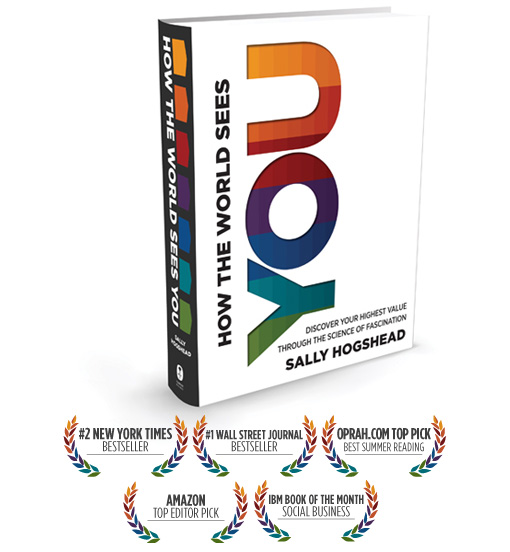
Sally Hogshead created an entire methodology, book, business and speaking career based on the science of fascination. Her book, How the World Sees You – Discover Your Highest Value Through the Science of Fascination – is an insightful glimpse into her findings. It walks through actionable steps and advice that’s incredible relevant to any new professional, especially those in the public relations and marketing space.

I heard Sally Hogshead speak at an event a month ago, and I’ve been hooked on her principles ever since. While I’ve taken many personality-type tests before, her methodology is unique, because it focuses on how the world sees you – instead of how you see the world.

Her basic premise is as follows: if you can succinctly communicate to others what makes you uniquely fascinating, you are better equipped to win in business, life, and relationships.

Here are some compelling tidbits from Ms. Hogshead’s book:

  • “On an MRI scan, a fascinated brain is in a state of relaxed focus…if your listener becomes distracted while you communicate, they are more likely to feel conclusion or doubt about your message. If you’re not communicating clearly, you’re less likely to add value.”

  • “Different is better than better. You aren’t necessarily better than your competition. But you are already different.”

  • “Identify how you are MOST likely to add distinct value. Do more of this. Identify how you are LEAST likely to add distinct value. Do less of this.”

I highly recommend this book to all professionals looking to enhance their careers. Sally Hogshead brings to the table an impressive advertising and branding career, and while her insights are applicable to individuals, they’re also applicable to PR and marketing professionals’ work with brands. After all, it’s our job to make people think our clients are fascinating, and in turn, motivate people to buy from or do business with our clients.

As new PR pros, now is the time to figure out who we are as professionals and people. How the World Sees You is the best resource I’ve found to guide me in that journey. It’s a quick and enjoyable read. Don’t let the length intimidate you – Part II dives into each advantage and personality type, and is meant as more of a reference than a cover-to-cover read

The five advantages are:

  • Innovation – you change the game with creativity

  • Passion – you connect with emotion

  • Power – you lead with command

  • Prestige – you earn respect with higher standards

  • Trust – you build loyalty with consistency

  • Mystique – you communicate with substance

  • Alert – you speak the language of details and prevent problems with care

Your unique combination of primary advantage + secondary advantage = your archetype (there are 49).

If you have any desire to learn more about yourself and improve the way you interact with clients and coworkers, I would highly recommend How the World Sees You. If you purchase the book, you receive a code to take the quiz. The nice folks at How to Fascinate have supplied us with a code for blog readers to take the quiz for free:

Visit: www.howtofascinate.com/you

Use code: PRSA

I almost guarantee you will be hooked like me, and start obsessively guessing the archetypes of your friends, coworkers and family.

Screen Shot 2015-07-07 at 7.42.55 PMLauren Leger graduated from Boston University with a bachelor’s degree in communication, concentrating in public relations. She started her career while still in college at Boston-based PR firm, Zazil Media Group. Lauren relocated to Dallas, Texas in fall of 2014 and began working at The Power Group as a PR account executive. She recently took on a new role as Power’s manager of digital strategy, where she brings her PR expertise to the digital realm of the business. Connect with her on LinkedIn and Twitter.

Leave Your Mark: A Book Review

Reading “Leave Your Mark” was like having a chat with the career mentor I always wanted, the kind of book I wish existed when I was in college.

Leave Your Mark: A Book ReviewDescribed as a career mentorship in a book, Aliza Licht takes readers on a tour of her career – from majoring in neurobiology in college to being SVP of Global Communications for Donna Karan International, while sprinkling invaluable nuggets of advice throughout her story.

DKNY PR Girl revolutionized the way brands use social media and Aliza Licht’s ideas and advice could very well change the way we young professionals use social media professionally – to search for jobs, too reach out to brands and pros we admire and to build our own personal brands. There’s so much to learn from her experiences whether you have a passion for fashion or not.

Unlike other career books out there, “Leave Your Mark” isn’t a how-to book. Reading it won’t tell you how to complete a particular task during your career or explain a certain trend in our industry. It’s not a textbook, but it’s something every aspiring, young and seasoned PR professional should read and keep on their bookshelves.

Aliza breaks down the book into sections on finding your dream career path, crafting the perfect resume and cover letter, getting the most out of an internship, nailing interviews, promotions and raises, getting ahead, handling a difficult boss or trouble coworker, using social media to your advantage and building your own personal brand.

Among the many gems she shares, these are the five best tips I found in “Leave Your Mark.”

  1. You reap what you sow.

Early on, Aliza tells a story relayed to her from a colleague. Her colleague received an email from an acquaintance on behalf of her daughter. Daughter wasn’t involved in the conversation at all – never even bothered to email herself. She didn’t get a job with the company, of course. The moral of this story is that you’ll only benefit from the work that you put in. If you’re not willing to put in the effort to find or get the job, it won’t be yours.

  1. Attention to detail is important no matter the job.

The most important thing you can do when applying for a job or internship is to pay attention. Applications have instructions, whether you’re applying online, via social media or the old fashioned way, and if you can’t follow whatever instructions were set, your application won’t even make it to the hiring manager’s desk. Same for spelling, grammar and, the worst offense of all, addressing it to the wrong person. The devil is in the details.

  1. Leverage your existing network in the job hunt.

Cold calls don’t really do much for anyone really. Aliza makes this point by saying that those who contact a potential new place of employment themselves are at a disadvantage and telling her own story of securing her first job at DKNY. She had heard of an opening at DKNY and asked an editor friend of hers to reach out and recommend her, which made DKNY seek her out. This can be a bit tricky, especially if you’re trying to relocate as you may not have connections in your new home, but when possible, it’s always the best way to go.

  1. Social media isn’t personal anymore.

We may love to use social media to share photos of our favorite meals or to live-tweet our favorite TV shows (excuse me while I blow up everyone’s Twitter feeds on Thursday nights. You can thank Shonda Rimes), but social media isn’t personal for PR pros. Your social media accounts are a virtual resume, whether you like it or not, and it’s important to make sure that you’re not costing yourself a job because of your affinity for oversharing or less-than-ideal after-work behavior.

  1. The best brand you can build is you.

The biggest thing I took away from “Leave Your Mark” were all of the great tips on building my own personal brand. Aliza shows through her own experience that building you is the most important thing you can do in your career. By working hard wherever you are, learning everything you can and always putting your best foot forward, you’ll build a great reputation for yourself that will precede you in your career.

RobynRobyn Rudish-Laning is a graduate of Duquesne University, with a bachelor’s in Public Relations, a master’s in Media Arts and Technology, and currently works as a PR Associate with Pretty Living PR, a boutique firm based in Pittsburgh. Find her on LinkedIn orTwitter or read her PR-focused blog

Book Review: Jab, Jab, Jab, Right Hook: Telling Your Story In A Noisy Social World

Training. It’s a part of an athlete’s life, but it’s also important to PR pros.
From newbies to veterans, we all need to train ourselves to be storytellers for our companies, our clients and even our personal brands, on all the right social networks.
jab jab right hook book reviewConferences are great for training, but if you’re on a tight budget, especially as a new PR pro, your best bet is to hit the books. Enter Gary Vaynerchuk and his third book, “Jab, Jab, Jab, Right Hook” which will train you how to tell your story in a noisy social world.
 
Vaynerchuk asks readers to consider “Jab, Jab, Jab, Right Hook” as a “training camp to prepare you to storytell on today’s most important social media sites.” 
The objective of great storytelling is to create outstanding content on the right platform, and he compares doing that to the sport of boxing (hence the jabs and right hook).
 
Key takeaways
I highlighted a lot of great points throughout my copy of the book, and the following three takeaways stood out to me most.
 
1. “Content is king, but context is God.” 
You can create really great content that is compelling, but if you put it out on the wrong platform—or it misses what a certain platform is all about—it won’t be the hit you expect it to be. And as Vaynerchuk points out, content for the sake of content is pointless.
 
2. “No matter who you are or what kind of company or organization you work for, your number-one job is to tell your story to the consumer wherever they are.” 
It could be on Facebook, Instagram, Twitter , etc., but it is most likely that customers are on all three and even more than that. You need to make sure that your content is relevant to your customer on the platforms they utilize most.
 
3. “Skillful, native storytelling increases the likelihood that a person will share your content with a friend.” 
That increases your brand’s audience further and further. Shareable content makes your brand more memorable in the future and tells your story beyond your network of consumers.
 
Train by example
If you’re the typical new PR pro, you were probably a first adopter of many social platforms (Facebook, Twitter, Instagram, Pinterest) that Vaynerchuk covers in “Jab, Jab, Jab, Right Hook.”
You know the ins and outs of these sites. But don’t think that means this book isn’t relevant to you!
It is easy for brands to get in the grind of posting the same content to Facebook, Twitter and Instagram (I’ve seen it happen before), but that way of promoting content is a great disservice for the very reason why context is so important.
 
The best way to complete the training that this book offers is to flip through to the “color commentary.” This is where he breaks social networks up by chapter and gives countless examples of good and bad content with screenshots of various campaigns.
Some will make you rethink your strategy, and others will make you cringe, asking “what were they thinking?!”
 
Do you believe in the power of storytelling and context? What do you consider to be the most important way to get your brand noticed?
 
Victoria BepplerVictoria Beppler is a graduate of Waynesburg University where she received a Bachelor of Arts in Public Relations as well a Master of Business Administration in Market Development. She currently manages social media, email marketing, the annual fund and more for her alma mater as the Assistant Director of Alumni Relations. When she isn’t in the office or traveling to alumni events around the country, you can find her working on a DIY project or hanging out with her husband, Josh, and their dog, Brinkley. Connect with Victoria on Linkedin and Twitter (@victoriabeppler).

#ThrowbackThursday with Dorie Clark

Editor’s note: This is part of our monthly #ThrowbackThursday series, which features a prominent, successful PR pro taking a look back and sharing tips from his/her days as a new pro. 

As the author of Stand Out, Dorie Clark knows a thing or two about – wait for it – standing out on the job.

Today, as part of our #ThrowbackThursday, Dorie shares how young PR pros can break through the clutter and excel in their future careers, with some tips and insights from her past.

Dorie ClarkSo, without further ado, meet Dorie Clark, and soak in her helpful career tips! 

Question 1: What were some of the biggest challenges you faced as a new professional and how did you overcome them?

Honestly, one of the hardest things for me was getting up in the morning in order to get to work on time! That sounds ridiculous, but adjusting from the free-floating schedule of grad school to the early mornings and “face time” requirements of the work world was rather difficult and dispiriting for me.

Once I became an entrepreneur, I realized it suited my temperament much better, because you can set your own hours, avoid office politics, and you have the interesting and life-affirming challenge of being responsible for surviving through your own wits and mettle (i.e., your business development skills).

I also had a lot of career setbacks early on, including being laid off as a journalist and working as a spokesperson on two prominent political campaigns – only to have them both lose.

I had to keep reinventing and rebranding myself, a process I chronicled in my first book, Reinventing You. Eventually, nine years ago, I started my own marketing strategy consultancy, and have been writing, speaking, consulting, and teaching business school since then.

Question 2: What advice would you give to new college graduates looking for their first jobs?

Start creating content. You may have had some internships, and it’s a great idea to do so, but in general your resume isn’t going to look that much different from other recent grads – and prospective employers won’t necessarily be convinced you know applicable workplace skills, even if you got an A in your marketing or PR class.

Instead, differentiate yourself by sharing your ideas, whether it’s through blogging, creating videos or a podcast, or curating a knowledgeable social media feed.

That signals to employers that you’re truly interested in the profession, are familiar with the issues being talked about, and have something meaningful to say.

Question 3: As a young professional, how did you find ways to stand out in front of prospective employers and bosses?

One of the most important things I did was build my network. I wasn’t terribly strategic at the time; mostly it meant that I periodically invited people for coffee or lunch whom I liked and knew I should be keeping in touch with because I could learn from them and they were plugged into the worlds I wanted to enter (at the time, journalism and politics).

As I describe in my forthcoming e-book Stand Out Networking, after I’d been laid off from my newspaper reporting job, I was able to land a great gig thanks to Michael Goldman, who began as a source I’d call frequently for comment as a reporter, and with whom I developed a warm and friendly relationship. He was a political consultant and went to work for a gubernatorial candidate who needed a spokesperson ASAP, and since he knew I’d been laid off, he called me.

Similarly, I got to know Steve Grossman, at the time a local business owner in the Boston area, when I wrote an article about him. He was very involved in politics and several years later, he helped me secure a job as the spokesperson for a presidential campaign.

Investing in relationships is one of the most important things you can do, especially early on in your career. (Click to Tweet!)

Question 4: How can new college graduates uncover (then market) their unique values?

One of the best ways to discover your unique strengths and the value you bring is to think about how you’re different than most others in the field you’re aspiring to enter.

We tend to emphasize our commonalities – if you’re looking for a marketing job, then you highlight the fact that you were a marketing major.

That’s great, but remember: employers are looking at 100 or 1000 resumes, and they want to see something unique. Don’t be afraid to mention your minor in philosophy, or the fact that you grew up in Russia, or the chess championship you won. Smart employers know they need innovative perspectives and a different way of looking at the world.

I also created a free 42-page workbook that’s adapted from my new book Stand Out. It’s 139 questions that walk you through the process of discovering your unique ideas and then becoming recognized for them. It’s available to download for free on my website.

Question 5: If you could go back in time and give advice to yourself during your first year on the job, what would you say?

When I was working as a presidential campaign spokesperson, I managed a 13-person staff. I had an employee named Kumar who was right out of college, and once he worked for me, I realized what a great employee looked like – so if I had the chance to go back in time, I’d learn from Kumar and ask my boss the incredible question that he did: “What can I do to make your job easier?”

It was so simple, but as a boss, I was inordinately grateful: here was someone wanting to erase problems and stressors for me (of which there were many). And Kumar realized the highest and best use he had was to free up my time to focus on what mattered for the organization.

He earned my undying gratitude, and it made me want to keep giving him more and better responsibilities, because with that question and that attitude, he demonstrated his team spirit and desire to do whatever it took to help the organization. I wish I’d been that savvy early on!

About Dorie Clark

Dorie Clark is an Adjunct Professor of Business Administration at Duke University’s Fuqua School of Business and the author of Reinventing You (Harvard Business Review Press, 2013) and Stand Out (Portfolio/Penguin, 2015). A former presidential campaign spokeswoman, she is a frequent contributor to the Harvard Business Review, TIME, and Entrepreneur. Recognized as a “branding expert” by the Associated Press, Inc., and Fortune, Clark is a marketing strategy consultant and speaker for clients including Google, Microsoft, Yale University, Fidelity, and the World Bank. You can follow her on Twitter @dorieclark and download her free 42-page Stand Out Self-Assessment Workbook.