Five Reasons to Attend a Conference as a New Professional

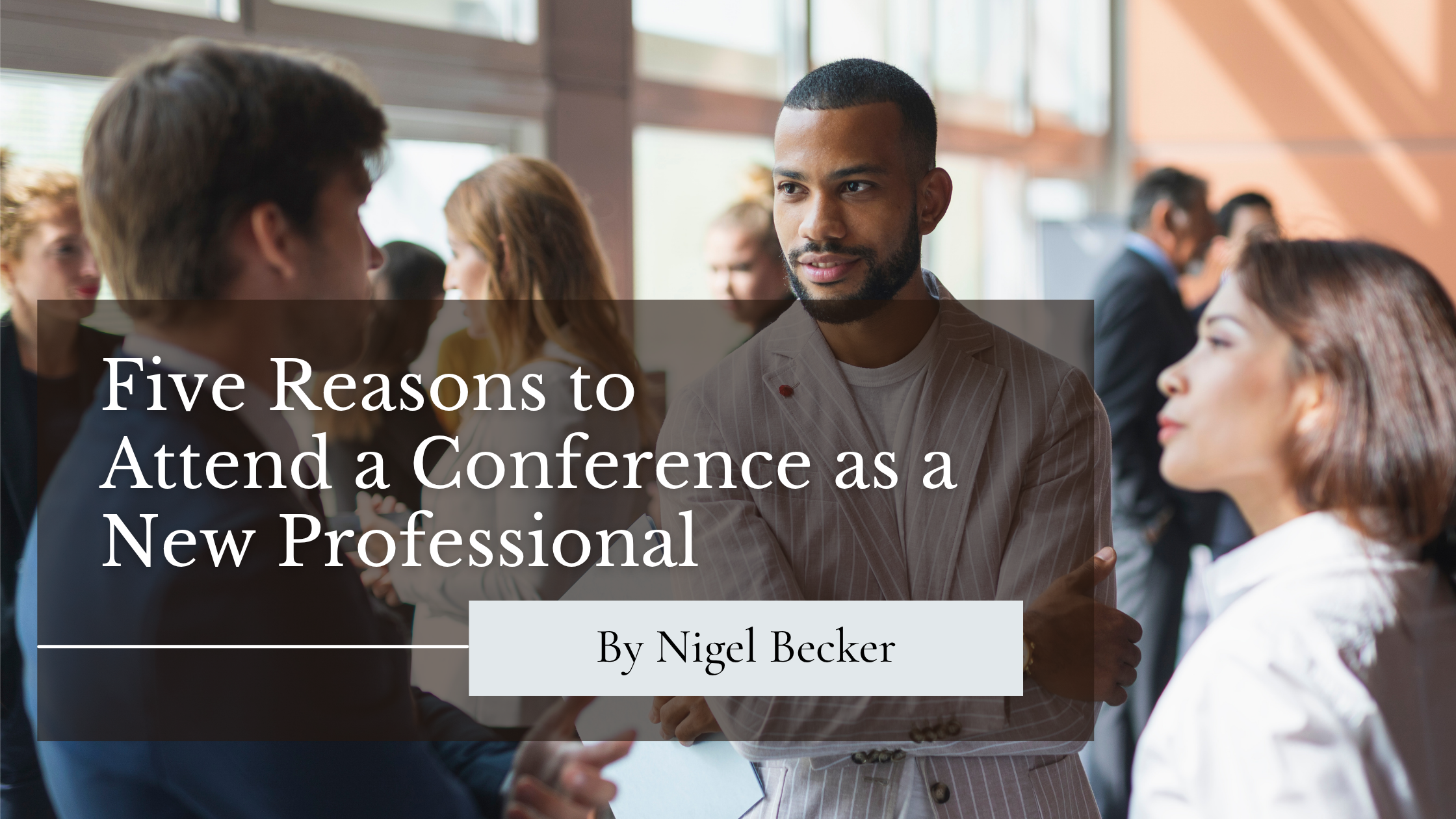
A group of young professionals speaking to one another in a conference hall

PRSA’s annual conference, ICON 2026, is taking place October 18-20 in Orlando, Florida. Over the coming weeks, the PRSA New Professionals Section will be posting a series of blog entries aimed at educating our members about the importance of attending events like these–even and especially as a new professional.

By Nigel Becker

As new professionals, we’re always looking for ways to expand our skill set, access new opportunities and meet fellow professionals who can become connections, mentors, and above all, friends.

Attending a conference is a great way to do that. 

I recently attended PRSA’s 2026 Public Affairs and Government Summit, and it was one of the highlights of my professional career so far. 

PRSA offers a huge selection of conferences every year, from the marquee ICON to those hosted by the numerous professional sections. Many local and regional PRSA chapters and sections also host their own conferences.

If you’re wondering how you might be able to benefit from a conference, I’m here to break down five specific ways that going to one can open doors and help you level up your career. 

1. Expand Your Network

Professional conferences bring together hundreds of industry representatives, vendors, and partners all together under one roof. These attendees come from diverse backgrounds and experience levels. They may be able to help you get a job, share tips to make you better at your role, or provide an extra set of eyes and ears to bounce ideas off on future projects. 

You can also connect with mentors at these events. Approaching someone to say “I’m really interested in your work and would love to learn more” can stand out in ways an email or LinkedIn message simply can’t.

And if a fellow conference-goer is looking for work and seems talented, you may even be able to connect them with your own organization. 

2. Learn from Pros Who Are Further Along in Their Own Journey

As a new professional, you may worry that you’ll be the youngest or least experienced person at a conference. That might not be the case; attendees from all stages of their careers attend conferences! 

Even if you are the least experienced person in the room, that’s often a benefit. It can mean you have the highest likelihood to learn something impactful, and where better to learn than a room full of people who have been in the industry for years or decades longer than you? Many are eager to share what they know, especially with a new professional who’s taking the time to learn.

3. Gather Fresh Ideas from Other Organizations

Every organization is unique. They have their own audience, their own stakeholders, and their own internal team with its own skills and opportunities for growth. 

But even organizations that seem different on the surface can learn something from each other. If you work for a PR firm, you can still learn from a media relations manager, a public utility organization, or a government spokesperson. Effective communication is still effective communication, regardless of how different our audiences look. 

4. Get Hands-On Experience

Many conferences host activities like crisis simulations and brainstorming sessions where you can work with other professionals to solve problems and put best practices into action. 

During the PRSA Public Affairs and Government Summit, I experienced an afternoon-long crisis simulation that made my head spin in the best possible way–and it taught me more about crisis communications than any book or how-to video ever could. 

5. Find New Passions

If you say “I had no idea that was a job!” coming out of a conference, you won’t be the first!

You might meet a conference-goer with a job title you didn’t know was possible or discover a new way to put your media relations background into action. 

Treat the conference floor as a discovery zone, and you’ll often be rewarded for the adventure. 

What Now?

Whether your goal is networking, learning, or finding new career directions, there’s likely a conference for that. 

PRSA maintains a list of upcoming conferences, and if you’re a PRSA member, you’ll likely qualify for discounted tickets. Other local, state, and national organizations host conferences too, so be sure to ask colleagues and mentors for recommendations. 

As for tickets and travel costs, ask your employer about professional development funds. Many organizations offer stipends or reimbursement for professional development expenses. Find out if they can help pay for conference tickets, travel, and/or membership in professional organizations like PRSA. 

And above all, keep looking out for professional development opportunities. As a PRSA member, you have access to a tremendous number of resources–many free or discounted. The time you invest in your growth now can have a real impact on your career down the road. 

Reflections on My Experience

During my three days at the 2026 Public Affairs and Government Summit, I participated in the mock crisis communication simulation mentioned above (complete with a mock press conference), explored case studies at organizations ranging from a regional sewer district to a public health department to a state department of corrections, and met government and public affairs officials from all stages of their careers who were beyond generous in sharing their time, insights, and encouragement. 

Heading home, I felt so inspired–with fresh ideas to bring back to my team and pros to stay in touch with as I continue to navigate my professional journey. 

If you’d like to know more about my experience and want help understanding how a conference can help you as a new professional, feel free to message me on LinkedIn.

I’d like to thank the Public Affairs and Government section for putting on a wonderful event. If my experience is any indication, you won’t regret exploring conferences as a new pro either. 

About the Author

Nigel Becker is an account executive at Slide Nine, a communications, public relations and digital marketing agency based in Columbus, Ohio. Since 2025, he has served as the Social Media Co-Chair of PRSA New Professionals, overseeing the section’s Instagram and Facebook. He also chairs PRSA Central Ohio’s Student & New Professional Engagement committee.

Behind the Mission: A Career in Nonprofit Communications

Several hands gathered in a circle holding a heart

When people hear the word “nonprofit,” they might make assumptions. Some imagine a small office with limited resources, volunteers doing most of the work, and employees making financial sacrifices in exchange for meaningful work. While passion and purpose are part of the nonprofit experience, the reality is much more.

Wearing Many Hats

Communication professionals play an important role in advancing the impact of nonprofit organizations’ mission by turning their services into stories that inspire action. Nonprofit pros gain experience in marketing, events, social media, and public relations, as well as community engagement and outreach. One day you might be writing a press release, and the next, you’re at an event, creating social media content, interviewing program participants, or developing a marketing campaign. The variety keeps the work exciting. 

Wearing many hats helps professionals discover their strengths while gaining experience they might not receive as quickly in a larger organization with more specialized roles.

One of the biggest advantages of starting a career in the nonprofit sector is the opportunity to develop a broad range of skills in a relatively short amount of time. Because nonprofit teams are often smaller, communications professionals are frequently involved in many aspects of the organization—from social media management and content creation to media relations, event promotion, and even strategic planning. 

Nonprofit Doesn’t Mean “No Money”

One of the biggest misconceptions about nonprofit organizations is that they don’t generate revenue. In reality, nonprofits operate like businesses in many ways. They manage budgets, invest in equipment, hire employees, and develop strategic growth plans.

The difference is where the money goes. 

Instead of generating profits for shareholders, nonprofit revenue is reinvested into programs, services, and community impact. Nonprofit organizations understand the value of communications and marketing because visibility drives support. Donations, sponsorships, grants, and community partnerships are all ways a nonprofit can receive funding.

Passion Makes A Difference

There’s something unique about working alongside people who deeply believe in a shared mission. Whether the cause is education, healthcare, animal welfare, the arts, social services, or environmental conservation, nonprofit professionals are often driven by a genuine desire to make a difference. 

That passion shows up in everyday conversations, team meetings, and projects. Knowing that your efforts contribute to positive change can make the busiest days feel rewarding.

Building Community Through Communication

Nonprofit communications is about building relationships. Events are an opportunity to bring people together around a common purpose, and public relations is about amplifying stories that deserve to be heard. Every communication effort helps increase the likelihood of a larger community of supporters, volunteers, donors, and partners.

For recent graduates, nonprofit work offers an excellent foundation for long-term career growth. It encourages adaptability, creativity, and problem-solving, while providing meaningful opportunities to take ownership of projects and see the direct impact of your work. 

Small But Mighty

Working in a nonprofit role has significantly broadened my professional skill set. In addition to gaining experience in communications, I’ve developed knowledge of sales processes and CRM systems, giving me exposure to areas I would not normally encounter. Being part of a small team has also provided opportunities to collaborate closely with colleagues and build professional relationships.

Knowing that the work has a meaningful purpose is one of the most rewarding aspects of working in the nonprofit sector. Seeing the direct impact of our efforts and the positive growth within the community has made my work especially fulfilling. 

Nonprofit organizations play a vital role in addressing community needs, and the work they do is both valuable and essential. For recent graduates, nonprofit work offers not only the chance to make a difference but also an opportunity to gain diverse, hands-on experience that can serve as a strong foundation for a successful career.

About the Author

Isabel Scudella is the Mentorship Co-Chair for PRSA’s New Professionals Section. She serves as the Lead Marketing and Media Coordinator at MaternityMetrix, where she manages social media, public relations, community outreach, event coordination, and digital analytics. Isabel graduated from the University of Wisconsin-Milwaukee in 2024 with a Bachelor’s degree in Communications and Public Relations. She is currently pursuing her Master’s Degree in Arts, Entertainment, and Media Management at Columbia College Chicago. 

Three Reasons for PR Pros to Pay Attention to Politics

Political news shapes public sentiment, brand perception and communication trends. For PR pros, especially new professionals, understanding political developments can improve audience awareness, crisis management and campaign creativity.

By Nigel Becker

The last few weeks have been busy ones in American politics: Voters in Virginia and New Jersey elected new governors, New York City chose a new mayor and the federal government shutdown disrupted air travel, public assistance programs and more. 

If you’re a political nerd like I am, or if your clients operate in policy-related spaces, you may have been following these events closely. 

But even if politics don’t excite you and your day-to-day role isn’t tied to public policy, it’s still worth keeping an eye on political news as a new pro. Here’s why.

Political issues may impact your audience

As communicators, we need to understand what’s happening in our audience’s lives. Maybe they’re stressed about losing access to a government program, or they’re anxious about the outcome of an upcoming election. 

Being mindful of these stressors can help your organization avoid appearing out of touch. For instance, if your audience is stressed about finances, you might proceed with caution when promoting pricey products, or highlight how your organization is supporting community nonprofits.

Politics can appear in surprising places

In recent years, brands have found themselves in the middle of political debates over everything from DEI programs, to commercials perceived as dogwhistles, to controversial logo redesigns. 

These controversies can seem to come from out of nowhere, but by staying aware of hotly debated topics, you can help your organization tweak non-political communications to avoid taking an accidental stand — or decide how best to weigh in when a cause aligns with its values.

(PRSA’s daily “Issues and Trends” newsletter, which all members can sign up for, regularly highlights trends like these.)

Campaign communications can inspire non-political comms

Political communicators exist in the same ecosystem as the rest of us: They’re navigating AI, deepfakes, shifting social media algorithms, distracted audiences and a public that’s increasingly skeptical of both political and business leaders. 

Despite these challenges, they continue to find creative ways to cut through the clutter, simplify complicated concepts and craft messages that resonate. Trade publications like Campaigns & Elections offer a glimpse into how campaigns are reaching voters and communicating under pressure. 

Many of the challenges campaign communicators tackle — like navigating shrunken budgets and experimental influencer partnerships — can spark ideas for non-political communicators, too. 

A note for outside the office:

Local politics and civic participation depend on communication, too

Even outside of work, following politics can help you be a more engaged citizen… and can open opportunities to use your skills for causes you believe in.

Maybe a local advocacy group needs help running social media or promoting events. Perhaps a school board or city council candidate needs help sharing their ideas with the community. You might even find yourself writing a letter to the editors or speaking at a city council meeting about an issue that matters to you.

Many of us were drawn to PR by a love of explaining complex issues and connecting with people. Those same skills lend themselves perfectly to civic involvement.

About the author

Nigel Becker serves as the Social Media Chair of PRSA New Professionals, overseeing the section’s Instagram and Facebook. He graduated from The Ohio State University in 2024 and is an account associate at Slide Nine, a communications, public relations and digital marketing agency based in Columbus, Ohio.

One of his majors at OSU was Political Science, as you may have guessed!

From Internship to Full-Time: How to Make the Transition Smoothly

By Whitney Conaghan

Whether you’re starting your first full-time job after an internship or you’re entering the workforce in a brand-new environment, the shift from student to intern to new professional is both exciting and challenging. It marks a major milestone in your communications career, and it’s more than just a title change. With more responsibility and expectations come new challenges — including adjusting to a longer workweek, learning how to advocate for yourself and figuring out how to build lasting relationships with colleagues. 

The good news? You don’t have to have it all figured out on day one.

Here are a few practical tips to help you transition smoothly into your first full-time communications role, whether you’re in-house, at an agency, or somewhere in between. 

Embrace the learning curve

You might feel pressure to prove yourself right away, especially if you’re coming into an entry-level position with hopes of moving up. But every company and role comes with its own systems and nuances. That means you’re going to be learning a lot, and quickly.

Pay attention to how the team operates. Watch how meetings are conducted, how decisions are made and what the tone of internal collaboration is. 

Ask thoughtful questions. You won’t be expected to know everything, but you will be expected to show curiosity, attention to detail and a willingness to learn.

Shift from an intern mindset to a professional mindset

As an intern, you were probably focused on learning and supporting. As a full-time professional, you’re expected to own your work and think critically. This is your opportunity to demonstrate your value by connecting your day-to-day work to the bigger picture.

Start by being proactive. Instead of waiting for assignments, look for ways to add value. If there’s a project kickoff or a new client, volunteer to do the background research or manage timelines. If your team is short-staffed, offer to build the media list or serve as an extra set of eyes on the press release. 

Build relationships (they matter more than you think)

In communications, relationships are everything — and that includes the ones you build inside your office. The colleagues you’re working with now become your mentors, collaborators and advocates.

Reach out to coworkers for a chance to connect, especially if you don’t work with them directly or if your company has offices in multiple locations. Be a team player by asking questions about what your colleagues are working on. You’ll not only learn more, but you’ll also show that you’re invested in the success of the whole team.

Adjusting to full-time life takes time

Going from a part-time internship or college schedule to a full-time job is a big adjustment. Between longer hours, new responsibilities and the mental shift of working full-time, it’s normal to feel drained.

Give yourself some grace. Your body and brain will adjust to a new routine. In the meantime, try to stay organized with a task list or a calendar, protect time for deep focus and find ways to disconnect at the end of the day. That work-life balance everyone talks about? It starts with small habits, like taking breaks and setting boundaries around after-hours emails.

Keep growing

Your first job is just that – your first job. It’s the start of your career journey. Make time for professional development, whether that means taking a PRSA course, attending a local chapter event, or reading up on industry trends.

Pay attention to what you’re drawn to. Do you love media relations, or are you more excited about internal comms? Are you energized by the fast pace of agency life, or are you more aligned with the stability of in-house work? 

The transition from intern to full-time professional is a busy time, but it’s also one of the most exciting stages of your career. Stay curious, take initiative, ask for help when you need it and give yourself time to grow.

You don’t need to be perfect, you just need to keep learning!

About the Author

Whitney Conaghan serves as the membership chair of the PRSA New Professionals section. She graduated from the University of Oregon in 2023 and is a client services partner at dovetail solutions, a full-service communications agency in Denver, Colorado.  

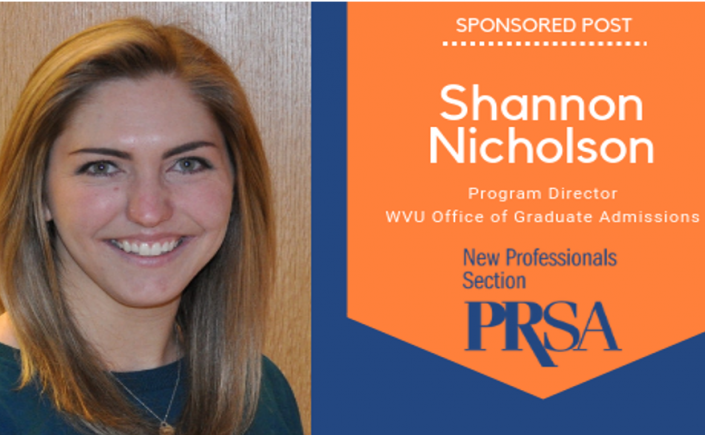
New Professional Spotlight: Shannon Nicholson


Name: Shannon Nicholson
Job Role: Program Director, West Virginia University Office of Graduate Admissions
Education: B.S. Journalism, ’14, M.S. Data Marketing Communications, ’17 – WVU Reed College of Media
Social Media: @shannonicholson (Twitter) and @shannonpauline (Instagram)

How and when did you first become interested in PR and communications?

My first job in the industry was at a small, B2B advertising agency in Morgantown, WV. I was exposed to all facets of marketing: content development, direct email, digital advertising, media relations, social media, traditional media, and website design (to name a few). What I did not know before I started my Junior Account Manager position was the importance of tying campaigns to business goals, breaking down department silos, and utilizing collected data to be relevant and timely. Enter the Data Marketing Communications, fully-online, graduate program. This program allowed me to bridge my interest in the business-side of marketing and my growing expertise in the field.

How did you find internships/jobs?

As a WVU student and alumni, I have an amazing resource at my disposal- MountaineerTrak powered by the Career Services Center. MountaineerTrak was my first line of defense. During my years as an undergrad, the Reed College of Media hired a Director of Student Careers and Opportunities, Eric Minor. Eric’s weekly “opportunity” email quickly became my go-to resource. Eric is the perfect liaison between current students looking for experience and alumni looking to provide that experience as a way to give back to their alma mater.

What was the biggest challenge you’ve ever faced in your career? How did you overcome it?

The biggest challenge I have faced in my young career has been introducing new procedures, and strategies from the ground up. In my current role, I assumed that after six months and I’ll be like a well-oiled machine and have already implemented new strategies. I soon realized that implementation would take closer to one year. The next year will be spent analyzing, and the following year will be about growth and optimization. It is hard not to get ahead of myself and want to be at year three, today! Really, the biggest challenge is not trying something new, it is pacing myself to check one step off the list at a time. Devoting 110% to each step without getting ahead of myself and potentially losing sight of details that could later derail all that the team has worked towards. Slow and steady wins the race.

What has been the most valuable thing you have learned through classes or experience?

Differing experiences, bring perspective. In my Data Marketing Communications cohort, students had varying backgrounds in data, graphic design, marketing, sales, etc. Listening to each other’s viewpoints helped the entire cohort approach problems with an open mind.

What has been the best piece of advice you have received?

You won’t know unless you try.

Do you have any advice for future PR pros?

There are a lot of different ways to apply your marketing/PR knowledge. Don’t limit yourself to certain industries or titles. Today, there are more opportunities than ever to be creative with your knowledge.

What do you think is the best benefit of PRSA and the New Pros section?

I think the biggest benefit of the New Pros section is the opportunity for engagement and networking. PRSA boasts amazing partners, and communities for growth and learning. I was particularly drawn to the #NPPRSA Twitter chats. Twitter chats have been a great outlet to informally discuss specific topics with others in the industry. I have found that those who participate want to engage and share. Even simply reading through threads has helped open my eyes to areas outside of my expertise.

Is there anything you wish you would have known before starting your career?

You will never stop learning. When you think you know enough, there is always more. It is important to be vigilant about the changes within your field.

Tell us a little-known fact about yourself.

I have a Bengal Cat that is about 20 lbs, who acts more like a small dog than a cat.

This New Professionals spotlight is sponsored by West Virginia University. If you are a member of PRSA New Pros and interested in being featured, or interested in nominating someone to be featured as a part of our #MemberSpotlight, please complete the following form.