professional development event…Navigating the PR terrain

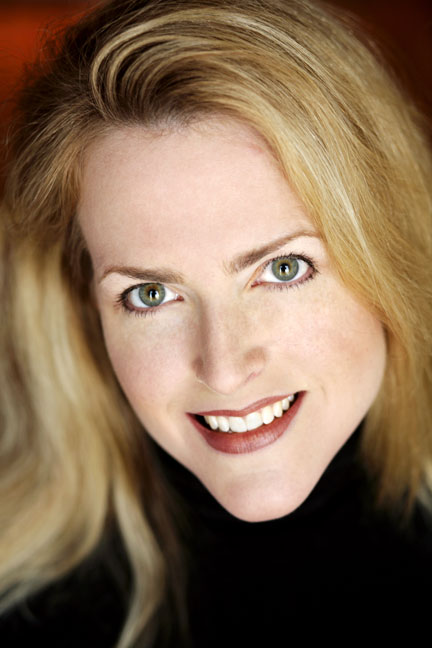
Mary Beth WestNext week, on Wednesday, September 30, Mary Beth West will be telling new PR pros how to generate opportunity and avoid common mistakes in the teleseminar, Navigating the Terrain of Your First Professional Years.

Mary Beth West currently manages her own public relations consulting firm near Knocksville, Tenn., and she has been very active in PRSSA and PRSA, including being a co-founder of this New Professionals of PRSA Section!

We asked Mary Beth some questions about herself and her upcoming teleseminar. Check out this Q&A, and to hear more, register for Navigating the Terrain of Your First Professional Years. (Keep in mind, you must register ASAP if you want to phone-in to the live event!)

1. You are one of the founders of the New Professionals Section. What motivated you to try to start a new section?

PRSA’s member demographics had shifted somewhat younger in the 1990s to early 2000s. The Society needed a section that served the immediate needs of new public relations professionals — whether they were younger 20-somethings coming straight out of undergraduate public relations programs or individuals who were switching careers with perhaps 10 or more years of experience under their belt in another profession. Beyond the demographic opportunity, it was very important to create a place within PRSA that could serve the needs of these new professionals and enable them to utilize their own skills and insights. It needed to be a self-directed group to create leadership opportunities, professional development, and networking that spoke to their interests and changing needs. Helping set the initial course for New Professionals has been one of the most rewarding volunteer tasks of my PRSA involvement.

2. How did you go from PR newbie to starting your own consulting firm?

I was lucky to start my career in the agency business, interning in school and later working for both small firms in mid-size markets to a large agency in New York. The diversity of experience and exposure to so many different companies and organizations was an excellent eye-opener on what the possibilities and opportunities are in the field.
In terms of how I transitioned from my early years in the business to ultimately owning my own firm . . . I guess the key to it is that I not only embrace change but also thrive on it. I never like to get into a comfort zone with what I’m doing professionally, because to me, it quickly turns into a rut. I’m always seeking out challenges because I genuinely enjoy them and relish the opportunities they offer to become better at my work. And to be self-employed, you have to have that energy and that ability to face ever-changing circumstances.

3. One of the things you’ll discuss is a “three-year career plan”. Why is such a thing helpful/important for new pros?

As they say, if you don’t plan on going anywhere in particular, you’re sure to get there fast! While a new pro’s first years in the public relations field may be a time for exploration and not being sure what the immediate future holds, it’s important to ask oneself some challenging questions that will lead you to where you ultimately want to be. Only then can you begin creating a definitive plan for how to get from Point A to Point B.

For example, what kind of work do you truly enjoy and get personal satisfaction from doing (beyond getting a paycheck)? What are the work-reward values that mean most to you? What industry or organizational sector is most fascinating to you and where you see the most potential for you to utilize your interests, talents and skill sets? Once you’ve answered these and similar questions, you can start mapping out the experience you need to start accumulating, the networking/professional relationships you need to start building, and the types of companies or organizations you need to start researching for near-term job opportunities.

4. What do you think is one of the most challenging aspects of being a new pro, and how do you think it can be overcome?

In terms of strategic skills, PR pros must always maintain an acute understanding and sensibility about how their stock-in-trade–building communications, relationships and reputations–impacts the overall success of their clients or employers, particularly in financial terms to generate revenue and mitigate expense. Only then can you really achieve resonance between what your employer/client needs from you and what you have to offer. Sometimes, professionals in our field are expert technicians in the tools and tactics of our profession but are lousy at translating the value of those tactics into a real business strategy that is designed to make money for the company or otherwise achieve a very critical business objective. And until you have the capability of connecting those dots on your own, your career progression will be limited.

Regarding the more tactical skills, the thing I see lacking too often is attention to detail. Cutting corners just doesn’t work in this business. There is often an entire mindset or attitude that goes with that tendency, and it’s generally revealed readily in many different ways, such as a person’s writing style (short on clarity and rife with errors), verbal communications style (a lot of “you know”s and “like”s), and even the way they present themselves (lack of eye contact, a lazy handshake and a bit-too-casual dress code). My advice: Sweat the small stuff. It’s often the little things that either solidify good impressions or send them packing.

5. What are tips or information are you most excited about sharing during the teleseminar?

Like Generation X–which I am part of and in the 1990s was conveniently termed the “slacker” generation right as I entered the profession–I think Generation Y often gets a bad rap with the whole “trophy kids” and “helicopter parents” attributions. That imagery can lead some employers and supervisors to make automatic negative assumptions about younger new professionals before they have had a chance to prove themselves. I’ll address that issue and how new professionals can overcome it in a workplace.


MARY BETH WEST will be presenting Navigating the Terrain of Your First Professional Years: Generate new opportunities for yourself while avoiding common mistakes on Wednesday, September 30. For more information and to register, go to the event site.

professional development event…How to Break in to International PR (Sept. 16)

Did you think you had to curb your wanderlust and settle down before you could enter the public relations field? International PR is one way you can feed your interest in travel and culture while still getting a paycheck doing the public relations work you enjoy; but how can you, a new public relations professional, tap into the international PR scene?

Next week, the International Public Relations Section of PRSA is hosting a teleseminar specifically designed to help PR newbies get a foot in the international door. Jim Holtje (Senior Manager of Leadership Communications for Siemens Corp) and three others will share their Tips to Breaking into International PR on Wednesday September 16.

Holtje was kind enough to give us a preview of his experience in international PR, including how he started on the international track and what advice he’d give newbies who want to break in. If you’d like to hear more about international PR and how to break in, register for the teleseminar–Oh, and don’t put it off for too long; if you want to dial in to the live event, you’ll need to register by this Friday!

How did you break into international PR?

I began studying foreign languages in middle school and continued through high school and college. In college, I traveled a lot to Europe, taking advantage of cheap student airfares, Eurail passes, sometimes sleeping on friends’ floors to save money. I had also gotten some practical journalism skills working as the features editor at New York University’s student newspaper, The Washington Square News, and worked on a PBS television program. After NYU, I got my M.A. at Columbia University in international affairs and economics. At first, I wanted to work for the State Department but ended up in a private sector career.

My professional career started out in international political consulting working on a 1992 presidential campaign in South Korea. I then worked for a number of PR agencies and consultancies doing international PR for Chrysler, DaimlerChrysler, Wal-Mart, Eli Lilly, Deloitte, Deutsche Post, and others in Washington, D.C. and New York. I started working at Siemens USA seven years ago including a three-year stint at the Munich headquarters as the chief English-language speechwriter. As far as international goes, I absolutely love it. I can’t imagine doing anything else!

What skills are especially important in international PR?

Most international PR pros are often generalists who have a tremendous passion for the world beyond their immediate borders. That passion could come from previous travels or living overseas or just plain “wanderlust.” Either way, they enjoy working and dealing with the world beyond their immediate horizons.

Personally, I think the skills that count most include foreign language ability; hard-core PR skills, including writing and pitching; as well as empathy for others who are not always like you culturally or linguistically. Last but not least, flexibility and patience. You have to be ready to roll with the punches in the international arena. International PR is not always seamless or easy. A lot can get “lost in translation.” But that’s the challenge—and for me, that’s what makes the work eternally interesting.

What’s a typical day when you work in international public relations?

There probably is no “typical” day. A lot depends on where you’re working and whom you’re working for. For example, when I worked as a speechwriter at Siemens’ global headquarters in Germany, we had to write speeches for our CEO to deliver in China, India, Brazil, Egypt, Russia, etc.

That meant quickly getting up to speed on our businesses there, plus learning what would work—or not work—culturally. You constantly have to strike a balance between what your core corporate message is while keeping in mind what foreign audiences are looking for or expect.

Typical? Not likely. Fascinating? Always.

What are you most excited about talking about during the Sept 16 telesem?

I’m excited that we have such great guests from the corporate, agency, and not-for-profit worlds who can give New Pros some real-world advice about international PR. Real world advice–not theory. This is especially valuable in a down economy when people are looking for ways to distinguish themselves in a tough marketplace.

Anita Larsen at Unilever; Robin Kim at Burson-Marsteller in London; and Blair Palese in Australia who used to head Greenpeace PR in London; all bring practical experience to the table that New Pros can benefit from. I’m looking forward to a very lively discussion and to participants getting some real value from the experience.

My hope is that it that the teleseminar ends up changing a few career. It will be well worth the hour investment.

What advice do you have for new pros who are interested in breaking into international PR?

The panelists on September 16 will have their own tips. Here’s a sneak peak at mine:

1) Travel. It can change your life.
2) If you’re already in PR and working at an agency, seek out either foreign clients or large American clients with operations overseas. Large global PR agencies also have opportunities overseas.
3) If you work for a foreign corporation, look for ways to work at the company’s overseas headquarters. If you work for an American multinational, find ways to work at their foreign affiliates.
4) If you’ve haven’t already learned a foreign language, give it a try. If you already speak one, improve your skills. You don’t have to be perfect, but you should at least make an effort.
5) Don’t neglect your core PR skills: writing, pitching, problem solving.
6) My advice no matter what you do in PR: Network, network, network…


JIM HOLTJE will be one of the panelists during “Stand out in a down economy: Tips for breaking into international pr”, a PRSA teleseminar. The event will be 1 hour long, mid-day Wednesday, September 16. For more information and to register, go to the event site.

your pr career… Walking the Social Networking Tightrope by Courtney Vaught

Remember when we used Facebook to write funny comments on friends’ walls about the previous night’s blunders or to post pictures to keep memories alive? Now Facebook antics bear the same brunt of judgment as walking into work on Friday covered in sharpie drawings.

I recently read a blog post by Ari Adler titled, “Facebook Users Show Two Faces to the World,” discussing how some Facebook users are creating separate profiles for their professional and personal lives. This made me think about the challenges new professionals face in the expanding social media world–Facebook specifically. As Facebook’s 35-and-older demographic continues to expand, we are seeing our parents, aunts, uncles, clients and employers join in on a world that used to exist only within college walls.

The new professional’s generation (i.e. Millenials or gen Y) started using social media years ago, in a very different environment, for vastly different purposes than today. This is where I believe some of us find our struggle.

Personally, I maintain stubborn grounds in wanting to keep the fun, ridiculous college memories up for all to see. I say, if you have a problem with my photos, don’t look at them. However, some comments about my photos from colleagues led me to cave and block all the pictures on my profile. (Boo, I know.)

However, after discussing this topic with some fellow new professionals, I have found that I’m not alone. A former classmate of mine had an interview with a PR agency scheduled, but was e-mailed with a cancellation note a few days before the interview. When asked why the interview had been cancelled, the agency’s answer was that it had something to do with “social media content.”  My former classmate has since taken down all Facebook pictures and continues to monitor content closely. (And if you are curious, my former classmate was able to find a position at another PR agency.)

Others haven’t had as much trouble with their Facebook content but have taken similar steps to protect their reputation–and jobs. Jennie Ecclestone, General Motors, blocked all of her pictures and posts selective albums for public viewing. Ashley Mead, Fleishman-Hillard PR, closely monitors all photos that are tagged of her and “maintains a very genuine approach” in everything she has on her profile, and Nikki Stephan, Franco PR, uncluttered her profile by deleting all of the applications.

All of these privacy techniques may protect you professionally, but it begs the question, is this defeating the whole purpose of social networking sites? Are you really showing who you are when you have to monitor the content and only place pictures that show you in one, highly-monitored light? It’s an extremely fine line, one that I don’t think anyone has successfully balanced on yet.

Have you balanced on the social networking tightrope? Leave us your comments!

Courtney Vaught is an account coordinator at Eisbrenner PR and a member-at-large for the PRSA New Professionals Executive Committee. Contact her on Twitter @CourtV. 

___

NOTE

Thank you to those of you who were interested in commenting on this or other posts! Unfortunately, we’re having a technical problem that prohibits anyone, even WordPress users, from posting comments. We’ve notified the appropriate techies, and hope to have this issue resolved soon. Cheers~jk.