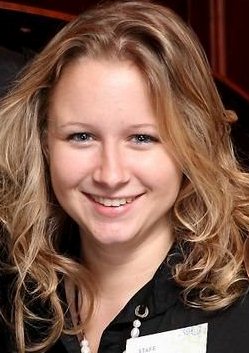
Don’t Press “Send”! E-mail Lessons from a New Pro by Joshua Romero

Being a new staffer at an organization can be a challenge – reading through binders of HR paperwork, figuring out everyone’s names and responsibilities, getting the copier code right, learning how to dial out, the list goes on and on. The last thing you should worry about is making rookie mistakes communicating via e-mail.

Here are some of my tough lessons learned in the world of e-mail communication:

Did I Press “Reply”? I Meant “Forward”.

What Happened: When I was assigned to write my first news release for the law school featuring a quotation from the dean, my supervisor suggested that I craft a statement from the dean and ask for his approval. She was very encouraging of my work, suggesting that the dean rarely, if ever, suggests changes or revisions to the statements we prepare. I sent the dean my quotation.

When he replied, I was surprised to see that he had some significant changes to what I had prepared. Keeping my supervisor in the loop of my progress, I sent her an e-mail: “Of course, he would want to edit the very first quote I put together for him. HAHAHA! Good thing this hasn’t gone out yet. Can we just go home, since this is most definitely a Monday!?!”

I thought the e-mail went to my supervisor. Apparently I hit “reply” instead of “forward” and the lighthearted message went right to the dean’s inbox.

What I Learned: Our dean is a very gracious man! In all seriousness, he was very understanding of the incident and understood my joking about the challenges of our work. He even said that it is good for us to laugh at those things. More importantly, I learned to always double-check the recipient before I press send.

Can I Have Your Number?

What Happened: It was a busy media day for me with three requests for legal experts coming in from three reporters on three different subjects. With the chaos of logging reporter contact information and trying to get professors on the phone or on e-mail, my desk was covered in a patchwork of Post-it notes. I secured one of our professors and the reporter asked me to e-mail her the professor’s contact information. I typed out the e-mail, double-checked who I was sending it to and pressed send. Moments later, I got an e-mail back from the reporter: “You sent me my phone number.”

What I Learned: As important as it is to respond quickly to media requests, it’s just as important to provide our media colleagues the correct contact information. I got lucky. The reporter saw my e-mail and corrected me. She gave me a chance to make things right, when she could have just moved on to another legal expert.

You’re Not So Special

What Happened: I’m probably not alone in sending out news release e-mail blasts. I’ve been fortunate enough to develop one-on-one relationships with some members of the media who have asked that I send all of our news releases to them. With these contacts, I compose a news release e-mail and “Bcc” them. After a few weeks without sending news releases, I had some news to share. Since I was out of practice on my releases, I accidentally entered my contacts in the “To” box instead of “Bcc.” Whoops! Looks like my media friends aren’t so special anymore, because everyone gets that news release.

What I Learned: On the surface, I learned to double-check where you’re entering recipients’ e-mail addresses. More importantly, I realized the value of that personal touch with your media contacts. Just because everyone wants your news release, that doesn’t mean you can’t send it out individually. It is more work, but I’ve found that it helps to nurture those relationships you’ve already built. It also gives your media friends that “I’m special” feeling. Plus, it keeps them from thinking that someone else might cover the story so they don’t have to.

Learn from my mistakes. Only press ‘send’ when you know you’re sending the right message to the right person. For those who can’t break the habit of pressing ‘send’ prematurely, you can always learn how to recall an e-mail!


Joshua P. Romero is the marketing & communications coordinator at California Western School of Law in San Diego. He manages the media relations and social media programs for the school. Romero is Member Co-chair of the New Professionals Section of PRSA.

Intro to Independent PR: Part Two with Susan Rink

According to the 2008 PRSA Membership Value Perception and Satisfaction Study, 6 percent of PRSA’s members are “independent practitioners”. This month’s “Intro to” series features two such professionals who once worked in agency, corporate and association PR and have since joined the ranks of independents.  Susan Rink, Principal at Rink Strategic Communications, LLC, spoke with Mike Greenberg of the New Professionals Section about life as an “indie”.


Mike: What was your PR experience like before you decided to practice as an independent?

Susan: I decided to go into business for myself in January 2007, after more than 20 years in corporate communications, specifically in employee communications.  I left Sprint Nextel after the merger and spent a couple of months looking for the “right” internal communications leadership role.  But after interviewing with a number of very good local companies, I realized that I simply could not work up any enthusiasm for another job that consisted of staff meetings and progress reports.  So after a six-month sabbatical, I decided to open my own communications consulting practice – and I’ve never looked back.

Mike: What do you offer clients that an agency doesn’t?

Susan: Most of my clients are marketing, communications and PR professionals who are looking for someone with my specific expertise to provide guidance, as well as an extra set of hands.  I think that is what differentiates me from a large agency – I manage the client relationship, develop the product and counsel my clients on the best way to sell the solution to their boss. They know that I’ve sat in their chair and struggled with the same challenges they deal with on a daily basis.

Mike: What is your work environment like?

Susan: For the most part, I work from a small desk in my dining room.  I contact my clients primarily via email and phone, since a good number of them are located outside the D.C. Metro area. 

Mike: What types of non-PR abilities and interests are needed in order to succeed as an independent practitioner?

Susan: I never wanted to be a sales person – both my parents were Realtors – but I quickly realized that in order to run successful business, I have to constantly sell my product: me. The other important elements – being customer-focused, understanding business essentials, being able to multi-task, being organized – are all skills developed in a prior career, skills that I use on a daily basis.

Mike: What are the greatest challenges an independent faces?

Susan: Isolation.  Although I’m an introvert, and enjoy working on my own, I find that I need a way to connect with other indies to brainstorm, trouble-shoot or sometimes just commiserate with me.  That’s why I’m so glad to be part of IPRA (the Independent PR Alliance, a section of PRSA’s National Capital Chapter).  IPRA members are very generous with their time and knowledge and are always willing to act as a sounding board to a fellow member.

Mike: What has surprised you the most about being an “indie”?

Susan: I never doubted that I’d love being an indie and having the opportunity to actually “do the work.”  I think the thing that has surprised me most is how much my skills and knowledge are valued in the real world.  There are few senior-level professionals who specialize in employee communications these days; most VP and SVP-level communications executives come from the media side.  These clients understand the value of effective employee communications and are willing to admit that they need outside help to overcome their challenges.

Mike: What advice would you give a new professional who wants to work as an independent?

Susan: The best piece of advice I can give anyone starting their own independent agency is to decide what they can offer that is unique, then figure out who needs that service. Define what you are and what you offer, then look for people who need that service.

Susan RinkSusan C. Rink, Principal, Rink Strategic Communications, LLC

Susan C. Rink is an award-winning employee communications professional with extensive experience in developing strategic communications programs and processes.  Her firm specializes in effective internal communication strategies to drive employee engagement in small to medium-sized companies.  Rink’s blog (http://rinkcomms.wordpress.com), as well as the “Take Note” podcast available on YouTube and iTunes, provide senior executives with tips and best practices for employee communications.

Rink is a member of the Society for Human Resources Management (SHRM), as well as the Public Relations Society of America’s National Capital Chapter, and is the 2011 Chair of the Independent Public Relations Alliance.

Intro to Independent PR: Part One with Robert Udowitz

According to the 2008 PRSA Membership Value Perception and Satisfaction Study, 6 percent of PRSA’s members are “independent practitioners”. This month’s “Intro to” series features two such professionals who once worked in agency, corporate and association PR and have since joined the ranks of independents.  Robert Udowitz, Principal at RFP Associates, LLC, spoke with Mike Greenberg of the New Professionals Section about life as an “indie”.  Check back on Friday, February 25 for part two of the series with Susan Rink, Rink Strategic Communications, LLC.


Mike:  What was your PR experience like before you decided to practice as an independent?

Robert:  I am entering my seventh year as an independent. Immediately prior to going out on my own I was working at a trade association as its director of communications. Before that I had been in corporate communications and at a couple of PR agencies in Washington, DC, and New York City.

Mike: What do you offer clients that an agency doesn’t?

Robert: In most cases I offer my clients equal if not more experience through a more economical and efficient model.  I’ve done crisis counseling, community relations work, media relations, analyst and investor relations, writing and event planning.  I have even created an animated video—from concept, to writing the script and directing the shoot!

Mike: What is your work environment like?

Robert: My work environment is as professional as it was when I had an employer. With all the modern technology I use, the only disadvantage I have is the lack of an office tech support team at my beck and call. 

Mike: What types of non-PR abilities and interests are needed in order to succeed as an independent practitioner?

Robert: You must possess some simple financial management and business skills.  In particular, when you start out you need to determine how much to charge clients. Then you need to tabulate your monthly expenses so you know how much money has to come in to afford your lifestyle. From there it’s critical that you devote time each month toward bookkeeping and billing your clients. Your business skills are critical to building a client base, marketing yourself, and maintaining a steady income.

Mike: What are the greatest challenges an independent faces?

Robert: The work will always find you, but there’s never enough time to market yourself for those times when you need more work. As long as you stay networked and are always talking to your colleagues and meeting new people, you will find work the moment you have the time to take on something new.

Mike: What has surprised you the most about being an “indie”?

Robert: How capable I was. In the confines of office work there isn’t much time to create opportunities that go outside of your assignments. And, sometimes you observe that the decisions that are being made aren’t as productive as they should be. As an indie, you have an ability to accomplish more and there’s a degree of pride when you are able to look back and see all that you have done.

Mike: What advice would you give a new professional who wants to work as an independent?

Robert: You have to have experience, and preferably a diverse amount of experience.  The more you’ve exposed yourself to professionally before you go out on your own, the more of an asset you’ll be for your clients.

Robert UdowitzRobert Udowitz, Principal, RFP Associates, LLC

Over the course of his 25-year career, Udowitz has worked at public relations/public affairs offices, corporations, and trade associations. He recently began RFP Associates, LLC (www.rfpassociates.net), a PR agency search firm specializing in the request for proposal process for companies seeking a public relations agency. Prior to creating RFP Associates, he operated RUdowitz Consulting, a PR/PA consultancy based in Washington, DC, where his clients centered in the financial industry but included commercial real estate companies, trade associations, a magazine publisher, and government contractors.

Udowitz has been a member of the Board of the Public Relations Society of America’s National Capital Chapter for the past four years and on the Board of the Independent Public Relations Alliance for more than five.

Higher education PR: who controls the college website? by Elizabeth Rhoads

High school students begin their college search online. They explore Princeton Review, US News & World Report and search for some of the colleges they’re familiar with on Google. College students are directed to their college’s website to get more detailed information on a few assignments for the semester. Professors who have completed research in their field want to make sure that their information is on the website for everyone to see.

One of the most crucial parts of public relations in higher education is a website. Considering that the majority of high school students spend quite a bit of time online, a college’s website often serves as the first impression for prospective students. While it’s used as the primary recruiting tool, it also has to serve a couple of other audiences – current students and faculty members. So, websites in higher education are more complicated than they may appear.

Not only does a college website have to serve a few different audiences, but everyone wants to have control over their part of it. I recently read an article that questioned why college websites are so awful, given that faculty and staff in higher education are often perceived as being a very intelligent crowd. Part of the answer is that while there is a common theme and template, every department has their own information that they feel is absolutely essential to display on the website. It’s often impossible for one or two web designers to be able to keep up with all the constant updates and posting, in addition to somewhat serving as a filter to what gets put up online. As a result, many departments are given the ability to update the site, and therefore, the website is actually written by several different people, in several different tones.

The question becomes, who’s the most important audience to serve? The answer depends on the college.

Personally, I believe the most important thing is to have a consistent tone throughout the entire website that is appealing to prospective students. Although a second person, conversational style was rare years ago, it has become more common. Rather than trying to formally convey the college, or departments’, mission and vision, I believe simply stating the benefits of the college (or department) in a conversational style is the best way to communicate with prospective students through a website. As for the faculty – often times they don’t have much time to dedicate to posting content on the website, which gives someone else an opportunity to write for them. That’s where we come in – who could be better for the job than a PR professional?

Elizabeth RhoadsElizabeth Rhoads currently serves as the Web Content Coordinator for a small liberal arts college in Central Pennsylvania. She graduated from Susquehanna University in 2009 with a Bachelor of Communications. She is an alumna of the White House Internship Program.  Rhoads serves the PRSA New Professionals Section Executive Committee as Programming Chair.

Take a risk to get out of the rut! by Brianne Bromberek

Think you’re in the minority when you dread going to work on Monday morning? Think again. In fact, a recent study shows that nearly 84 percent of Americans are unhappy and restless at work, itching to find a new career for more money, more responsibilities, or mere satisfaction. And just a few months ago, I, too, was grouped into that statistic. In fact, I wouldn’t even call what I was feeling unhappiness or restlessness – I would call it downright disgust. Disgusted that I had worked my butt off to answer calls at the reception desk and remind my boss that he had a 2:30 conference call with someone who would later refer to me as the “nice girl who answers the phone.” Sure, every company needs an administrative professional, I thought, but that’s not me. In college, I was the girl who skipped class – but not to participate in homecoming festivities or get a head-start to the tailgate party. I spent my time networking with the Women in Business leaders, attending professional luncheons and talking to pretty much anyone that would give me 10 minutes of their time. So when I finally walked across the stage and headed out into the “real world,” I received a nice slap in the face when I landed a fancy position answering phones and making coffee. Let’s just say I started my job in July and was already looking in the wanted ads by mid-September. 

I spent two long years not only dreading my 9-5, but also making excuses – “everyone hates their job, I’m not a quitter,” or the infamous “quitting now will look bad on my resume.” What I didn’t realize was that my dissatisfaction wasn’t affecting just me – it was spreading to everyone and everything that surrounded me. People got sick of listening to my story, sitting on the other end of the line while I complained about how unfair the world was. I became cynical about the professional world and even started to resent anyone who actually enjoyed their career.  How had I become such a negative person? It’s only a job, I thought to myself. Why am I letting it affect everything around me? And that’s when it finally hit me. I wasn’t looking at this as a career, but merely a job. What’s the difference? The mindset of a job holder is focused on security and money while the mindset of a career person is focused on development and risk-taking. So instead of complaining about my job, why wasn’t I taking any risks to secure a real career?  Simply put, I was afraid.  

“Fear is a double-edged sword,” says Barbara Stoker, author of Positive Risk: How Smart Women Use Passion to Break Through Their Fears. “On the one side it keeps you safe, but it usually holds you back from doing those things that really matter.”

I was afraid to take a risk and open myself to new opportunities for the possibility of, once again, being disappointed with the outcome. So when I finally realized that making progress often involves taking risks, I not only had a new outlook on life, but I had a new found confidence in my ability to succeed. Aside from the uncertainty that comes with taking risks, there’s a certain satisfaction in knowing that you went for your dream, whether you achieve it or not. The regret of never trying can often be harder to live with than tying and failing.

How many of us can say that fear has limited us from achieving our fullest potential? We spend years exploring our options, talking with guidance counselors and taking specific steps to map out our future. And although this approach is a good way to find a career that suits us best, it’s not the only way.  Sometimes taking a risk is exactly what we need to do to figure out what we want – or don’t want. We might take a huge risk and fail…or just maybe, taking the biggest risk of our lives, can often lead us to opportunities we never knew existed.

So when I finally took a risk and left my position, I realized that life is really all about taking risks. Each and every day we all take risks that could great affect our future – moving to a new city, beginning a new relationship, or in my case, quitting a job to start a new business. Think about every great success story you’ve ever heard – nearly every one involves a little risk-taking.  

Brianne Bromberek is the owner of Studio 213, a full-service graphic design firm in Milwaukee, Wisconsin. She also works as a marketing coordinator at the Schlitz Audubon Nature Center in Bayside, Wisconsin.  Before launching her business, Bromberek graduated from the University of Wisconsin-Madison with a Bachelor of Arts in Journalism and Mass Communications and a Certificate in Women’s Studies.  She can be reached at bri@studio-213.com.