Book Preview: “Public Relations for the Public Good: How PR has shaped America’s social movements”

public relations

Editor’s note: The below Q&A with Shelley Spector previews her forthcoming book, available in August. 
You have a forthcoming book coming out this summer, “Public Relations for the Public Good: How PR has shaped America’s social movements.” Could you provide a synopsis?

The book (co-authored with Lou Capozzi) explores how public relations activities have been used to make social movements more successful.  While they were not called “PR” at the time, nor did they involve “professional” PR people, these historical milestones were, nevertheless, powered by people who understood public opinion and how to influence it. So there’s a lot to be learned about strategy, messaging, impacting attitudes, and measuring one’s impact.

The topics in the book include a wide range of topics spanning the 20th century: including, the Triangle Shirt Waist factory fire, the Harlem Renaissance, anti-smoking campaigns and civil rights campaigns.  To me, the most exciting thing about the book is that my students wrote most of the chapters.  This was for the class I teach at Baruch College/CUNY:  “From Plato to Twitter: A History of Influence, Media and Public Opinion.”   It’s exciting that our students have a chance to be published!
IMG_0609What inspired you to write the book?

While I find PR history fascinating, I find PR in history even more fascinating. When you look at historical events through the lens of PR, it often reveals PR in its purest sense. With social media dominating much of the workday of PR people, it’s important that young professionals understood that the Internet is just a channel, just like TV, film, word-of-mouth, carrier pigeons, pony express and cave drawings. It’s the message that counts, not the medium.

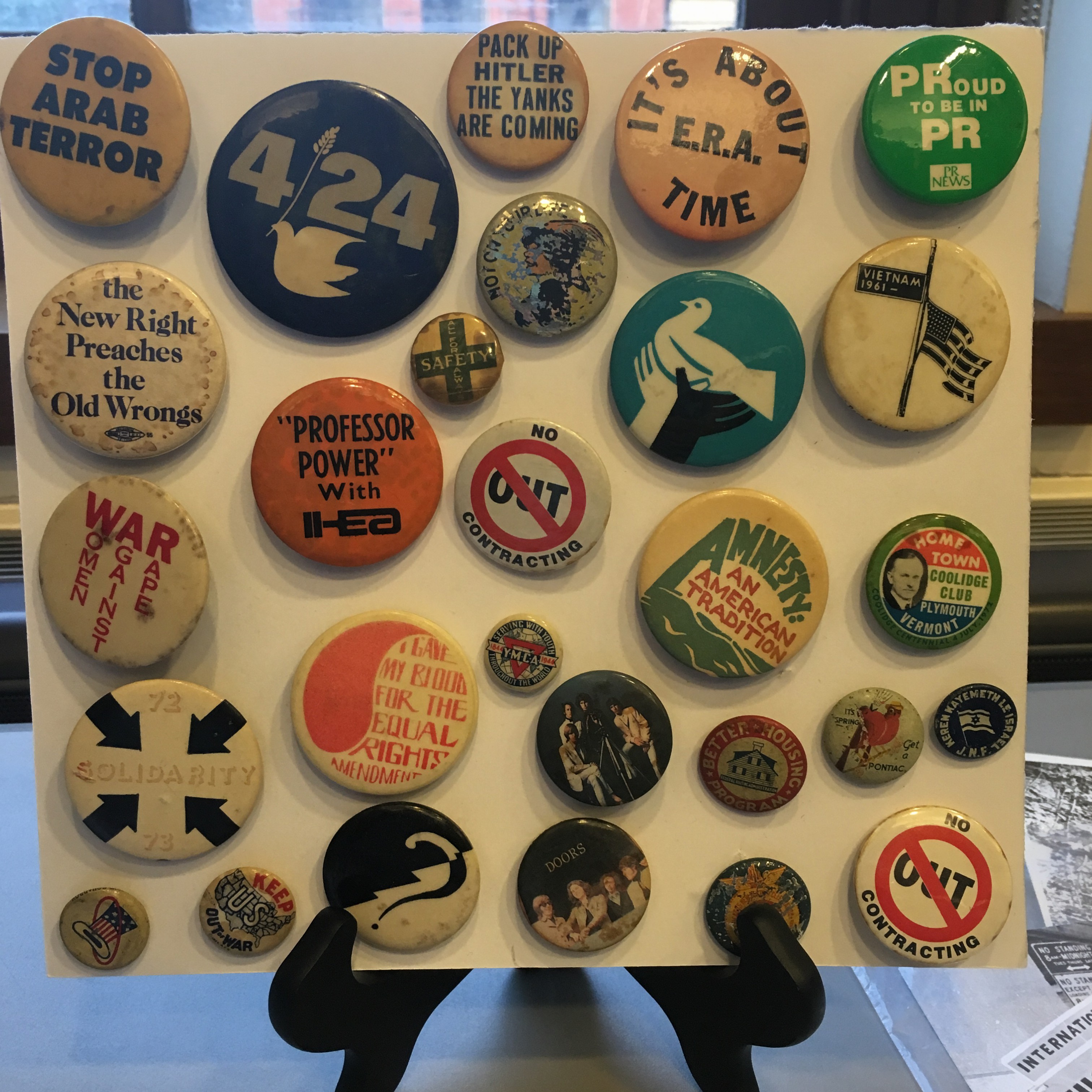
IMG_0611You’re also the founder of the Museum of Public Relations. How did the museum begin and what is your favorite artifact or resource within it?

The museum was the brainchild of Edward Bernays. What a wonderful way to preserve historical documents, books and artifacts that tell the story of our field. The first collection we received was from Bernays himself: two dozen first-edition books from his library, artifacts from the Light’s Golden Jubilee, original newsletters published by his wife and business partner, Doris Fleischman. 

I have a few favorites: The 1966 press release announcing the formation of the National Organization of Women (N.O.W.) with Muriel Fox and Betty Freidan as contacts. The issues of magazines from the 1930s that explore the burgeoning new PR field. The photographs of civil rights marches in the 1960s and collection of anti-slavery literature from a century before. And, of course, Bernays’s inbox.
FullSizeRender_1And what are some other examples of early public relations throughout history?

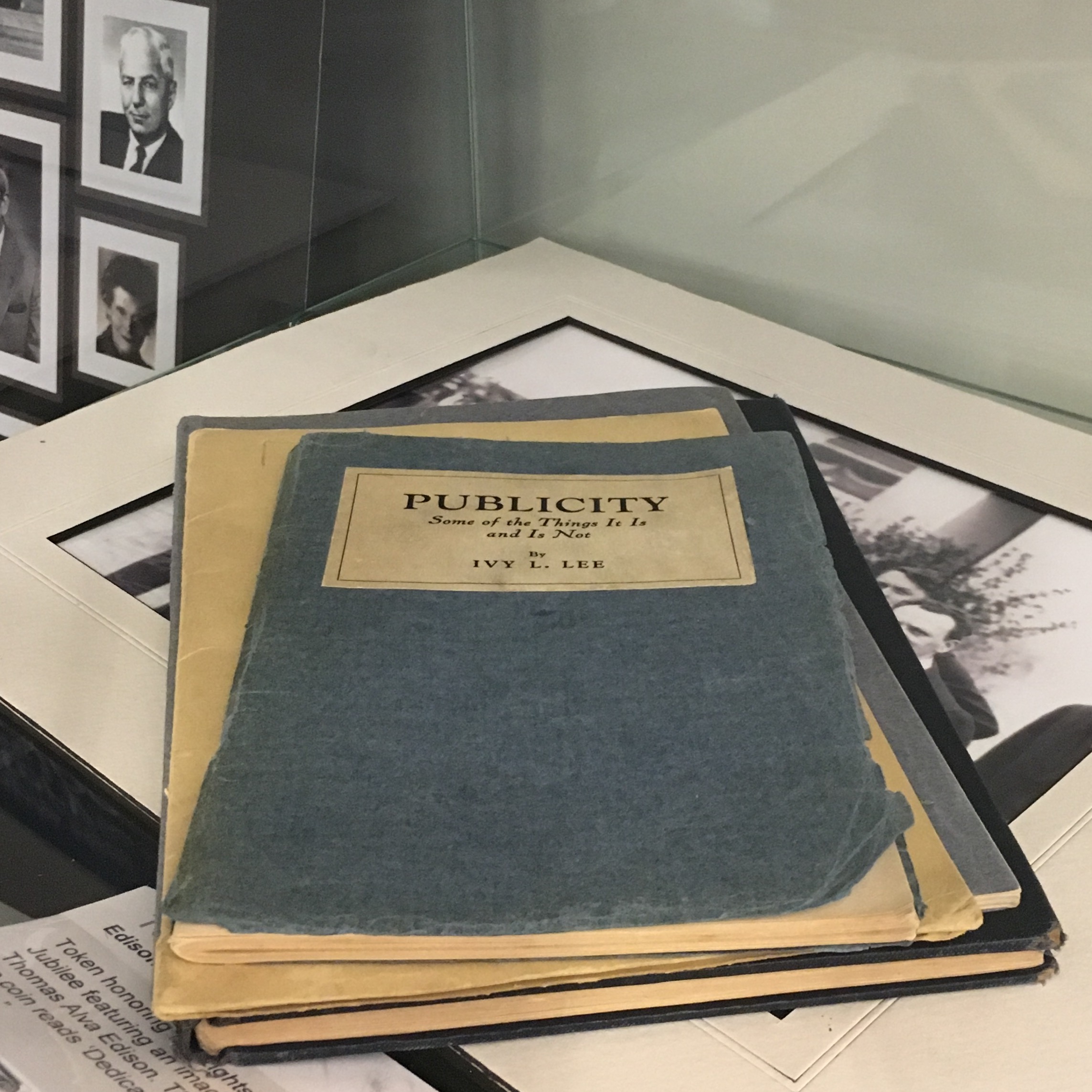
Every PR student learns about Bernays’s campaign to promote bacon and eggs, or Ivy Lee’s counsel to the Rockefellers.  Some of the best campaigns, though, are ones that are not mentioned in the textbooks. You can find wonderful examples of modern PR at work throughout the 20th century. Take for example, the campaign to raise public awareness for the polio vaccine; the “Meatless Tuesdays” program during World War II; the campaign for Tobacco-Free Kids; and the promotion of the Works Progress Administration during the Depression.  Some of the best “PR” programs may not be called “PR” but are every bit as much “PR” as Bernays’s campaign to boost sales for Ivory Soap.

You are an adjunct professor at Baruch College as well as president of Spector & Associates, working with aspiring PR pros every day. What is your go-to piece of advice for new professionals in the public relations industry?

Get as much “real world” experience while you’re in school or immediately after graduation. You want to be able to walk into your first job interviews with an impressive portfolio of work that displays, not only your “PR” skills, but your professionalism, creativity and drive. That may mean taking on internships (whether paid or unpaid) whenever and wherever you can.  We see young professionals apply here who already have four of five internships under their belts. This shows us that he or she is truly serious about making a career in this field, and already has the required skills so they can hit the ground running from Day One… One other suggestion, equally as important:  Become familiar with the organization before you even send your resume in. Chances are, you’ll be asked, “So why do want to work here?” “What attracted you to us?”  You’d be shocked to see how many have no idea beyond, “I saw your post on Indeed.”  The more time you spend researching the company the better that interview is going to be.

 Any additional information you’d like to share about the Museum of Public Relations?(I’ll include a note about how it’s open to the public by appointment, link to website, etc.)

The museum has a very active online presence, with 90k views on our website and 6,800 followers on the Facebook page, representing some 60 countries from every corner of the world. We have hosted a dozen classes so far this year, some over Skype.  We also host events for organizations, such as PRSA and the Plank Center, as well as give tours for PR agencies, such as Burson Marsteller, Weber Shandwick and Ketchum.  Scholars come from all over the world to do research here, as it is the largest and most complete repository of books and materials documenting the history of the field.

Editor’s note: The Museum of Public Relations is free and open to the public by appointment.

Any other book recommendations or “must reads” for PR professionals?

I would recommend the writings by Bernays and Lee (you can find them through our Facebook page).  Although their work was written nearly a century ago, Bernays and Lee remain the top writers of our practice. Their writings are as relevant today as ever.  

I would also urge everyone who aspires to succeed in this field to read the New York Times every day.  Keeping up with the news is essential in this business.

shellyShelley Spector is the president of Spector & Associates. She has counseled some of the world’s largest defense, technology and communications companies — from Exelis and ITT to HP and AT&T — and has won more than four dozen awards, including the Silver Anvil and Gold SABRE.  Prior to founding Spector & Associates in 1991, Spector worked at Hill & Knowlton and  RuderFinn, and served as press relations manager for the American Stock Exchange. She is an adjunct professor at the graduate level at NYU and Baruch College/CUNY.  Spector is also founder of the Museum of Public Relations. Spector earned a B.A. Journalism at the University of Rhode Island and an M.S. at the Newhouse School, Syracuse University.
You Can’t Just “Tap” Into Influencers

Influencer marketing seems to be the latest buzzword over the last few years and platforms like Klout, Get Little Bird and Traackr have dominated this space when it comes to identifying influencers within specific markets.

At W2O Group, we have proprietary methodology that combines quantitative scoring and human intelligence to identify the top 1% of influencers (in a specific category, topic, geography, language) that actually move the market when they speak.

Before diving into influencers you must first understand the market and how it’s shaped. (Click to Tweet!)

Influencer MarketingWe look at the market through the lens of the 1:9:90 audience framework. We didn’t create this model but we have perfected it over the last 7 years in activating programs and the model has proven to be true regardless of what vertical or industry you work in.

The “1%” drive the market based on their actions – what they write/tweet about or what they say at events and interviews. They are influencers and are seen as subject matter experts for a specific topic.  Our algorithms show that there are never more than 50 people who drive the majority of share of conversation for a brand or a topic in a given country or language.

The “9%” are highly active online. They recommend, share, sign up, download, comment and other actions that let their community of peers know what they think about certain topics. In many respects, this group serves as the “trust filter” for the rest of the market.

The “90%” are the great majority of any market. They lurk and learn. This group is satisfied with using search for discovering new products or consuming the content of their peers. They decide how compelling the 1% and the 9% really are in telling your brand’s story based on their purchase behavior.

In the upcoming PRSA webinar, I will go deep in explaining how we arrive at identifying the 1% of influencers; and then provide very actionable examples of how you can activate those influencers across paid, earned, shared and owned media channels.

 —

Michael Brito Michael Brito leads social strategy for the W2O Group – an analytics driven marketing and communications firm. He is also an Adjunct Professor at San Jose State University and author of “Your Brand, The Next Media Company”.  You can connect with him directly on Twitter and LinkedIn

Three Alternative Methods for Identifying the Right Media Contact

As new PR pros, you’ve likely sat through a webinar or listened to some sort of training for PR software and services such as Cision or Vocus.

Three Alternative Methods for Identifying the Right Media Contact While an extremely useful tool for building media lists and identifying media contacts to reach out to with the awesome story you have to tell, don’t fall into the trap of letting these portals be the be-all and end-all of how you determine who you’re going to pitch or share your news release with.

As an entry-level PR pro at my first job right out of college, I was asked to build a list of media contacts that might be interested in sharing details of the large-scale art installations at an upcoming music festival. Of course, my list included the likes of the local weekly alternative publications and those already who had shown an interest in the music festival.

But it also included Rolling Stone, and Forbes.

My supervisor – and mentor to this day – immediately questioned me on this. Why would Rolling Stone, let alone Forbes, write about a collection of art installations? That doesn’t exactly fall into their realm of the publications’ typical coverage topics.

But I stood my ground because I knew I had done my research. Sure enough, Rolling Stone was the first-ever national placement of my career on the art installations of an electronic dance music festival.

What’s the lesson here? I didn’t use Cision to find these contacts.

Here are three alternative methods for identifying the right media contact for your pitch or news release:

Use the outlet’s search function.

Admittedly, this is easier when you know what outlet you’re hoping to see your client’s story featured. For example, you know you have an excellent finance story.

Head to Fortune.com (or whatever outlet you’ve identified) and search for topics similar to your client. Is the pitch on the state of the economy? On an innovative payment system? Search using these terms to identify who has covered this type of story for the outlet in the past and go from there.

Take to Twitter.

More times than not, you will find a reporter using the method above and find that their email address is as elusive as the golden snitch. This is where social media can be an excellent tool to identify a media contact’s info.

A simple tweet to the journalist giving them a quick synopsis that you want to reach out to them with a story idea and a request to have them DM you their email address can work magical wonders.

Additionally, consider using Twitter to cross-check that the journalist is the right fit. Often times, you’ll find that their designated beat / what they cover is referenced in their Twitter bio.

Ask another reporter. 

Read: this is not to say email or call a random reporter and ask them who you should pitch.

Rather, this is a recommendation to never take no for an answer. As part of pitching or sending a news release, there’s the follow-up phone call. If a reporter turns you down, don’t let that be the final word. Ask them, “Do you think this might a better fit for someone else at the outlet?”

Remember that the person on the other end of the phone is in fact a person. They are likely willing to help you and point you in the right direction.

And if not, the worst they can tell you is no.

These are just a few tried and true methods I’ve found to be helpful when Cision or Vocus just doesn’t have the answers you’re looking for. Do you have another tool or route you’ve taken to find a media contact? I’d love to hear it! Share with me on Twitter at @shandihuber.

Shandi HuberShandi Huber is a senior account executive at Wordsworth Communications, a public relations agency in Cincinnati, Ohio. An enthusiast for all social media platforms, you can often find her pinning her dream closet on Pinterest or posting photos of her new puppy on Instagram. Connect with Shandi on LinkedIn and Twitter(@shandihuber).

Five Ways to Keep Integrated PR Consistent

Five Ways to Keep Integrated PR ConsistentWith integrated marketing communications, the focus is usually on which platform you’re using or how you’re adapting to industry changes. But despite all the integrated PR news and happenings, one traditional, important staple remains true:

All messages should be consistent and relevant at all times. (Click to tweet!)

Messages should be reinforced consistently across all communications function – be it a post on Facebook or a press release about a new hire.

In addition to messages being consistent, you should also make sure they’re understandable. The best integrated communications messaging is concise enough that all stakeholders understand the brand.

As a new pro, you’ll impress supervisors if you can understand the fundamentals behind this new PR world. Here are some integrated marketing tips to help you get in the know on this important subject.

Messaging

Everyone in an organization, be it a CEO or intern, must be on the same page on the five Ws: who, what, when, where, and why. This will ensure the outgoing messages are concise and understandable.

If you’re starting a new job but want to comprehend your company’s five Ws, answer each question specifically about your company, ask your supervisor to review your answers, then post them on your wall. The more you integrate yourself into the company – and test your knowledge – the more likely you are to be called on for important tasks.

Photo Filters

Taylor Swift may win at social media by using each platform differently, but this doesn’t always work for everyone. For nearly every business, brand uniformity on all channels is important.

The content doesn’t always have to be the same, but little things like using the same filters for each platform ensure consistency.

Some see the world in Valencia and others view it in Lo-Fi. The brand should have a noticeable aesthetic. For example, Conscious Magazine is a winner in my opinion for having beautifully curated social media accounts. They can be found @cmagazine on Twitter and Instagram.

Hashtags

As an organization, there should be a hashtag that links your conversations together across all social media channels. Hashtags help us discover content curated internally and from members of target audiences.

Color Schemes

A company should choose theme colors to be used across all platforms that are on-brand and consistent. Colors have meaning and subconsciously communicate with the audience, so it’s no coincidence that the leading fast food restaurants all use red, yellow, and green in their color schemes.

Why? Red triggers stimulation, appetite, hunger, and garners attention. Yellow communicates feelings of happiness and friendliness. Green sends a message of nature and relaxation.

When creating assets like images and logos, organizations should use that chosen color scheme across all communications functions.

Planning

As a PR pro, I know nothing can come to proper fruition without planning. The most successful pros – and companies they work for – are always two steps ahead and have a plan for every situation. There should be a planning around National Holidays, potential crises, upcoming company and client announcements, editorial calendars, etc.

Public relations is constantly evolving because of new technology and convergence. Transparency is integral to combating negative stereotypes people have of the industry. And, in order to be transparent, all the functions of communications (public relations, marketing, and advertising) need to correctly reinforce a company’s open, cohesive and honest message clearly across all channels.

Tiffany WooTiffany Woo is an Account Coordinator at NRPR Group, which is a public relations and social media marketing agency in Beverly Hills, CA. She has a goal of becoming one of the public relations industry’s top practitioners. Find her on Instagram, Twitter, and LinkedIn.

Visual Dos and Don’ts: A Guide to Optimizing Images for PR Success

A guide to optimizing images for PR successWe, in general, are drawn to what is visually appealing. Take a look at your Facebook or Twitter feed, and I will bet that nine times out of 10 as you’re scrolling down, skimming the content and taking in the highlights, your attention will be captured by a captivating image.

With this in mind, it’s more important than ever for us as PR pros to develop eye-catching and memorable visuals for the clients we represent on social media. Here are some dos and don’ts to consider for your integrated marketing communications plan.

Visual Dos

  • Do add an image to every blog post. This goes back to what we we’ve already said; images and visuals capture our attention. Leverage this to draw viewers in and engage.
  • Do include multiple images in blog posts when possible. This will help break up the content, especially if your content tends to be a bit lengthy. But don’t go overboard. Be sure to complement your content with the visual assets – not destroy it.
  • Do use photographs when available; avoid a static one-color background. This might be self-explanatory – but consider the two visuals below. Which one is more likely to grab your attention?

Visual Dos and Don'ts2

Visual Dos and Don'ts

  • Do sign up for free stock photo services (and attribute when and where necessary). There is a plethora of services out there to take advantage of including Unsplash, Death to the Stock Photo, Gratisography and more.
  • Bonus: Do consider placing the company or brand’s logo in the visual, when applicable. You can also take this a step further and place it in the same location e.g., the bottom left-hand corner of the visual, so viewers can easily distinguish your content as they scroll through their feeds.

Don’ts

  • Don’t use images that include 20 percent more text on Facebook. Use the platform’s useful text overlay tool as guidance.
  • Don’t use copyrighted photos – ever. Just like you were taught to never steal as a young child or to plagiarize in your college courses, don’t use or rather “steal” a photo when you don’t own the rights.
  • Don’t make your design too busy. As the old adage goes: KISS, Keep it simple, stupid. You want to avoid overwhelming your viewers with clutter and too much noise.
  • Don’t forget to adapt image sizes based on social media channel dimensions. Cut-off text in the preview image is not a good look for anyone, let alone your client. Reference this infographic from Constant Contact for sizes of various visual components on the top platforms.

Do you have helpful tips or tools that you to create attention-grabbing images to leverage your content? I’d love to hear from you! Please share with me on Twitter using @shandihuber, and #NPPRSA.


Shandi HuberShandi Huber is a senior account executive at Wordsworth Communications, a public relations agency in Cincinnati, Ohio. An enthusiast for all social media platforms, you can often find her pinning her dream closet on Pinterest or posting photos of her new puppy on Instagram. Connect with Shandi on LinkedIn and Twitter (@shandihuber).