PRSA New Pros Teleseminar: March 13 on Real-Time Marketing with Arby’s

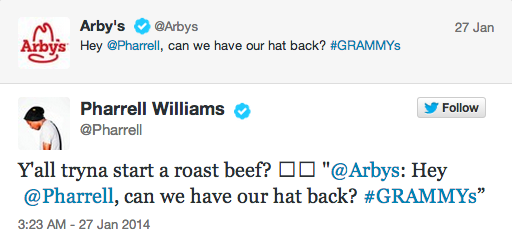
Josh Martin, Social Media Manager at Arby’s, will host our first PRSA New Professionals Section Brown Bag Discussion of the year. Josh gave us a preview of what you will be able to learn from his teleseminar on Real-Time Marketing Done Right. Register for the March 13th teleseminar today.
Screen Shot 2014-03-06 at 9.43.54 AM

How would you personally define real-time marketing? 

To me, real-time marketing is simply making timely responses to mainstream events.

What are some notable differences when executing RT marketing with an agency vs corporate?

Agencies bring a lot of creativity and strategic thinking to the table when it comes to RT marketing. Corporate lives/breathes the brand on a daily basis and often has a better understanding of what will work with their audience. The magic happens when both agency & corporate can work together seamlessly.

What are some of your goals when planning/executing RT marketing? 

My goal for RT marketing: Don’t do anything stupid. RT marketing is about two things: listening and engaging. We want to make sure we’re listening first and understand the conversations that are taking place. If we decide to pursue an opportunity, our goal is for the content to not feel forced and stays consistent with our brand voice.

What advice do you have for brands/companies that don’t have a budget to promote/push out their content?

Brands can still be effective in social media, even with a limited budget. They need to be laser-focused on developing a content strategy and be patient with results.

In your opinion, is there a good ratio to be used of pre-planned content and real-time content?

Specifically during a major event, when brands are trying to stay relative. It’s important to have pre-planned content at the ready so you can move quickly during a major event, but it’s as equally important to be flexible and pivot to real-time content when an opportunity presents itself.

Want to learn more from Josh? Register here.

 

Creative Tech Skills You’ll Need for Entry-Level Jobs

Landing your dream job or even an entry level position in public relations requires more than being a crafty wordsmith, talented strategist and a social media wiz.

SinhVienIT.Net---adobe-photoshop-cs6

While most of us already have blogs and understand how to use WordPress, most job postings I see now list a slew of additional visual storytelling skills that those of us new to the profession have to at least have some experience with before being called in for an interview.

Additional skills to consider developing:

  • Adobe publishing including InDesign, Photoshop and other software to create digital documents and iPad apps
  • Adobe Systems Acrobat
  • Video shooting and editing skills
  • Website creation software – Joomla! , WordPress and Drupal are examples of ones I often see on job posting. If you have created a blog or a website using WordPress, extend your knowledge and skills by learning and implementing the latest upgrades
  • Software to create mobile apps to leverage for campaigns
  • Analytics – although being a data analyst is not expected, understanding the basics and being comfortable with numbers and with an analyst is expected
  • Microsoft Office software including SharePoint Server and Excel. Formulas are a must know!
  • Some knowledge HTML coding
  • Cascading Style Sheets
  • Podcasting software

Deirdre-Breakenridge “Public Relations is becoming more intergraded with marketing and advertising,” said Deirdre Breakenridge, an experienced public relations professional and author of several books on the intersection of technology and public relations. “It’s important to embrace new technology to do justice to the brand. All areas such be working together.”

And although these skills may not be taught in university classes, it’s important to invest some time in learning them before you graduate, she said.

Check out classes online or professional development classes at a local community college as they’re both budget-friendly options. Some of those classes even offer certificates that can be earned with just three or four shorter classes.

While technology is becoming almost a basic requirement for entry level jobs, good, strong writing skills still rule.

“You need a balance of the two,” Breakenridge said. “Always strive for the balance.”

A healthy balance of skills can set you apart from the crowd of applicants.

How many of you are making the effort to go beyond your college classes or to upgrade your personal talents in these areas?


Kris Antonelli,  is a freelance writer and communications professional based in the Baltimore-Washington, D.C. metro area. As a former newspaper journalist, her work has appeared in the Washington Post, Baltimore Magazine, Baltimore Sun and other publications. Connect with her on LinkedIn and Twitter or via email at Kris.antonelli@yahoo.com.

Networking: Keeping Contacts as a New Professional

YBusiness Meetingou studied hard, joined PRSSA, did multiple internships, networked, graduated, networked some more and got a job. Phew! Now, you no longer have to worry about your LinkedIn activity, participate in that Twitter chat or attend local industry events, right? Wrong!

In case you haven’t already figured it out, the PR industry is like a big small-town. There aren’t six degrees of separation, in many cases there are barely three. It seems everyone knows everyone (or knows someone who knows someone). This tight-knittedness is capable of swinging the pendulum in your favor–or not. The choice, really, is yours.

How do you hold on to that network you’ve worked so hard to build? How do you continue to build that network, and make it work for you?

  1.  My first suggestion is to not just attend your PRSA chapter meetings, but volunteer and get involved. As current president of the PRSA-St. Louis Chapter, I can tell you that having new pros on our committees are just as important as having senior pros. You provide a different perspective, and we need all viewpoints represented. In addition, You will work side-by-side with seasoned pros, who will get to know your solid work ethic first-hand and meet people you may have not have had access to otherwise. Volunteering is work, and creates work experience.
  2.  Participate in Twitter chats. Not just #NPPRSA, but other industry-related chats, such as #PRprochat started by Carrie Morgan, or the #SoloPR chat spearheaded by Kellye Crane. Not only may you meet your next recruit, but many senior pros participate in those chats as well. Doing this keeps you in front of your network, expands your network, and may even provide informational content you can later expand into a blog post!
  3.  Join applicable LinkedIn groups and participate in the discussions. Don’t feel like you can’t contribute if you don’t know the answers–ask questions, there may be others with the same question.
  4.  I’m sure you have certain industry-leading blogs to which you subscribe. Don’t just read those posts, comment and reply to other comments. Add value to the community. Warning: be careful to not over-do it; you don’t want to comes across as a stalker.
  5. Finally, swinging back to #1 – involvement in your local PR organization. You should at least set a goal of attending one event per quarter (4 per year).  And, don’t just attend make a point of introducing yourself to at least three new people at each event. Then, within a couple days of the event, connect with them on LinkedIn—reminding them where you met and thanking them for the conversation, then follow-up. The follow-up doesn’t have to be often but does need to be pertinent and professional.

A case in point: a while back I wrote a post on mentoring for BurrellesLuce Fresh Ideas blog. In it, I mentioned that Lori George Billingsley, director of issues communications at The Coca-Cola Company and past PRSA Multicultural Communications Section chair, claims her mentor has been instrumental in helping her secure all of the PR jobs she’s held.  That’s a pretty powerful testament to her networking, diligence and professionalism!

There’s no doubt that social media makes it much easier to keep in touch with people. However, no matter how much you keep in touch electronically, nothing beats face-to-face conversations to build your network!

Share what you’re doing to build and strengthen your network in the comments below.

Tressa RobbinsTressa Robbins is Implementation Vice President at BurrellesLuce, to ensure successful onboarding of major accounts with traditional and social media monitoring, media contacts and press release distribution, as well as reporting and analytics. She is the president of the PRSA St. Louis chapter, a PRSSA mentor, professional advisor to the Southeast Missouri State PRSSA chapter, and serves on Southeast’s Mass Media Department Professional Advisory Council as well as teaches a special topics course this semester. You may follow and connect with her on Twitter.

5 Tips to Make Business Travel a Breeze

Unfortunately, traveling for business isn’t as easy as packing up your car or shoving your carry-on items in the overhead space. To make the agony of travel a little more bearable and keep you from looking like the new kid in the airport, here are five tips to travel like a pro:

tips for a business trip1. Research your travel destination before you board the plane –Typically, you’re going to have down time on business trips so it’s a good idea to look up popular bars, restaurants and coffee shops in the city. And, if traveling with a client who isn’t familiar with the area, it’s a good idea to get a feel of the land ahead of time. That way, when the down time comes, you can suggest things to do and get to know your client a little better in the process

2. Pack the important stuff in your carry-on – A co-worker shared a horror story with me once that went a little something like this: “I flew to Germany for a meeting with a global company’s executive team and made it there without my luggage.” Be sure you have the essentials with you at all times – a business suit, contacts, medicine, glasses, basic toiletries, jump drive with your presentation and chargers  should all find room in your carry-on to avoid headaches and frantic shopping trips around an unknown city.

3. Know how travel expenses will be handled –Talk to your office travel coordinator, finance department or supervisor before you leave about how to handle expenses acquired during your time away from the office.  Some offices choose a per diem, while others require employees to keep track of their receipts and fill out an expense report upon returning. Clearing up any confusion about how to handle finances before you leave will make sure your company and your pocketbook are left surprise-free. Also, don’t forget cash. You’ll need it to tip the folks that make your life easier, like doormen, bellhops and maids.

4. Confirm all the details of the trip before you leave – Make sure everything is in check prior to leaving the office – including your flight, hotel and car rental – and be sure to bring the confirmation emails with you so you have it if any issues arise. If you have to ship product or additional materials to your destination ahead of time, it is best practice to call the location ahead of time and give them a heads up as to exactly what and when your things will be arriving.

5. Download travel apps – If you’re flying, there’s a good chance your airline has an app that lets you check your flight status, change your flight time and check-in online. Plus, car service apps, like Uber, make sure you get from Point A to Point B on-time, without worrying about trying to hail down a cab or navigate through an unfamiliar city. If your destination is within driving distance, apps like Waze can give you inside information on traffic patterns, slowdowns and construction areas. Also, the likes of Yelp and UrbanSpoon give you quick access to nearby restaurants and cafes.

Most of all, don’t forget to have fun. Take the opportunity to reconnect with old friends, develop a more personal relationship with coworkers and connect with your clients. After all, there’s no better place to learn than on the road.

Kelsey SpellmanKelsey Spellman (@kelseyspellman) is a social influence manager at The Adcom Group, a full-service communications agency in Cleveland, Ohio. Kelsey works with a variety of B2C and B2B clients, specializing in media and blogger relations and experiential marketing. Kelsey graduated from Ohio University in 2011 with a degree in public relations and blogs over at starfishsnacks.wordpress.com.

Company Culture: Finding the Right Fit

As a friend told me about some reservations that she’d been having at her new workplace, comparing the competitive nature of her colleagues to “The Hunger Games,” I couldn’t blame her for reconsidering her decision to accept the position.

My friend’s revelation got me thinking about the job search process and how we as young professionals often become so focused on how we’re the right fit for the employer that we forget to consider if the company culture is right for us.

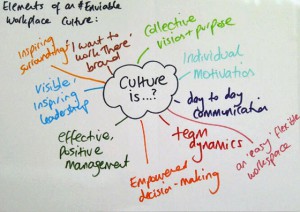
While most of us have heard the term “company culture,” I’d argue that it’s still one of those ambiguous phrases that can be difficult to describe. In a 2013 New York Times article, Josh Patrick of Stage 2 Planning Partners defined office culture as “what you value, what is important for you and your company.”

When considering what we value most in a job, among the first things that come to mind are typically salary and benefits. While undoubtedly important, money isn’t everything and our generation has come to equally value the workplace itself; sometimes even sacrificing a lower salary for a more suitable culture.

Young professionals work hard (before playing hard) and, according to Geoffrey James of Inc., seek to be rewarded accordingly when it comes to perks and promotions. We don’t want to be seen as kids, instead value our voices being heard, opportunities for professional growth and fair treatment by senior-level employees and older colleagues. Although we thrive in a team setting, we expect others to pull their weight and to be able to work independently rather than being constantly micromanaged.

Perhaps most importantly, we desire a personal life. While long hours are often to be expected, we appreciate having realistic goals set for us as well as ample time to complete our work so we can hit the gym at the end of the workday before getting home to watch The Bachelor or some Monday Night Football.

But how do we ensure that we’ll arrive at this comfort level? Finding the right fit begins by determining what you value in the workplace and then asking the necessary questions during the job search and interview process.

Job seekers are encouraged to conduct informational interviews with individuals at a prospective employer in order to not only learn about potential openings, but to get a better feel for its company culture as well. Utilize personal connections to get in touch with individuals that also work there and ask for their honest opinions. Be proactive; there’s nothing wrong with cold contacting folks whose information you find on company websites and LinkedIn.

When you find yourself in the interview itself, have a number of questions prepared to ask different people at various levels of the company. Make an effort to talk with both veteran employees and new hires. In terms of the questions themselves, be sure to ask these potential colleagues about their favorite aspects of the company culture, any complaints they may have and how often staff meetings are held. For one resource, Scott Ginsberg of TheLadders.com poses seven insightful questions you should ask during the interview.

Moreover, keep in mind that unlike skills, the right fit cannot be learned. What criteria are most important to you and how does your company culture match up?


Zach Burrus is currently a public relations professional in Richmond, Va., with experience in both political and sports communication. He graduated from the University of Missouri and the University of Notre Dame and holds degrees in political science, journalism and strategic communication. Mr. Burrus is an active member of PRSA National, PRSA Richmond and the PRSA New Professionals Section. He can be reached at zachburrus@gmail.com.