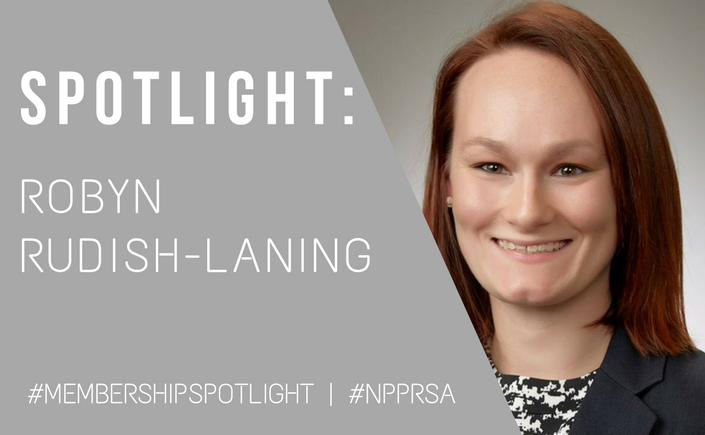
Member Spotlight: Robyn Rudish-Laning

Name: Robyn Rudish-Laning
Position/Company: Senior Manager, Marketing for Airports Council International – North America (ACI-NA)
Location: Washington, DC
Education: B.A. in Public Relations, Duquesne University
M.S. in Media Arts & Technology, focus in Creative Media Practices, Duquesne University
Social Media Handle: @robyn_rl

How and when did you first become interested in PR and communications?
When I was in high school. My first job was waitressing at a small restaurant in my hometown and towards the end of my junior year of high school, I started coming up with ideas to reach more people in the community and engage with customers through community events, promoting specials, using social media, connecting with the local newspaper and helping our happy customers to spread the word. Since we were a small staff, I took on the responsibility of planning & executing these ideas too. When it came time to look for colleges and think about what I was interested in the following year, I already had a pretty good idea & looked for schools specifically for their PR programs, not just general communications. Everything I learned while pursuing my degrees and on the job has only made me more curious.

How did you find internships/jobs?
I came up with a list of places I wanted to intern and hit the ground running applying and figuring out if I knew anyone who could help me get in the door. That method worked and I landed my first internship with the Make-A-Wish Foundation in Pittsburgh. Everything after that I’ve found by just being open to opportunities and making sure my network knew that I was interested in new things, even if I was enjoying what I was doing at the time. I found my last two jobs by making connections through PRSA, particularly local chapters, and being honest that I was new in the area and looking for a new opportunity.

What was the biggest challenge you’ve ever faced in your career? How did you overcome it?
Learning how to be the one making the plan and communicating the importance of a comprehensive communications strategy to guide the communications, PR and marketing efforts. Taking things from tactical and responsive to strategic and proactive is tough, especially when you’re not exactly in a decision-making role. The experience I had gained through volunteering for my PRSA chapter was incredibly helpful in knowing what needed to be done and the importance of a forward-thinking strategy. I’m also grateful for the guidance of more experienced PRSA members who often offered to be a sounding board for ideas and mentors.

What has been the most valuable thing you have learned through classes or experience?
I think learning to speak up and how to be a leader have been the most valuable things I’ve learned. It’s easy to say “I don’t have enough experience” or “what do I know, this person probably knows better than I,” but that’s not always the case. There’s no such thing as too little experience when it comes to leading or coming up with new ideas. The most dangerous trap anyone can fall into is believing that just because something has always been done one way, that you shouldn’t shake it up once in a while.

What has been the best piece of advice you have received?
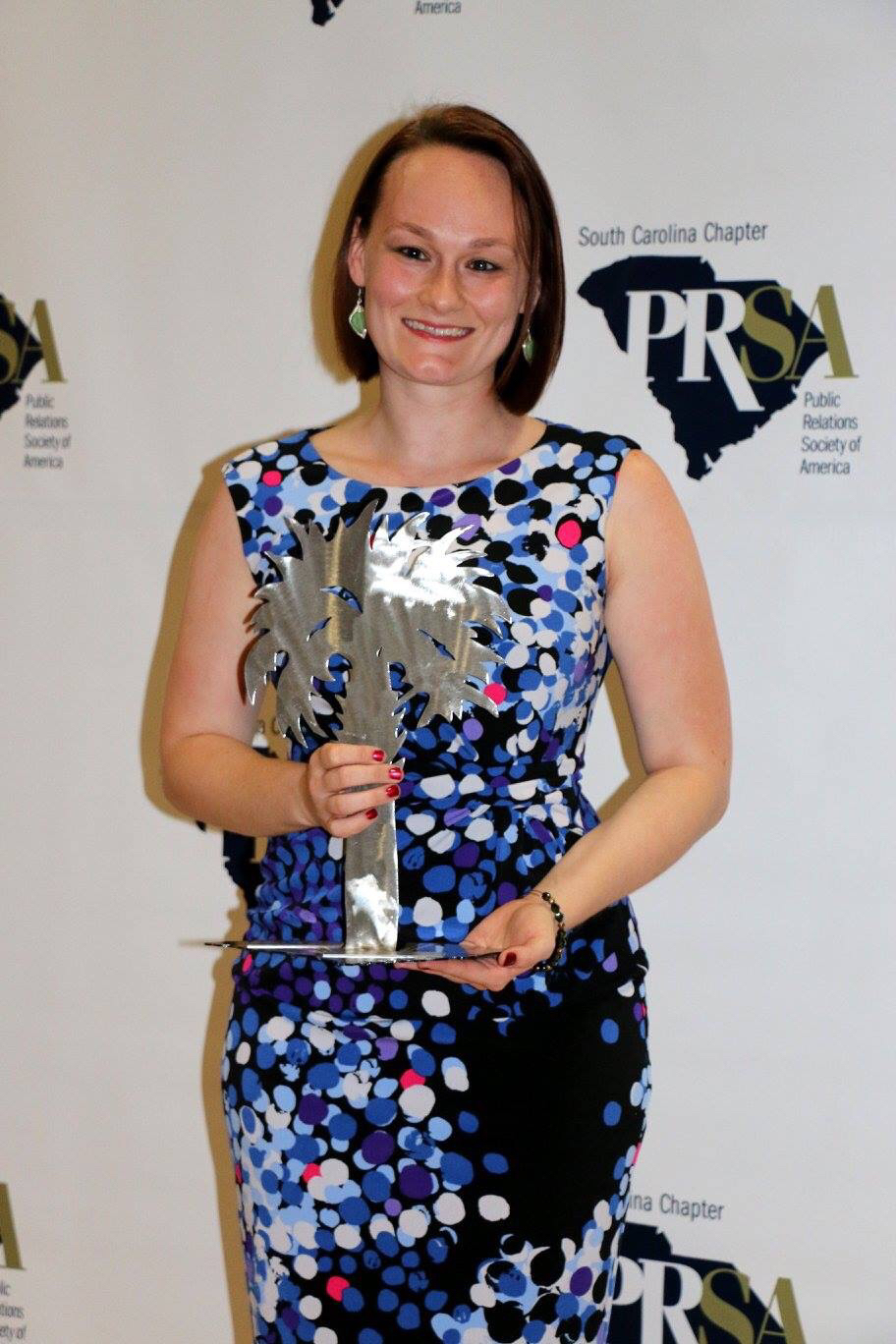
“Give yourself some time and give yourself some hope.” – PRSA’s 2017 National Chair Jane Dvorak while speaking to a mixed group of SCPRSA and PRSSA members at the University of South Carolina.

Do you have any advice for future PR pros?
Practice, practice, practice. You can never learn too much. Volunteer, take on some pro bono work, take on new roles and responsibilities in internships and jobs – whether the job is in the profession or not, everything uses communications in some way. Get into a habit of learning whenever you can and being inquisitive. The more time and energy you invest in yourself and your career, the better the returns will be and the more likely an employer is to invest in you and helping you develop your skills.

What do you think is the best benefit of PRSA and the New Pros section?
Definitely the opportunities to network, get involved and lead. It’s incredibly easy to turn down opportunities to get involved and lead by thinking that lack of experience is a barrier, but being a part of the New Pros section has shown me otherwise. We’re a group of pros with five years of experience or less, so it’s a pretty level playing field and there’s plenty of room for everyone to get involved in some way. Leading the section has given me the opportunity to gain experience and has boosted my confidence in my own abilities, making me more sure of myself and my work and leading me to take seize leadership opportunities in my chapter and my workplace.

Is there anything you wish you would have known before starting your career?
I wish I had understood the importance of practical experience and application of the theories and ideas discussed in the classroom. While it’s all important, it can be overwhelming when you’re first starting out to translate that knowledge into practice.

Tell us a little-known thing about yourself.
I once competed in a local-level preliminary Miss America pageant. My issue platform was literacy across America & I competed to prove to myself that I could & to push myself to step outside of where I was comfortable.

If you are interested in being featured, or interested in nominating someone to be featured as a part of our #MemberSpotlight, please complete the following form.

Image uploaded from iOS (1)

Managing Up: What Does That Even Mean?

Stat: 85% of millennial managers worldwide have moved into management in the past five years (Ernst & Young).

Coming from a new professional classified as a millennial, and who recently moved into a management position last year, this is a terrifying daunting statistic.

Making the transition from an early-staged new professional to a mid-level new professional can happen before you even realize. Nonetheless, you still must be prepared as you make this transition to set yourself up for success (and ensure minimal stress-induced sugar binges).

What could this new transition include . . .

Overseeing staff? Say what?

Giving hard feedback instead of only receiving it? You’ve crossed the line, Greg!

Managing up? What does that even mean?

These are all questions we have to face as we produce solid work and move up the professional ladder, whether we’re ready or not. Let’s focus on the last of those three facets of mid-level new professionalism: managing up.

I was fortunate enough to deliver a presentation at 2017’s PRSA International Conference with two of my fellow colleagues (“colleagues” is what you say when you’ve transitioned into mid-level new professionalism, by the way) from the PRSA New Professionals Executive Committee. The topic in which we delivered captivating content to our session attendees? You guessed itmanaging up.

I’ll let you look over the presentation on your own time HERE (there are some pretty interesting stats and tips in there), but I want to pull out two main points:

  1. Managing up, the act of managing upwards to your superiors, is not something that’s often taught outside of real-world experience (and even that’s if you’re lucky).
  2. When done well, managing up takes foresight, strong two-way communication and a grounded perspective.

“But Greg, you say it’s only taught in the real world? I’m in dire need of this skill; where can I learn more?!”

Well, I just happen to know of the perfect event to recommend and it’s coming up next Wed., Jan. 24 from 3 – 4 p.m. EST in the form of a virtual teleseminar!

This session, PRSA New Pros’ first of the year and entitled Maximize Your Career Potential by Learning to Manage Up, will be presented by Scott W. Thornburg, APR.

This session is a crash course on managing up and you’ll end being armed with tangible takeaways! I met Scott last October and I’m so excited to hear what advice he’ll be offering attendees. Needless to say, I’ll be showing up with my Do Not Disturb active on my phone and the door shut to my office (no distractions, you know, as a mid-level new professional you’re now being pulled in 200 different directions both upward and downward).

>> REGISTER FOR THE TELESEMINAR HERE <<

So register, buckle up and get ready for a worthwhile learning experience to rock your mid-week next Wednesday.

With that kind of hype, how could you not register?

jan-24_teleseminar

greg-rokisky

Greg works full-time as the Marketing Manager for the Michigan Association of School Boards, as well as a freelance creative services consultant. With several years of strategic communications experience, he specializes in digital and creative marketing and public relations. His experience spans agency, corporate and nonprofit arenas. He serves as the social media co-chair for both the New Professional and Association/Nonprofit PRSA sections. When he’s procrastinating not working he enjoys pretending he’s Twitter famous @GregRokisky and checking off items on his never-ending Goodreads shelves.

Answering The Tough Questions

Weighing the ethics of any situation may seem like something better left to those with more experience under their belts than we New Pros. Questions of ethics are the tough questions.

But being an ethical professional isn’t magically bestowed on PR pros once they have a certain amount of experience. That would be nice, right?

As PR professionals, the closest thing we have to an ethics fairy godmother is PRSA’s Board of Ethics and Professional Standards, or BEPS. BEPS is responsible for developing PRSA’s Code of Ethics and counseling professionals through ethical dilemmas and practices.

Since an ethical professional can’t be born overnight, New Pros has teamed up with BEPS to answer any and all ethics-related questions to celebrate Ethics Month. Throughout the month of September, we’ll be collecting questions from New Pros via this form. BEPS will answer each question and we’ll share the answers in a blog post and across our social media between Sept. 25 and Sept. 30.

Have a question, but prefer to remain anonymous? No worries! Just select that option on the form before you submit your question.

ethics-banner

My PR story: Robyn Rudish-Laning

“Find something you’re passionate about and keep tremendously interested in it.” ― Julia Child

There really isn’t a better way for me to describe my career, especially since Julia Child’s passion was food. I, too, love food and that’s where my passion for PR started.

First, a little about me. I currently live in Columbia, SC, with my boyfriend and our tail-less cat Izzy and where I work for the South Carolina Council on Competitiveness, a nonpartisan, business-led nonprofit that works to advance South Carolina’s long-term economic competitiveness. I grew up on a farm in Southern New Jersey and when it came time for me to head off to college, I packed my bags and moved to Pittsburgh. There I attended Duquesne University, right in the heart of the city, which is where I belong – right in the middle of a city. I earned my bachelor’s in public relations and a master’s in media arts and technology, focusing on creative media practices. My PR experience has been a little all over the place: nonprofits in Pittsburgh, New York and Columbia, retail, boutique agency and pharmaceutical research.

So how did I get here? I figured out early that I wanted to work in PR and communications. My first job back in high school was waitressing at a local restaurant. It was small and, being the master of multitasking I am, I began helping to organize some of our events and putting together marketing pieces and campaigns, in addition to my normal job and learning how to cook in the kitchen on slow nights. So in a way, food led me to PR.

As a student I interned with two nonprofits – the Make-A-Wish Foundation of Greater Pennsylvania & West Virginia in Pittsburgh and the 9/11 Tribute Center in New York. In both, I created and maintained media lists, drafted press kits, press releases, media advisories, social media content, web content, print marketing materials – basically if it was written or designed, it probably started on my desk.

That’s a common theme through each job I’ve had so far. If there’s writing to be drafted, a piece to be designed or, more recently, strategy to be crafted, it’s started with me. I could outline all the different types of projects that I’ve worked on, but the point is that through all the places I’ve worked, no matter how thrilling or mundane the project or task might have been, there was a similarity tying them all together – each was its own form of storytelling. Telling stories is the heart of what PR is and it’s what I love about the field. Being able to find and share stories, whether that’s through blogs, video, social media, events, photos or whatever type of content lies ahead, is important to me. It’s what I’m tremendously interested in, what I’m passionate about. It’s what I’ll keep looking for in every job through the end of my career.

Whether you’re trying to tell your own story, still trying to find a path for yourself or anywhere in between, that’s the best advice you can take. Find what you’re passionate about, what drives you, inspires you, makes you feel like you’re doing something, and stay interested, learning everything you can along the way.

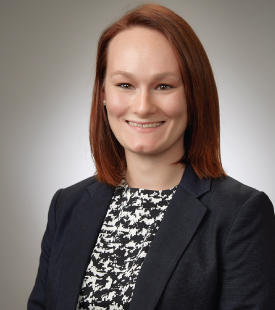
robyn-rudish-laningRobyn serves as PRSA’s New Professionals Section’s programming co-chair and is a communications and PR pro currently living and working in Columbia, S.C. In addition to volunteering with PRSA’s New Professionals Section, she also serves as the 2017 VP of Communications for the South Carolina PRSA Chapter and brought together the chapter’s first New Professionals group in 2016. She’s a native of southern New Jersey and currently resides in Columbia, S.C., by way of Pittsburgh, and currently works as the communications coordinator a statewide non-profit organization. In her spare time, Robyn likes to cook, read, spend time with her tail-less cat Izzy and write for her own blog – and almost always with a cup of tea in hand. Find her on Twitter & talk to her!

How I foster my public relations skills


Don’t settle for mediocrity. You’re young. Be nimble. Be an expert at what you do.

I’ve learned a lot about public relations from my nearly two years of working as a new professional. In particular, I’ve learned about media relations, research, leadership development and time management. I’ve developed a groove for these skills. In fact, I consider them to be my strong suites in public relations. Here’s what I do to further develop each:

Media relations.

Keep tabs on what’s going on nationally and in your area. I’m sure you’ve heard by now, but theSkimm sends a daily newsletter with national news. For local news, save websites in your bookmarks for easy daily access.

Research.

Become a research powerhouse by using Google operators to find valuable information on the internet. Search for a specific word in a domain name, find related bloggers and locate news in minutes after a press release goes out. Find a list of Google operators here.

Leadership development.

My supervisor encouraged me to become a PRSA Charlotte board director and New Professionals leader for our local chapter. I was hesitant at first, but I agreed. I now lead ten New Pros who plan programs and networking events. Additionally, at the time of this writing, I’m gaining leadership skills through John Maxell’s book, Intentional Living: Choosing a Life That Matters. I highly recommend it. (Thanks for the recommendation, dad!)

Time management.

My first alarm goes off at 5 a.m. every weekday morning. I eat breakfast, drink lemon tea, read, journal, meditate and stretch before 7 a.m. This sets me up for success each day before I arrive at work. Daily stresses vie for my attention throughout the day, and these few peaceful hours help me manage all of them.

What facets of PR are you good at? I’d love to chat. Connect with me on LinkedIn.

Read more tips on my blog.

Seth Kingdon


Seth Kingdon works as an account coordinator at Chernoff Newman’s Charlotte office. He assists with social media, media relations and research for the agency. He’s also a director at-large with PRSA Charlotte, and leads the New Pros committee for the chapter. He could eat Chick-fil-A sandwiches every day.