The Dos and Don’ts of Building a Media Contact List by Noelle Pennyman

More than likely, you’ve dabbled in the art of building media contact lists. If you haven’t yet, this post will serve as a brief introduction because creating lists is a very common practice in public relations.

A media contact list is the foundation of any media relations campaign. For a campaign to be successful, your list must be targeted to the publications, staff and audience that will help your client or company achieve its goals.

The first step to creating a list is determining the audience of the initiative. Is it moms or foodies? Business professionals or frequent travelers? After you identify the audience, you can then target the most appropriate outlets, editors, reporters and producers.

Many industry experts will say you need to conduct extensive research such as reading every article by each media representative that you will be pitching. Although ideal, there may not be enough time to do that kind of thorough research. However, it is always important to make sure you’re selecting the appropriate people and fortunately, PR professionals have tools available to help this process.

Paid services such as Vocus, Cision and BurrellesLuce maintain media databases for communications professionals. You can also do your own research with Google and on each outlet’s websites. Fortunately, most publications, especially larger ones, typically maintain updated websites.

Below are some dos and don’ts to create an effective media contact list:

  • DO work with your company or client to determine a list of criteria in choosing the most appropriate contacts.
  • DO make sure your list is up to date. With a fluctuating industry, media contacts change positions, publications and coverage topics constantly.
  • DON’T have an overload of people from the same publications. There is no set number of contacts to have from each outlet (sometimes, this is determined by your company or superior). However, you don’t want to waste efforts by targeting six people at the same publication (especially if they’re sitting across from each other).
  • DO ask around. If you have colleagues who have pitched these publications in the past, ask them for any information as to the best people to target (if applicable), tips on how to pitch them or any new people.
  • DO create a detailed list. Include publication, contact’s first and last name, specification on the contact’s gender (for gender-neutral names), phone number, email address, position title and publication description.

Like with anything, the more lists you build, the more experienced you become. You will begin to learn which contacts and outlets are the best to target. At any experience level, remember that thoroughness, accuracy and effectiveness are key.
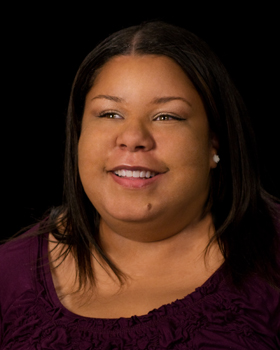
Noelle PennymanNoelle Pennyman
Public Relations Coordinator at thunder::tech

Noelle Pennyman is a public relations coordinator at thunder::tech, an integrated marketing agency located in MidTown Cleveland. As a public relations coordinator, Pennyman works with clients to develop communication strategies and tactics including brand messaging, media relations and social media. Prior to joining the team at thunder::tech, she served as the marketing assistant at Kent State University’s College of Communication and Information and account executive intern at the university’s student public relations agency, Flash Communications. Pennyman received a bachelor’s degree in public relations from Kent State University in 2009. She is an active member of the Greater Cleveland chapter of PRSA’s Young Pros group and serves as the membership co-chair of the PRSA New Professionals Executive Committee.

7 Crucial Job Search Tactics to Land an Entry-Level Job by Heather Huhman

Pretty soon, you’ll be donning that graduation cap, walking across the stage and taking your first step into the world of entry-level employment. Hopefully you’ve set yourself up for success throughout your college career by completing at least one internship, getting involved in on-campus groups and building a portfolio. What else is crucial to landing a job today?

Creating a job search plan. What many job seekers fail to do is create a plan consisting of multiple job search strategies in order to reach their goal. Merely combing job boards or applying to a few company openings probably won’t result in a job offer—or even an interview—in today’s tough market. You must be prepared, organized and diligent in every aspect of your job search, and creating a plan can help you stay on track. 

Spending time “company searching” as opposed to “job searching.” Part of your job search plan should be identifying 5-10 ideal companies that you’d like to work for. From there, you can work on making connections at those organizations, learning about their culture and determining your fit, and watching for openings and opportunities that are right for you.

Networking early and often. Your network is a vital resource in your job search. Friends, family, colleagues and acquaintances can help you learn about unadvertised openings, get an “in” at a specific company, or provide support while you’re job seeking. Keep in contact with important connections by adding them on professional and social networking sites, and reaching out to them to stay top of mind.

Branding yourself. You need to be your own advocate in your job search. This means having a clear idea of what makes you different from all of the other candidates vying for the same job as you (also known as your unique selling points). Communicate and share your personal brand by consistently marketing yourself across all social and professional networking platforms, as well as on your resume, cover letter and portfolio.

Harnessing the power of alumni. Don’t forget about the network you’re already a part of as a resource in your job search, which is your college or university. Consider contacting former students that are working in your field to ask for advice and job shadow opportunities. Join your college alumni network or search for groups on Facebook and LinkedIn. Because you already have something in common—your education experience—it will be easier to reach out to that individual and build a mutually beneficial relationship.

Taking things offline. While the Internet is a valuable resource for any job seeker, don’t neglect the power an in-person meeting can have. This can involve inviting another professional to lunch whom you’ve only talked with online, attending group and association meetings, and participating in conferences and meetups.

Volunteering your time. Not only can volunteering help eliminate gaps in your resume, but you can also make valuable connections with individuals at the organization. It’s also a great way to build upon your skills and add additional pieces to your professional portfolio.

Although your job search might not produce results right away, it’s important to stick with it and maintain a positive attitude throughout the process. You never know when you’ll meet someone who could lead you to your next opportunity!

What other tactics would you add to this list? Prospective graduates: What’s your plan to stand out in this job market?

Heather HuhmanHeather R. Huhman is a career expert, experienced hiring manager, and founder & president of Come Recommended, a content marketing consultancy for organizations with products that target job seekers and/or employers. She is also the author of #ENTRYLEVELtweet: Taking Your Career from Classroom to Cubicle (2010) and writes career and recruiting advice for numerous outlets.

Intro to Military PR by Lt. Colonel Ann Peru Knabe, APR+M

Ann KnabeIt is hard to believe I have been in military public affairs – the military’s version of PR – for almost two decades. I joined the Air Force Reserve in college and along the way was commissioned as an officer. Just like in the 1990s, today’s public affairs field is very exciting.

What exactly do I do? Right now I am assigned as a Reservist to the Pentagon, serving in a public affairs role with the office of the Secretary of the Air Force – Public Affairs. My immediate role is to support the outreach, opinion and engagement division.

My primary job for the last couple of months has been working on media training for high-level defense and federal officials. I develop training scripts, play the role of reporter and help with scheduling (this is all in addition to my full-time teaching job in Wisconsin). My favorite part of this job is playing the role of a reporter live from a remote location in New York. The trainee cannot see me, so it can be quite challenging. We provide feedback, offer other scenarios and give the trainees a video of everything that occurred. The Air Force has a very comprehensive media training program at the Pentagon – it shares the same tech qualities and capabilities of regular TV.

But PA – as we call public affairs – is not limited to media training. For many years, I served as the director of public affairs at an Air Force wing. I was responsible for community relations (tours, special events, and outreach), internal communications (employee newsletters and related communications), media relations and congressional relations. As a part-time employee, I had a lot of fun and gained exceptional experience. We managed a variety of projects, ranging from military balls to Presidential visits.

More recently, I have been involved in the Reserve’s social media strategy and have supported special projects like Tour for the Troops. In the Tour for the Troops, I executed the social media plan for Air Force Reserve as we flew Kid Rock around to various concerts in the war zone. Now THAT was interesting!

It is also important to note that you do not have to wear the uniform or join the military to do public affairs. The different branches of service have hundreds of opportunities to work as a civilian in PA.  Of course, as a civilian, you are less likely to deploy to remote places.

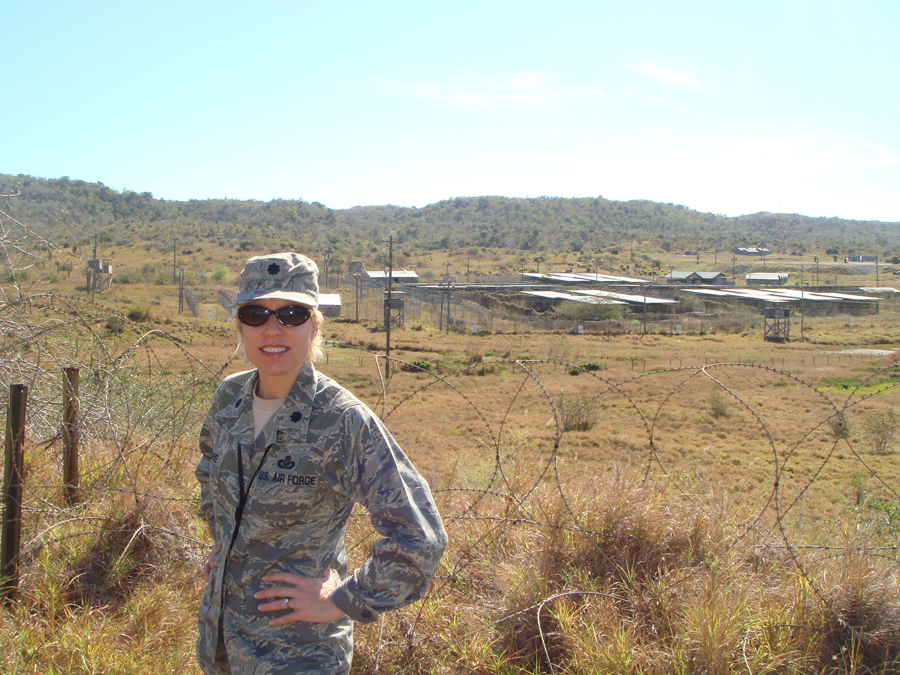
If I had to identify when my role really transformed, it would be 9/11. Ten years ago, my military job changed significantly, as did the “ops tempo” or rate we were supporting the active duty Air Force. Suddenly, we were helping activated Reservists, managing multiple media requests, honoring returning Airmen and Soldiers and executing other wartime activities in addition to our regular work. I was also activated – or deployed – three times in the last five years. I completed two tours in Southwest Asia, where we have a large base flying daily missions into Iraq, Afghanistan and Africa. I served as the Pentagon’s spokesperson for the Guantanamo Bay War Court in my most recent tour. Throughout these experiences, I have made the greatest friends of my life. After sacrificing and facing daily uncertainty with my brothers and sisters in arms, we cannot help but become closer because of the trust needed in a mission. I love this aspect of the military.

I love the Air Force, and cannot say enough positive things about my experience in the Reserve. I have worked in more than 20 different countries, met lifelong friends and mastered tough communication skills. The Reserve has also given me priceless education and extra income. There is room for more public affairs officers and civilians – the military can be a fabulous career.

It is not a piece of cake, though. On those days that seem especially hard or challenging, I always remember this quote: “If it was easy, everyone would do it.”

Ann KnabeLt. Colonel Ann Peru Knabe, APR+M, Air Force Reserve Public Affairs Officer

Knabe is a dynamic change-agent in public relations. She believes innovation and progressive thinking are keys to survival in today’s competitive global PR environment. Her 20+ years in military public affairs and international NATO settings leverage her civilian and educational experiences. Knabe is a “relationship-builder,” referring to her extensive work in media relations, internal communications, social media, community relations, international public affairs and congressional relations.